Archive for the 'Boating' Category

Paddling: Rio Grande White Water

Tuesday, January 26th, 2010

This is Passport to Texas

What if I told you the Rio Grande has a class two white water rapid—would you believe me? Would you believe Eric Ellman?

We’ve been leading tours on a class two rapid below Anzalduas Dam that Gary Lacey, who designed the US National Whitewater Training Center in Charlotte North Carolina flew out to take a look at for free, himself, because he could hardly believe it. He believes it is a world class white water park waiting to be built.

Ellman is the Executive director of Los Caminos Del Rio a non profit that preserves and promotes the natural and cultural heritage of the Rio Grande Valley from Laredo to the Gulf of Mexico—and paddling the Rio Grande is one way to bring attention the area, and change attitudes. Building a white water park would be another.

So far the best place we’ve found for a white water park would probably below Anzalduas Dam. There’s already sufficient drop, the water coming out below the dam is cool and clear most of the year, and there’s opportunities to do something even more extravagant, which the IBWC has said would be possible, involving taking off water above the river and creating a water course through the park and putting it back into the river below the dam, thereby obviating any of the cross-border issues that people are generally most concerned about.

The bi-national white water park is currently in discussions. We’ll have updates as they are available.

That’s our show… For Texas Parks and Wildlife…I’m Cecilia Nasti.

 
icon for podpress  Paddling: Rio Grande White Water: Play Now | Play in Popup | Download

Paddling: Understanding the Rio Grande

Monday, January 25th, 2010

This is Passport to Texas

The Rio Grande Valley and its river are misunderstood, but Eric Ellman, Executive Director of the non-profit Los Caminos Del Rio,is out to change that.

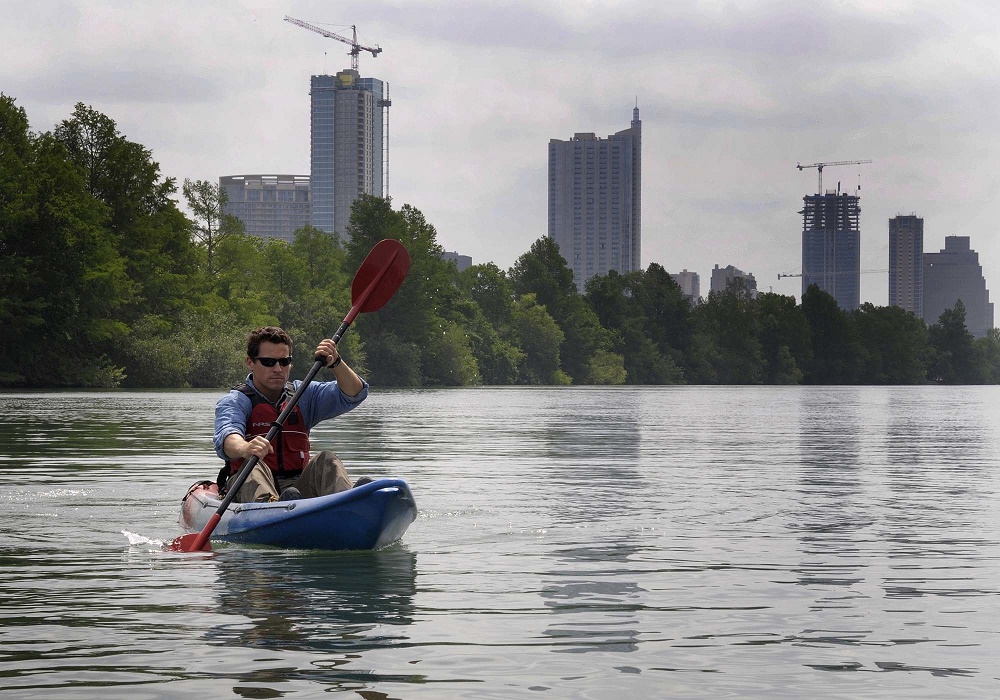
The organization’s focus is on historical and environmental preservation. And we’ve found recently that paddling is a great way to bring people’s attention to the area, and to fundamentally alter the way that they perceive the Rio Grande River and the Rio Grande Valley.

Most of us have an opinion about the Rio Grande, but few of us have actually spent time on it. Yet when we do, Ellman says we are forced to reexamine our preconceptions.

There are all kinds of positive associations to be made with the river. The river is free-flowing, it’s there’s year-round, the weather is warm, the birding is great, we have some of the most historic buildings in the country on either side. We’ve been running trips there and taking literally hundreds of people down there in the last few years and we have never had a single unpleasant incident. And, we really think it’s going to become the wintertime destination for canoe and kayak racing for the entire United States and perhaps northern Mexico.

And Ellman says there’s something you may not know about the Rio Grande River that could surprise you.

Gary Lacey who designed the US National Whitewater Training center could hardly believe it.

And we’ll tell you about it tomorrow.

Until then…That’s our show… For Texas Parks and Wildlife…I’m Cecilia Nasti.

 
icon for podpress  Paddling the Rio Grande: Play Now | Play in Popup | Download

Mind Your Buoys

Friday, May 22nd, 2009

Passport to Texas from Texas Parks and Wildlife

Think of buoys and water markers just like you would a traffic signal or sign on a roadway

There may be some that indicate a speed limit…some that indicate there is not a wake allowed…a lot of inland buoys will contain information telling you where boat traffic is restricted…information such as hazards or rocks, that’s a danger to boating.

That’s Alfonso Campos, the Assistant Chief of Marine Enforcement for Texas Parks and Wildlife. Buoys can also help keep you steering in the right direction…or on the right channel.

The main thing to remember is red right returning…that simply means that when you’re returning you keep the red buoy on your right and it will bring you inland.

And just because you leave your car in the garage…you can still get a ticket for not obeying these signs on the water.

If people failed to obey the laws a game warden or other marine safety officer may issue citations…and the penalties are quite stiff. They range anywhere from 25 to 500 dollars.

Boater safety classes will introduce you to the buoy system…to learn more, log on to our website, passporttotexas.org.

That’s our show…we receive support from the Sport Fish and Wildlife Restoration Program…reminding you that June 6th through 14th is National Fishing and Boating week…For Texas Parks and Wildlife…I’m Cecilia Nasti.

 
icon for podpress  Mind Your Buoys: Play Now | Play in Popup | Download

Reporting Boating Accidents

Thursday, May 21st, 2009

Passport to Texas from Texas Parks and Wildlife and the Sport Fish Restoration Program

You would think if you’re in your boat on a wide-open waterway you’d be less likely to have an accident…but it happens. When it does you can’t tell a fish story…

An accident must be reported under Texas law if there is at least 500 dollars in damages, if there is a person that is killed or injured…injured means an injury that is beyond first aid.

Alfonso Campos, is the Assistant Chief of Marine Enforcement at Texas Parks and Wildlife. He says you’d be surprised how many people don’t report boating mishaps.

A national statistic, provided by the Coast Guard shows as few as 10 percent of the accidents are actually reported.

Accident reports need to be filed within 30 days of the incident…and it’s an up to a 500-dollar fine if you don’t comply. To encourage more folks to fill out the paperwork, he says the report is not admissible in court as evidence against you.

It can’t be held against you that you reported an accident…if you write something down it’s not going to incriminate you…it’s simply a statistical report and we use it to look at trends in boating…what things are causing accidents.

If you have an aquatic fender bender, download a copy of the boating accident report online, we have a link to it at passporttotexas.org.

That’s our show…we receive support from the Sport Fish and Wildlife Restoration Program…reminding you that June 6th through 14th is National Fishing and Boating week…For Texas Parks and Wildlife…I’m Cecilia Nasti.

 
icon for podpress  Reporting Boating Accidents: Play Now | Play in Popup | Download

Personal Floatation Devices

Wednesday, May 20th, 2009

Passport to Texas from Texas Parks and Wildlife and the Sportfish and Wildlife Restoration Program

Next time you are on the water, and decide to forgo wearing a life jacket, consider this:

About eighty-five percent of the drowning fatalities, a person is not wearing a life jacket—and that’s huge.

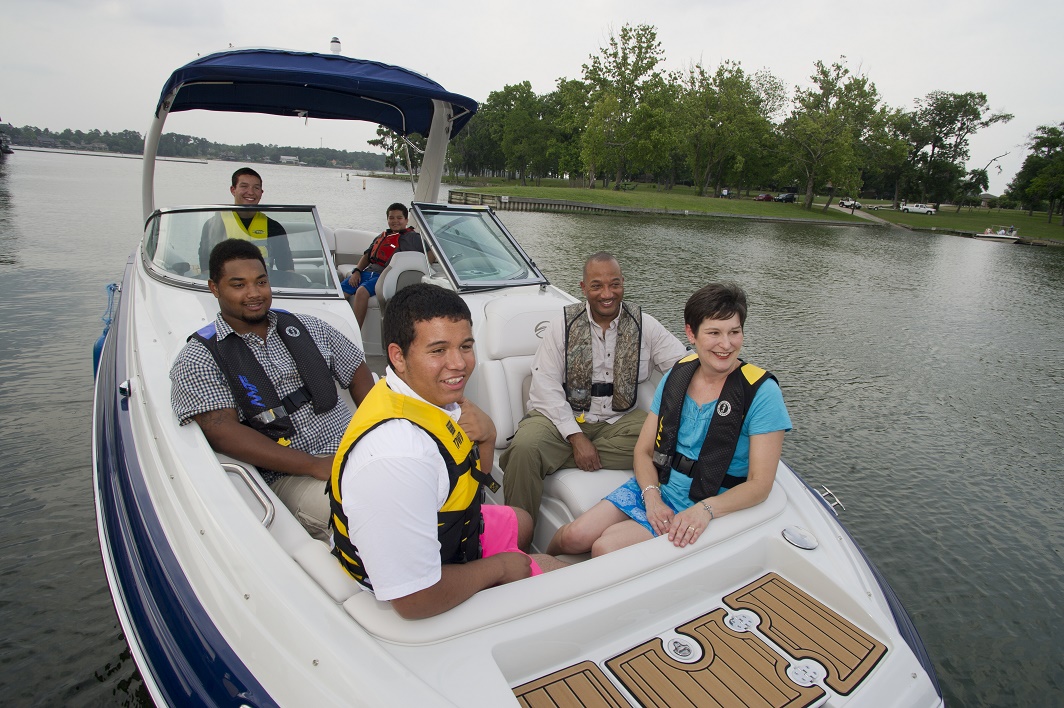
Brandi Bradford, state boater education coordinator, says all personal watercraft passengers, including those being towed, must wear life jackets…including the kiddos.

The law says that anyone under the age of thirteen must be wearing a life jacket while the boat is underway. We recommend that everyone does.

Boaters have reasons why they don’t like wearing life jackets, but those excuses don’t hold water.

People usually don’t like to wear them because they’re heavy, they’re bulky, they make you hot. You know, it’s a hundred degrees outside in Texas. There are actually new forms of life jackets. We have belt pack inflatables, over the shoulder (they look like little harnesses) inflatables. They’re real lightweight; they won’t mess up your tan, and they don’t get in your way when you’re driving around.

Life jackets are widely available at department and sporting goods stores. Find additional information about life jackets at passporttotexas.org.

That’s our show…we receive support from the Sport Fish and Wildlife Restoration Program…working to increase hunting, shooting, fishing and boating opportunities in Texas.

For Texas Parks and Wildlife…I’m Cecilia Nasti.

 
icon for podpress  Personal Floatation Devices: Play Now | Play in Popup | Download