Archive for the 'Freshwater' Category

State Park Getaway–Choke Canyon State Park

Tuesday, March 9th, 2010

This is Passport to Texas

No matter what your outdoor interest, chances are you’ll find it at Choke Canyon SP. Bryan Frazier is our guide.

Choke Canyon State Park—a great place to go in terms of catfish fishing, which turns on a little later in the spring. Crappie fishing, white bass…Choke Canyon has just risen in the ranks, if you will, in the fishing world as a place to go to really catch lots of different kinds of fish. But, right now, bass fishermen, that’s one of their hot spots to stop and visit on the way. A lot of tournament fishermen show up there.

Another thing about Choke Canyon is, it’s a complete park from a recreational standpoint. You’ve got hike and bike trails, you’ve got a gymnasium, you’ve got screen shelters that have been enclosed with air conditioning, you’ve got lots of different facilities. A group facility, fish cleaning stations—so many different things, depending on what your needs are. Hookups for RVs are good there, with 50 amp service.

It’s far enough south—you’ve got great birding—even some of the things like the green jays and chachalacas…and the wildlife viewing is unmatched. Whether you’re looking for deer, or turkeys or javalina—they’re oftentimes viewable right from the park road in your vehicle. A great place to take the kids to get them familiar with nature. So,. Choke Canyon is definitely a place I recommend this time of year to people to visit.

Find more State Park Getaway information on the Texas Parks and Wildlife website.

That’s our show… with support from the Sport Fish and Wildlife Restoration Program…For Texas Parks and Wildlife…I’m Cecilia Nasti.
 
icon for podpress  State Park Getaway--Choke Canyon State Park: Play Now | Play in Popup | Download

State Park Getaway: Falcon State Park

Thursday, March 4th, 2010

This is Passport to Texas

This week’s state park getaway takes us to Falcon Lake State Park, where fishing for bass tops a long list of recreational opportunities. Bryan Frazier is our guide.

Falcon state park—this time of year—is really one of the premier bass fishing destinations in the United States. It’s one of the first ones to be an indicator of the bass fishing season, if you will, as a lot of bass fishermen can note.

And, where it is, right there on the international border…it is a great destination, not just for the fishing…there’s also great birding….you get the subtropical species coming up from Mexico, and then a lot of the winter residents there…the wildlife you’re going to see is great at Falcon State Park.

You’ve got this native habitat of the south Texas brush country, which is really what the habitat of the lake is…one of the reasons it’s such good fishing. But, it’s just this beautiful south Texas scrub brush.

There’s a butterfly garden there that the volunteers helped build. You’ve got great camping, you’ve got some enclosed shelters there that are air conditioned. So, Falcon State Park, this time of year especially—but really all year—a great place by yourself, friends, family, check out Falcon State Park.

Find more State Park Getaway information on the Texas Parks and Wildlife website.

That’s our show… with support from the Sport Fish and Wildlife Restoration Program…For Texas Parks and Wildlife…I’m Cecilia Nasti.
 
icon for podpress  State Park Getaway: Falcon State Park: Play Now | Play in Popup | Download

Private Fishing Ponds

Friday, February 19th, 2010

This is Passport to Texas

The 2009 drought left private ponds throughout Texas low or bone dry—conditions that Todd Engeling says actually presented pond owners with an opportunity.

There was an opportunity for a number of folks to really go in and renovate those facilities and prepare them for the rains when they came.

Engeling is chief of inland hatcheries for Parks and Wildlife. With luck, ponds got a needed facelift when dry, and are returning to their former glory thanks to winter rains. The down side is—fish in those ponds probably didn’t survive the drought.

So, if you’re looking for an opportunity to get fish for your private pong, although the Parks and Wildlife department raises millions of fingerlings each year, we do not provide those to the general public. But, there are a number of commercial, private fish hatcheries that can provide you with what you need for stocking—including any advice on what you need and how many would be appropriate for you to stock in those areas. And on our webpage there is a link to the Texas Aquaculture Association, which maintains a list of their members who can provide that service for you.

In fact, the parks and wildlife website offers information on creating and maintaining private ponds…

Including how you can deal with some of that unwanted vegetation.

Visit the TPW website for information on ponds, stocking, and other landowner information.

That’s our show… with support from the Sport Fish Restoration program.

For Texas Parks and Wildlife…I’m Cecilia Nasti.
 
icon for podpress  Private Fishing Ponds: Play Now | Play in Popup | Download

Guadalupe Bass–Solving the Hybrid Problem

Wednesday, February 10th, 2010

This is Passport to Texas

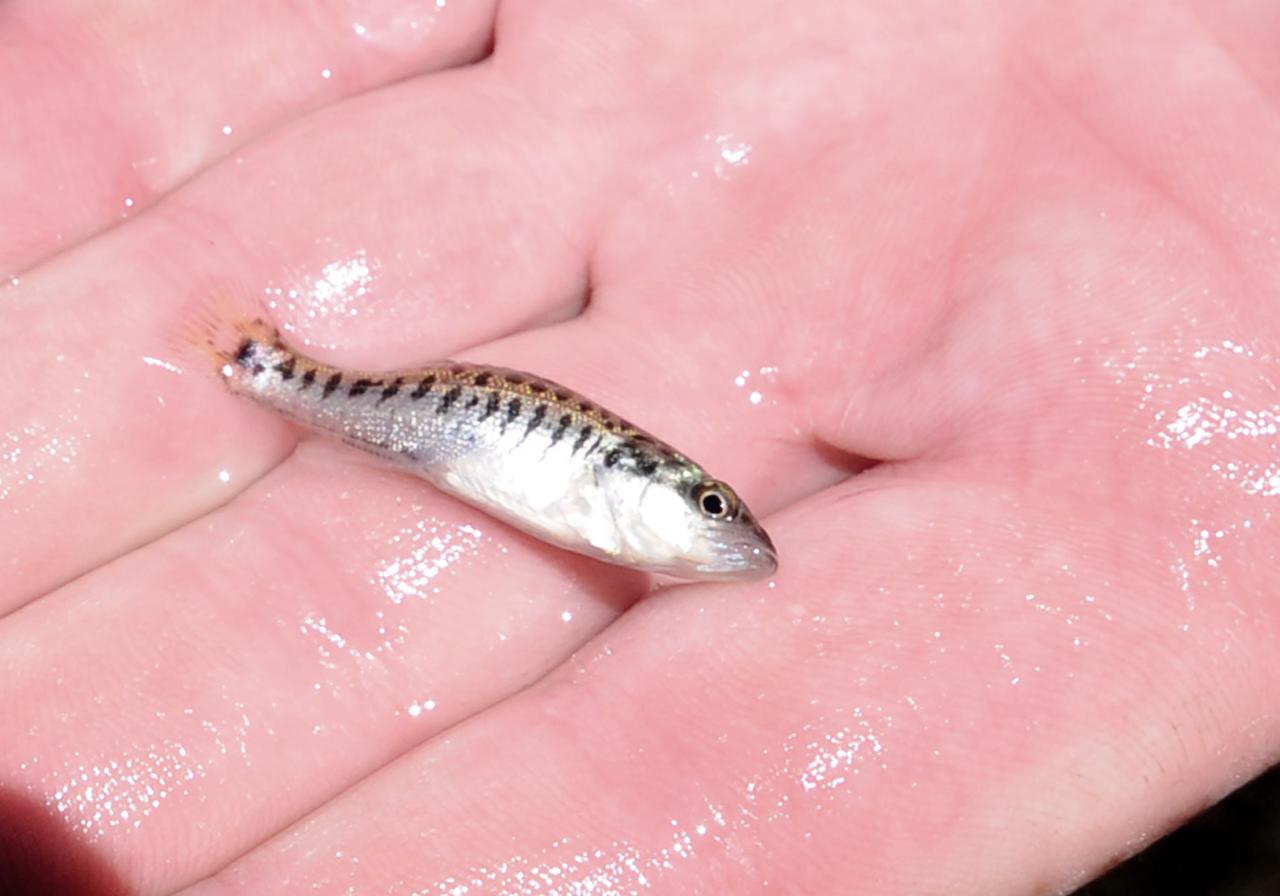
For more than a decade, researchers at the Heart of the Hills Fisheries Science Center in Kerrville have battled the hybrid progeny of Guadalupe bass—the state fish of Texas—and the introduced Smallmouth bass.

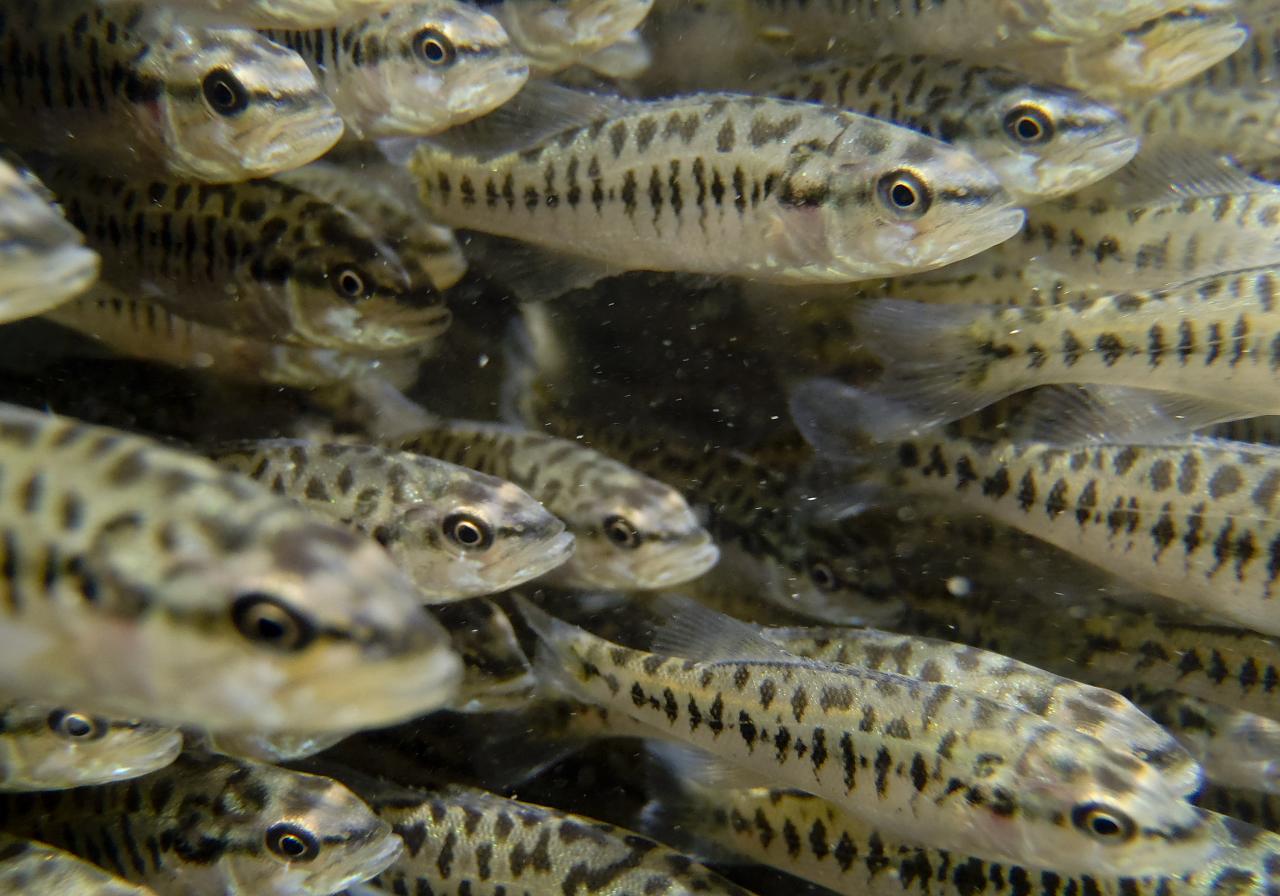
We’re raising thousands of pure Guadalupe bass here at the research station. And every year we stock them back into nature. Basically, what we’re doing is replacing the hybrids that are out there with these pure Guadalupe bass. And we’ll let nature take its course form there.

That’s Gary Garrett, who initiated the Guadalupe bass recovery program. The fish exists only in the Texas Hill Country—in the headwaters of streams that drain the Edward’s Plateau.

Shortly after non-native smallmouth bass were introduced to Texas waters, they bred with native bass, resulting in an explosion of hybrids. But using a technique called “saturation stocking,” Garrett and his crew have made exceptional progress.

So far we’re seeing here in Johnson Creek, where we began eh study, we started where 30 percent of the fish were hybrids. And that wasn’t stable—it was still increasing when we started. It is now down to around three percent. Which is excellent! Top go from thirty to three is great. Now we want to go from three to zero.

And Garrett expects to reach zero in the next four to five years.

That’s our show… we receive support from the SF Restoration program…For Texas Parks and Wildlife…I’m Cecilia Nasti.

 
icon for podpress  Guadalupe Bass--Solving the Hybrid Problem: Play Now | Play in Popup | Download

Guadalupe Bass–A Hybrid Problem

Tuesday, February 9th, 2010

This is Passport to Texas

Some ideas seem good when you first have them. Then after some time passes—not so much. Take smallmouth bass, for example, and their effect on the Guadalupe bass population.

Small mouth bass, of course, are not native to Texas, but were brought in as an additional sport fish. The problem is they can’t tell each other apart. Even though they look very different, but evidently, they act similar enough behaviorally that they’ll reproduce—and they have hybrids.

That’s Gary Garrett, Director of the Watershed Conservation Program. So, what’s wrong with hybrids, anyway?

Hybrids, by definition, are halfway between the parents. So, they’re not as well adapted for their environment; they may do well in the short run, but in the long haul, they’re really not going to be as good a species.

Besides, they’re the state fish of Texas, occurring only in the Hill Country. And, well, you just don’t mess with Texas.

The other thing we’re now seeing a little bit is that these hybrids are now also crossing with our largemouth bass…which is yet another problem we want to avoid.

And you definitely don’t mess with largemouth bass. But, we’ve started to turn the tide on these hybrids with saturation stocking.

And we’re confident that in the next four or five years we’re going to be able to solve this problem.

That’s our show… we receive support from the SF Restoration program…For Texas Parks and Wildlife…I’m Cecilia Nasti.

 
icon for podpress  Guadalupe Bass--A Hybrid Problem: Play Now | Play in Popup | Download