Archive for the 'TPWD TV' Category

TP&W TV–Squirrel Hunting: A Fading Tradition

Friday, August 1st, 2008

Passport to Texas from Texas Parks and Wildlife and the Wildlife Restoration Program

Squirrel hunting is often a child’s first introduction to the sport. As Texas Parks and Wildlife television producer Ron Kabele tells us, the tradition is beginning to fade.

One of the reasons is the habitat is going away. A lot of the good squirrel habitat is hardwood bottomland. And, it’s pretty well accepted that we’ve lost just a tremendous amount of the hardwood bottomlands in East Texas.

In a segment this month, the television series follows a father as he takes his daughter squirrel hunting where the healthy habitat still sustains a squirrel population.

This is a beautiful place. And the squirrel habitat—I haven’t seen like this since I was a kid hunting in south Alabama. (gunshot) Macy, be sure he’s dead before you pick him up. I know that. This one? Whoa. That’s cool.

Kabele says biologists he’s talked to fear squirrel hunting may not survive the future, but they keep hope alive.

And so, we’re wanting to continue that tradition in hopes of instilling conservation ethics, and just a love of being in the out of doors.

You can view this story on the Texas Parks and Wildlife television show in August. Find a link to stations that air the series at passporttotexas.org.

That’s our show… For Texas Parks and Wildlife…I’m Cecilia Nasti.
 
icon for podpress  TP&W TV--Squirrel Hunting: A Fading Tradition: Play Now | Play in Popup | Download

TP&W TV–State of Springs

Thursday, July 17th, 2008

Passport to Texas from Texas Parks and Wildlife and the Sport Fish & Wildlife Restoration Program

This month the Texas Parks and Wildlife television series airs segments from the documentary Texas: The State of Springs. Series Producer, Don Cash.

One of the things that’s pointed out in the documentary is that water conservation in Texas is going to have to happen on private lands. We’re not going to get more rain; we’ve got to deal with the water supply that we receive, and that starts on the land. One of the landowners that we feature is David Bamberger. He and his wife Margaret have a ranch in Blanco County. They’ve had to remove a lot of cedar from it, but as David points out, removing the cedar is not the end of the problem.

Without a grass system that has roots down into the earth when that rain falls, it washes off. But if it falls on the grass, you’ve got miles of root systems and that water can now penetrate down in.

Also in July, we’ll head to the Panhandle where we look at water speculators who are looking at building pipelines from the Panhandle—south—to sell what they call surplus water.

There isn’t actually any surplus water in this area. All the water that’s here is going to be needed eventually.

So, there’s a lot of information in July about the state of springs in Texas, and what we can do to help preserve them for the future.

Go to passporttotexas.org and find a link to PBS stations that air the series.

That’s our show… with support from the Sport Fish and Wildlife Restoration program…For Texas Parks and Wildlife…I’m Cecilia Nasti.
 
icon for podpress  TP&W TV--State of Springs: Play Now | Play in Popup | Download

TP&W TV–State Park Water Recreation

Tuesday, July 1st, 2008

Passport to Texas from Texas Parks and Wildlife

July sizzles, but you won’t when you visit state parks with lakes. This month the TW&W TV Series highlights wet and wild summer recreation. Series producer, Don Cash.

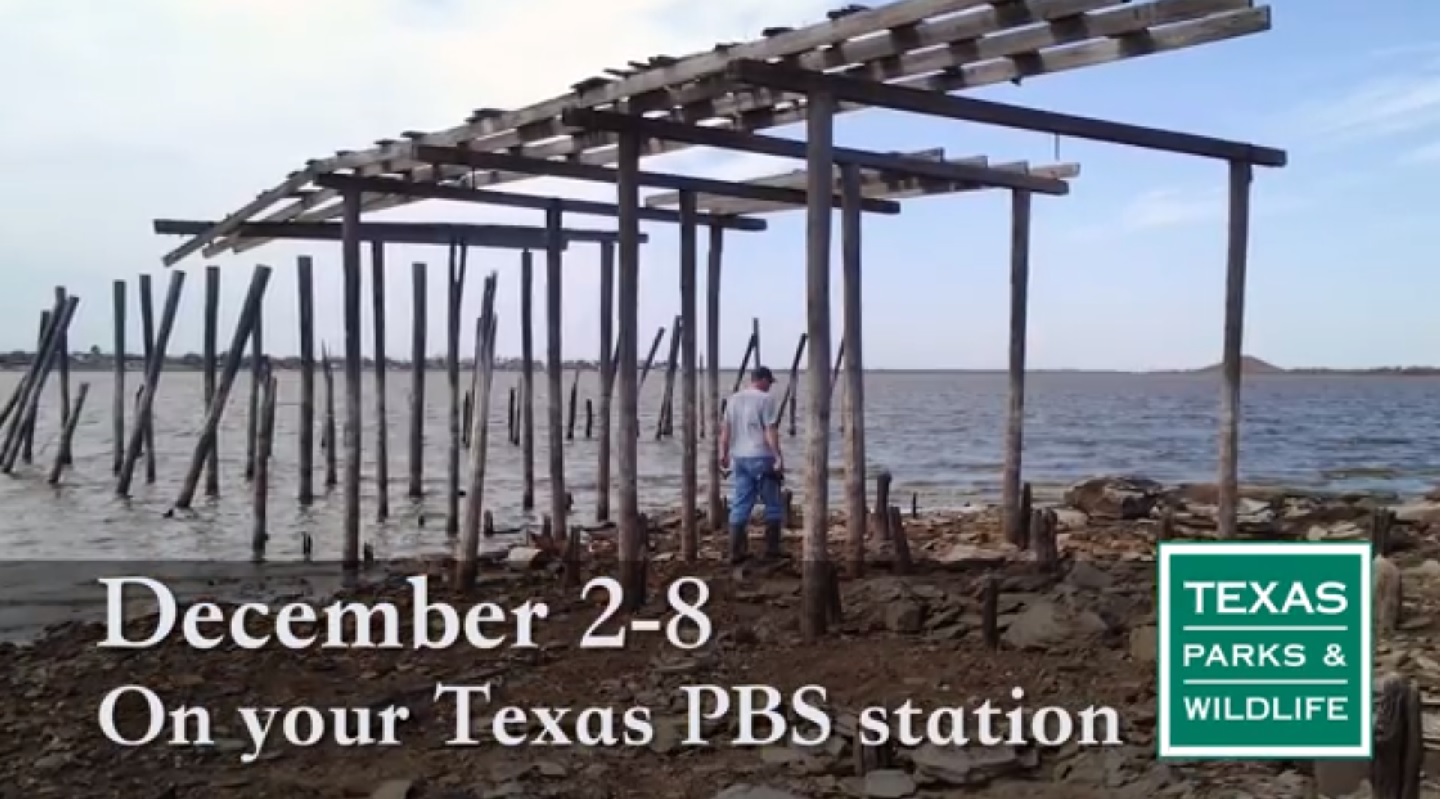
Getting in the water is just a great thing to do. So, we’re going to head off to Lake Livingston State Park and follow a family that’s been coming for years, and one of the things they like to do is spend time around the water fishing.

Just let it go, or you can like hold it, and throw it and let it go at the same time. (reel) Nice cast! Oh, man! My hook came off. (laughter)

Another park we’ll go to is Lake Somerville State Park. It’s got a pretty good sized lake there good for boating, fishing, water skiing; but one of the really relaxing ways to enjoy the park and the water is with a canoe trip.

(canoe paddle in water) The best float trips that we have are going to be really small groups. We see lots more wildlife.


And, finally, we end up at one of my favorite state parks, Inks Lake State Park. One of the main draws there is the swimming hole.

(yell and splash) One of the unique areas of this park is Devil’s Waterhole. I think a lot of people like to jump off those cliffs, but that’s what makes it fun. (splash)


So, if it’s a little too hot out there for you, we’ll give you some pointers on places to go and enjoy the water in Texas State Parks.

Go to passporttotexas.org and find a link to PBS stations that air the series.

That’s our show… For Texas Parks and Wildlife…I’m Cecilia Nasti.
_____________________________________________________

CLICK HERE for a list of PBS stations that air the series.

 
icon for podpress  TP&W TV--State Park Water Recreation: Play Now | Play in Popup | Download

TP&W TV–Urban Biologists

Monday, June 9th, 2008

Passport to Texas from Texas Parks and Wildlife

Not all wildlife is in the wilderness, and this month Texas Parks and Wildlife television series viewers meet urban biologists. Writer / producer, Alan Fisher gives us the scoop.

You know, when you think about Texas wildlife, you probably don’t really think about the urban—the big cities: Dallas, Houston, El Paso. But, in fact, there are half a dozen biologists who are assigned to these areas in the state. And, it’s very different depending on what city you’re talking about.

In Houston, I met a biologist who was responsible for helping the city develop an urban bat colony as a tourist attraction. There is a large number of bats that live under a downtown bridge, and people are now getting to go watch them fly out in the evenings and learn more about bats.

There are 250-thousand to 300-thousand bats that are under the bridge; we think some do migrate, but there are some that stay.

In El Paso, I was out with a biologist there, who got a call about a mountain lion sighting and had to go investigate.

(door slams shut, truck engine starts) We definitely have mountain lions. So, that’s why I go to investigate.

If you live in an urban area of Texas, while we encourage you to get outside the city limits, you don’t necessarily have to, to see wildlife. It’s true. There are a lot of viewing opportunities right in your own backyard.

The Texas parks and Wildlife TV series airs on PBS stations statewide. Check your local listings.

That’s our show… For Texas Parks and Wildlife…I’m Cecilia Nasti.
 
icon for podpress  TP&W TV--Urban Biologists: Play Now | Play in Popup | Download

TP&W TV May Feature: Mystery of the Tarpon

Monday, May 12th, 2008

Passport to Texas from Texas Parks and Wildlife

The mystery of the tarpon is a story you’ll see this month on the Texas Parks and Wildlife television series– writer/producer Ron Kabele.

The funny thing about a lot of young anglers is, there’s so few tarpon left in the gulf of Mexico that a lot of them don’t even know what a tarpon looks like. But, it’s a big silver fish; when I say big, I mean ninety to two hundred and fifty pounds.

Just as recently as fifty years ago, it was a very prominent thing to see in the Gulf of Mexico. But since then, their population has just bottomed out, and the thing is, scientists just don’t know why. So, they’ve been doing research the last few years. It’s a program where anglers and scientists work together– anglers to catch the tarpon, so that the scientists can do some experiments, like what conditions do they need to reproduce. They just don’t know why the tarpon aren’t reproducing—it’s not because they’re over fished—it’s because there’s something going on in the gulf that’s causing the population to crash.

The producer who did the story went out a number of times—they never saw a tarpon. They’re really hard to catch now because there aren’t that many left. One of the biologists said, in the course of the story, that they didn’t want to happen to the tarpon to what happened to say the Attwater’s prairie chicken, where the population gets just so low that bringing the species back would be virtually impossible. And that’s what they’re trying to circumvent with this research.

The series airs on PBS stations statewide.

That’s our show for today… For Texas Parks and Wildlife…I’m Cecilia Nasti.

 
icon for podpress  TP&W TV May Feature: Mystery of the Tarpon: Play Now | Play in Popup | Download