Archive for the 'Food' Category

Tilapia: Detrimental and Delicious

Thursday, July 26th, 2018
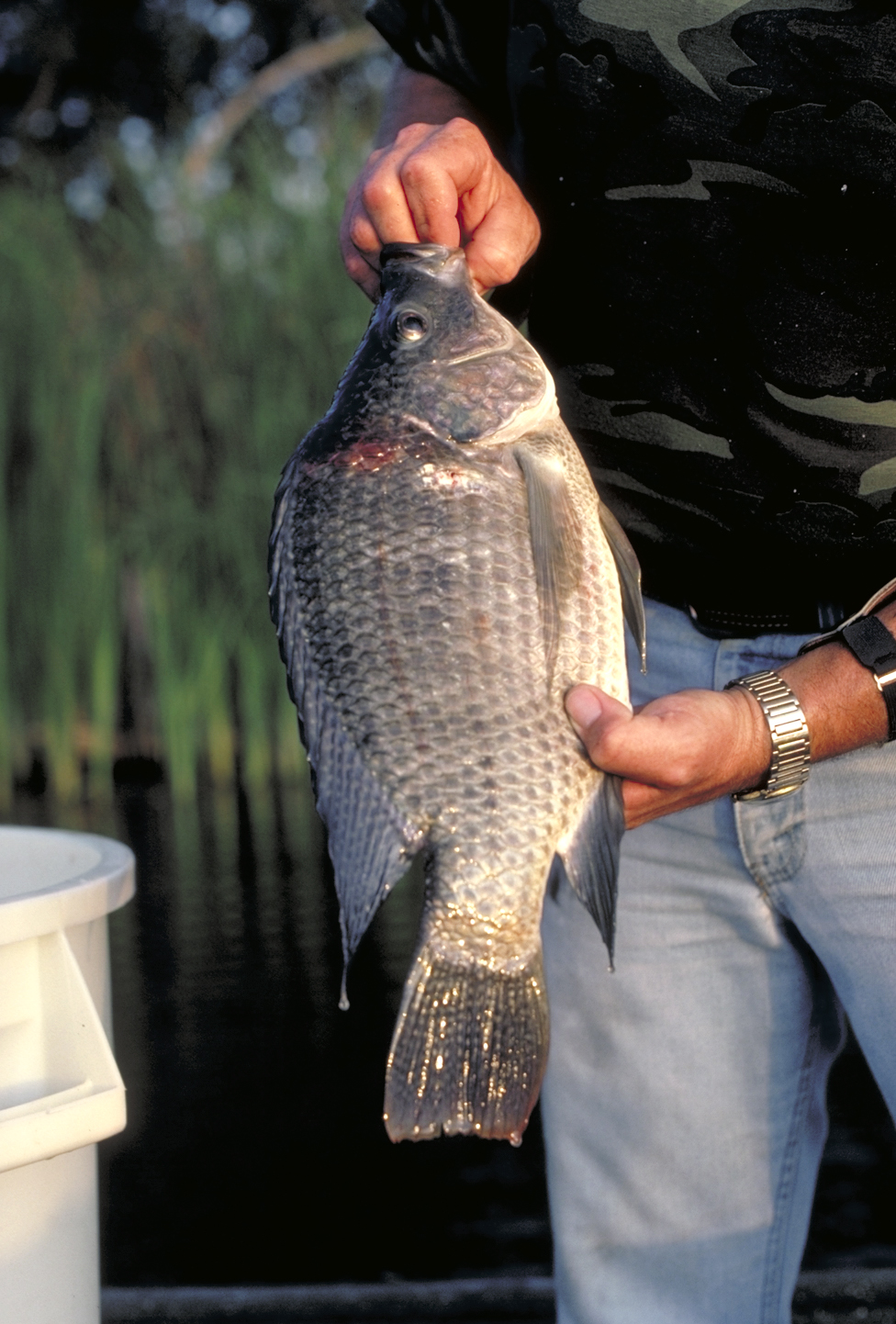
Blue tilapia

Blue tilapia

This is Passport to Texas

When you hear the word tilapia, you may think of a savory meal with lemon butter sauce, but you probably don’t think of the term “invasive species.”

Tilapia are great to eat. They’re raised as a food fish, and they’re quite tasty. They’re quite popular in restaurants. But the problem is when they’re in our natural waters they are upsetting the ecosystem.

Originally established in fish farms as a food source, Tilapia eventually found their way into Texas waters.

Gary Garrett, a former Texas Parks and Wildlife fisheries biologist, says tilapia pose a threat to large mouth bass and other native species.

They build big pit nests and in doing that they stir up a lot of the sediment. And it’s been shown, for example, with large mouth bass, all that sediment stirred up and settling back down will often kill largemouth bass eggs.

And because of the delicate nature of the food chair, this behavior has the potential of damaging the entire ecosystem.

TPW has regulations for tilapia, but because they’re widespread statewide, they are difficult to control. But if you like to fish, Garrett says, there’s one way you can help.

Don’t throw them back. If you catch them, keep them.

So, next time you reel in tilapia, turn on the grill and get cooking.

The Sport Fish Restoration Program supports our series.

For Texas Parks and Wildlife…I’m Cecilia Nasti
Can Eating Insects Save the World?

Tuesday, July 24th, 2018

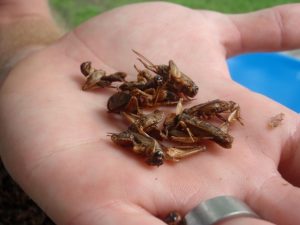
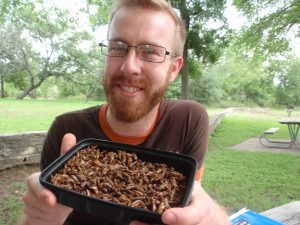
Little Herds’ Robert Nathan Allen with toasted crickets.

This is Passport to Texas

Experts predict the world’s population will increase to nine billion people by 2050. That’s two billion more mouths to feed. And Robert Nathan Allen says an eco-friendly protein to help nourish the masses is insects.

Compared to say a cow, where we can only really eat about forty percent of the cow, with insects; we can eat most if not all of them.

Allen founded the nonprofit Little Herds to educate the public about insects as a nutritious alternative food source. Insects are high in protein and rich in fiber micronutrients. Currently 70% of agricultural land supports meat production, which limits the industry’s future growth.

So, with insects, we can raise them in a modular fashion vertically on a fraction of the land as traditional livestock, with a fraction of the water, with a fraction of the feed, and end up with more nutritional valuable protein.

It’s a huge leap from eating burgers to bugs. For the brave ones, Allen recommends obtaining edible insects from farms that raise them for human consumption.

That way we can assure that they’re raised in a hygienic, safe, clean environment. We can make sure that there’s no risk of diseases and parasites, and we can make sure tht they’re eating a clean, wholesome diet.

According to a UN report, over 2 billion people worldwide already supplement their diet with insects. Intrigued? Learn more about edible insects at littleherds.org.

For Texas Parks and Wildlife, I’m Cecilia Nasti.

Insects–They’re What’s for Dinner

Monday, July 23rd, 2018

A handful of tasty, toasted crickets.

This is Passport to Texas

Bugs have a way of showing up just as you unpack your picnic. But what if you welcomed their presence? No, not as guests… as snacks.

They really do have a crunch [crunches]; really similar to roasted nuts.

That’s Robert Nathan Allen, who was just then crunching a toasted cricket. He’s founder of the Austin, Texas nonprofit Little Herds.

And we focus primarily educating the public and particularly children about edible insects and why and how we can adopt them into our diet.

We call eating insects as food Entomophagy; it’s commonplace among 80% of the world’s population. But we westerners steer clear.

Once western societies started becoming very agriculturally based, particularly in northern climates, it just became ingrained in our society that insects are dirty. And so, that idea has continued to be passed down generation to generation in these western cultures. Whereas in the tropical environments where the habit has continued, it’s just another food source.

The thing is, we already eat more than 400 insects a year without knowing it. Allen says by intentionally switching animal protein for insect protein, we can improve the environment and our nutrition. More on that tomorrow.

Our show receives support in part from RAM Trucks: built to serve.

For Texas Parks and Wildlife, I’m Cecilia Nasti.

Quail Conservation License Plate

Friday, June 29th, 2018

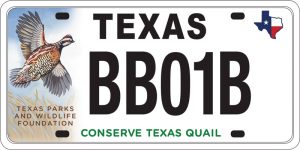
Conservation license plate supporting quail conservation in Texas.

This is Passport to Texas

As a teen, Kelly Thompson of Fort Worth, cherished time outdoors hunting quail with his friends. It usually involved walking with bird dogs through a variety of habitats, before ever seeing a bobwhite.

Sometimes you won’t see a quail all day.

Even when the young men never saw quail, Kelly says the fellowship and time in nature was worth it. As it is today.

Years ago, many people measured a successful hunt by how many birds you got in your bag. Today we measure success by how many birds you found—not at all how many you shot. As a matter of fact, we’re so much more thoughtful about the conservation aspects of quail than we are about the harvest of quail. It’s much more fun to find them than to shoot them.

Yet, quail are declining in Texas, and Kelly wants to reverse the trend. As a member of the Texas Parks and Wildlife Upland Game Bird Committee, he and others worked to get a quail license plate added to the conservation plate collection.

Specialty license plates cost $30; $22 would go to the Texas Parks and Wildlife Foundation [through TPWD] for quail conservation efforts in Texas, including: habitat conservation, education and some small-scale habitat projects. The funds will be directed by a committee of representatives from quail-related organizations, and administered by the Texas Parks and Wildlife Foundation.

View the new quail plate at conservationplates.org.

For Texas Parks and Wildlife…I’m Cecilia Nasti.

Crack Down on Illegal Fish Trade

Monday, June 25th, 2018

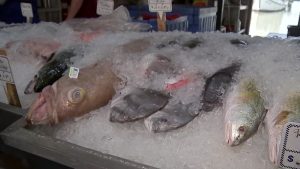
Texas Game Wardens are cracking down illegal fish trade in markets after nearly 20 area fish markets and restaurants were cited for buying illegal seafood. Image: KTRK

This is Passport to Texas

Houston has a dynamic culinary scene, where seafood is on the menu. In April, Texas Game Wardens wrapped up a two-year covert operation by issuing more than 150 citations to fish markets and restaurants in the Houston area that illegally purchased game fish from undercover officers.

Over the two year period, we approached approximately 40 businesses in the Houston area—restaurants and markets. And I think the final number was 19 purchased from us. So, about 50% purchased.

Captain Josh Koenig oversees the Game Warden’s Special Ops Criminal Investigations Division. During the two-year operation, wardens in plain clothes offered to sell more than a dozen different Texas saltwater species to seafood markets and restaurants along the upper Texas coast.

The black market fish market is definitely a global issue. The legal folks who are doing everything correct, it could put a damper on them; these illegal fish can change the market, and affect you then when you in turn go to buy fish. So, trying to slow down or stop the black market fish trade is a very high priority.

Wardens received tips from sources identifying businesses known to purchase fish under the table. They began approaching them using product seized from other cases. These covert investigations are ongoing.

That’s our show, brought to you in part by Ram Trucks…built to serve.

For Texas Parks and Wildlife…I’m Cecilia Nasti.