Archive for the 'Habitat' Category

More Funding to Fight Invasive Species

Friday, May 13th, 2016
Aquatic imvasives

Aquatic imvasives

This is Passport to Texas

Record funding approved by the Texas Legislature is launching new fronts in the war on aquatic invasive species.

With $6.6 million dollars in appropriations, this year and next, Texas Parks and Wildlife will ramp up an unprecedented effort to control and stop the spread of aquatic invasive plants and creatures.

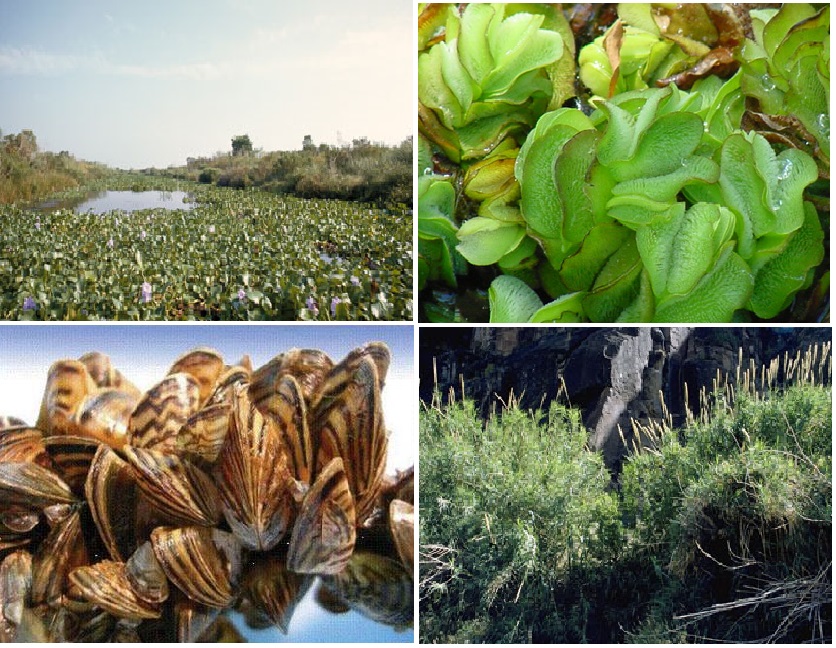
Some of the aquatic invasive species that will receive the agency’s attention include: giant salvinia and zebra mussels covering Texas lakes, to giant reed and salt cedar smothering rivers and streams, to exotic fish that compete with Texas natives and alter natural ecosystems.

One major category of work is Aquatic Invasive Plant Management—projects focused on management of aquatic invasive plants on public waters to enhance boater access for recreation, and management of riparian invasive plants in target areas to improve water quality and quantity.

In Texas, the economic impacts of aquatic invasives are far-reaching, costing the state billions of dollars annually, including threatening to undermine a recreational freshwater fishing industry worth more than $4 billion-dollars.

That’s our show. The Texas Parks and Wildlife Foundation supports our series and helps keep Texas wild with support of proud members across the state. Find out more at tpwf.org

For Texas Parks and Wildlife…I’m Cecilia Nasti
Enchanted Rock and Rover

Monday, April 18th, 2016
Enchanted Rock

Hiking Enchanted Rock.

This is Passport to Texas

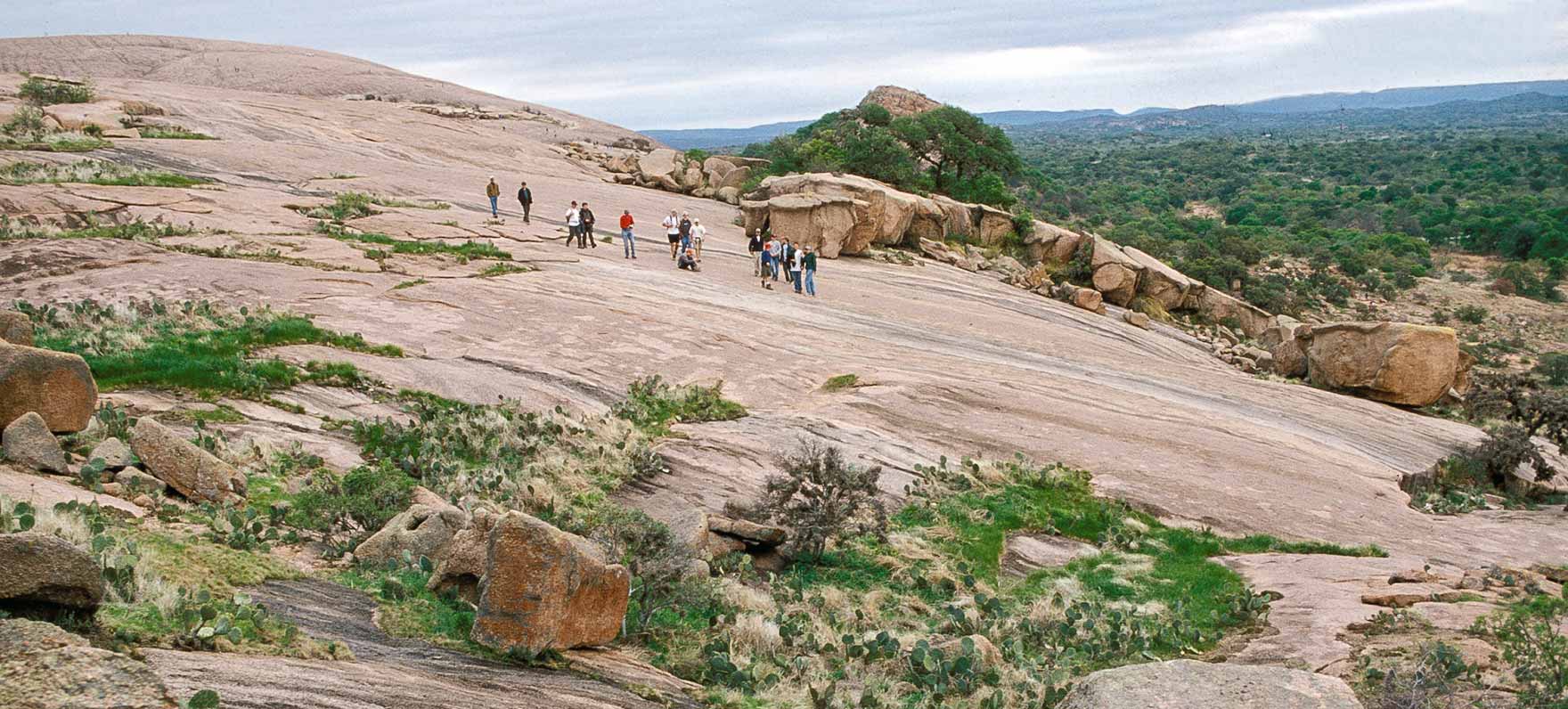
You’ll find fragile ecosystems called vernal pools on the summit of Enchanted Rock.

They’re little formations—weathering pits that have formed over the years—and they’ll collect rainwater. And there are little lifeforms that grow in them: fairy shrimp and other invertebrates. And, it’s their own little, small ecosystem in there.

Dough Cochran is superintendent at Enchanted Rock State Natural Area in the Texas Hill Country.

A scientist was doing some tests on invertebrates – testing the different kinds of algae that were present in the water. And he notices over the past three or four years that blue-green algae had been increasing in these pools of waters. And that’s an indication of pollution.

Pollution caused unintentionally by visitors who bring their dogs to hike the summit with them, and then interact with the vernal pools.

We see a lot of pets and humans going in these waters and wading through them, drinking out of them (the people don’t drink out of them, but the pets do) and in some cases they’re doing things they’re not supposed to be doing in there.

Animal waste that seeps into the pools raises the nitrogen level of the water, and disrupts ecosystem stability.

Tomorrow, learn of a new regulation intended to help nature regain her balance on Enchanted Rock.

For Texas Parks and Wildlife…I’m Cecilia Nasti

The Birding Classic for Beginners

Monday, April 4th, 2016
The Great Texas Birding Classic

The Great Texas Birding Classic

This is Passport to Texas

For those who don’t know how the various birdwatching tournaments of The Great Texas Birding Classic unfold…

Groups of people go out and birdwatch for a half a day or a day and even as much as a week. And, they go out with their friends and family to see how many birds they can identify in a short amount of time, and the team with the most species on their list wins. Except for one tournament.

That one tournament is The Big Sit. Shelly Plante is the nature tourism manager at Texas Parks and Wildlife, and coordinates the Great Texas Birding Classic, now in its 20th year.

The Big Sit is a fun one. In the Birding Classic, most of the tournament categories, everyone has to ID a bird for it to go on a list, but not the Big Sit.

In the Big Sit, Plante says only one team member has to ID a bird for it to make the list, either by sight or sound.

It’s the perfect event for the new birder. You can have a team with all people who are beginning, and then they just have to be sure they have a ringer or two on their team who can ID the bird for them for it to go on their list. And it turns into a really fun day for people.

The Great Texas Birding Classic is April 15 through May 15th. Team registration is closed for this year, but you can stay on top of the action at birdingclassic.org.

That’s our show for today… Funding provided in part by Ram Trucks. Guts. Glory. Ram

For Texas Parks and Wildlife…I’m Cecilia Nasti
Citizen Scientists Take Biological Inventories

Monday, March 21st, 2016
Getting up close and personal with Texas critters.

Getting up close and personal with Texas critters.


This is Passport to Texas

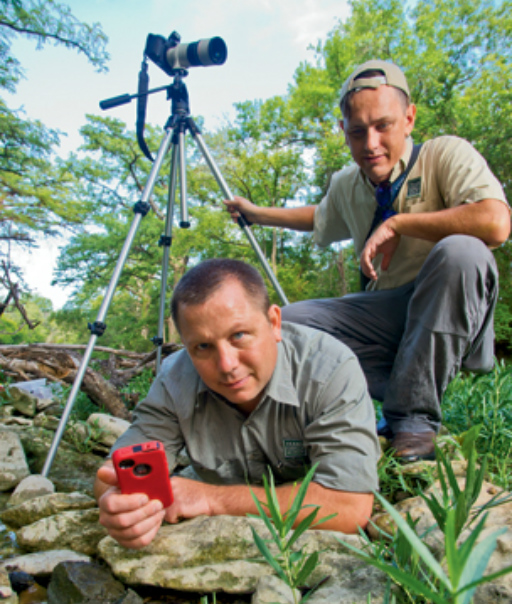
With the help of biological inventory teams of citizen scientists, Texas Parks and Wildlife monitors plants… herps…

Which are the amphibians and reptiles…

…birds and invertebrates…

…and that would mainly be: butterflies, dragonflies, beetles, bumblebees and such….

…in Texas’ 8 wildlife districts; Biologist Marsha May oversees the program. She says she’s recruiting experts statewide to join these monitoring teams.

Mostly, we’re looking at hobbyists; people who have joined herp societies. They know their herps. As well as birders. There’re people involved in Audubon Society that know their birds. So those are the types of people [as well as those with expertise in native plants and invertebrates] that we’re looking for, for these projects.

These biological inventory teams will monitor species on private land.

So, my plan is to start with organizing teams throughout the state. And once we get good, solid teams in place, then we’re going to go out there and open it up to the landowners, and let them know that these teams are available to come and do surveys on their property.

Knowing what’s on the land helps landowners become better stewards. Find out how to volunteer when you log visit the Nature Trackers page on the TPW website.

Funding provided in part by Ram Trucks. Guts. Glory. Ram For Texas Parks and Wildlife…I’m Cecilia Nasti.

Texas Master Naturalists

Wednesday, March 16th, 2016


Become a Texas Master Naturalist, http://txmn.org/

Become a Texas Master Naturalist, http://txmn.org/

This is Passport to Texas

They say you never forget your first love. For writer Sheryl Smith Rogers, her first love had eight legs.

Spiders are my first love, and from there I grew into plants and animals.

Eager to fully understand the natural world around her, Smith Rogers completed Texas Master Naturalist training.

I’m with the Highland lakes chapter, which is based out of Burnet. So you learn about your own ecosystems in your region. I’m learning about the plants that are indigenous to this area. Whereas, if you live on the coast, you’ll be learning about those kinds of plants. So, we’re all learning what’s important to our
area.

Trainees learn about living things in their ecosystem, as well as their region’s geology, hydrology and more. After receiving certification, Smith Rogers says Master Naturalists volunteer in their communities where needed.

Volunteers go to ranches and survey the plant species, and they offer land management advice. In a city, volunteers might go into a city park and create a butterfly garden. For instance, here in Blanco – at Blanco State Park – the Master Naturalists help put on program every May for third graders. They do so
many different things [laughs].

Find details on becoming a master Naturalist on the Texas parks and Wildlife Website.

For Texas Parks and Wildlife … I’m Cecilia Nasti.