Archive for the 'Habitat' Category

Rio Grande Turkeys

Thursday, March 10th, 2016
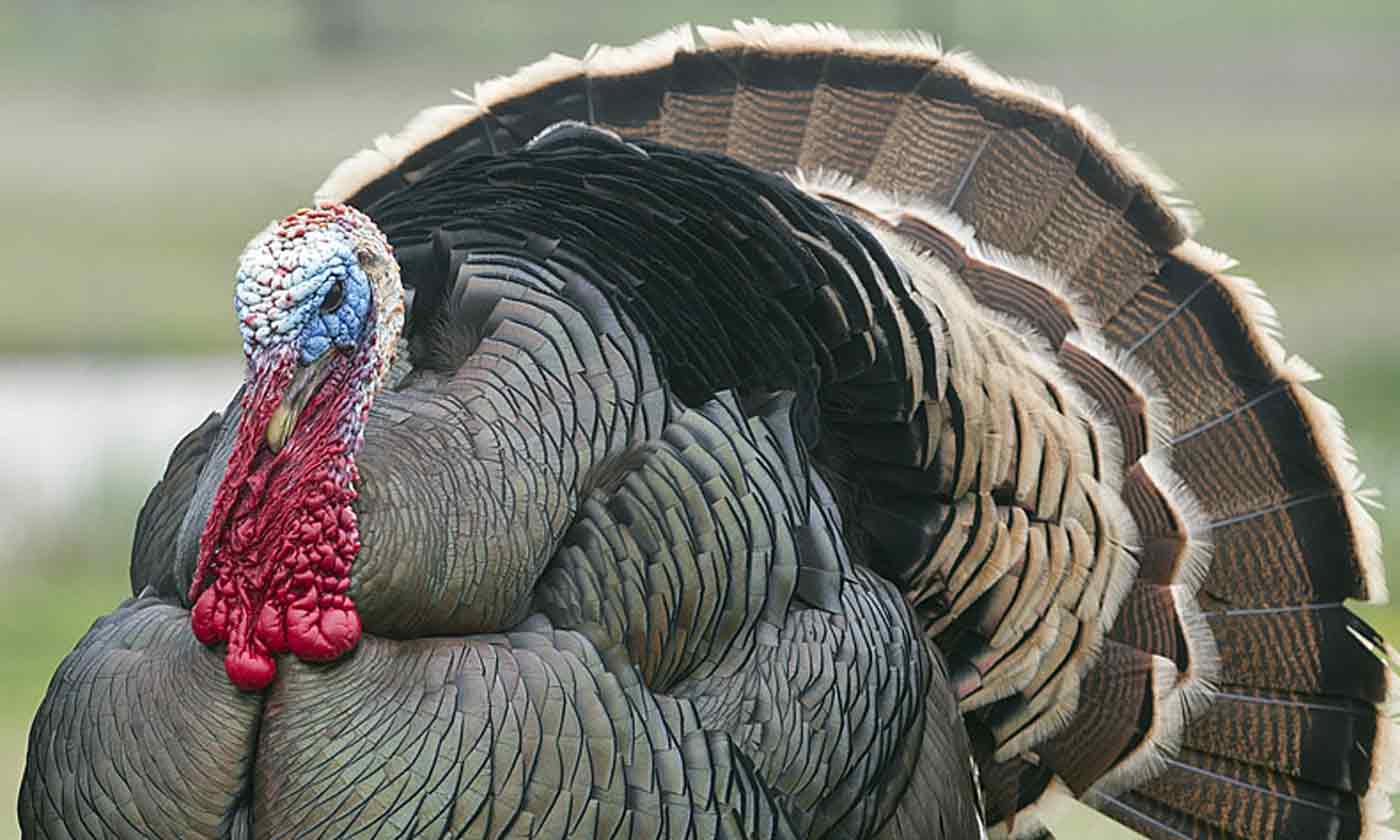
Rio Grande Gobbler

Magnificent Rio Grande Gobbler

This is Passport to Texas

Everything’s big in Texas – including the Rio Grande turkey population.

The Rio Grande is really a neat bird from a Texas standpoint, because Texas has, by far, most of the Rio Grandes in the country. There are Rio Grande turkey populations in Okalahoma and Kansas as well, but they’re very small compared to the Texas population.

Former upland game bird specialist T. Wayne Schwertner currently serves as Assistant Professor of Wildlife, Sustainability, and Ecosystem Sciences at Tarlton State University.

So, the Rio Grande turkey is a uniquely Texas bird. It’s adapted to the arid conditions of the western part of the state, to the brush lands and prairies. Versus the eastern turkey which is much more adapted to the forests of east Texas and the east United States.

Spring Rio Grande season varies by zone, with the South Zone kicking off March 19 and the North April 2. Hunters will find the bulk of the birds west of I-35.

The Rio Grandes occupy the central half of the state, from about I-35 to the Pecos River, and all the way from the Panhandle down to the Rio Grande Valley.

The Wildlife Restoration Program supports our series and works to increase hunting opportunities in Texas.

For Texas Parks and Wildlife…I’m Cecilia Nasti.
Prescription to Burn

Thursday, February 18th, 2016
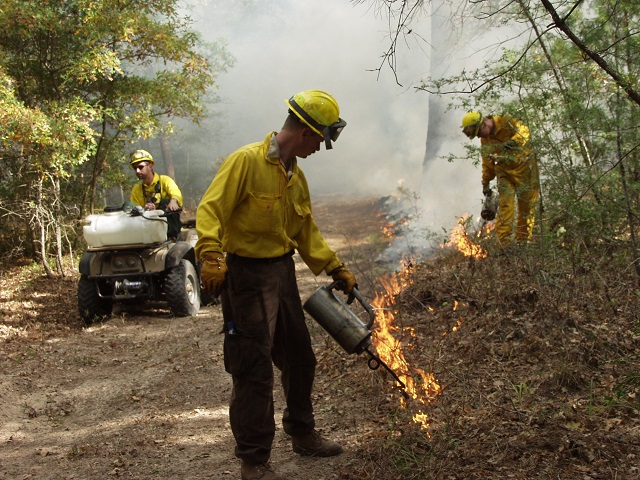
Prescribed burn underway.

Prescribed burn underway.

This is Passport to Texas

Man mimics nature when he uses fire as a land management tool. One way to use fire is through controlled burning; another way is to use prescribed fire.

According to David Riskind, director of natural resources for state parks, there is a difference between the two.

Controlled burning is a term that people use that you start at part A, and you burn until you get to part B. Professional land managers use the term prescribed fire because you have specific objectives, you have specific outcomes, you burn under very specific conditions. And so a prescription is a planning document… you lay everything out ahead of time and you then implement it with very specific objectives in mind.

Riskind adds that those objectives usually have to do with land management.

There can be a whole series of objectives. From very simple things like fuel load reduction. You can have specific habitat objectives…to change the vegetation structure and composition to support waterfowl, or to support antelope, or lesser prairie chickens…or Houston toads for that matter.

Learn more about prescribed burns on the Texas Parks and Wildlife website.

The Wildlife and Sport Fish Restoration Program supports our series and works to increase fishing, hunting, shooting and boating opportunities in Texas.

For Texas Parks and Wildlife…I’m Cecilia Nasti.
TPW TV: Oil Spill Team

Friday, February 12th, 2016
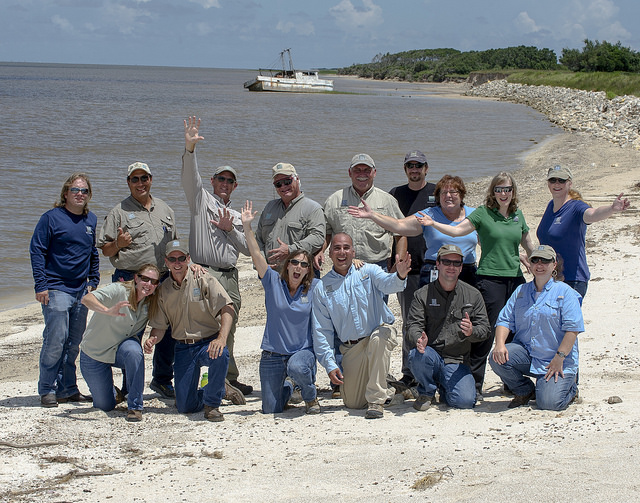
TEXAS CITY Y OIL SPILL RESPONSE TEAM GROUP PHOTO

TEXAS CITY Y OIL SPILL RESPONSE TEAM GROUP PHOTO


This is Passport to Texas

On March 22nd, 2014 two vessels collided in the Houston ship channel. And that’s when the TPW Oil Spill Response team sprang to action.

[Winston Denton] There was a timing issue with an incoming inbound ship and a barge and tug crossing the channel.

[Steven Mitchell] The crew members started reporting that they had oil leaking from the barge.

[Rebbecca Hensley] We had about 170,000 gallons of fuel that was spilled into the ship channel.

[Don Pitts] Any large spill like this, we get notified by the Coast Guard or the General Land Office to come and assist in the role of Natural Resource Advisors.

[Heather Biggs] Since it was a large event, we did pull people from Austin, from Corpus, even down from Brownsville we had folks coming in to help us.

[Angela Schrift] We coordinated, figured out what we’d need. Got the materials together and got down to the coast as soon as we could.

Meet the team, and find out what happened next, when you view their story next week on the Texas Parks and Wildlife TV Series on PBS.

For Texas Parks and Wildlife…I’m Cecilia Nasti.
___________________________________________________

2016 Crab Trap Clean-up

Thursday, February 11th, 2016
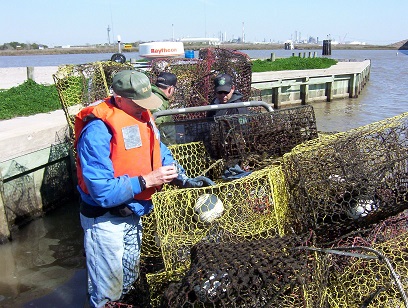
Derelict crab traps collected from Chocolate Bayou.

Derelict crab traps collected from Chocolate Bayou.

This is Passport to Texas

Lost and abandoned crab traps become hazards to marine life in Texas bays.

We are particularly concerned because of the ghost fishing effects; they continue fishing unmaintained.

When something gets in the trap and dies, it acts as bait, attracting more marine life, which in turn suffers the same fate. Art Morris coordinated the annual cleanup of derelict traps during his time with Texas Parks and Wildlife.

And what we do once a year in February, is get volunteers together up and down the coast, and we try to remove all those traps that have been lost, or vandalized or whatever that are potentially ghost fishing.

Volunteers have removed more than 31-thousand traps in the cleanup’s 15 year history. The cleanup traditionally starts on the third Friday of February and continues for 10 days.

We don’t have any kind of salvage laws in Texas, and once you put out a trap—it’s your property and nobody is supposed to touch that. So, in order to get to these derelict traps, we have a legislative, mandated closure.

This mandate gives citizens permission to remove derelict traps from their favorite fishing holes during that 10-day period. Find details volunteering for this year’s cleanup on the Texas Parks and Wildlife website.

The Sport Fish Restoration Program supports our series.

For Texas Parks and Wildlife…I’m Cecilia Nasti.
Rules for Tree Planting

Wednesday, February 10th, 2016
How to Plant and Where to Play Your Trees.

How to Plant and Where to Play Your Trees.


This is Passport to Texas

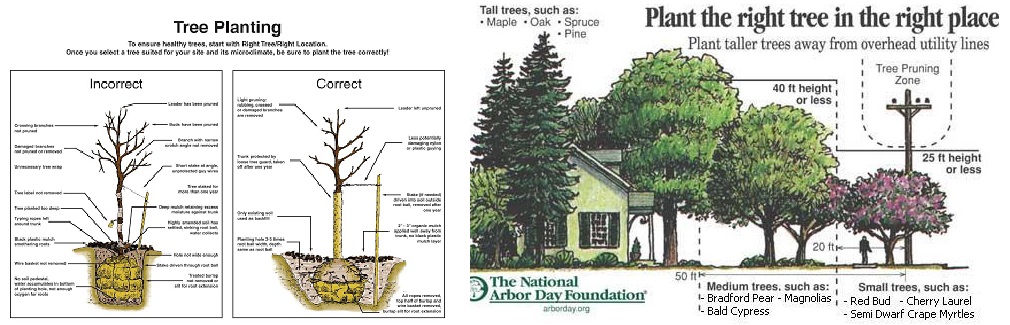
Trees are habitat for wildlife. And if you’re adding new trees to your landscape, you need to know the rules.

People frequently ask how close they can put a tree to the house, because shade on the house obviously is a huge energy savings. The general rule of thumb is you go no closer to the house than the eaves are high. So, if you measure up to the eaves of your house, and it’s ten feet high, then you need to get ten feet back from the house.

Scott Harris, a certified arborist in Austin, recommends planting only native specimens.

You always want to plant your trees at the exact level they were in the pot. Don’t dig a big deep hole, dig a big wide hole. Always use the same soil you took out to backfill. But, you can put your compost underneath the mulch, and then all of that organic goodness will dribble down in the way that nature intended.

By watering infrequently and deeply, we can help new trees develop extensive root systems.

If you just have a little bit of water in one area, that’s where the roots are going to go. But if you water very deeply, it’ll spread into the surrounding soil, and the roots will follow that moisture out.

Strong root systems help trees remain strong and withstand drought.

That’s our show…For Texas Parks and Wildlife…I’m Cecilia Nasti.
