Archive for the 'Conservation' Category

Questions About Monarch Butterflies

Tuesday, February 20th, 2018
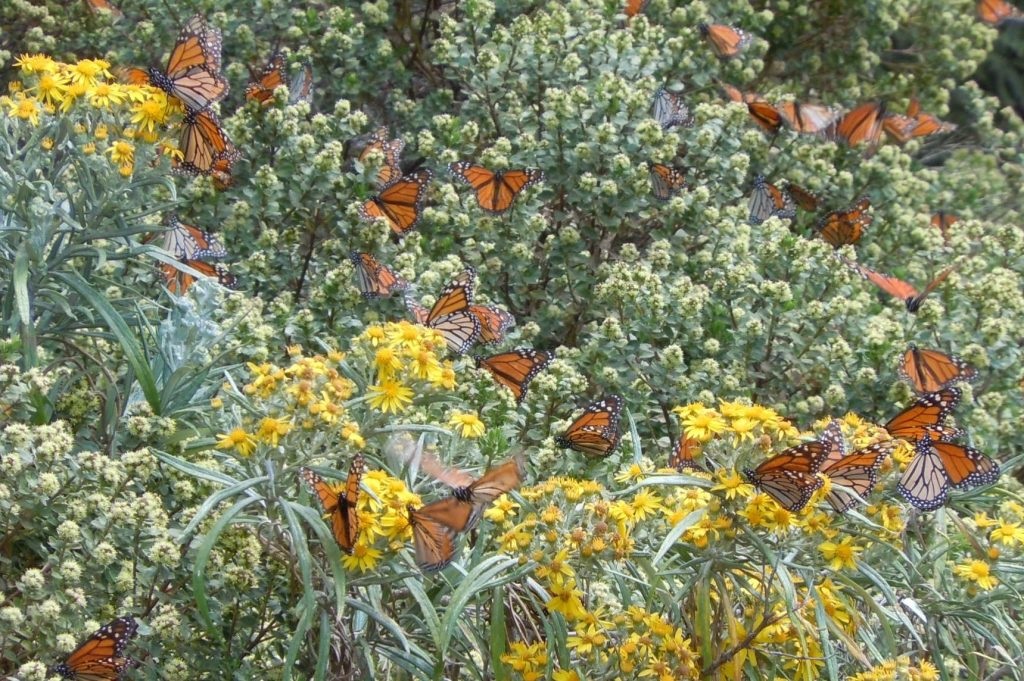
Monarchs

Monarchs-Photo by Monika Maeckle

This is Passport to Texas

Here’s what you need to know about scientific discovery: it starts with a question. And that leads to—not answers —not immediately, anyway. It leads to more questions.

They just keep coming.

Ben Hutchins, the state’s invertebrate biologist, has been asking a lot of questions lately about monarch butterflies.

That’s right. The more you know, the more you realize you don’t know. And so, many of us that are involved in monarch conservation have been to a number of conferences, meetings, workshops, symposia. And a big emphasis is on all of the questions that we still have about monarch biology. I think the biggest question, particularly, for conservationists for natural resource managers is: what can we do to make the landscape good monarch habitat. How can we be good stewards of the land to make sure monarchs are getting what they need?

See what I mean?

We have lots of questions about how particular land management practices, like using controlled burns, or reseeding with native plants—how those practices can best be used to produce good monarch habitat. We have lots of questions about patch size, too.

And if your next question is: what does Ben Hutchins mean by patch size? You’ll have to listen next time to find out.

The Wildlife Restoration Program supports our series.

For Texas Parks and Wildlife…I’m Cecilia Nasti
Feel the (Prescribed) Burn

Monday, February 19th, 2018
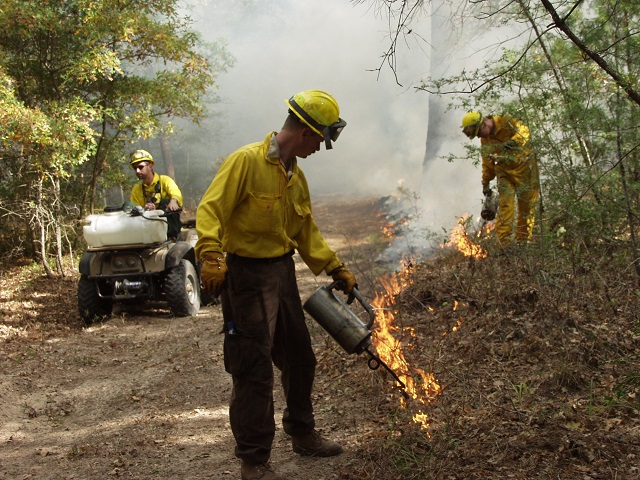
Prescribed burn underway.

Prescribed burn underway.

This is Passport to Texas

Man mimics nature when he uses fire as a land management tool. He does this with controlled burning, and with prescribed fire.

David Riskin, director of natural resources for state parks, says there is a difference between the two.

Controlled burning is a term that people use that you start at part A, and you burn until you get to part B. Professional land managers use the term prescribed fire because you have specific objectives, you have specific outcomes, you burn under very specific conditions. And so a prescription is a planning document… you lay everything out ahead of time and you then implement it with very specific objectives in mind.

Those objectives naturally have to do with land management, as well as a range of various objectives a landowner may hope to achieve.

There can be a whole series of objectives. From very simple things like fuel load reduction. You can have specific habitat objectives…to change the vegetation structure and composition to support waterfowl, or to support antelope, or lesser prairie chickens…or Houston toads for that matter.

Learn more about prescribed fire on the Texas Parks and Wildlife website.

The Wildlife Restoration Program supports our series.

For Texas Parks and Wildlife…I’m Cecilia Nasti
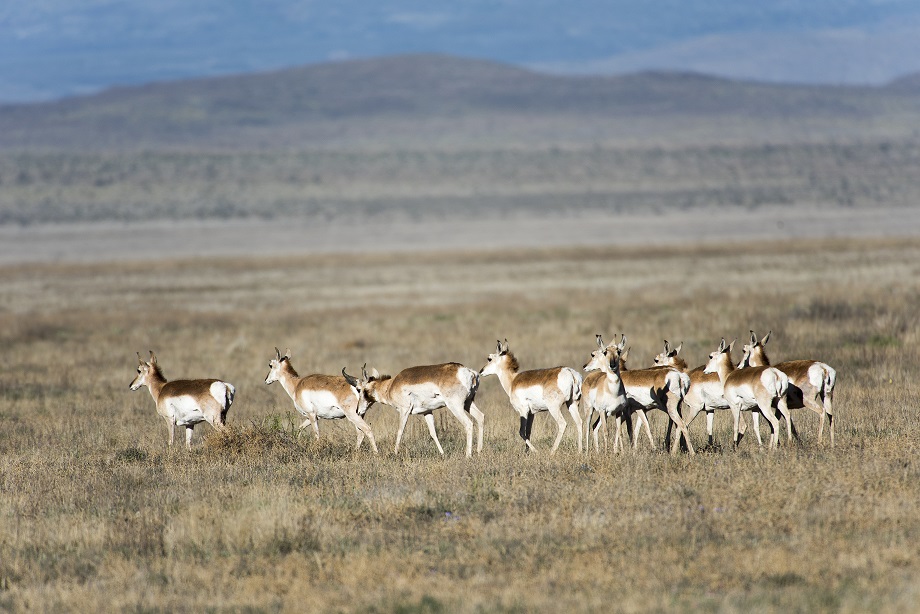
Pronghorn Restoration and Rural Economy

Wednesday, February 14th, 2018
Pronghorn Antelope

Pronghorn Antelope

This is Passport to Texas

Wildlife biologist Shawn Gray finds pronghorns fascinating, and hopes you will, too.

The pronghorn is a unique mammal of North America; it’s the only one found in its family. It’s the fastest mammal in North America. It’s a big game species.

Gray is the pronghorn program leader and oversees the Pronghorn Restoration Project. Because it’s is a game species, hunting them should pick up as their population grows, thus benefitting local communities.

In 2008, we issued probably like 800 buck only hunting permits. And, shoot, in 2009 or 10, we were issuing less than 100. And there’s a lot to that. Not only is it the money that they get for trespass access for hunting, but the hunters come into the local communities and spend time and spend money. So, there’s a lot of those economic impacts as well with a much reduced pronghorn population out here.

The Trans-Pecos pronghorn population dipped below 3K in 2012, and Gray says through translocation and natural reproduction, they hope to see the number rise to 10K.

Most of the local communities in the Trans-Pecos really miss the pronghorn. And they really want to see pronghorn back on the landscape at numbers that they are used to seeing.

With the continued success of the restoration project, they may get their wish.

The Wildlife Restoration program supports our series and funds pronghorn restoration in Texas.

For Texas Parks and Wildlife…I’m Cecilia Nasti.

Re-homed on the Range

Tuesday, February 13th, 2018
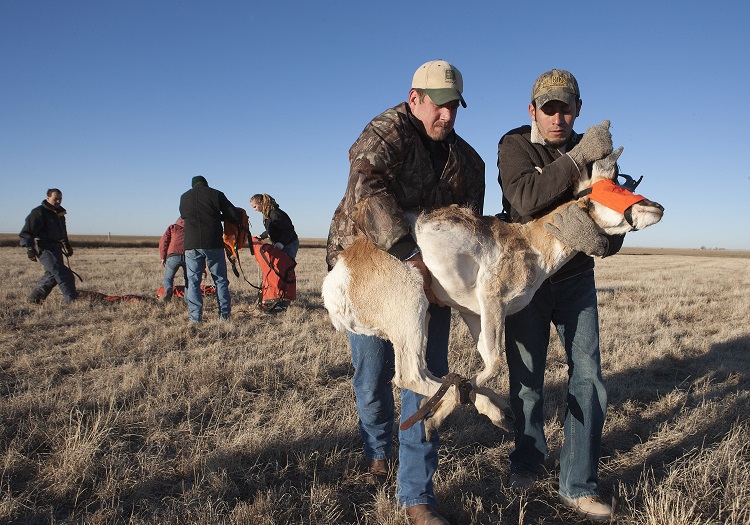
Pronghorn capture and release.

Pronghorn capture and release.

This is Passport to Texas

Wildlife biologist, Shawn Gray, stays busy most days in his role as Texas Parks and Wildlife pronghorn and mule deer program leader in the Trans Pecos.

I get to oversee the management and research for the two species for Texas Parks and Wildlife.

This includes orchestrating the restoration of these species to their native range. Last year, Texas Parks and Wildlife Department successfully relocated 109 pronghorn.

Our surplus populations are located in the Northwest and Northeast Panhandle. We take animals from healthy populations there to boost our local populations in the Trans Pecos that have in recent years seen historic decline.

Texas Parks and Wildlife worked with partners to redistribute the animals.

Translocation has been one of the management tools we’ve been able to do to help those populations rebound. There’s a whole suite of things that we do to improve populations. And, of course, we always need help from Mother Nature to make all those things work for us.

Drought was a leading factor in the pronghorn’s decline in the Trans Pecos, but Gray says the reasons are more complex than that alone. After trapping the animals, each received a health checkup; some were fitted with radio collars.

Through time and our management practices, the populations have been responding well.

The Wildlife Restoration program supports our series and funds pronghorn restoration in Texas.

For Texas Parks and Wildlife…I’m Cecilia Nasti.

What Monarchs Need

Thursday, February 8th, 2018
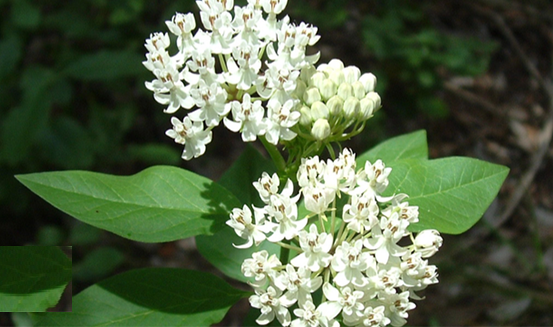
Milkweed for monarchs

Milkweed for monarchs

This is Passport to Texas

Larval monarchs have very specific nutritional needs.

Larval monarchs depend on milkweed species. Essentially, that’s the only plant monarch caterpillars consume.

Ben Hutchins, state invertebrate biologist, says availability of milkweed in Texas is vital to their survival.

As monarchs migrate north from their overwriting grounds in Mexico, Texas is one of their first stops. And this is where they begin to reproduce. And so all of the monarchs that then migrate farther north through the US and Canada, those future generations depend on successful reproduction in the spring here in Texas.

Yet, Texas is just one stop along their migration route.

Monarchs also reproduce and depend on milkweed in the Midwestern states in the united states. And, we know that in many of those states—for example, in the corn belt region—that the availability of milkweed plants has declined substantially over the last several decades. And so, there is some pretty good science that suggests that decline in milkweed availability in the Midwest, directly relates to the monarch population declines that we have seen.

We can all play a part in the monarch’s survival when we plant milkweed and other nectar producing plants.

The Wildlife Restoration Program supports our series.

For Texas Parks and Wildlife…I’m Cecilia Nasti