Archive for the 'Conservation' Category

Pollinators in Peril

Tuesday, July 12th, 2016
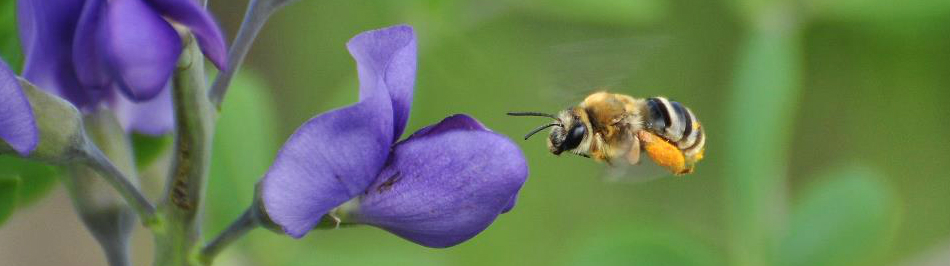
Friendly neighborhood pollinator.

Friendly neighborhood pollinator.

This is Passport to Texas

Pollinators are a trending topic these days.

We’re mainly talking about insects and sometimes mammals—like bats—who visit flowers.

Michael Warriner is non-game and rare species program leader for Texas Parks and Wildlife. Pollinators visit flowers for nectar or pollen, which they use as food.

But in the process, they’re transferring pollen from plant-to-plant, which the plant needs to become pollinated, and set viable seed.

Yet, over the years we’ve noticed a decline in the number of non-native and native pollinator species.

There’s a whole level of concern that’s manifested out of the concern for honeybees. Folks then started thinking about what’s going on with native bees, butterflies… And research shows that with things like bumblebees, there are a number of species that have experienced declines—that have disappeared from big parts of their range. And so there’s this whole overarching concern about native and non-native pollinators since their so closely tied to-–especially—human food production.

Tomorrow: how landowners can help revive slumping pollinator populations with Texas Parks and Wildlife’s new protocol.

The Wildlife Restoration program supports our series.

For Texas Parks and Wildlife…I’m Cecilia Nasti.
Even Non-Hunters Buy Federal Duck Stamps

Thursday, June 23rd, 2016
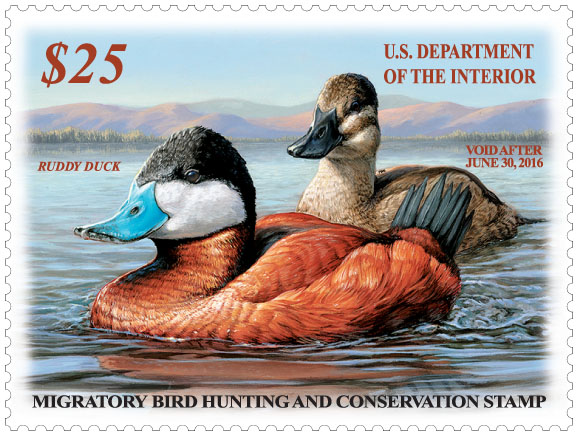
2015-16 Federal Duck Stamp

2015-16 Federal Duck Stamp

This is Passport to Texas

Waterfowl hunters aren’t the only ones buying the federal duck stamp. Non-hunters across the state are spending $25 on the stamp to support conservation.

The federal duck stamp, which was never intended for postal use, is intended for wetland conservation.

Parks and Wildlife non-game ornithologist, Cliff Shackelford.

And even though it’s intended for duck hunters, it’s benefiting so many non-game birds. So, I recommend bird watchers and nature enthusiasts buy a duck stamp.

Hunting is only one way to use the stamp.

It makes a great gift. And for yourself, it’s a great way to go visit National Wildlife Refuges, where there’s an entry fee. That duck stamp will get you and your carload of birdwatchers in for free.

The Aransas National Wildlife Refuge is the winter home of endangered whooping cranes. The land was purchased in 1937 with duck stamp money.

So, just three years after the inception of the duck stamp, it was used to buy the Aransas Refuge at a time when there were only about 15 whooping cranes left. Now we have a little over 300. And so many other birds benefit from the duck stamp. When we’re protecting wetlands for ducks, we’re also saving habitat for grebes and rails and common yellow throats, and lots of shorebirds, and lots of other things that are not game birds, but really benefit from wetland conservation.

The Wildlife and Sport Fish Restoration Program support our series.

For Texas Parks and Wildlife…I’m Cecilia Nasti.
Ask a Game Warden: Jurisdictional Differences

Wednesday, June 1st, 2016
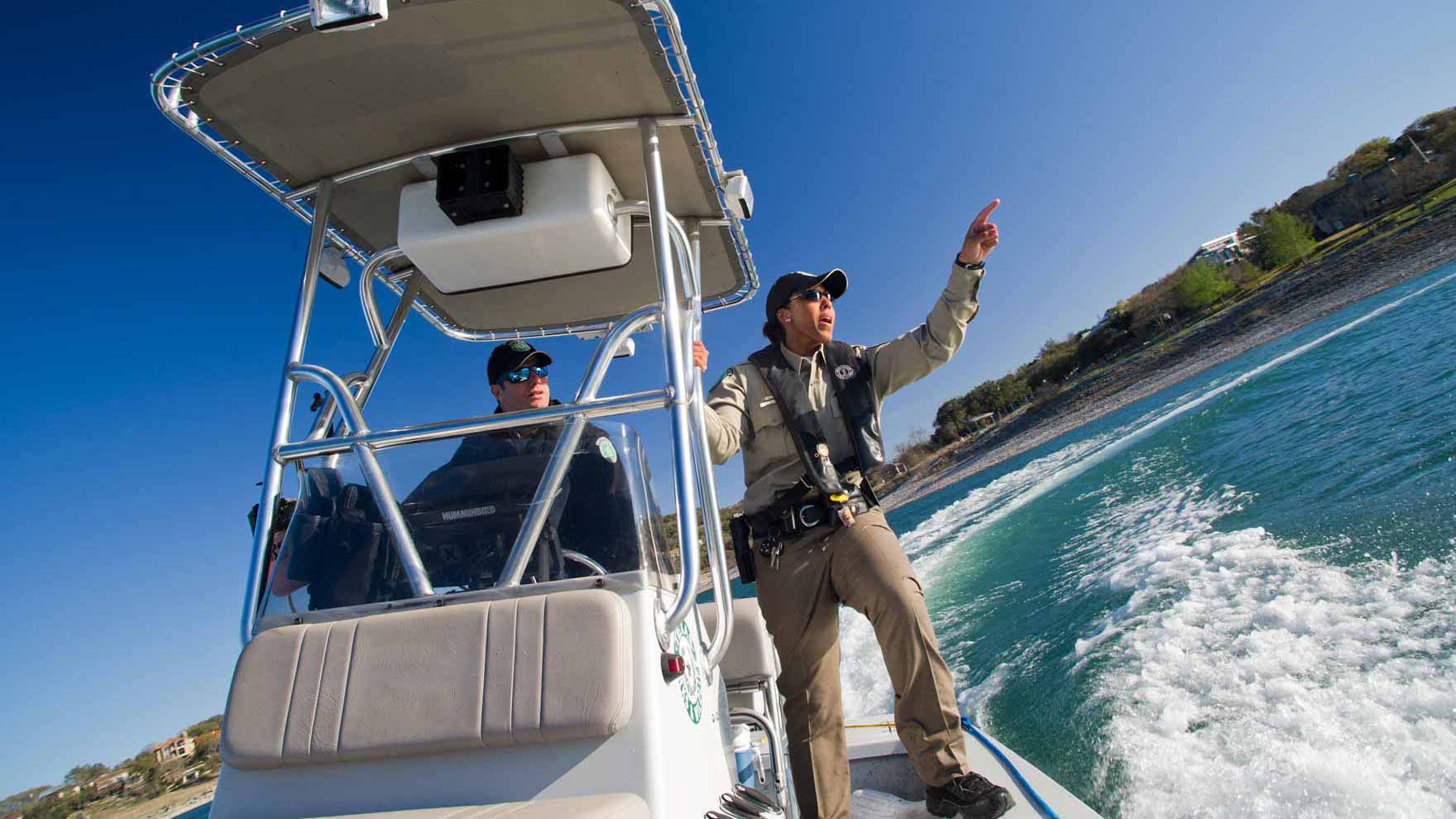
Where the pavement ends--that's where you'll find Texas Game Wardens.

Where the pavement ends–that’s where you’ll find Texas Game Wardens.

This is Passport to Texas’ Ask a Game Warden

Game Wardens and State Troopers are state peace officers; although assigned to specific areas, they enforce laws and regulations wherever needed statewide.

Sharon Cundiff of Williamson County contacted us to ask about the difference between Wardens’ and Troopers’ jurisdictional areas. We reached out to Game Warden Travis Porter, in Tarrant County, to help sort things out.

43—One of the main differences between State Troopers and Game Wardens are that Game Wardens have the added ability to enforce wildlife and natural resource rules and regulations throughout the state as well. Game Wardens are the law enforcement off the pavement. Most of the time, we get off the roadway, and that’s where we enforce most of our rules and regulations. Texas Law grants us the ability to enforce those laws anywhere wildlife lives, roams, or can be found—with a few limitations. These laws are designed so that we can enter private and/or public property to enforce hunting, water safety, natural resource laws and regulations, when the situation is called to do so. Game Wardens use these abilities to promote and regulate safety among those who are fortunate enough to be able to enjoy the outdoors, and to help conserve natural resources for future generations.

Click on the Contact Us link at passporttotexas.org to submit your Ask a Game Warden question.

Lone Star Law featuring Texas Game Wardens airs on Animal Planet Thursdays at 9 p.m. CT.

The Texas Parks and Wildlife Foundation supports our series and helps keep Texas wild with the support of proud members across the state. Find out more at tpwf.org.

For Texas Parks and Wildlife…I’m Cecilia Nasti.
Giant Reed is a Giant Problem in Texas

Monday, May 16th, 2016
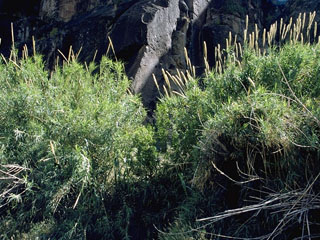
Arundo donax, also called Giant Reed.

Arundo donax, also called Giant Reed.

This is Passport to Texas

Texas has its share of invasive plants and animals, including Arundo Donax, or giant reed; you’ve probably seen it along roadways and river banks.

13— If you see it on roadsides, it’s very tall—grows up to about 30 feet. Has segments, really broad, pointed leaves—huge showy plumes. It can actually be quite pretty. And it looks somewhat like corn.

Giant reed is a non-native grass. Monica McGarrity who studies aquatic invasive for Texas Parks and Wildlife, says its greatest impact occurs when it gets into areas along rivers and creeks.

18—They have these impacts because they’re able to outcompete the native plants and push them aside, displace them. And when we’re talking especially about riverside, riparian areas, along our creeks – diversity of native plants is really important to the wildlife, and for maintaining the overall health of the community.

When giant reed displaces native plant communities, the result is reduced habitat quality.

17— It reduces quality for birds and other wildlife. And then it can start to— over time – have impacts on the stream itself, and reduce the habitat that’s available to the aquatic community, and make it more homogenous, more the same throughout. Rather than having diverse pools and riffles and habitats that they need.

Monica McGarrity returns tomorrow to tell us how not to try and remove this plant from our property.

The Sport Fish Restoration program supports our series.

For Texas Parks and Wildlife, I’m Cecilia Nasti.

More Funding to Fight Invasive Species

Friday, May 13th, 2016
Aquatic imvasives

Aquatic imvasives

This is Passport to Texas

Record funding approved by the Texas Legislature is launching new fronts in the war on aquatic invasive species.

With $6.6 million dollars in appropriations, this year and next, Texas Parks and Wildlife will ramp up an unprecedented effort to control and stop the spread of aquatic invasive plants and creatures.

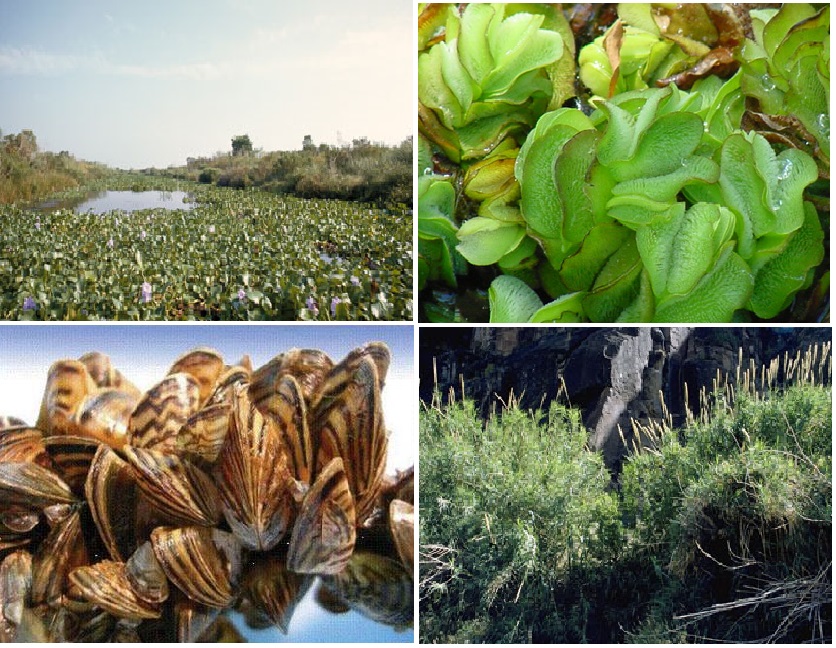
Some of the aquatic invasive species that will receive the agency’s attention include: giant salvinia and zebra mussels covering Texas lakes, to giant reed and salt cedar smothering rivers and streams, to exotic fish that compete with Texas natives and alter natural ecosystems.

One major category of work is Aquatic Invasive Plant Management—projects focused on management of aquatic invasive plants on public waters to enhance boater access for recreation, and management of riparian invasive plants in target areas to improve water quality and quantity.

In Texas, the economic impacts of aquatic invasives are far-reaching, costing the state billions of dollars annually, including threatening to undermine a recreational freshwater fishing industry worth more than $4 billion-dollars.

That’s our show. The Texas Parks and Wildlife Foundation supports our series and helps keep Texas wild with support of proud members across the state. Find out more at tpwf.org

For Texas Parks and Wildlife…I’m Cecilia Nasti