Archive for the 'Conservation' Category

Fido Free Enchanted Rock

Tuesday, April 19th, 2016
Enchanted Rock

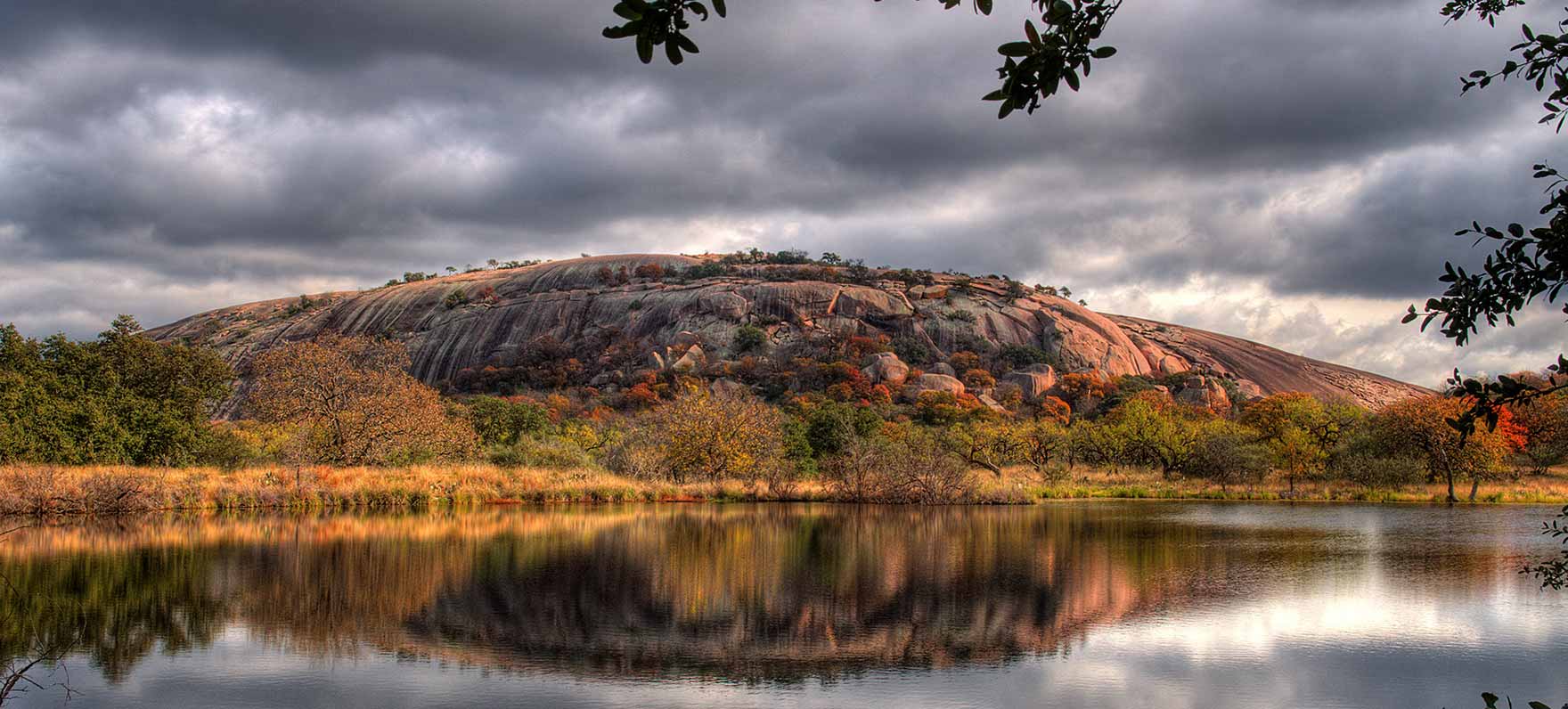
Enchanted Rock

This is Passport to Texas

Visitors to Enchanted Rock State Natural Area may bring their dogs with them – as long as it’s not to the top of the granite dome.

I’m a dog lover – I have two dogs – and I can’t take my dogs up there either, anymore.

Doug Cochran, superintendent at Enchanted Rock State Natural Area, says a new regulation went into effect March first; it prohibits visitors from taking their dogs to the summit in order to protect the fairy shrimp that live in the vernal pools atop the dome.

We want to protect these precious resources for future generations. I want my grand kids and my grand kids’ grand kids to come up and have the same experience on top of Enchanted Rock, looking at these fairy shrimp that the kids are have now.

Visitors have unwittingly upset the fragile ecosystems on E-Rock by allowing their pets to drink from, and relieve themselves too close to, the pools—thus polluting the water. Even so, dogs are welcome.

On our loop trail there’s a 4.5 mile walk. You can take dogs out there, and they can get really good exercise, and you can see really great parts of Enchanted Rock on our loop trail that a lot of people don’t get to see because they just go up to the summit and come down.

Find a link to the new regulation for Enchanted Rock at passporttotexas.org.

For Texas Parks and Wildlife…I’m Cecilia Nasti
Enchanted Rock and Rover

Monday, April 18th, 2016
Enchanted Rock

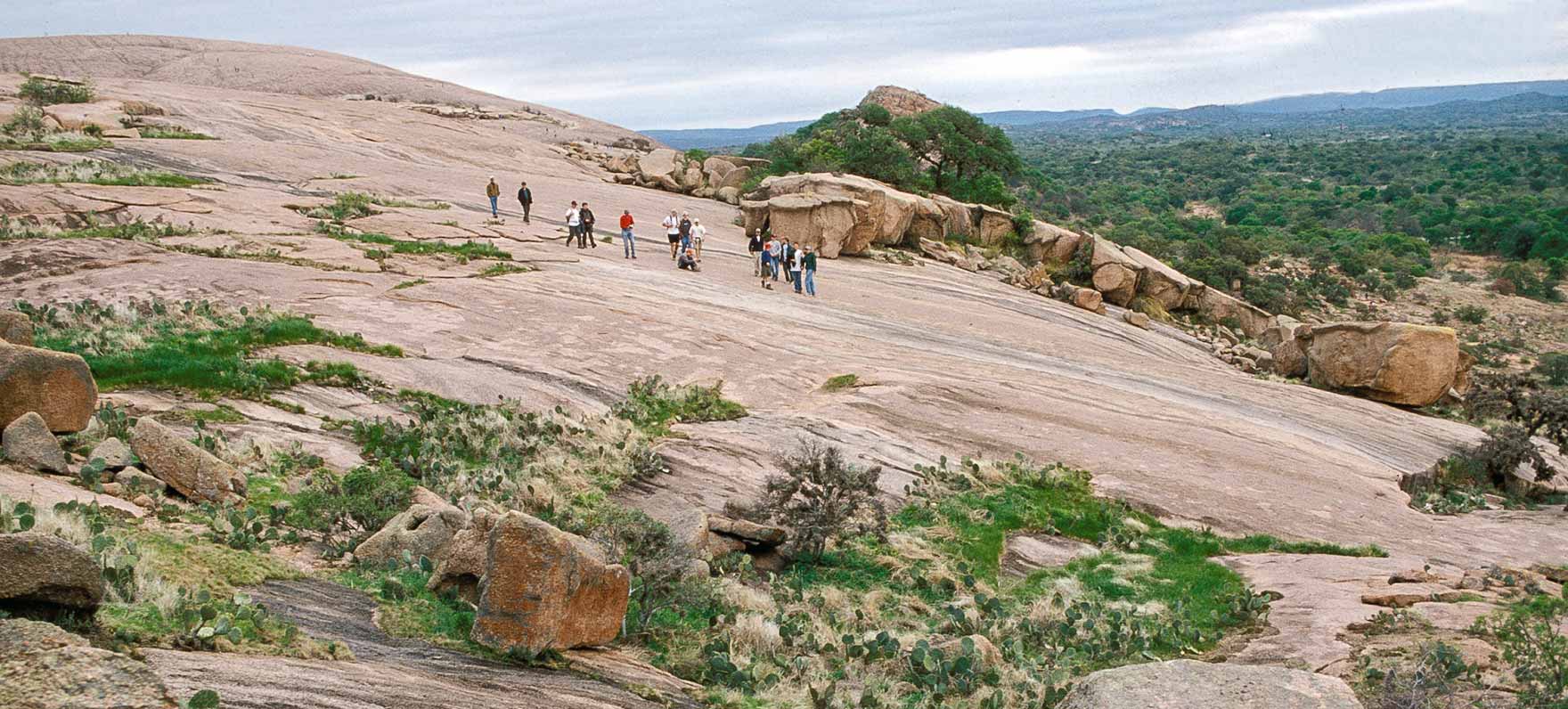
Hiking Enchanted Rock.

This is Passport to Texas

You’ll find fragile ecosystems called vernal pools on the summit of Enchanted Rock.

They’re little formations—weathering pits that have formed over the years—and they’ll collect rainwater. And there are little lifeforms that grow in them: fairy shrimp and other invertebrates. And, it’s their own little, small ecosystem in there.

Dough Cochran is superintendent at Enchanted Rock State Natural Area in the Texas Hill Country.

A scientist was doing some tests on invertebrates – testing the different kinds of algae that were present in the water. And he notices over the past three or four years that blue-green algae had been increasing in these pools of waters. And that’s an indication of pollution.

Pollution caused unintentionally by visitors who bring their dogs to hike the summit with them, and then interact with the vernal pools.

We see a lot of pets and humans going in these waters and wading through them, drinking out of them (the people don’t drink out of them, but the pets do) and in some cases they’re doing things they’re not supposed to be doing in there.

Animal waste that seeps into the pools raises the nitrogen level of the water, and disrupts ecosystem stability.

Tomorrow, learn of a new regulation intended to help nature regain her balance on Enchanted Rock.

For Texas Parks and Wildlife…I’m Cecilia Nasti

How to Commemorate Earth Day

Thursday, April 14th, 2016
Earth Day

Love Mother Earth by being a good steward.

This is Passport to Texas

I remember the first Earth Day Celebration. It was April 22, 1970, and I was a young, impressionable kid.

Leading up to it were weeks of news reports about how we were killing the planet… with litter, toxic chemicals, wasting resources, destruction of wild places, and air pollution.

It scared me. So, I decided to do what I could to help. Not big things, of course. I was just a kid. I started turning off lights in empty rooms, and not letting water run while I brushed my teeth. I also started to pick up other people’s litter I found on the ground.

Plus, I finally understood why my mother recycled newspapers, composted our kitchen scraps, grew some of our food in a backyard garden, and always kept the thermostat at a low setting in winter.

It’s the little things we do every day that make a difference when it comes to the long-term health of our planet. Nobody expects perfection—just a bit of effort.

Perhaps this Earth Day, April 22, we can rededicate ourselves to putting forth that extra effort when it comes to keeping our big, beautiful planet, and every living thing she supports, healthy and strong for generations to come.

For Texas Parks and Wildlife…I’m Cecilia Nasti
Citizen Scientists Take Biological Inventories

Monday, March 21st, 2016
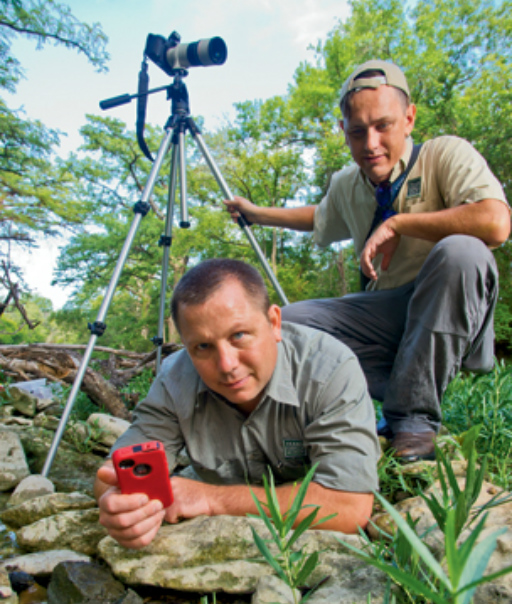
Getting up close and personal with Texas critters.

Getting up close and personal with Texas critters.


This is Passport to Texas

With the help of biological inventory teams of citizen scientists, Texas Parks and Wildlife monitors plants… herps…

Which are the amphibians and reptiles…

…birds and invertebrates…

…and that would mainly be: butterflies, dragonflies, beetles, bumblebees and such….

…in Texas’ 8 wildlife districts; Biologist Marsha May oversees the program. She says she’s recruiting experts statewide to join these monitoring teams.

Mostly, we’re looking at hobbyists; people who have joined herp societies. They know their herps. As well as birders. There’re people involved in Audubon Society that know their birds. So those are the types of people [as well as those with expertise in native plants and invertebrates] that we’re looking for, for these projects.

These biological inventory teams will monitor species on private land.

So, my plan is to start with organizing teams throughout the state. And once we get good, solid teams in place, then we’re going to go out there and open it up to the landowners, and let them know that these teams are available to come and do surveys on their property.

Knowing what’s on the land helps landowners become better stewards. Find out how to volunteer when you log visit the Nature Trackers page on the TPW website.

Funding provided in part by Ram Trucks. Guts. Glory. Ram For Texas Parks and Wildlife…I’m Cecilia Nasti.

Rio Grande Turkeys

Thursday, March 10th, 2016
Rio Grande Gobbler

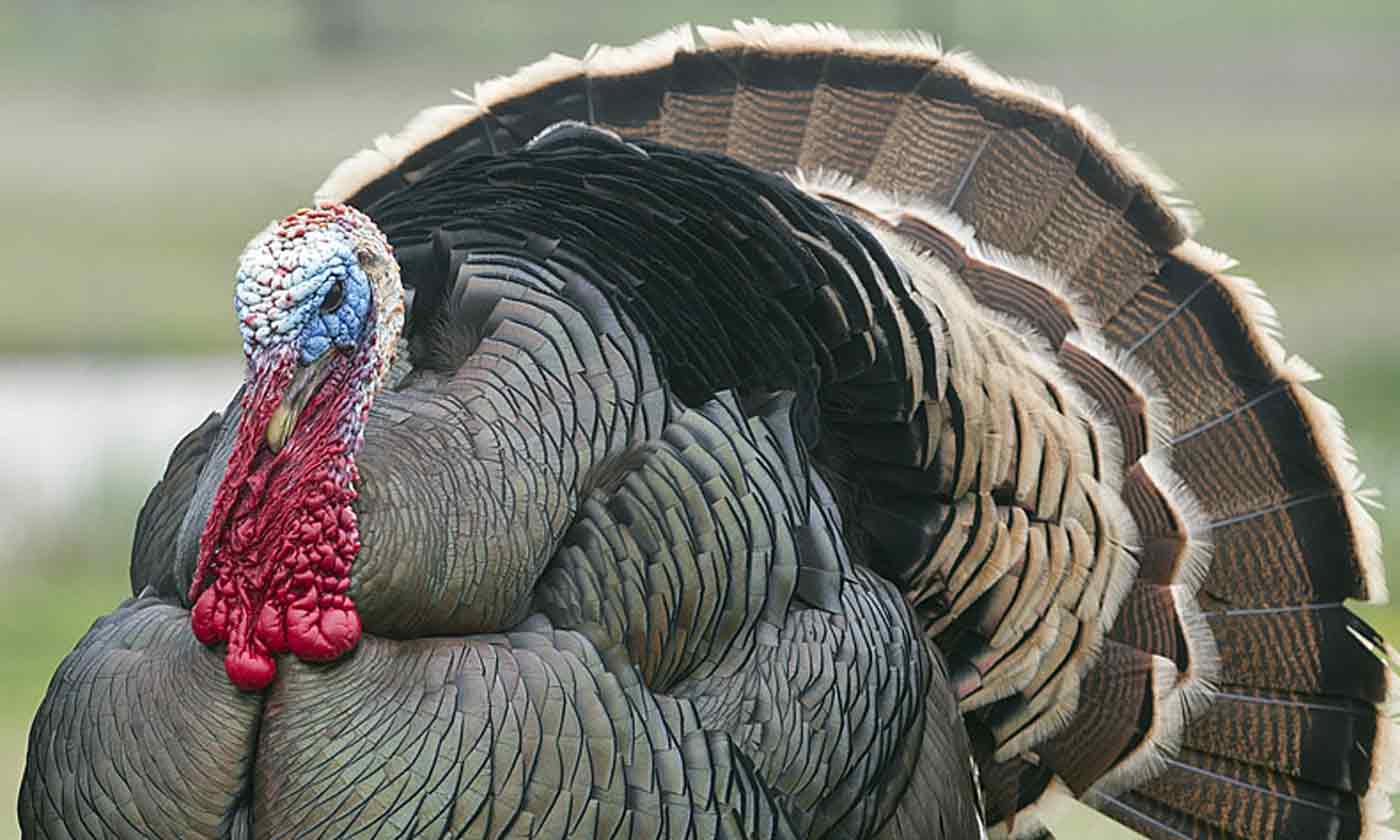
Magnificent Rio Grande Gobbler

This is Passport to Texas

Everything’s big in Texas – including the Rio Grande turkey population.

The Rio Grande is really a neat bird from a Texas standpoint, because Texas has, by far, most of the Rio Grandes in the country. There are Rio Grande turkey populations in Okalahoma and Kansas as well, but they’re very small compared to the Texas population.

Former upland game bird specialist T. Wayne Schwertner currently serves as Assistant Professor of Wildlife, Sustainability, and Ecosystem Sciences at Tarlton State University.

So, the Rio Grande turkey is a uniquely Texas bird. It’s adapted to the arid conditions of the western part of the state, to the brush lands and prairies. Versus the eastern turkey which is much more adapted to the forests of east Texas and the east United States.

Spring Rio Grande season varies by zone, with the South Zone kicking off March 19 and the North April 2. Hunters will find the bulk of the birds west of I-35.

The Rio Grandes occupy the central half of the state, from about I-35 to the Pecos River, and all the way from the Panhandle down to the Rio Grande Valley.

The Wildlife Restoration Program supports our series and works to increase hunting opportunities in Texas.

For Texas Parks and Wildlife…I’m Cecilia Nasti.