Archive for the 'Conservation' Category

Flooding and Aquatic Invasive Species

Thursday, August 20th, 2015
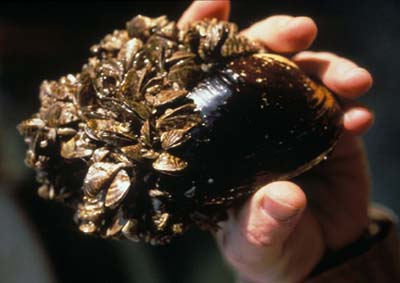
Zebra Mussels

Zebra Mussels

This is Passport to Texas

Texas lakes and rivers are full and flowing again thanks to an influx of water brought on by heavy spring rains. The downside is we could see the spread of invasive species as a result.

06- We always have to be vigilant about invasive species: zebra mussels…giant salvinia…water hyacinths…

Inland fisheries’ Dave Terre says improved water levels and boat ramp accessibility means more boaters on the water. He adds everyone must do what is in their control to prevent the spread of these species.

09- Make sure that you clean your boats and trailers; and dry your boats–and drain your boats–before going onto other water bodies. It’s the law.

Cleaning, draining and drying boats–that’s within our control. Mother Nature is not. When she soaked Texas, it’s possible she also flushed zebra mussels downstream.

25- Certainly, we’ll be monitoring that situation through time, but at this point it’s really unknown what impact these floods will have on the spread of zebra mussels across our state. But, anglers and boaters still need to be mindful about spreading these species by boat. [Clean, drain & dry] is the one thing we do have control over, and one thing that we can do. We’re always concerned about invasive species trying to keep them out of our water bodies. So we need to control what we can control.

Find information about invasive species at texasinvasives.org.

The Sport Fish Restoration program supports our series.

For Texas Parks and Wildlife, I’m Cecilia Nasti.
Lone Star Land Steward: Big Woods

Tuesday, August 18th, 2015


This is Passport to Texas

In 1995, Dr. Robert McFarlane bought 1,500 acres 90 miles southeast of Dallas along the Trinity River near where he hunted and fished as a kid. Since then he has
pieced together an additional 6,000 acres of river bottom, open marsh wetlands and upland hardwoods, which he named Big Woods.

08- I try to keep the Big Woods true to what I see as the laws of nature. It’s a place where you can go and be in the wild and see the animals and just be.

When Dr. McFarlane acquired the property, it was highly-fragmented and over-grazed. During the last 20 years, he’s walked the land daily, and worked tirelessly to improve aquatic and terrestrial resources.

07- We have 40 to 45 marshes, and over a hundred miles of roads. We plant about 50 food plots.

Dr. McFarlan’s effort to restore this area of the Trinity River is representative of what it means to be a good steward of the land, which may be why he won the 2015 Lone Star Land Steward Leopold Award.

15- When I started buying all this land, and I sold what stocks I owned, my friends thought I was crazy. And they were correct. I think this was a form of insanity, but I think it was a beautiful insanity, and I’m happy to have been crazy.

Learn more about the Lone Star Land Steward program and Dr. McFarlane’s contribution to habitat on the Texas Parks and Wildlife website.

The Wildlife Restoration Program supports our series.

For Texas Parks and Wildlife, I’m Cecilia Nasti.
After the Floods

Thursday, August 13th, 2015
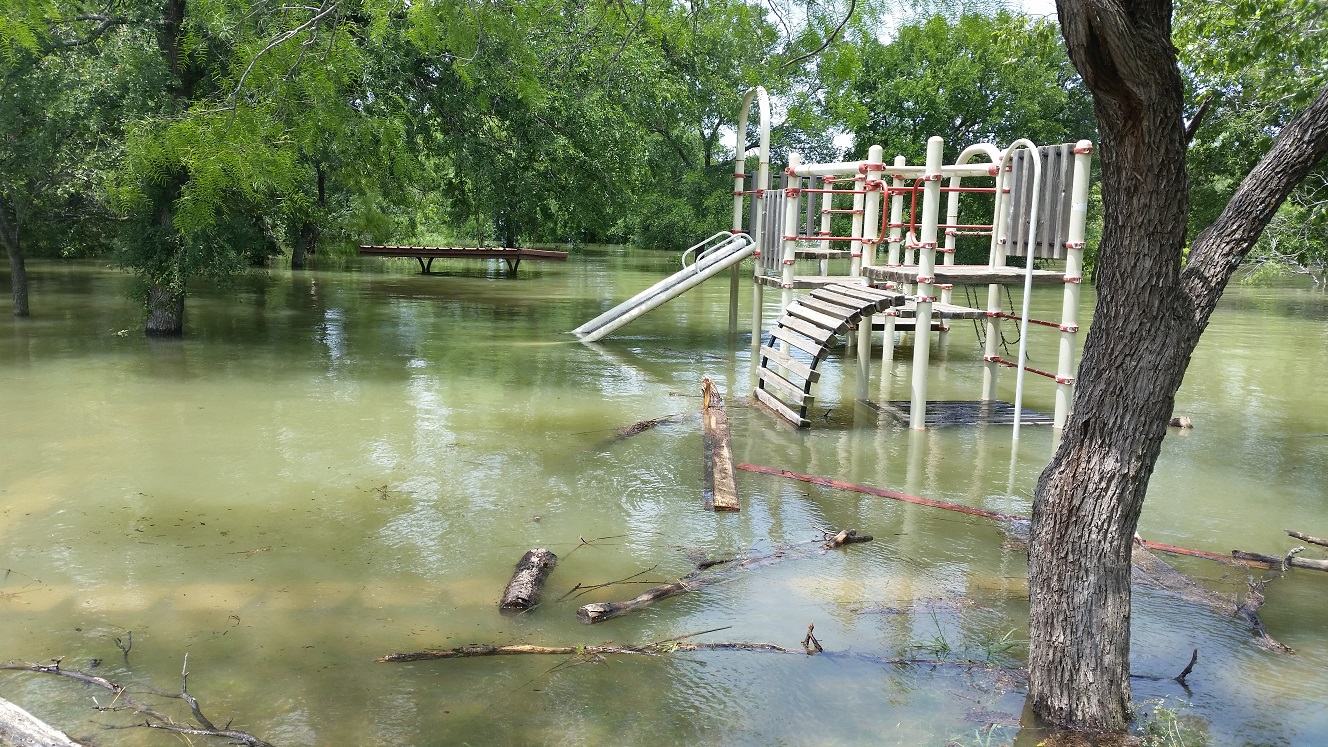
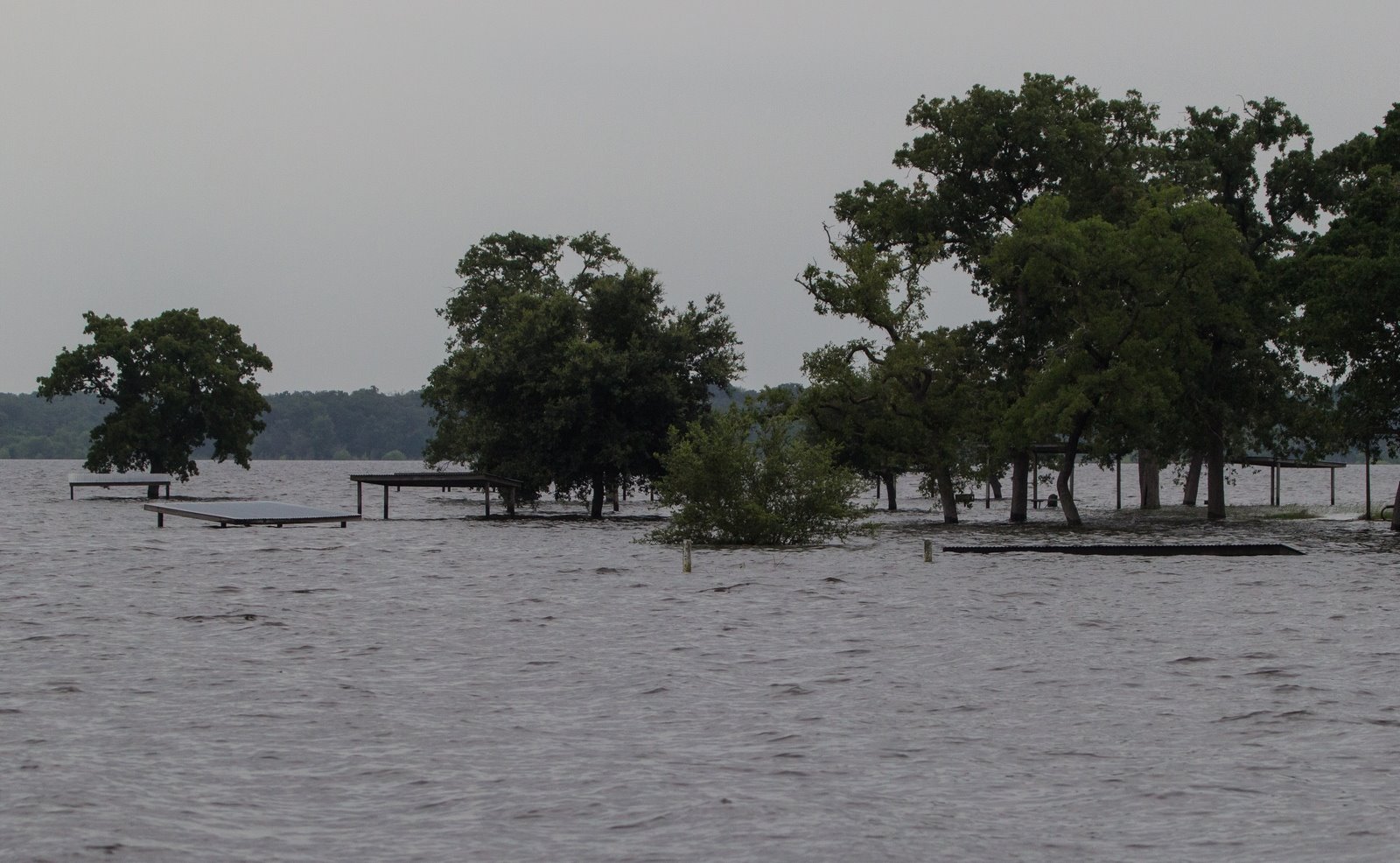
Cedar Hill State Park after the flood.

Cedar Hill State Park after the flood.


This is Passport to Texas

A year ago this time, the majority of the state was in the throes of exceptional drought. That changed Memorial Day weekend 2015 when the skies opened up over Texas.

10- The official status from the US Drought Monitor is that Texas is about 92 percent drought-free right now, which we haven’t seen in many, many years.

And this is good news, says Cindy Loeffler, water resources branch chief at Texas Parks and Wildlife.

11- That’s not to say that every part of the state is completely drought free. If you go up into the Texas Panhandle, there are still some regions up there that would dearly love to have a bit of this rainfall.

For areas that received extreme rainfall, changes are evident, and biologists are optimistic about the short and long term affects.

20- Many of our reservoirs have been so low that you couldn’t even access via boat ramps to go fishing. And so now that situation has been improved. And then a lot of the terrestrial and wildlife biologists are very excited about–not only the conditions now–but going into the fall, for deer, white-tailed deer, mule
deer, migrating waterfowl–that kind of thing in the fall.

You won’t have to wait long to see those outcomes, as fall is right around the corner.

The Wildlife and Sport Fish Restoration Program supports our series.

For Texas Parks and Wildlife, I’m Cecilia Nasti.
Water World Texas

Wednesday, August 12th, 2015
Lake Sommerville, Birch Creek

Lake Sommerville, Birch Creek


This is Passport to Texas

After Texas’ 5-year drought, the rainfall Memorial Day weekend was like resetting nature’s clock…

04- When it comes to our thirsty ecosystems across the state.

Cindy Loeffler is water resources branch chief at Texas Parks and Wildlife.

08- The bays and estuaries, with their characteristic salinity levels, having a flush of fresh water–especially at this time of the year–is ideal.

That flush of fresh water will, in time, help improve the productivity of the bays, which serve as nurseries for many of our sport fish species. Yet, Loeffler says productivity could decrease before it rebounds.

10- We may see some setbacks, in terms of impacts to oysters–if the water is too fresh for too long. But long term, we’re very excited about what it means for our coastal estuaries.

Conditions across the landscape have improved, too.

20- One just needs to look out the window, or go outside, and just see how green everything is. All of the vegetation is just very healthy and thriving. Importantly, our pollen producing plants, nectar producing plants, important food sources for insects-butterflies, bees, birds-lots of critters we depend on in Texas.

What are the short and long term effects of this new water windfall?

02- That’s a really great question.

And we try to answer it tomorrow.

The Wildlife and Sport Fish Restoration Program supports our series.

For Texas Parks and Wildlife, I’m Cecilia Nasti.

Take the Pledge, Receive a State Park Guide

Monday, August 3rd, 2015
Take the Pledge and take Care of Texas

Take the Pledge and take Care of Texas


This is Passport to Texas

If you’re a state park user, or plan to be, and don’t have a free Texas State Park Guide in your vehicle’s glove box, what are you waiting for?

12- That guide has full descriptions of each park; it includes helpful tips like where to go and what to pack, which parks have playgrounds, which parks have pools. That sort of information.

And isn’t that what we all want when planning a state park outing? Thomas Wilhelm works with parks, and says there’s more than one way to get your hands on a guide.

12-So, you can pick up a state park guide at any state park. You can also pick it up at any TXDOT Travel information center. Most Convention and Visitor’s Bureaus or Chambers of Commerce across the state also carry them.

No time to pick up a guide? You can get it in the mail.

14- Through the Texas Commission on Environmental Quality. If you got to takecareoftexas.org, you can take a pledge to take care of Texas, and they will mail you–free of charge–a state park guide.

When you sign the pledge, you promise to be a good steward of Texas’ water, air and land–which you already are, right? So get your hands on a Texas State Park Guide and go outside and enjoy what you treasure about the Lone Star State.

That’s our show… Funding provided in part by Ram Trucks. Guts. Glory. Ram

For Texas Parks and Wildlife, I’m Cecilia Nasti.