Archive for the 'Conservation' Category

Event | Birding: Great Texas Birding Classic

Monday, March 16th, 2015
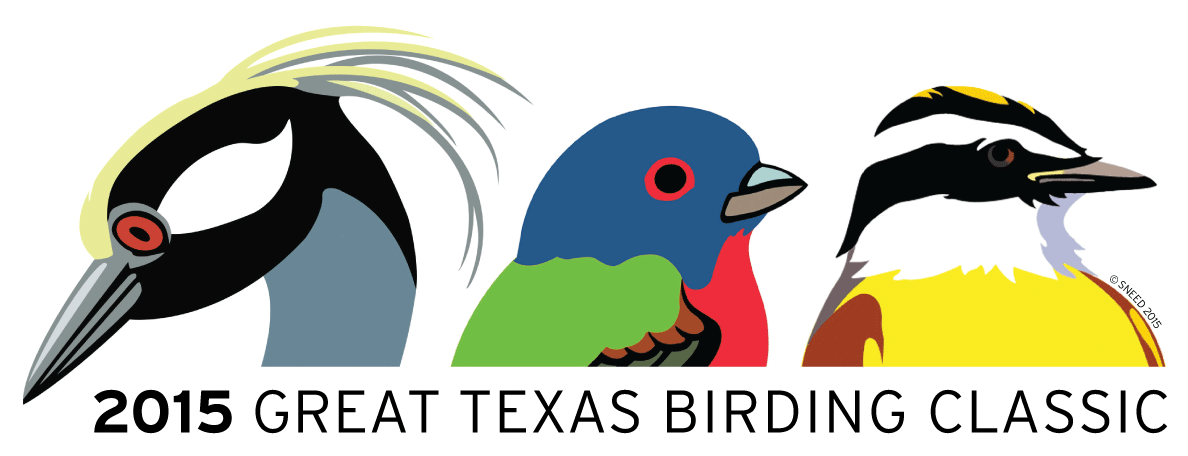
The Great Texas Birding Classic


This is Passport to Texas

Calling all twitchers, listers and dudes…The Great Texas Birding Classic invites you to form a team to watch birds.

09— It’s a really great win-win, where people are able to go birding with their friends or family. And then they’re raising money for a really great cause: conservation right here in the state of Texas.

Shelly Plante, nature tourism manager, says teams go into the field and ID bird species from a checklist over the course of a few hours or even a few days. Tournament winners determine which avian habitat conservation projects receive preservation and restoration grants.

05— And the more habitat we’re able to preserve here in the state, the more birding opportunities there are going to be for birders.

Birders of all ages and skill levels that register at birdingclassic.org by the April first deadline may participate in this statewide series of tournaments.

22—Go online. Fill out your registration form. Pay online. And then you’re ready to go. Everything I do is through email: I’m going to email you updates; I’m going to email you how to submit your checklists to be in the running for the prizes; I’m going to let you know who won, where the award ceremonies are. So, it’s all done online to save on costs so as much of this money goes to habitat conservation as possible.

The Great Texas Birding Classic, April 15 through May 15, is for beginners and advanced birders. More on the classic tomorrow.

Funding for our series provided in part by Ram Trucks. Guts. Glory. Ram

For Texas Parks and Wildlife…I’m Cecilia Nasti
Fishing: Crab Trap Cleanup

Monday, February 16th, 2015
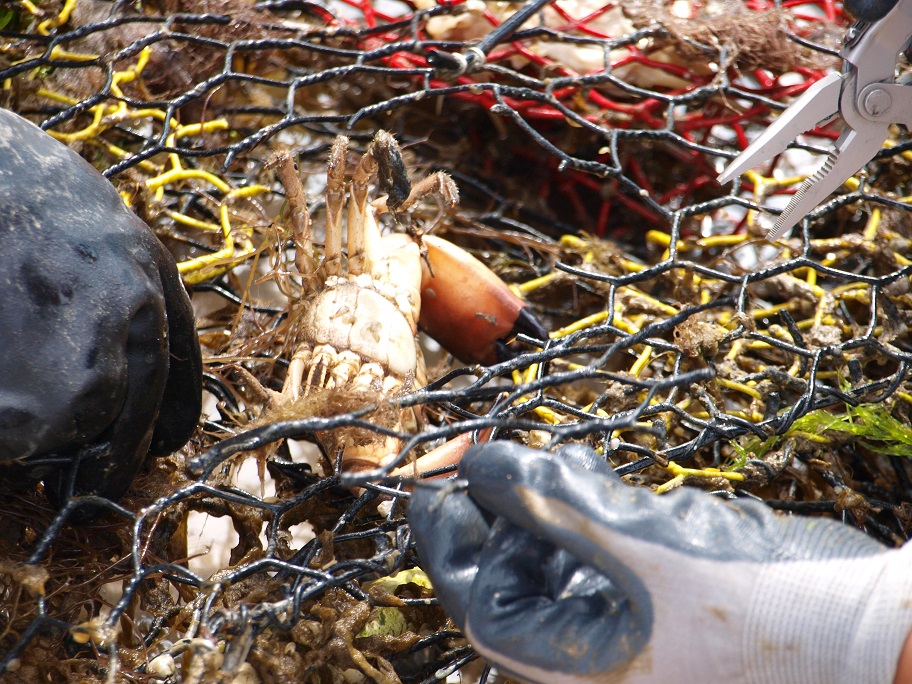
Dear crab in abandoned trap, San Antonio Bay. Image  Art Morris, © Texas Parks and Wildlife Department

Dead crab in abandoned trap, San Antonio Bay. Image
Art Morris, © Texas Parks and Wildlife Department

This is Passport to Texas

Lost and abandoned crab traps become hazards to marine life in Texas bays.

06— We are particularly concerned because of the ghost fishing effects; they continue fishing unmaintained.

When something gets in the trap and dies, it acts as bait, attracting more marine life, which in turn suffers the same fate. Art Morris is with coastal fisheries at Texas Parks and Wildlife, and coordinates the annual cleanup of derelict traps.

12— And what we do once a year in February, is get volunteers together up and down the coast, and we try to remove all those traps that have been lost, or vandalized or whatever that are potentially ghost fishing.

Volunteers have removed more than 31-thousand traps in the cleanup’s 14 year history. This year’s cleanup is February 20 through March 1, with a big one day push on February 21. And Texas isn’t alone in its efforts.

12— And we’re particularly excited this year in that we have a joint closure in Sabine Lake with the state of Louisiana, and we’ll be using joint efforts there to remove traps from the Louisiana side of the lake.

Find details on the cleanup and volunteering, on the Texas Parks and Wildlife website.

The wildlife and sport fish restoration program support our series and is funded by your purchase of hunting and fishing equipment and motor boat fuel.

For Texas Parks and Wildlife…I’m Cecilia Nasti.

Nature: Becoming a Master Naturalist

Thursday, February 12th, 2015
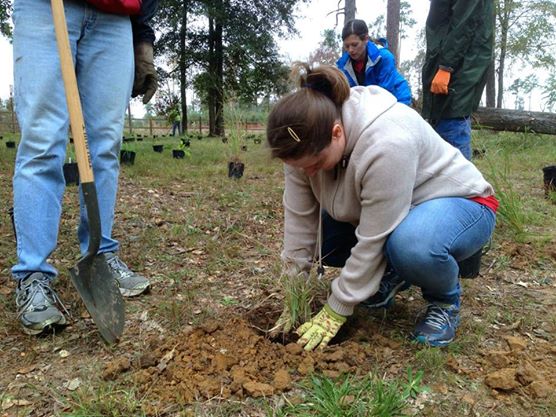
Volunteer planting pine trees.

Planting pine trees at Bastrop State Park after the wildfire. Photo courtesy Texas Master Naturalist Facebook Page.

This is Passport to Texas

There’s a training program for people with a passion for nature. It’s called the Texas Master Naturalist Program.

19— The Texas Master Naturalist Program is a volunteer based training program; we develop a corps of well-informed volunteers that provide education, outreach and service around the state in the beneficial management of natural resources and the natural areas within Texas.

Mary Pearl Meuth is assistant state program coordinator. They train roughly 700 volunteers annually, and have sessions this spring in 16 of their 44 chapters.

15— Our curriculum that is used for the training, has 26 chapters in it. So, they march through those 26 chapters all with a large context of the state of Texas, but then developed even more within their local ecosystem.

Once trained, volunteers provide 40 hours of community outreach, and take 8 hours of advanced training annually. The program’s not just about taking or facilitating classes. It’s also about discovery.

08—Quite a few of our Master Naturalists have identified new species of plants or new species of animals located within the state of Texas.

Are you ready to help Mother Nature? Consider the Texas Master Naturalist program; training sessions starting soon. Learn more at txmn.org.

For Texas Parks and Wildlife…I’m Cecilia Nasti

Game Wardens: Illegal Fishing in the Gulf

Thursday, January 29th, 2015


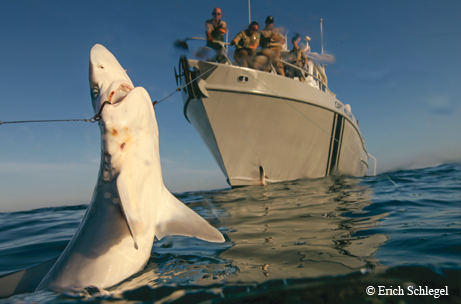
Texas Parks & Wildlife patol in the Gulf of Mexico near the Mexican border.

Texas Parks & Wildlife patrol in the Gulf of Mexico near the Mexican border.

This is Passport to Texas

Gillnets are vertical panels of netting used by some commercial fishermen; they arbitrarily catch fish and other wildlife, and are illegal in Texas waters. During an enhanced marine patrol last fall, Texas Game Wardens seized roughly 8,000 feet of gillnet.

07— The gillnets were actually in the Rio Grande River, which is a fertile ecosystem that feeds to the Gulf of Mexico.

Captain James Dunks, a Game Warden in the Brownsville District in the Lower Rio Grande Valley, says they made no arrests in this Class B misdemeanor case, but he’s certain who owned the nets.

27— There’s a commercial fishing village just south of the Mexico border; it’s called La Playa Bagdad. And basically all it is, is a commercial fishing camp; they have a bunch of boats and captains that are fishing out of that area. We chase them, and we catch a few. The coast guard catches a few. And every time you interview one, you ask them why do you keep coming over here. And they’ll tell you they don’t have any fish left. So, they’re having to utilize our resources for their personal gain.

Captain Dunks says these fishermen are after whatever they can sell, saying bull sharks are close to shore these days, and with shark fin soup a delicacy…

06— They’ll take them right up to the beach, cut the fins off, and I’ve heard of them discarding the actual shark – just to cut the fins off.

Anyone who witnesses alleged illegal commercial fishing activity is encouraged to call their local game warden or Operation Game Thief.

For Texas Parks and Wildlife…I’m Cecilia Nasti.

Monarch Week: Time to Gather Information

Friday, January 9th, 2015


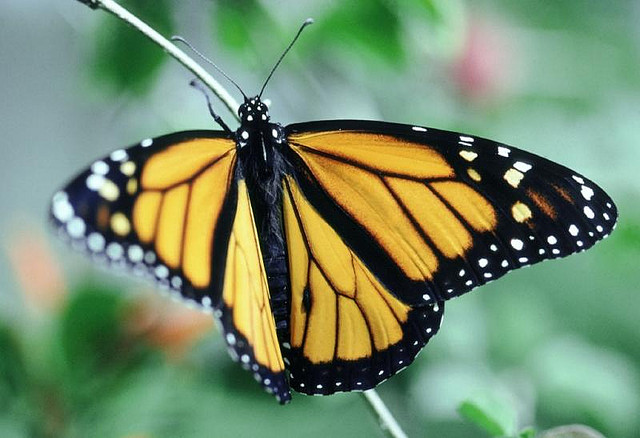
Monarch butterfly

Monarch butterfly


This is Passport to Texas

You don’t have to know much about milkweeds to take part in the new Texas Milkweeds and Monarchs Citizen Science Project on iNaturalist.org.

06— We have experts that are going to be looking at these observations and identifying those [plants].

Milkweeds, important to the monarch butterfly’s life cycle, are declining, as are monarchs. Biologist, Ben Hutchins, who helps coordinate the project for TPWD, says once the data’s collected, and answers to questions such as where certain species grow – or not – and which ones monarchs utilize most, biologists can start to develop a detailed management plan.

38— To be honest, we’re still kind of feeling out what is going to be Texas’ response to monarch conservation. Right now we’re kind of in a data collection phase. So, how this information is used when we start developing monarch conservation plans and we start to take conservation action – we’re not sure. But, we want to know as much as possible. So that we can say, ‘hey, if you’re in this particular habitat, here are some species that may be appropriate to add to your seed mix. Or, if we’re looking at trying to advocate large-scale production of seeds so that there are more species of milkweed available for consumers to plant, we’d like to know potentially, what should we focus on.

Get in on the ground floor of this citizen science project, which will be incorporated into Texas Park’s and Wildlife’s Texas Nature Trackers, and make a difference for monarchs in Texas. Find out how on the Texas parks and Wildlife website.

For Texas Parks and Wildlife…I’m Cecilia Nasti.