Archive for the 'Conservation' Category

Conservastion: Dogs with the Right Stuff

Tuesday, November 11th, 2014
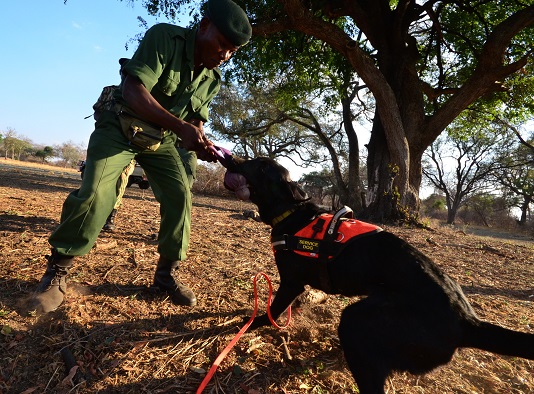
A scout from the South Luangwa Conservation Society, Godfrey Mwanza, and Steven (the black lab). Both are in training to stop ivory smuggling out of the Luangwa Valley of Zambia.

A scout from the South Luangwa Conservation Society, Godfrey Mwanza, and Steven (the black lab). Both are in training to stop ivory smuggling out of the Luangwa Valley of Zambia.


This is Passport to Texas

Working Dogs for Conservation in Bozeman, Montana trains dogs to help researchers in the field.

05—One in fifteen hundred dogs that we screen has what it takes to be a conservation detection dog.

Some of the program animals are rescues. Pete Coppolillo, Executive Director, says they train the dogs to detect everything from scat, to live animals, to invertebrates, and even invasive weeds.

12—We select for high drive so that they’ll want to do it and work really hard at it. And we also select for dogs that are toy obsessed – that are really excited about a specific toy. And that’s their reward, and that’s also how we train them.

At the time we spoke, Working Dogs for Conservation had just deployed animals to Africa to help fight the illegal ivory trade. Pete told me how they used toys to train the dogs for that assignment.

22—The ivory dogs were trained by hiding ivory with their toy. So, they’ll come in and they’ll sniff around and they’ll begin to associate the scent of ivory with their toy. And as soon as they discover the toy is sitting right behind the ivory, and they get a big whiff of ivory and then they get their toy – and so they get their reward. And then, gradually we separate the toy from the ivory; they learn as soon as they find it they get their toy and their reward.

Tomorrow: some positive results of working the dogs. Learn more about these dogs at Working Dogs for Conservation.

That’s our show for today… Funding provided in part by Ram Trucks. Guts. Glory. Ram

For Texas Parks and Wildlife…I’m Cecilia Nasti.
Conservation: Conservation Detection Dogs

Monday, November 10th, 2014
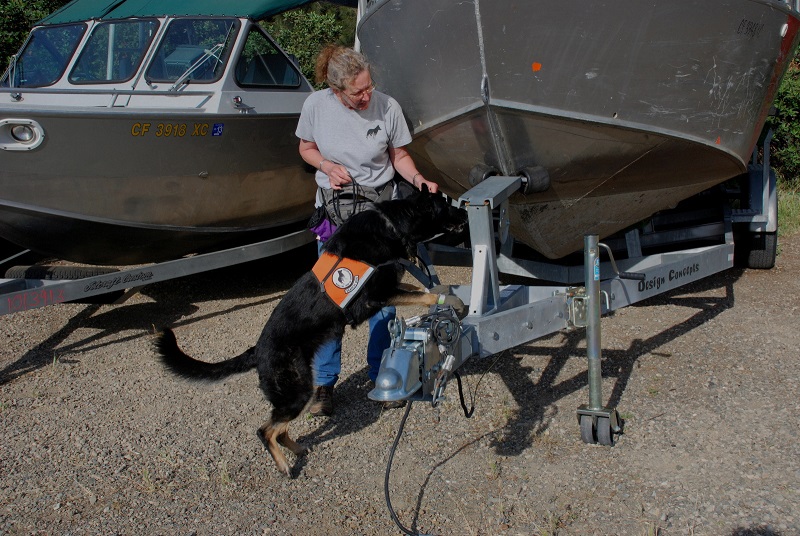
Alice Whitelaw and Tia, inspecting boats for zebra mussels in California

Alice Whitelaw and Tia, inspecting boats for zebra mussels in California


This is Passport to Texas

Most dogs like to work. And Pete Coppolillo is hiring. He is Executive Director of Working Dogs for Conservation in Bozeman, Montana. Since the mid-1990s, his organization’s trained dogs as a non-invasive alternative method for collecting data on hard to find wildlife.

05—By non-invasive, I mean we don’t have to capture them, we don’t have to handle them, we don’t even have to see them.

Then, just how are researchers using dogs?

06—So, the idea is we train a dog to find their scat, usually, which to non-biologists is a polite word for poop.

By detecting scat, the dogs help researchers determine the range, sex, and diet (among other things) of certain wildlife species. Pete said they first trained dogs to sniff out grizzly bear and wolf scat, but didn’t stop there.

28—Dogs can do everything from scat to live animal work to invasive weeds. Even invertebrates, like Emerald Ash Borer; they can find their larvae or their eggs. And, [we] even [use the dogs to detect] aquatic invasives like zebra and quagga mussels – to inspect boats. Because, the mussels can be in cracks, or inside, where a visual inspection can’t see them. Or the dogs can even detect the veligers, which are microscopic larvae that we can’t see.

Not all dogs are suited to this work. Learn more about these dogs at Working Dogs for Conservation.

More on that tomorrow. The Wildlife and Sport Fish Restoration program supports our series and funds diverse conservation projects in Texas.

For Texas Parks and Wildlife…I’m Cecilia Nasti.

Conservation: Money for Quail

Thursday, November 6th, 2014

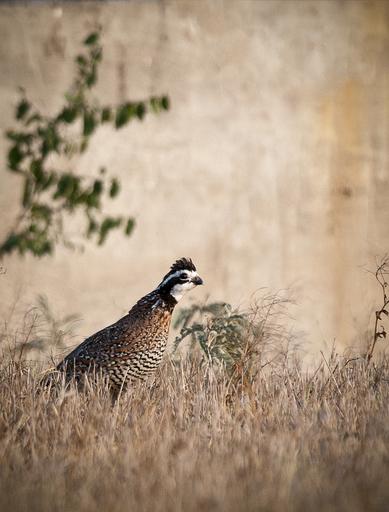
Bobwhite quail in Texas

Bobwhite quail in Texas


This is Passport to Texas

There’s new hope for bobwhite quail.

13—Four million dollars of the upland game bird stamp fund was authorized by the legislature this past session to specifically go towards further developing this concept of focus areas for bobwhite quail and grassland birds.

The “focus area” concept is one TPW upland game bird program leader, Robert Perez, has worked on for years.

08—Well, a focus area is an intensive effort within a small area to demonstrate that quail restoration can be successful.

Most focus areas are east of the I-35: places where quail are gone, said Perez, but they haven’t been gone long.

23— One of our focus areas in the Columbus-Seely area, southeast Texas. Another is the Navarro-Ellis area, along the I-35 corridor where Waxahachie is. Another is West of Dallas a good ways over towards Wichita Falls, around Clay County and south. So these are the front lines of bobwhite decline; birds are still around, but they’re noticeably rarer.

The agency awarded 15 grants, with two more in process, to nonprofits, universities and others for grassland restoration. Grantees will use the $4 million dollars over a two year grant period.

19—But that doesn’t mean that the project is over at the end of two years. Because the impacts – when you start to turn the dirt or manipulate habitat – those effects go on for years. And so what’s most important is to continue to monitor – think of the future beyond those two years – to really understand and paint a good picture of what the impacts are of these types of manipulations.

Find quail information on the Texas Parks and Wildlife website. The Wildlife and Sport Fish Restoration Program supports our series.

For Texas Parks and Wildlife…I’m Cecilia Nasti.

Birding/Conservation: Bird-Friendly Coffee

Wednesday, November 5th, 2014

Bird Friendly  Coffee Seal

Bird Friendly Coffee Seal


This is Passport to Texas

Coffee is an agricultural crop that thrives in the tropics.

14—These areas oftentimes are coincident with biodiversity hot spots; that is, areas of really high biodiversity, whether in birds, or insects, amphibians—what have you.

Dr. Robert Rice works with the Smithsonian Migratory Bird Center, which certifies coffees “Bird Friendly” when growers meet certain stringent criteria. Studies suggest shade grown coffee offers the greatest benefit as habitat.

15—Where coffee still is managed with a shade cover of the kind that we like to see and have defined with “bird friendly” criteria, then coffee oftentimes is some of the last remaining canopy cover—even though it’s not forest—it’s acting very much like a forest.

With habitat loss from deforestation, shade grown coffee estates serve as refuge for neo-tropical migratory bird species that travel through Texas, including the Black and White Warbler, the Baltimore Oriole, the Cerulean Warbler and others.

15—So, they just hang out there. They might be running around with mixed species flocks, and trying to stay alive and ultimately fatten up before they make the trip back north again. So this quality habitat becomes quite important for them in terms of making the trip back.

So next time you order a cup of coffee, you might ask your server if it’s for the birds.

That’s our show for today… Funding provided in part by Ram Trucks. Guts. Glory. Ram

For Texas Parks and Wildlife…I’m Cecilia Nasti.
Nature: Dealing with Light Pollution

Thursday, October 23rd, 2014

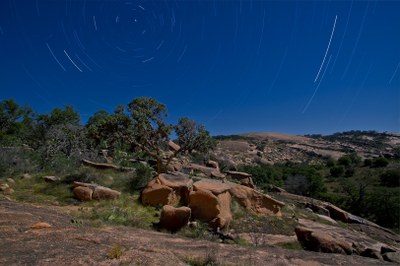
Enchanted Rock State Natural Area is a Dark Sky Park

Enchanted Rock State Natural Area is a Dark Sky Park


This is Passport to Texas

The night sky once offered an stunning display of twinkling stars and planets. These marvels still exist, but today light pollution masks their brilliance.

04—Often what we see that in is the form of what we call skyglow.

Residents in urban areas know it best as a haze of light that hangs over their cities. John Barentine is with the International Dark Sky Association.

12—Our mission as the International Dark Sky Association is to preserve and protect that nighttime environment and heritage that we have of dark skies through environmentally responsible outdoor lighting.

Awareness and simple fixes can help take back the night.

16—Some of the things that we try to do, is to get people to look at the quality of the lighting that they’re using…to think about [whether] the amount of light that’s being put on the ground sensible for the task at hand…and are all the lights fully shielded so we’re not always blasting light [up into the night sky] from the ground.

Want to experience a dark sky? Some Texas State Parks have the darkest skies around.

27—Enchanted Rock State Natural Area in the Hill Country, and Copper Breaks State Park in North Texas. We have a very active chapter of our organization in Texas. I would say that the reason that this has all come about, is that Texas being largely rural, and having this tradition where — the stars at night are big and bright – that a lot of people consider the dark night sky to be part of the cultural history of the state, and find it worth preserving.

For Texas Parks and Wildlife…I’m Cecilia Nasti.