Archive for the 'Conservation' Category

People: TPWD’s New Vet

Thursday, October 9th, 2014
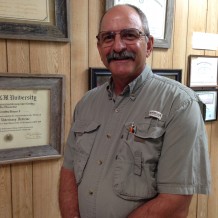
Bob Dittmar, TPWD veterinarian.

Bob Dittmar, TPWD veterinarian.


This is Passport to Texas

Veterinarian Bob Dittmar’s job is to help maintain healthy wildlife populations in Texas now and into the future.

17—My wife’s telling everybody that I’m going to be making sure that my grand kids and great-grand kids have wildlife to enjoy in the future. I’m going to be a part helping to ensure that our wildlife populations are healthy, and looking at it more from a veterinary medical standpoint than strictly a management and biological standpoint.

Dittmar is TPW’s first staff veterinarian. With an office in Kerrville, he’s currently spending time on the road meeting with regional biologists and technicians to further understand the needs among game and non-game species.

27—Right now, my job is to determine where I’m going to fit in and how I’m going to help. A lot of it is going to maybe be validating some of the things that the department has done in the past; maybe finding some new things that I would fit in and work on. But helping to analyze some of the date, doing some educational and training programs so that the field people will be able to recognize a disease situation or problem as it develops so we can take appropriate action.

More with Doctor Bob Dittmar – wildlife vet – tomorrow.

The WSFR program supports our series and funds its work through your purchase of hunting and fishing equipment and motorboat fuel.

For Texas Parks and Wildlife…I’m Cecilia Nasti.
TPW TV: Beneath the Surface

Friday, September 26th, 2014


This is Passport to Texas

Cast your gaze across the Texas landscape and its majesty and diversity become evident. Yet to experience the full depth these qualities you must dig deeper; go beneath the surface.

07— All these things behind me are not mountains. They’re the edge of the rim of the canyon; we’re 800 feet below the level of the ground.

That’s ranger Randy Ferris talking about Palo Duro Canyon.

12—This is like a reverse mountain. I mean, everything is flat; if you’ve driven across the Texas Panhandle, it’s like driving on the world’s largest billiard table. And then we get to Palo Duro Canyon, and the bottom just drops out of it.

Hidden worlds also exist below the surface of fresh and salt water – especially saltwater. Sylvia Earle, Advisory Board Chair, at the Harte Research Institute, says we must treat the Gulf with care and reverence or lose it.

17— We have in the past thought it was free, and infinite in its capacity to recover no matter what we did to it. But we’re learning that unless we take care and understand that this is a shared ocean, and that we need to work together to understand it, take care of it, and to use it – but don’t use it up.

View a segment on the Texas Parks and Wildlife PBS TV series called Beneath the Surface this week. Check your local listings.

For Texas Parks and Wildlife, I’m Cecilia Nasti.

Conservation: Lone Star Land Stewards

Thursday, September 18th, 2014

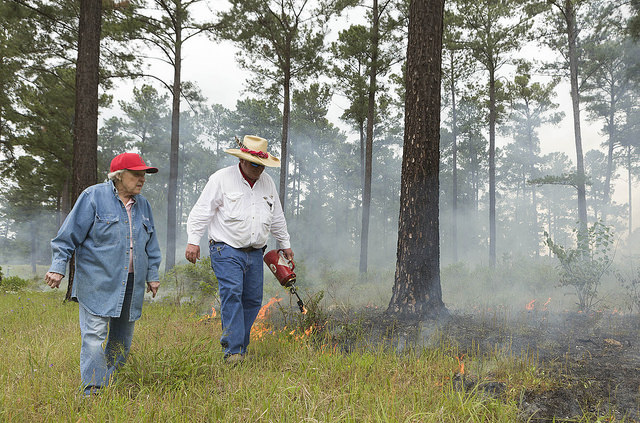
Prescribed burning

Leopold Lone Star land Steward Award winner 2014, Winston 8 Ranch.


This is Passport to Texas

The key to healthy habitat and wildlife populations rests in the hands of landowners. In Texas, we honor their skillful management.

09—Lone Star Land Steward is an award program where we recognize those landowners in Texas who are doing an exemplary job of managing their habitats and their wildlife.

Linda Campbell oversees the state’s Private Lands and Public Hunting programs.

13—We have all kinds of focus on these landowners. We have a great diversity of people. We have a regional award for each of the ten eco-regions. And then we have an overall award, the Leopold Conservation Award, for the overall statewide land steward.

Nominations for the awards opened June first, and will continue until the end of November.

23—Nominations can come from the landowners themselves, or those that assist them. We will take nominations from any member of the public. All of those nominations are evaluated, and we do site visited on those. We just want to make sure that we hold up those who are doing such an excellent job managing the resources of Texas.

Find nomination forms on the Texas Parks and Wildlife website.

The Wildlife and Sport Fish Restoration Program supports our series…and funds the Private Lands and Public Hunting programs.

For Texas Parks and Wildlife…I’m Cecilia Nasti.
Conservation: Powderhorn Ranch Acquisition

Wednesday, September 17th, 2014

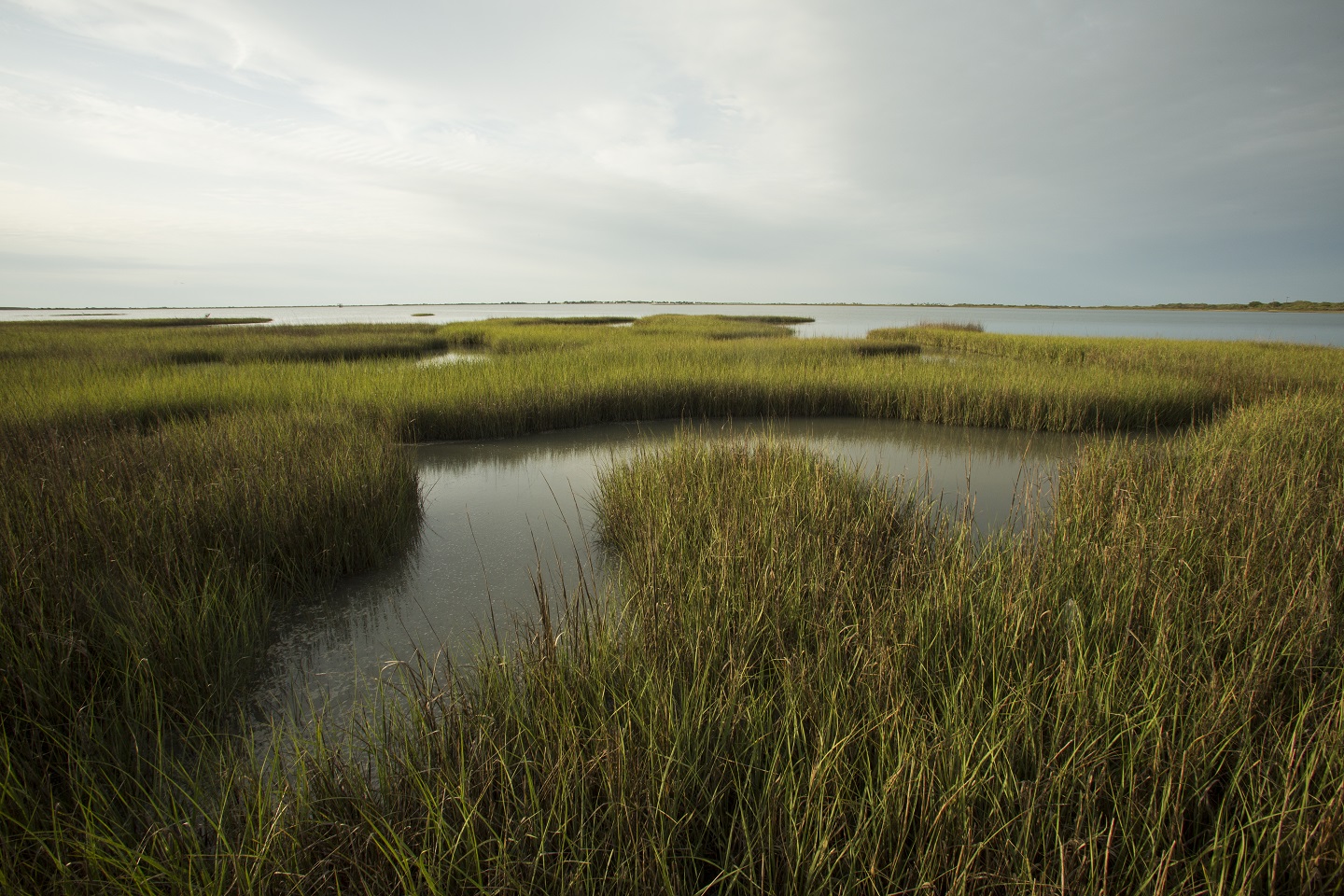
Wetland bayous

Wetland bayous along Powderhorn Lake, image by Jerod Foster, courtesy of The Nature Conservancy


This is Passport to Texas

The 17-thousand acre Powderhorn Ranch in Calhoun County has a long, fascinating past, and a bright future, thanks to a coalition of partners that raised nearly 38-million dollars to help purchase the land.

04—This really took the proverbial village to help put this project together.

Texas Parks and Wildlife Executive Director, Carter Smith says the expansive tract of pristine coastal prairie will be preserved for all Texans, including native flora and fauna.

18— The Powderhorn Ranch has been the dream of the conservation community for almost a quarter of a century. And, everybody has recognized its scale, its incredible ecological integrity and biological uniqueness. And, as we see more development, more activity, we’ve recognized the criticality of protecting places that scale like the Powderhorn.

The Texas Parks and Wildlife Foundation raised most of the money for the $50 million project, which includes an $8 million endowment to fund ongoing habitat management and restoration.

17— Every single attitudinal survey shows that Texans care about their coast. They’re passionate about it. It’s conservation. They value the water that flows into it, and is present there. And so, this is one of those places that are going to be there for future
generations. And, there’s just a special comfort in knowing that.

For more information about the Powderhorn Ranch project, visit the Texas Parks and Wildlife website.

For Texas Parks and Wildlife, I’m Cecilia Nasti.

Nature: Diversity in the Chihuahuan Desert

Friday, September 12th, 2014

The Chihuahuan Desert

The Chihuahuan Desert


This is Passport to Texas

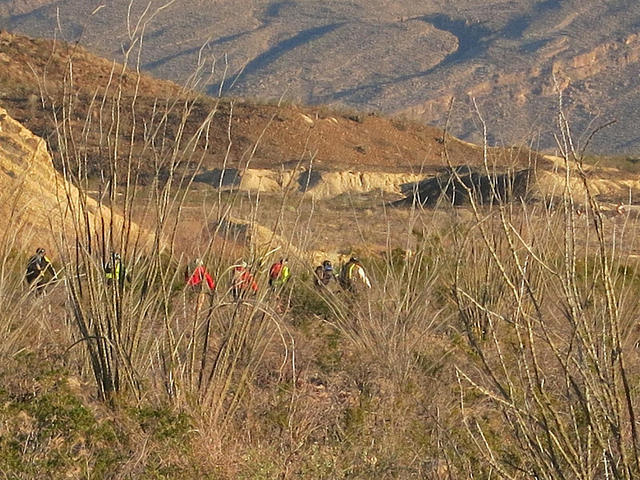
Say the word desert, and –and an image of a bleak and lifeless place may come to mind. That may be true for some deserts – but it’s not true for the Chihuahuan Desert Region.

07—It’s one of the most diverse places for both plants and animals in this country, and frankly, in the world.

That’s not including tropical and subtropical regions, of course. Cynthia Griffin is Executive Director of the
Chihuahuan Desert Research Institute, or CDRI, in Fort Davis…located within the 220-thousand acre ecosystem.

29—There are over 3-thousand plant species on the Chihuahuan; it is a center of diversity for cacti. Our cactus greenhouse has some of the most rare and best examples of cactus found in the Chihuahuan Desert. There are more reptiles on the Chihuahuan than there are on the Sonoran. There are more birds on this desert [region] than in the Everglades. And in the Davis Mountains, we have 16 of the 18 species of North American Hummingbirds.

The Chihuahuan Desert Region has an elevation range from 1-thousand to 10 thousand feet above sea level, and it is isolated from other North American deserts.

10—So there’s not the bleeding over. And, so because it’s large, and because of its range of elevation, you will find species here that you will not find anywhere else.

Learning about deserts isn’t as dry as you once thought.

Find out more about the Chihuahuan Desert Region in the Aug/Sept issue of Texas Parks and Wildlife magazine.

For Texas Parks and Wildlife, I’m Cecilia Nasti.