Archive for the 'Conservation' Category

Parks: A Seaside Park’s Rebirth

Wednesday, July 2nd, 2014
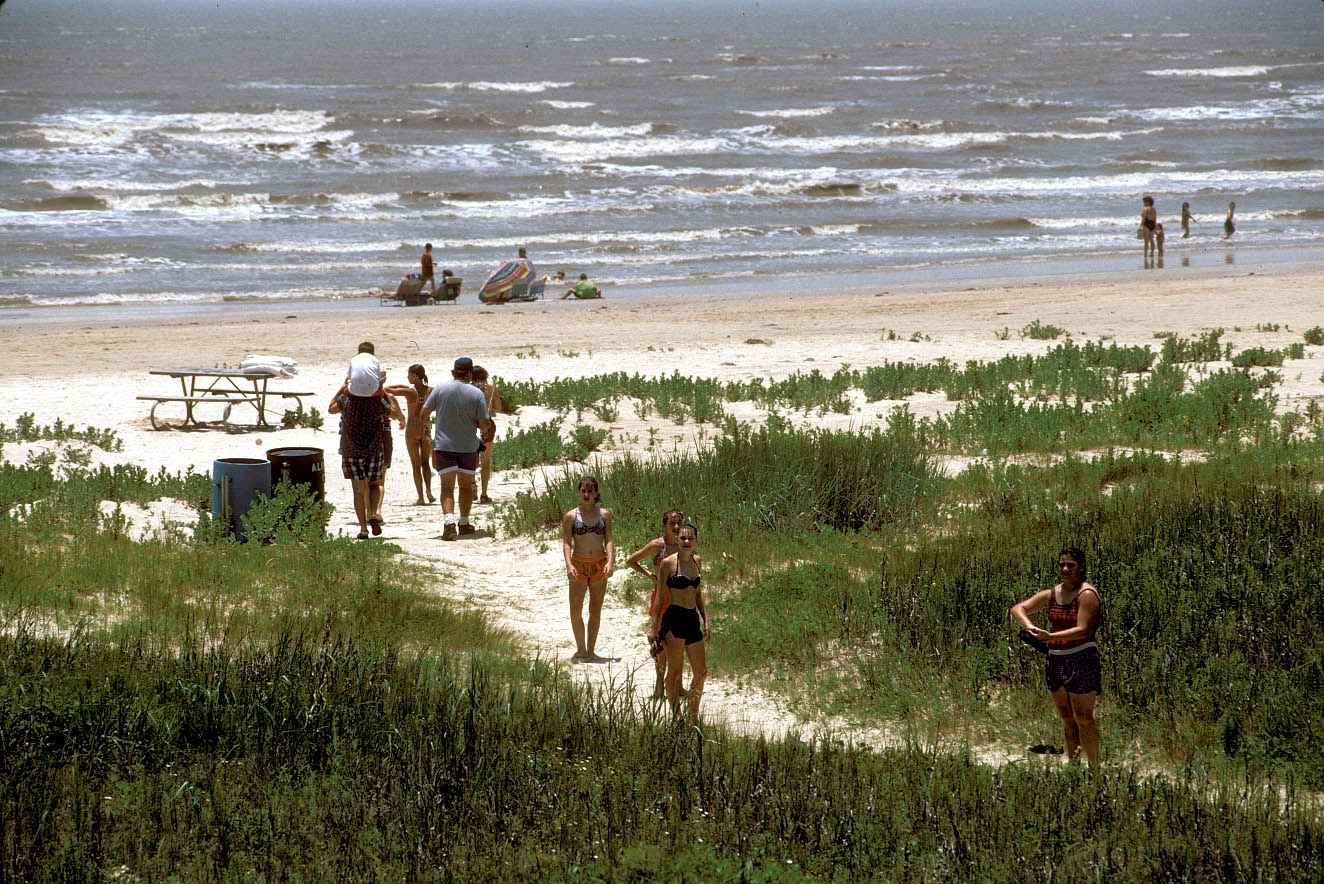
Sea Rim State Park

Sea Rim State Park


This is Passport to Texas

Sea Rim State Park in Sabine Pass is unique in the Texas park system.

07— It’s one of the most unique parks in the system, because it is the only park where the marshlands meet the Gulf of Mexico.

Ben Herman is Sea Rim’s superintendent. He says the diversity of ecosystems makes this park a standout – and an interesting place to live.

16— You have such a wide variety of ecosystems – both in the marshlands and on the surfside – that the joining of those two are pretty cool. I always joke on one side of my house I have mosquitoes and alligators and on the other side I have sharks and seaweed.

The natural world is as brutal as it is beautiful. In 2005 Hurricane Rita tore up Sea Rim, but before it could fully recover, Hurricane Ike brought destruction in 2008.

06— Which were pretty devastating blows for the park. We basically lost all of our facilities and all of our utilities.

TPWD closed the site for repairs. As recently as one year ago, when Herman joined the park, things looked bleak.

16— There was very little out here. We had to completely rebuild all of our logistics and all of our infrastructure. So now, being able to roll it back out to the residents, and everybody who wants to come up and enjoy Sea Rim, is a very proud moment for us. It was a long time coming.

The park celebrated its grand reopening June 20. How the park is nearly better than before. That’s tomorrow.

For Texas Parks and Wildlife, I’m Cecilia Nasti.

Conservation: New Conservation License Plate

Monday, May 26th, 2014

New State Park Tent Plate

New State Park Tent Plate


This is Passport to Texas

Before long you’ll be able to express your driving passion for Texas state parks with the latest addition to the conservation license plate lineup.

11— For the first time in about a decade, we are releasing a new plate; and it’s a beautiful yellow tent – the iconic boy scout-looking tent – with a campfire and stars in the sky at night.

Janis Johnson is with the Texas Parks and Wildlife marketing Group. She says the new design evokes a sense of nostalgia and fun with family and friends at state parks.

06—Yes, we are looking to create that nostalgic feeling: taking fun memories home with you – even if it’s putting them on the back of your car.

The Camping plate joins the Bluebonnet design, both of which benefit operational activities and visitor programs at state parks. Available online, the plates, themselves, cost $30 each, not including the registration fee; $22 of cost of the plate supports parks.

15— One common misconception is that you have to wait until your renewal date comes up for your license plate – and, in fact you don’t! So, you can just go online and order the plate – fill out some information – and they will mail it to you, or you can pick it up at your local tax assessor office.

Find the camping plate and other conservation license plate designs at conservation plate dot org.

That’s our show for today… Funding provided in part by Ram Trucks. Guts. Glory. Ram. For Texas Parks and Wildlife, I’m Cecilia Nasti.
Conservation: Texas Wild Rice

Thursday, May 8th, 2014

Texas Wild Rice

Texas Wild Rice


This is Passport to Texas

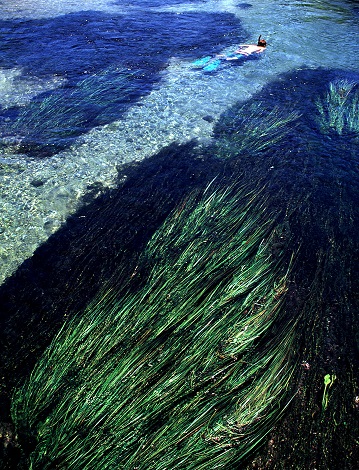
Texas Wild Rice is an endangered species that exists only in a two mile stretch of the San Marcos River.

06— Just in that two-mile stretch. Because, what happens is, you go further down the river and the river‘s character changes.

Botanist, Jackie Poole says where the rice grows, the spring-fed river is clear and a constant 72 degrees; but, farther downstream…

10— It’s very different. It starts to become more turbid, and loses that constant temperature quality. So, it’s just not as good habitat further downstream.

When asked to describe the plant, Poole laughed and said it’s like flowing hair.

15— [chuckle] That’s probably the best way to say it. If you envision someone with long, flowing hair, the leaves are submerged under water. And they can be up to 10 to 15 feet long, and so they just wave underneath the water with the current.

So here we have a very rare and endangered plant that only grows underwater along a two mile stretch of river. So, does that mean we never see it?

17— It does flower. And when it flowers, the flowering stalks are produced above the water. So then you would see flowering stalks that look like, um, maybe most grasses – like a Johnson grass. I hate to use that example of a noxious, invasive species. But it does resemble that.

The Wildlife and Sport Fish Restoration Program supports our series. For Texas Parks and Wildlife, I’m Cecilia Nasti.
Conservation: Rare and Endangered Texas Plants

Wednesday, May 7th, 2014

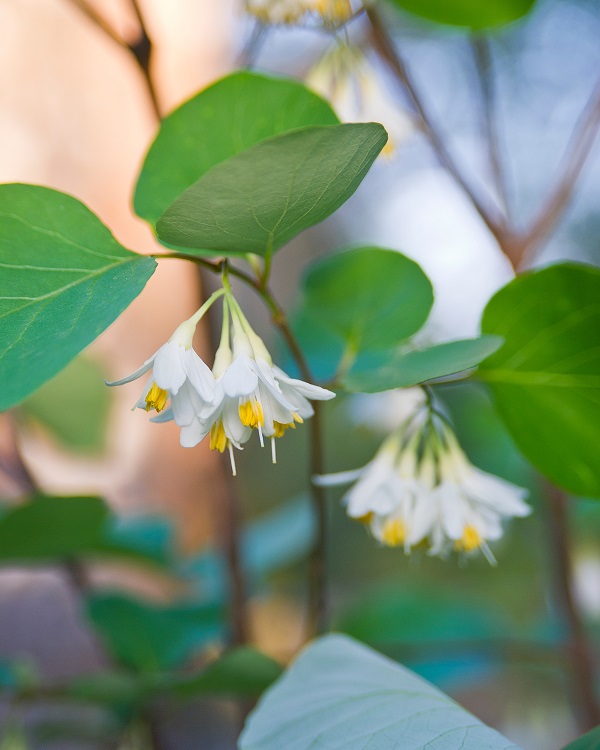
Endangered Texas Snowbell; image by Chase Fountain

Endangered Texas Snowbell; image by Chase Fountain


This is Passport to Texas

We have a fair share of threatened and endangered plant species in Texas.

08— Actually listed endangered or threatened plant species, we have probably right now around thirty-two.

Botanist, Jackie Poole says Texas has even more rare species.

15— We maintain a list of the rarest species in the state, which is about 250. And then we have about another 200 species that are not very common, but not at the level of being endangered.

One of the rarest of the rare is Texas Wild Rice.

11— It only occurs in two miles of the San Marcos River and, of course, the San Marcos River, is within the city of San Marcos almost its entire length. So there are all kinds of pressures.

Pressures like recreation and development… but money and manpower through the Edwards Aquifer Habitat Conservation Plan benefits the species, which has only ever existed in the clear, warm, spring fed waters of the San Marcos River.

20— The only similar river in Texas, really, is the Comal River. And interestingly, the father of Texas botany – Ferdinand Lindheimer – lived in New Braunfels on the Comal River, but he never collected the plant. So, it suggests that it certainly wasn’t at his backdoor step. We think it’s always been in the San Marcos River and that’s it.

Tomorrow: getting to know Texas Wild Rice.

The Wildlife and Sport Fish Restoration Program supports our series and funds diverse conservation projects in Texas.

For Texas Parks and Wildlife, I’m Cecilia Nasti.
Restoration: Galveston Bay Oil Spill

Tuesday, May 6th, 2014

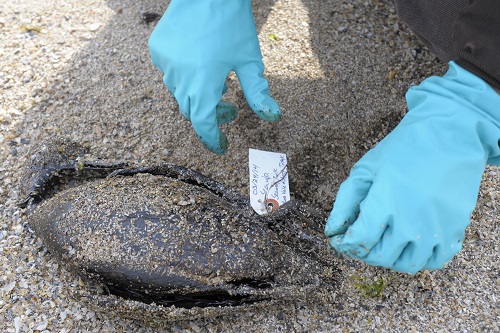
Dead bird being tagged on Pelican Island.

Dead bird being tagged on Pelican Island.


This is Passport to Texas

A late March collision between two ships in Galveston Bay caused a leak in one of them, spilling more than168-thousand gallons of fuel oil into the Gulf.

06— This time of year is particularly of concern to us because it’s the spring migration, we’ve got a lot of migratory shore birds moving through.

Andy Tirpak is with the Ecosystem Resources Assessment Team at Texas Parks and Wildlife.

08— So, in essence we’ve got oil on the beach where birds are coming through to rest, to feed, as they continue their migration. So it’s challenging right now.

Shortly after the spill, rescuers discovered oil-slicked and injured birds all along the coastline. Biologist A.J. Vale, with the U.S. Fish & Wildlife Service, is among the many wildlife advocates on hand to save them.

10— It’s just tough seeing the birds all oiled and struggling. They’re trying to clean themselves and they ingest the oil and it must make them really sick.

Andy Tirpak says they’re working against the clock to clean up this vital ecosystem.

10— It’s not just that we’re going to try to save the birds. If we try to save the birds – that’s great, that’s good – but we also need to be worried about impacts in the sand and the things that live in the sand that the birds are feeding upon.

Hundreds of shorebirds are dead or oil coated. By early April, oil from the spill in Galveston Bay drifted ashore on Padre Island National Seashore. Check for updates on the Texas Parks and Wildlife website.

For Texas Parks and Wildlife, I’m Cecilia Nasti.
