Archive for the 'Conservation' Category

Wildlife/Birding: Christmas Bird Count

Monday, December 9th, 2013
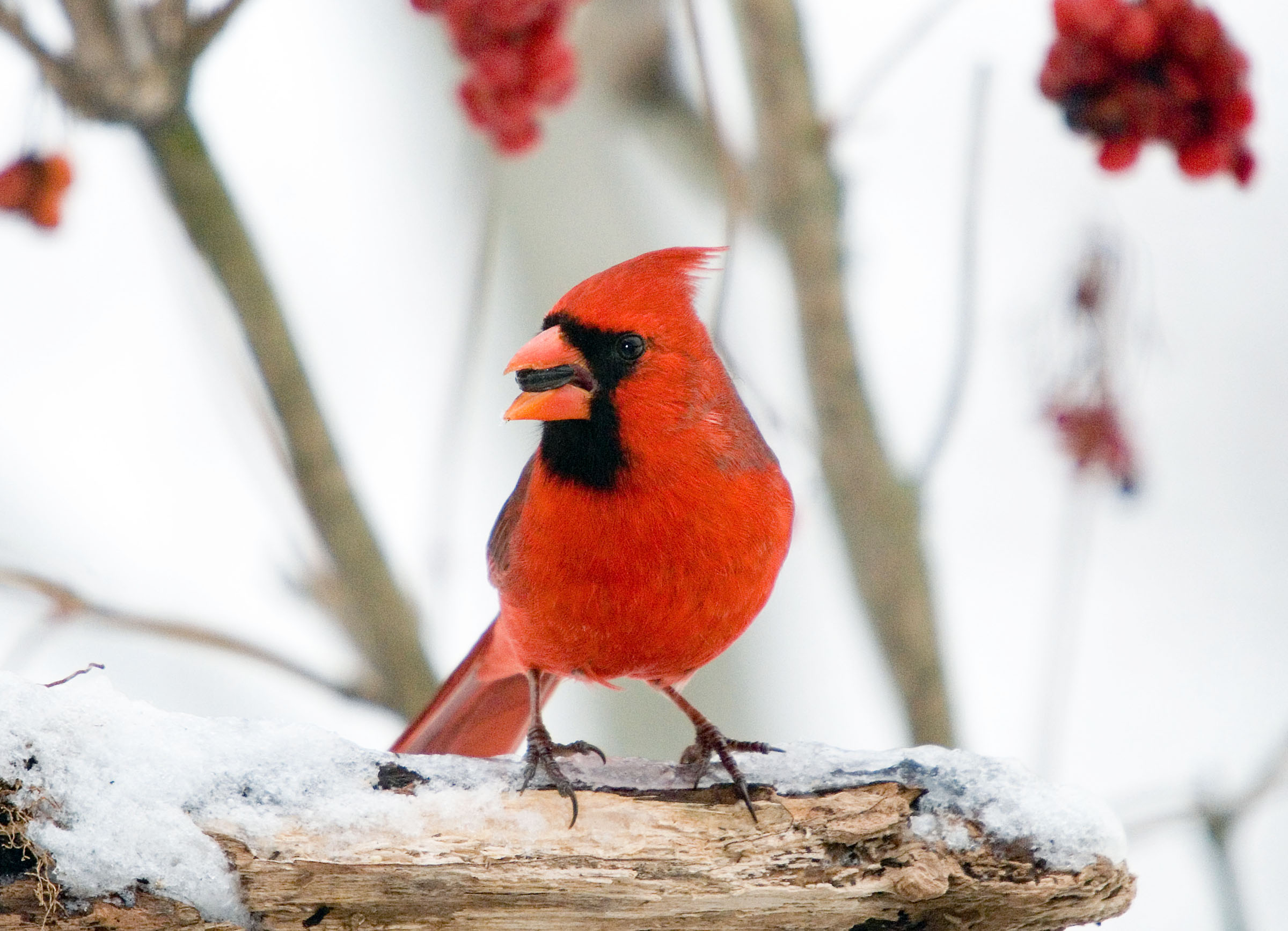
Christmas Bird Count, image Jerry Acton, www.audubon.org

Christmas Bird Count, image Jerry Acton, www.audubon.org


This is Passport to Texas

More than a hundred years ago people participated in a time-honored Christmas tradition.

06— People would go out and do what was called a side hunt, and the winning group would come back with the biggest pile of dead critters.

How festive. The majority of critters in those piles were birds. Cliff Shackelford, a non-game ornithologist with Parks and Wildlife, says conservationists had a better idea.

05—Early conservationists thought that we ought to count birds and not try to collect birds.

Today we have the nationwide Christmas Bird Count. Between December 14 and January 5, volunteers, armed with bird lists, head into the field and count birds over a 24-hour period.

15—What people do is they get into teams, and they have a defined 15 mile radius circle that they’re counting in, and that circle never moves. The hope is that you would count that circle for decades and decades and over time you would see trends.

Different groups pick different days within that three week period to count birds. Researchers use the census information to assess the health of bird populations, and to guide conservation action.

05—They might need a full year’s heads up to chew on it and figure out, hey, I want to do this next year.

Go to audubon.org for more information. The Wildlife and Sport Fish Restoration program supports our program. For Texas Parks and Wildlife…I’m Cecilia Nasti.
Wildlife: Whooping Crane Recovery Update

Thursday, December 5th, 2013

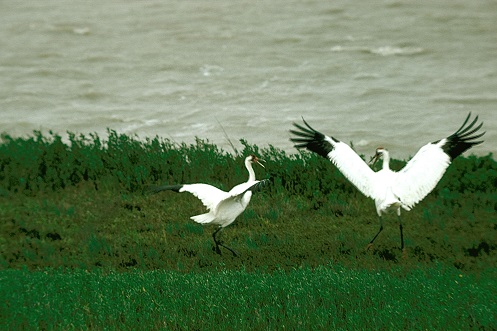
Pair of Whooping Cranes

Pair of Whooping Cranes


This is Passport to Texas

Parks and Wildlife biologist, Leeann Linam, has a long history with Whooping Cranes.

11— [chuckles] well, I may age myself here, but we moved to the Aransas National Wildlife Refuge when I was 12. And so I guess that means about 40 years or so I’ve been involved with whooping cranes.

Whoopers winter at the refuge, where Leeann’s father worked for the US Fish and Wildlife Service. Yet, after 70 years of conservation—and a low of 15 birds—there are still fewer than 300 members in the migrating population.

24 – Part of it is the nature of the animal, itself. Whooping cranes are one of these birds designed to be around for a long time. They live 25 to 30 years and more (in captivity). They don’t reproduce until they’re four or five years old; they usually only raise one chick successfully per year. So it just takes a while. You just have to be patient and provide the right conditions for a long time and then the numbers start to add up.

As their population increases and becomes more widespread, maintaining an accurate tally of the birds becomes a challenge. Whoopers are moving farther up the coast away from their traditional wetland habitat.

07 – Some in the rice country in Horton County and most interestingly, in Central Texas, we’ve had some whooping cranes wintering in Williamson County.

Tomorrow: where to see migrating whoopers.

The Wildlife and sport fish restoration program supports our series and funds diverse conservation programs in Texas…

For Texas Parks and Wildlife…I’m Cecilia Nasti.

Conservation: Holiday Conservation Gifts

Wednesday, December 4th, 2013

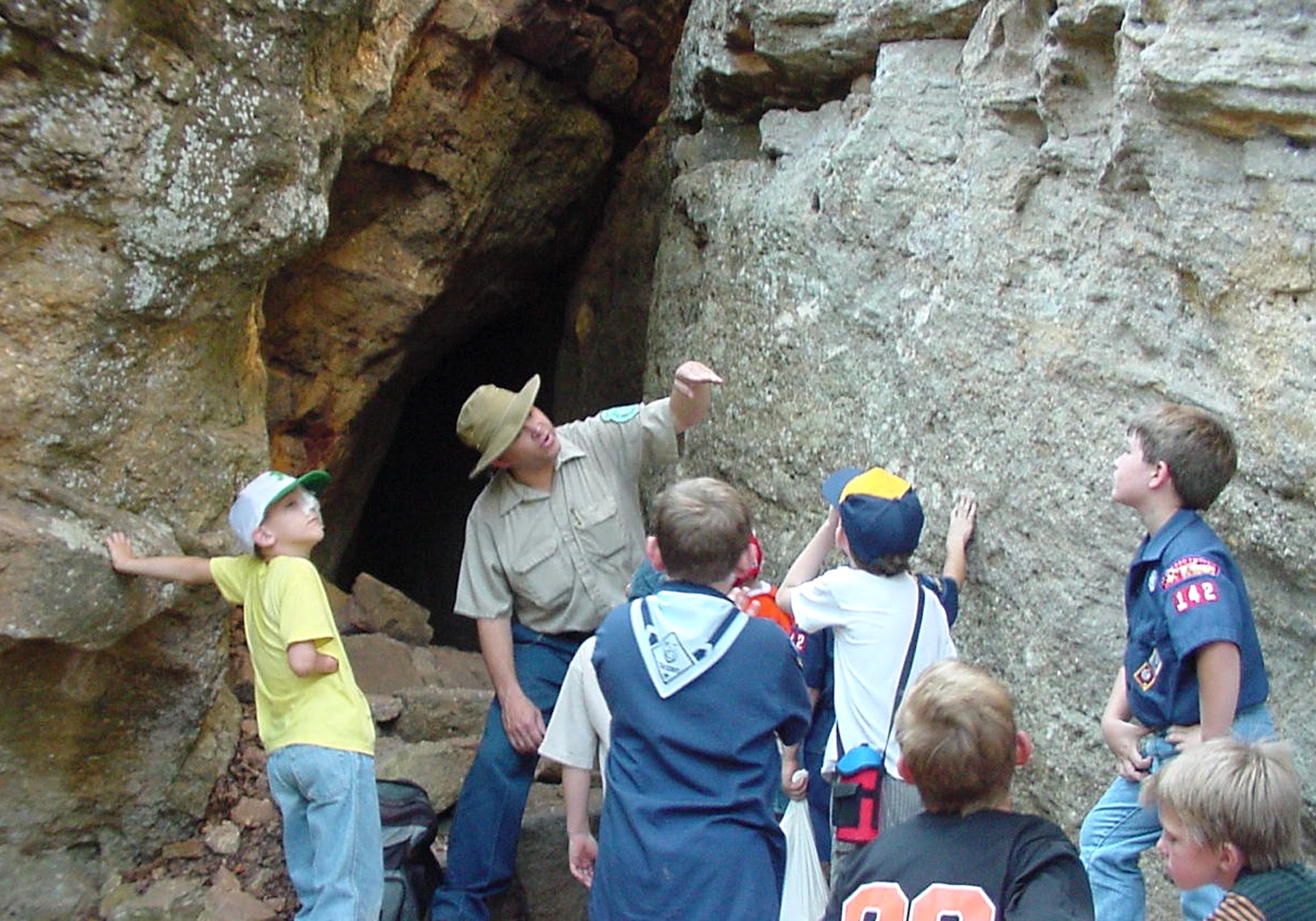
Nature Hike with Scouts

Nature Hike with Scouts


This is Passport to Texas

Holidays challenge the creativity of gift-givers everywhere. However, if you have nature lovers on your list, gift giving is easy—and the giving is twice as nice.

A seventy-dollar Texas State Parks Pass is a thoughtful and sensible gift for your outdoor enthusiast. Pass holders enjoy twelve months of unlimited visits to more than ninety state parks and historic sites.

They also receive discounts on camping, park store merchandise and recreational equipment rentals. Money spent on the pass supports your Texas state parks.

For thirty dollars each, you can give the drivers on your list a conservation license plate. Twenty-two dollars from every sale goes directly to help fund conservation efforts in Texas. The horned lizard plate, in particular, funds research and conservation of non-game species such as the iconic horned lizard.

Give every outdoor lover on your list access to more than a million acres of public land—with the Limited Public Use Permit—for the ridiculously reasonable price of twelve dollars.

Permit holders receive twelve months of access to Texas’ wildlife management areas, where they can fish, hike, bird watch, cycle, and camp.

When you give one of these gifts, you delight the receiver, and help support state parks and conservation in Texas.

That’s our show…remember: life’s better outside… For Texas Parks and Wildlife…I’m Cecilia Nasti.
Habitat: Bad News/Good News for Longleaf Pines

Wednesday, November 13th, 2013

Gas Well Fire, image theexaminer.com

Gas Well Fire, image theexaminer.com


This is Passport to Texas

A gas well blowout in 2011, in a remote area of Village Creek State Park in East Texas, burned acres of brush and trees; including newly planted native longleaf pines, part of a reforestation effort by Texas Parks and Wildlife.

06— It was a huge fireball, with several hundreds if not thousands degrees; it cooked a huge area.

David Riskind, director of the natural resource program for state parks, says the agency came to a damage claim settlement with the drilling company, and is using the funds to develop a restoration plan…

32—And implement that restoration plan on the type of site and soils which would have been occupied naturally by longleaf pine. So, here we are; we’ve begun to restore the site. We’ve tried to put back the site in its natural condition, using natural contours, that we got from our own experience and also from the topo maps that we have available before the site was site prepped for timber production. And, we’ve begun phase one of the restoration of this – about 180 acre – longleaf pine restoration project.

Longleaf pines were nearly logged to extinction, and with them, the plants and animals that call that habitat home. With this restoration, the agency hopes to see an eventual revival of the forest, flora and fauna.

For Texas Parks and Wildlife…I’m Cecilia Nasti.

Habitat: Restoring Longleaf Pines in East Texas

Tuesday, November 12th, 2013

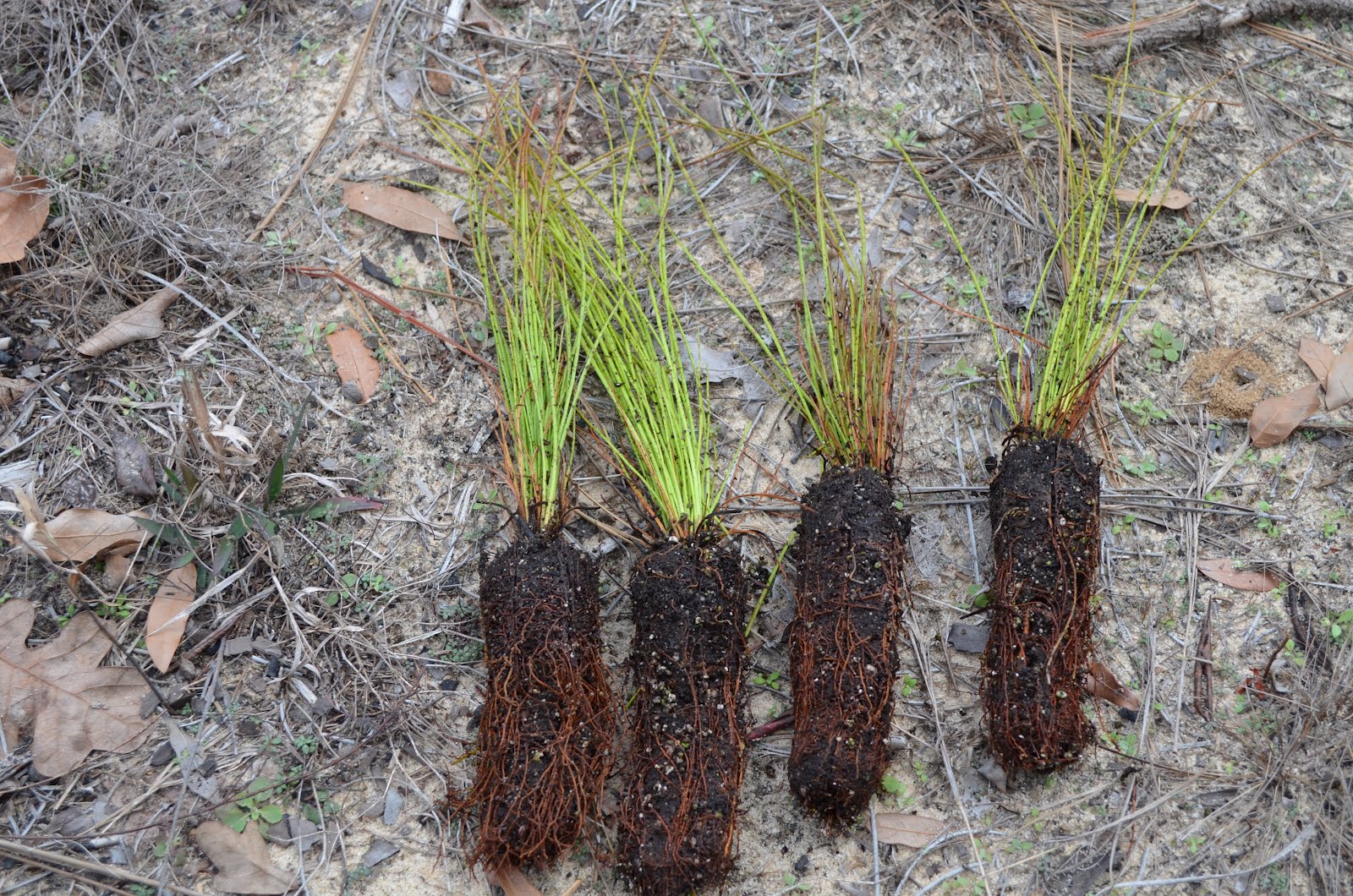
Longleaf pine Seedlings photo from naturejournals.blogspot.com. Image from

Longleaf pine Seedlings photo from naturejournals.blogspot.com


This is Passport to Texas

A reforestation project underway in East Texas will see the expansion of a stand of native longleaf pine trees at Village Creek State Park.

09— There’s no other state park that has longleaf pine in it. And only the Roy Larsen Sandy Lands Unit in the Big Thicket has a good stand of longleaf pine.

Davis Riskind is director of the natural resource program for state parks. He says the agency acquired property for the reforestation project from The Conservation Fund.

32—And our objective here on most of the state park land is to restore natural habitats. We had a special circumstance occur, in the process of acquiring the property from the conservation fund. There was an outstanding gas drilling right. So, we accommodated that; we worked with the gas company; we found a site that was suitable in the tract, out of the way for them to pursue their rights to explore for gas. The good news is they hit a huge gas well. The bad news was – the well blew out.

David Riskind says a huge fireball cooked a huge swath of land, taking some of the longleaf pine seedlings with it.

Tomorrow: How bad news turned into good news for the longleaf pine reforestation project.

For Texas Parks and Wildlife…I’m Cecilia Nasti.