Archive for the 'Conservation' Category

Conservation: The Rules of Frogging

Tuesday, July 9th, 2013
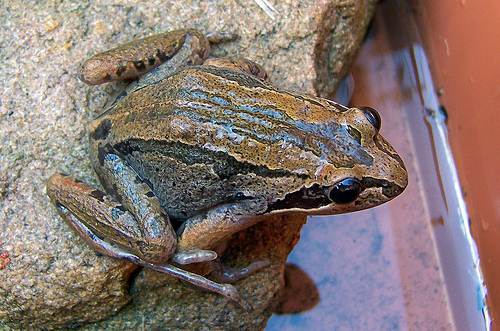
Brown Striped Frog, Image Creative Commons, Brenda Starr

Brown Striped Frog, Image Creative Commons, Brenda Starr


This is Passport to Texas

[Chorus of frogs]

Have you ever been frogging?

06 — It’s what we call when you just get out at night and you start listening for frogs and see what’s living out there around you.

Lee Ann Linam coordinated Texas Amphibian Watch for Parks and Wildlife. Frogging involves volunteers who collect information on amphibian species they hear.

10 — When we suggest that folks do something kind of unusual like that, we like to give them some guidelines to keep them safe, and to keep the frogs safe, and to respect the rules around them. So, that’s what the rules of frogging are for.

Volunteers must obtain permission before accessing privately owned land. Of utmost importance is the safety of the amphibians.

23 — Amphibians are sensitive to things like insect repellents that contain deet, which many of them do. Things like sunscreen and other chemicals that might be on your hands. And so we always say to people, before handling frogs, make sure that you wash your hands, keep your hands moist. And then the other thing we say is to go ahead and wash up afterwards because some frogs have compounds on their skin that protect them from being eaten.

And those compounds can be irritants. We have a link to the complete rules of frogging at passporttotexas.org.

The Wildlife and Sport Fish Restoration program supports our series… and provides funding for diverse conservation project throughout Texas.

For Texas Parks and Wildlife…I’m Cecilia Nasti.

Conservation: New Conservation License Plate

Wednesday, June 19th, 2013

Vote on Your Favorite Conservation Plate Design

Vote on Your Favorite Conservation Plate Design


This is Passport to Texas

Twelve years ago a bluebonnet showed up on a conservation license plate; money raised from the sale of these plates support state parks.

04— The bluebonnet plate has been wildly successful for us, and it’s something we’re going to continue.

Thomas Wilhelm, with State Parks, says 22-dollars of the 30-dollar cost of the plates go back to parks. Since two plates to support state parks are better than one, a new conservation plate is in the works.

13— Well, right now we have three designs that we’re looking at: one is a campfire scene, one is a nighttime tent scene, and then one is a hiking scene.

The new plate is intended to appeal to people who may like to support parks with images related to camping or hiking.

09— The goal was: how can we bring new people in that may want to support state parks, but may not be comfortable putting a wildflower on their 3/4 ton pickup truck.

You can go online and vote for your favorite.

11— Voting is running from now through August 31st. Go to conservationplate.org, or just visit the TPWD website and we’ll have links to a place where they can place their vote.

The winning design will become the new conservation license plate.

10— We’re hoping to have the plates available for purchase starting Spring of 2014. They’ll be available to purchase either online, or at the local DMV when they register their vehicles.

For Texas Parks and Wildlife…I’m Cecilia Nasti.

Conservation: Public Reefing

Wednesday, June 12th, 2013

Concrete pyramids for near shore reefing

Concrete pyramids for near shore reefing


This is Passport to Texas

An artificial reef is marine habitat created by man and placed on the ocean bottom for the benefit of marine life.

06 – Fish like structure. And just about anything you put overboard will attract fish.

Paul Hammerschmidt, with coastal fisheries, says a program called public or near-shore reefing allows the public to deposit reef materials into the gulf.

12 —We’re going to allow the general public to reef material within state territorial waters, and that will expand the number of artificial reefs that we have out in the Gulf of Mexico off of Texas.

You shouldn’t think of this as an invitation to dump your garage sale rejects into the gulf.

13 – We have certain criteria for the material. It has to be stable; it can’t fall apart, it can’t wash up on the beach, it can’t float…all of those things, which is just exactly what we comply with when we do our own reefing.

More reefs in the Gulf of Mexico will mean better fishing for coastal anglers.

03—Our charge is to increase fishing opportunities, and this is a really good way to do it.

Find details about near shore reefing on the Texas Parks and Wildlife website.

The Sport Fish Restoration Program supports our series and provides funding for the operations and management of Sea Center Texas.

For Texas Parks and Wildlife…I’m Cecilia Nasti.
Conservation: Houston Toad Recovery, 2

Thursday, June 6th, 2013

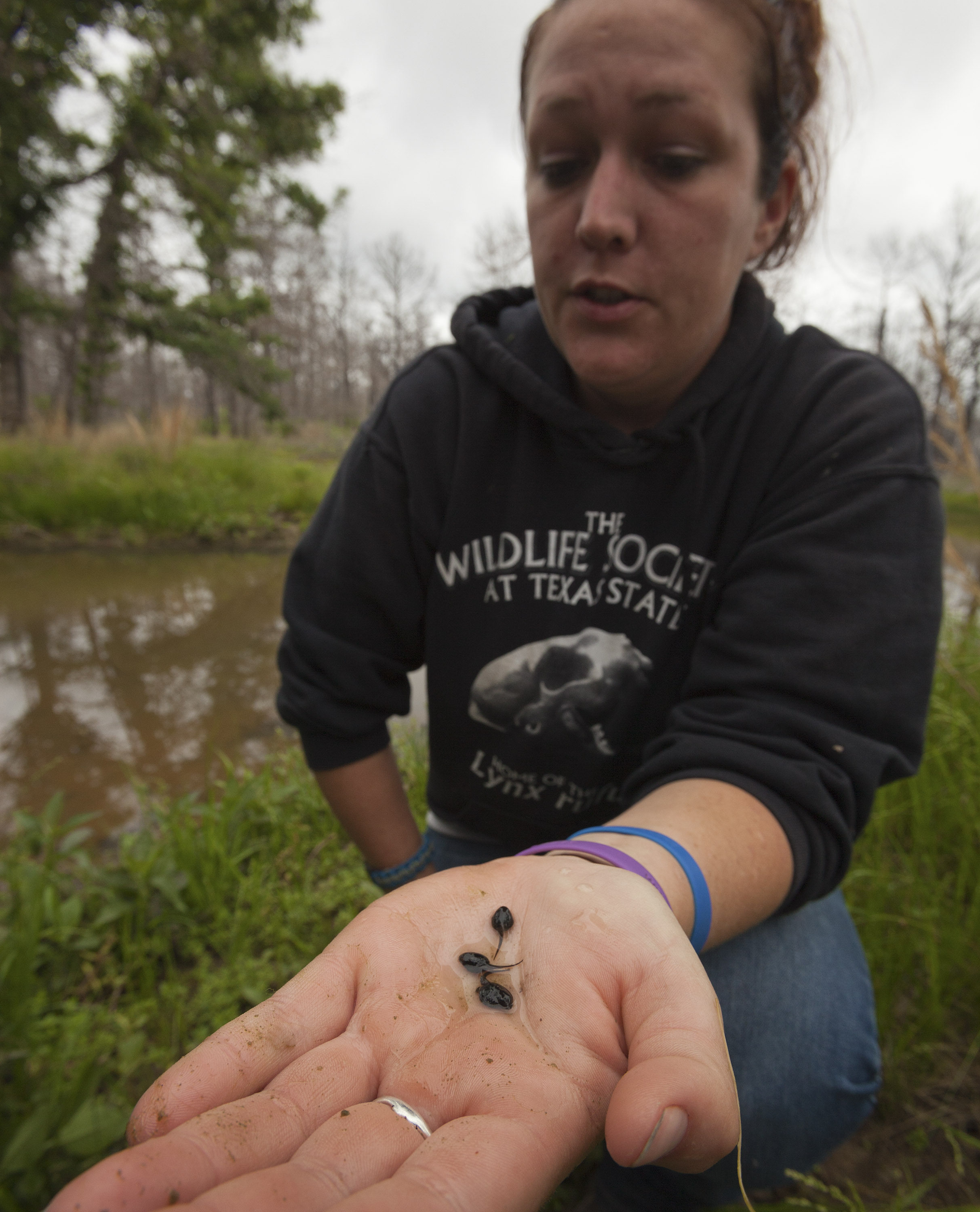
Houston Toad Tadpoles, Image by Earl Nottingham, © Texas Parks and Wildlife Department

Houston Toad Tadpoles, Image by Earl Nottingham, © Texas Parks and Wildlife Department


This is Passport to Texas

Recent drought and wildfires could have spelled the end for the endangered Houston Toad, which exists in and around Bastrop State Park.

05—A few months after the wildfire in Bastrop County, our surveys documented very few toads during that first breeding season.

This had wildlife biologists like Greg Creacy worried about the status of the remaining population. But a recent survey found more breeding toads than they had a right to expect after such devastation.

11— It’s puzzling, and we’re continuing to do research with collaborators like Texas State University. And we’re learning more about the species with every passing year, and we hope to have answers to those questions soon.

Using a “head start” program Creacy harvested egg strands from breeding areas – post fire – raised them to tadpole stage, then released them where they were found. While it gives them a higher survival rate…

27—We have noticed that the toads that we have found since the wildfire, typically do not weigh as much as they usually do. The eggs that they’re laying are smaller. So it appears that physiologically they’re not as in good health as they normally are. But you have hope that over time this will change? Yes. They’ve gone through a very difficult time with the drought and the subsequent wildfire, but we are optimistic things will be improving soon.

That’s our show. The Wildlife and Sport Fish Restoration program program supports our series, and is funded by your purchase of fishing & hunting equipment and motorboat fuel.

For Texas Parks and Wildlife…I’m Cecilia Nasti.
50th Anniversary: Redfish Wars, 1

Thursday, May 30th, 2013

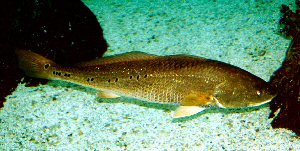
Red Drum

Red Drum


This is Passport to Texas

It’s illegal to commercially fish red drum, or redfish, in Texas. In the 1970s, during routine monitoring of bays, biologists discovered a serious decline in the number of the species caught by commercial fishermen.

06- So, we started looking into it very carefully, and started implementing bag and size limits on these animals.

Paul Hammerschmidt, with coastal fisheries, says the new restrictions were just the beginning of a lengthy and involved process to help increase populations of the species.

12-The legislature actually required us to establish quotas on commercial fishing. And we were allowed to modify those quotas depending on the amount of fish that were being caught on a day-by-day basis.

Most commercial anglers cooperated with Texas Parks and Wildlife by reporting the redfish caught in their nets….

26-Annecdotally, we had heard that red drum being landed and sold to fish wholesalers were actually reported as another species. What that did, is that showed fewer and fewer redfish were being caught in a particular bay. And that impacted the formula that we used to establish the quotas. So, the fewer and fewer fish that they got, the next year the fewer and fewer fish they were allowed to catch.

This marked the beginning of what would become known as The Redfish Wars; we’ll have more tomorrow.

The Wildlife and Sport Fish Restoration project supports our series…and funds the operations and management of fish hatcheries in Texas. For Texas Parks and Wildlife…I’m Cecilia Nasti.
