Archive for the 'Fishing' Category

Angling: Accessible Coastal Angling

Thursday, April 11th, 2013
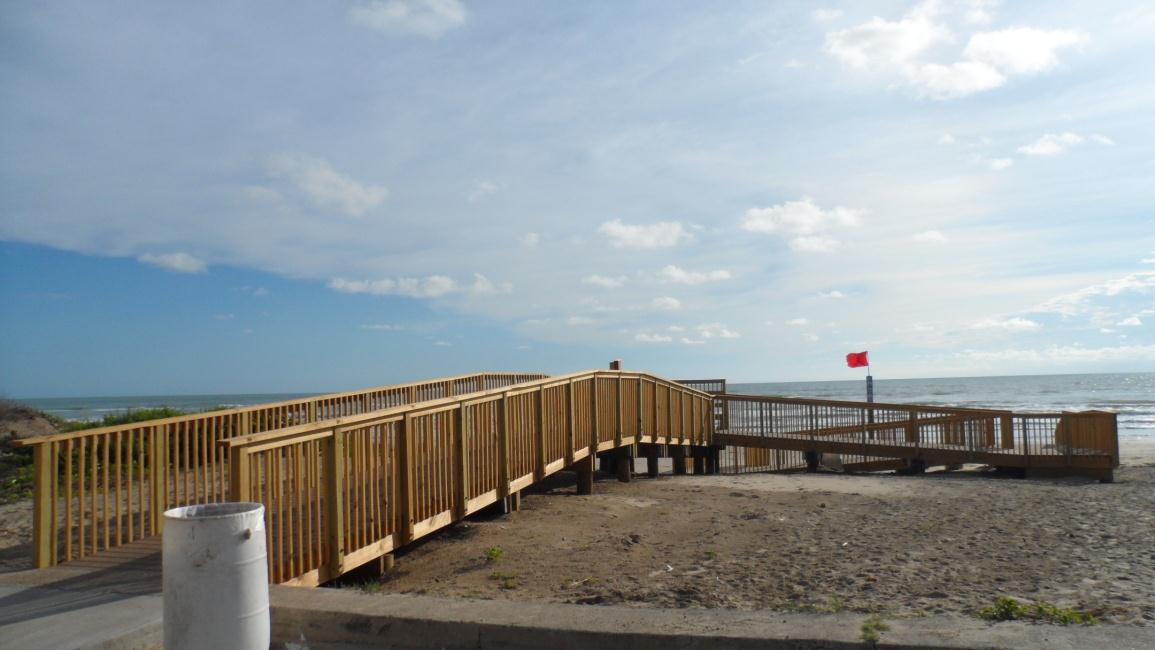
Accessible Beach Access South Padres, image http://www.myspi.org/

Accessible Beach Access South Padres, image http://www.myspi.org/


This is Passport to Texas

All Texans deserve reasonable access to coastal fishing opportunities, regardless of their physical abilities.

04 –This is Texas and Texans love to fish; and we want to make sure that everybody can fish.

Jim Suydam (SUE-dam), press secretary to Texas General Land Office Commissioner Jerry Patterson, says mobility impaired Texas anglers shouldn’t let concern over beach access stop them from casting a line in Gulf waters.

16 – I think people would be amazed to find how easy it really is. Some people may be intimidated to think that it would be harder to access the beach if they have a disability. But I think if they look at how most Texans go to the beach, that you can just drive up and find a nice spot– it’s really very easy.

Although the Americans With Disabilities Act doesn’t apply to the coast, Suydam says the state follows its accessibility guidelines because it’s the right thing to do.

25—It’s important in the mix for us when we’re looking at a city’s beach access plan, that we make sure that there is adequate vehicular access as well as pedestrian access. Also, we work to funnel grant monies to areas that will provide special ADA dune walkovers; that’s an important part of the mix. And we’ve put those in, in surfside and in Sea Rim State Park – some of the most popular parks in Texas for fishers.

Find information about the Texas Beach and Bay Access Guide on the Texas parks and Wildlife website

The Sport Fish and Wildlife Restoration Program supports our series… providing funding for the operations and management of Texas State Fish Hatcheries.

For Texas Parks and Wildlife…I’m Cecilia Nasti.

Angling: Carp Fishing

Tuesday, April 9th, 2013

Image from Carp Anglers Group, Austin Team Championship 2012

Image from Carp Anglers Group, Austin Team Championship 2012


This is Passport to Texas

Carp is the Rodney Dangerfield of the fish world—at least in the US, where many anglers consider it trash. But in other parts of the world, carp is highly sought-after. It may surprise you to know Texas has some of the best carp fishing in the country.

:04—This is one of the three best carp fishing waters in the whole of America.

Steven Bates is talking about Lady Bird Lake in Austin, where he and his brother Michael took part in the Austin Team Challenge carp angling competition.

:03—We’ve been lucky today. We’ve caught about five; right here.

The competition aims to change angler’s perception of carp. Casey Crawford cast in the competition, too, and reeled in a huge 43 pound 12 ounce carp. [:03 ambience]

:11—People that ride [bike] around this, run around it, row in this lake all the time never have any idea that there’s something that big under there. I caught that one ten feet off the bank. Your dog might have been swimming next to it—it’s bigger than your dog. [:01—laughs]

The team with the highest total catch weight went home winners.

:06—The Bates brothers with 550.69 pounds—congratulations on your ATC victory. [whoop]

That’s our show …made possible in part by the Sport Fish Restoration Program…working to increase fishing and boating opportunities in Texas.

For Texas Parks and Wildlife…I’m Cecilia Nasti.
Angling: Donating Largemouth Bass

Thursday, April 4th, 2013

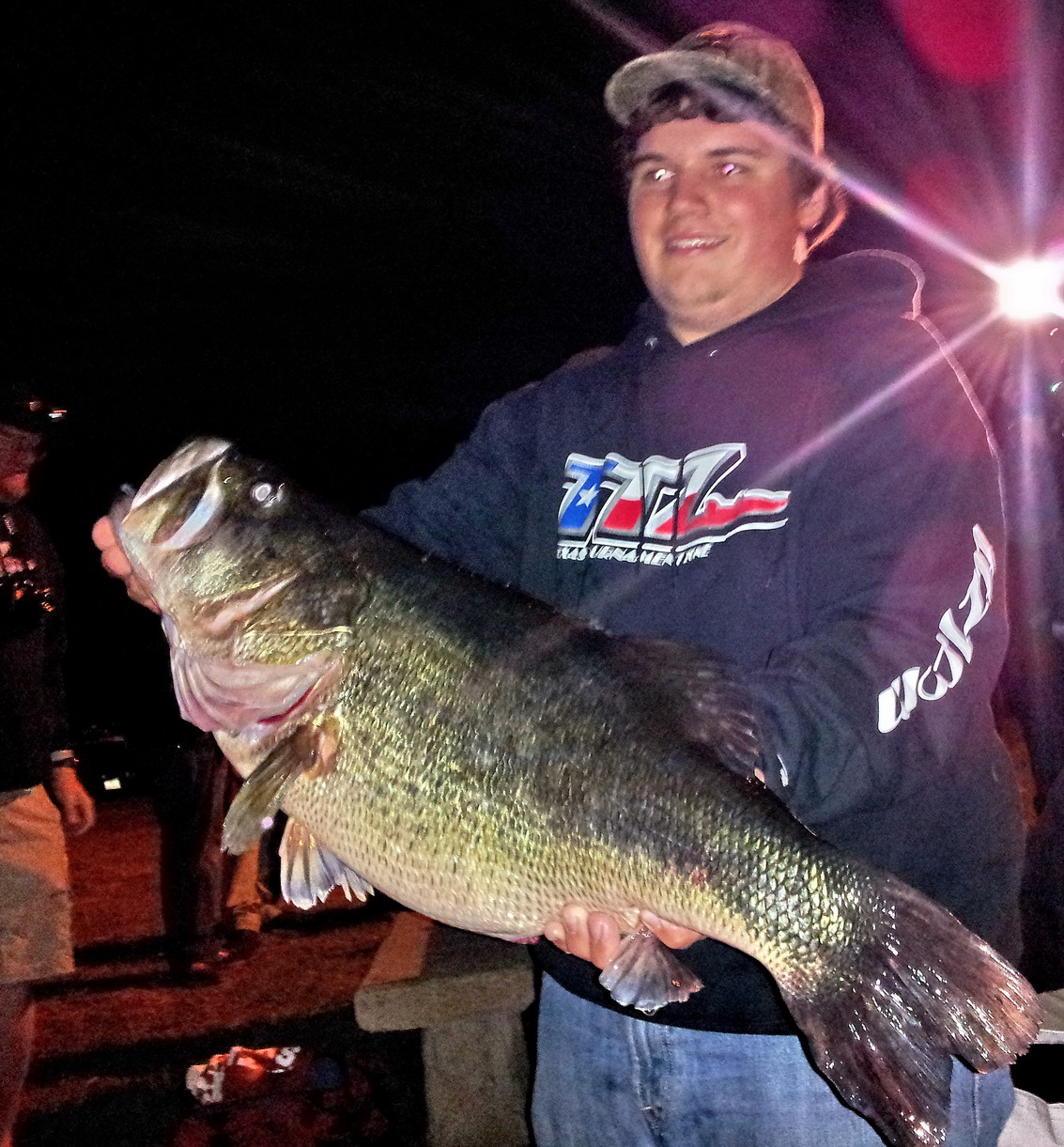
Colin Pack of Round Rock caught Toyota ShareLunker 548 from Lake Austin March 27, image by Nathan Reynolds, © Texas Parks and Wildlife Department

Colin Pack of Round Rock caught Toyota ShareLunker 548 from Lake Austin March 27, image by Nathan Reynolds, © Texas Parks and Wildlife Department


This is Passport to Texas

If you reel in a largemouth bass from Texas waters, and it weighs 13-pounds or more, donate it to the Toyota Sharelunker program through the end of the month; you’ll help spawn the next generation of big bass.

To donate a fish, handle it as little as possible, then…

Get a weight on it. If you have a set of scales that you feel like are close enough that you can actually say it’s a good enough weight to call us, weigh it and let us know.

David Campbell coordinated the program for 26 years before retiring in 2012. He explains what to do if you think you have a lunker, and want to donate it to the program.

We would like to have these fish in our possession in less than 12 hours. I realize sometimes if you’re on the other side of the state of Texas is may take me a few hours to get there. If you have to go somewhere and have that fish weighed, leave it in the water in aerated live well or whatever it is, try not to dry the fish off. If that fish weighs 13-pounds on a set of certified scales—whether it’s for business or whatever it is—give us a call as quick as possible. And we dispatch a vehicle; and take care of it until we get there. That’s the main thing.

Log onto the Texas parks and Wildlife website for more information.

That’s our show…with support from the Wildlife and Sport Fish restoration Program…providing funding for the Texas Freshwater Fisheries Center.

For Texas Parks and Wildlife…I’m Cecilia Nasti.
Angling: Breeding Bigger Bass

Wednesday, April 3rd, 2013

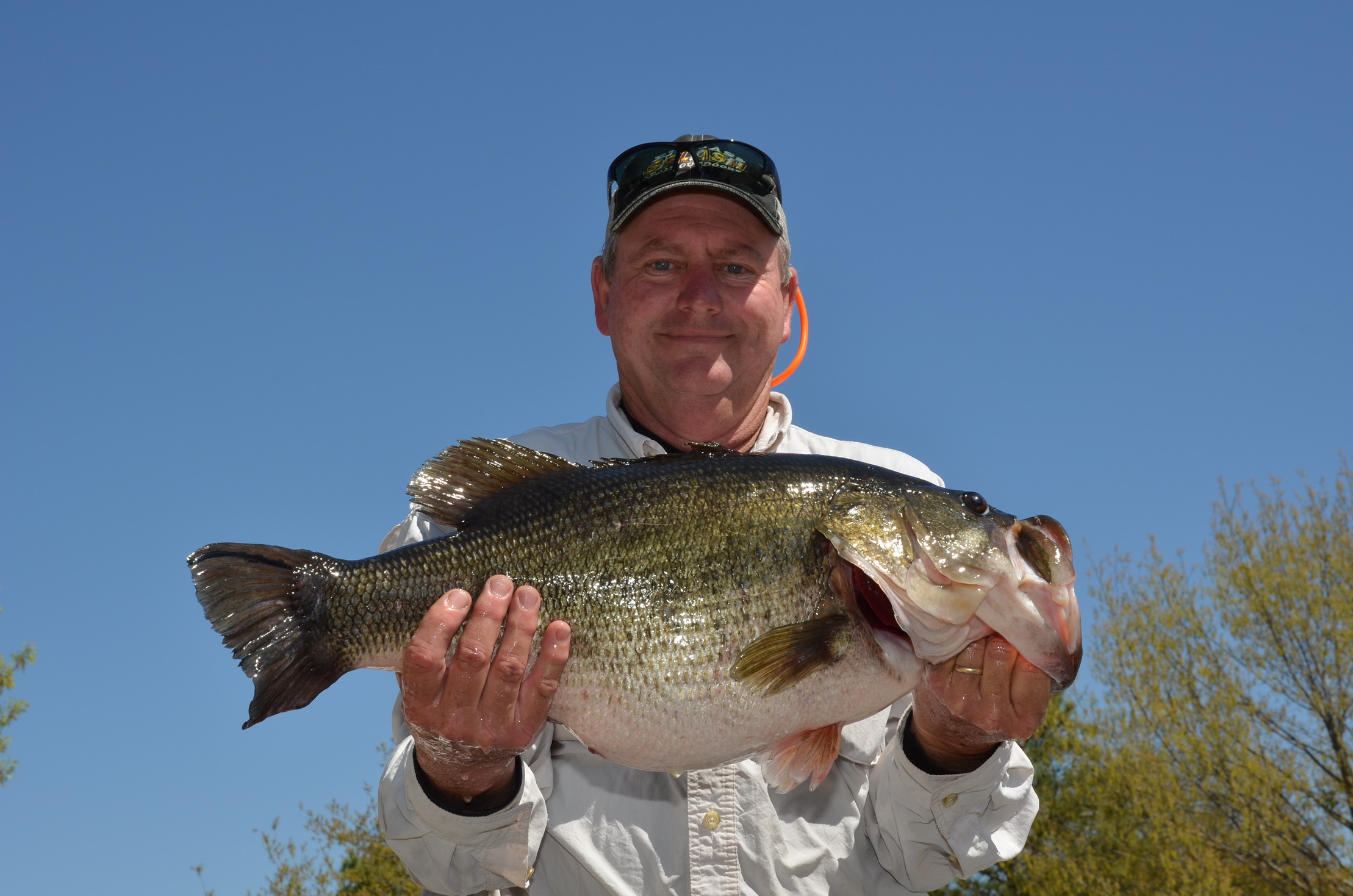
Donald Deville of Ville Platte, Louisiana, caught Toyota ShareLunker 547 from Lake Fork March 20, Larry D. Hodge, © Texas Parks and Wildlife Department

Donald Deville of Ville Platte, Louisiana, caught Toyota ShareLunker 547 from Lake Fork March 20, Larry D. Hodge, © Texas Parks and Wildlife Department


This is Passport to Texas

The Toyota ShareLunker program takes largemouth bass—13-pounds or more—and uses them to breed even bigger bass. By placing the males and females in the same tank, you’d think nature would take its course. It’s not that easy, says David Campbell.

04—It’s very hard to get these older fish to spawn in a strange environment.

Campbell retired from TPW in 2012, after 46 years with the agency, and 26 years managing the ShareLunker program. The bass donated to the program are ten years old or more, making their journey to the spawning tanks more stressful.

08—When you catch a thirteen-pound bass with a rod and reel, that’s not something you just reel in real quick and get it out of the water and put it in a live well—it usually takes some time, and it stresses the fish.

Music and dim lights work to calm humans and put them in the mood for romance. I asked, in jest, whether Campbell tried such mood enhancers with the bass.

11—(laughter) We haven’t tried it, but we have thought about it. (chuckles) We thought about a lot of this in the first few years of the program because we found it was extremely difficult to get them to spawn.

They’re doing something right, because they’ve stocked nearly a million fry in lakes from the Sharelunker program. Donating your catch to the program…that’s tomorrow.

The Sport Fish Restoration Program supports our series and provides funding for the Texas Freshwater Fisheries Center.

For Texas Parks and Wildlife…I’m Cecilia Nasti.
Angling: The Sharelunker Program

Tuesday, April 2nd, 2013

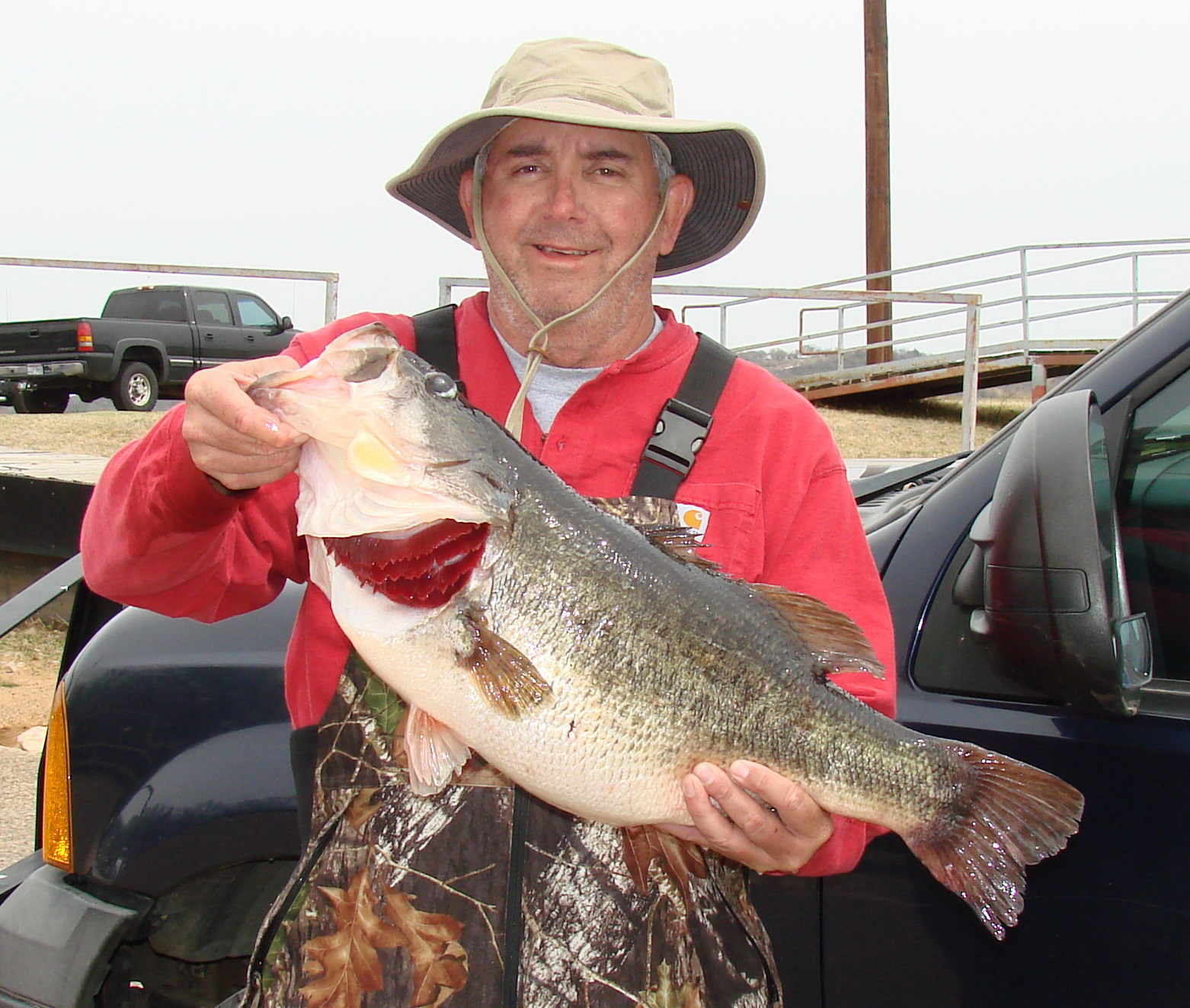
Johnny Spruiell of Iowa, Cody Talley, © Texas Parks and Wildlife Department

Johnny Spruiell of Iowa caught ShareLunker 546 , Cody Talley, © Texas Parks and Wildlife Department


This is Passport to Texas

Anglers know they can find big bass in Texas.

06—We have more big bass caught in Texas than anywhere I know of. I’m talking about anywhere in the United States or anywhere in the world.

From its inception in 1986, until he retired from Parks and Wildlife in 2012, David Campbell coordinated the bass spawning program at Parks and Wildlife, called the Toyota ShareLunker program.

17—I know there’s been some bigger fish caught in California, Florida—but it’s the numbers of big fish. And the anglers can go to almost any reservoir in the state of Texas and have the potential of catching a thirteen pound plus large-mouth bass. I don’t think that Anyone else can come close to that.

Anglers who reel in largemouth bass weighing 13-pounds or more are encouraged to donate their catch to the ShareLunker program. The donated bass enter into a spawning program, with the hope of creating faster growing, bigger bass.

11—We’ve had somewhere in the neighborhood of three quarter of a million fry from the sharelunkers through the years. We only had one year last year. We’ve had some years we didn’t have any spawn. Then some years we might have five, six or seven spawn.

The challenges of breeding bass in captivity…that’s tomorrow.

That’s our show for today…with support fro the Sport Fish Restoration Program…providing funding for the Texas Freshwater Fisheries Center in Athens…

For Texas Parks and Wildlife…I’m Cecilia Nasti.
