Archive for the 'Hunting' Category

Hunting: Spring Turkey in Texas

Friday, March 6th, 2015
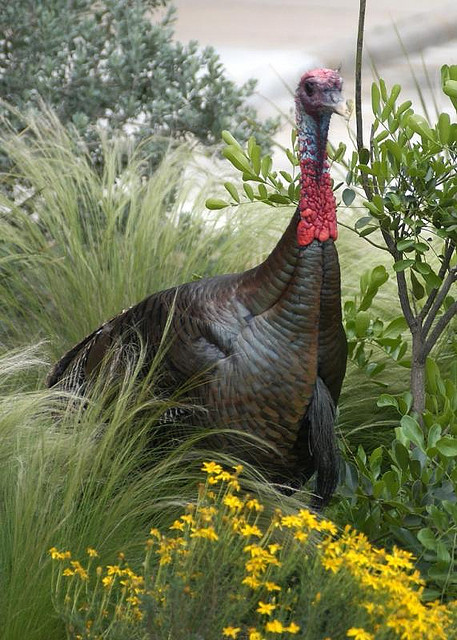
A turkey amid the spring growth.

A turkey amid the spring growth.


This is Passport to Texas

Spring hunting season for turkey kicks off this month.

04— In Texas – the majority of the state – the western two-thirds of the state are going to be Rio Grande Turkey.

Robert Perez, upland game bird manager at Parks and Wildlife, says over the long term, Rio Grande turkeys are doing well in their range. Another sub-species is the Eastern Wild Turkey, which occurs in deep East Texas.

13— And it’s population, for many years, Texas Parks and Wildlife and partner –the National Wild Turkey Federation – worked very, very diligently to restore that bird. But there is a spring eastern season in certain east Texas counties only.

And that season runs April 15 through May 14 and encompasses 28 Eastern counties. Find those counties in the Outdoor Annual on the TPW website. Meantime, if you plan to take advantage spring turkey season…

13— To hunt any upland game bird, there’s the upland game bird stamp – a seven dollar stamp – required to hunt pheasant, quail, turkey, or chachalaca. So, to hunt those species, you buy that stamp, and then that goes toward the conservation of that bird.

Find license, hunting and management information for all game species on the Texas Parks and Wildlife website.

The Wildlife and Sport Fish Restoration Program supports our series, funded by your purchase of fishing and hunting equipment and motor boat fuel.

For Texas Parks and Wildlife, I’m Cecilia Nasti.
Hunting: Spring Turkey –All About the Bird

Thursday, March 5th, 2015
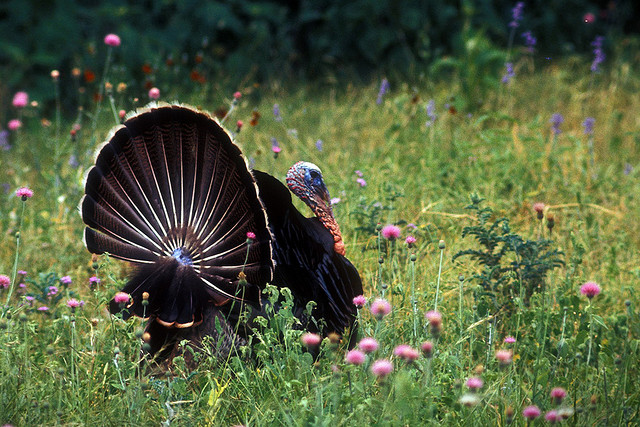
A fine looking turkey gobbler.

A fine looking turkey gobbler.

This is Passport to Texas

Upland game bird hunters look forward to spring turkey season, which begins March 21in in the south zone.

08— In Texas, what we’ve seen over the last several years – maybe over the last decade – is a continuing interest and growth in the number of spring turkey hunters.

Robert Perez is the upland game bird program leader at Parks and Wildlife. Perez says fall turkey hunting is often incidental to deer hunting.

05— Say, someone’s in their deer hunting blind, and they see some turkeys and decide, “Okay, I’m going to take a turkey.”

But, in springtime it’s all about the bird.

25— It’s more involved as far as calling a strutting male, or a male that’s going into breeding season. He’s going to be more colorful; he’s going to be looking for hens and responding to a hunter’s call. So, he’ll [the hunter] be imitating the calls of the hen, completely decked out in camouflage at the base of a tree or somewhere – trying to get that bird to get close enough to him to shoot. And it can be a very exhilarating, very exciting experience to successfully call in a bird. So, it’s quite addictive.

Find out when and where to hunt turkey this spring when you log onto the Texas Parks and Wildlife website.

The Wildlife Restoration Program supports our series, and works to create hunting and wildlife-oriented recreational opportunities in Texas.

For Texas Parks and Wildlife, I’m Cecilia Nasti.
Research | Hunt: Learning From Dove Lethality Study

Wednesday, February 25th, 2015
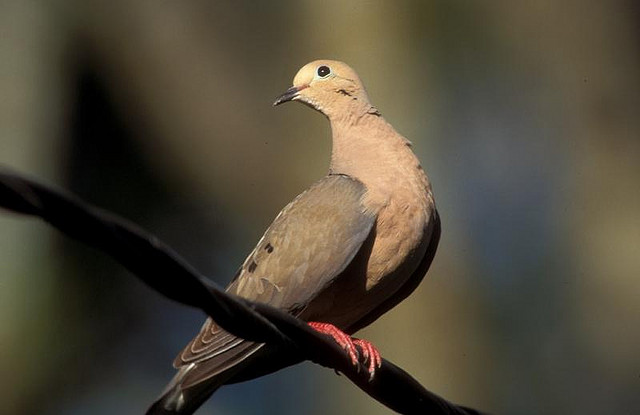
Mourning Dove

Mourning Dove


This is Passport to Texas

Lead shot is the most common load used when hunting dove in Texas. In high accumulations it is a potential environmental toxin. Texas carried out a two-year study to evaluate effectiveness of lead versus non-toxic shot, should ammunition regulations change in the future.

02—We went into this study no knowing what we would find.

Corey Mason, Wildlife Region Three Director says it was a double blind study.

23— Everyone that was in the field – the observer recording the data and the hunter pulling the trigger – they did not know what kind of ammunition they were shooting. All of the ammunition looked identical on the exterior: all in the same brass, the same hole. No one knew what they were shooting. So, it removed all of that potential bias so that the study results are as objective as they can possibly be.

Mason says Texas needed to determine if a non-toxic ammunition alternative would be as effective as lead.

19—Secondly, we needed to know that information because of our harvest management strategies in which we base the number of days, the daily bag [limit], the opportunities to hunt these birds based on current knowns. And so, if those efficiency and wounding rates were to change it could potentially have an impact on the number of days in dove season, the daily bag – all those sorts of things.

Mason says the final analysis shows virtually no difference in effectiveness of lead versus steel shot. So, for now, it’s hunter’s choice.

03— We believe in hunter choice, but we want that to be an informed hunter choice.

The Wildlife and Sport Fish Restoration Program supports our series.

For Texas Parks and Wildlife…I’m Cecilia Nasti.

Research | Hunt: Dove Lethality Study

Tuesday, February 24th, 2015
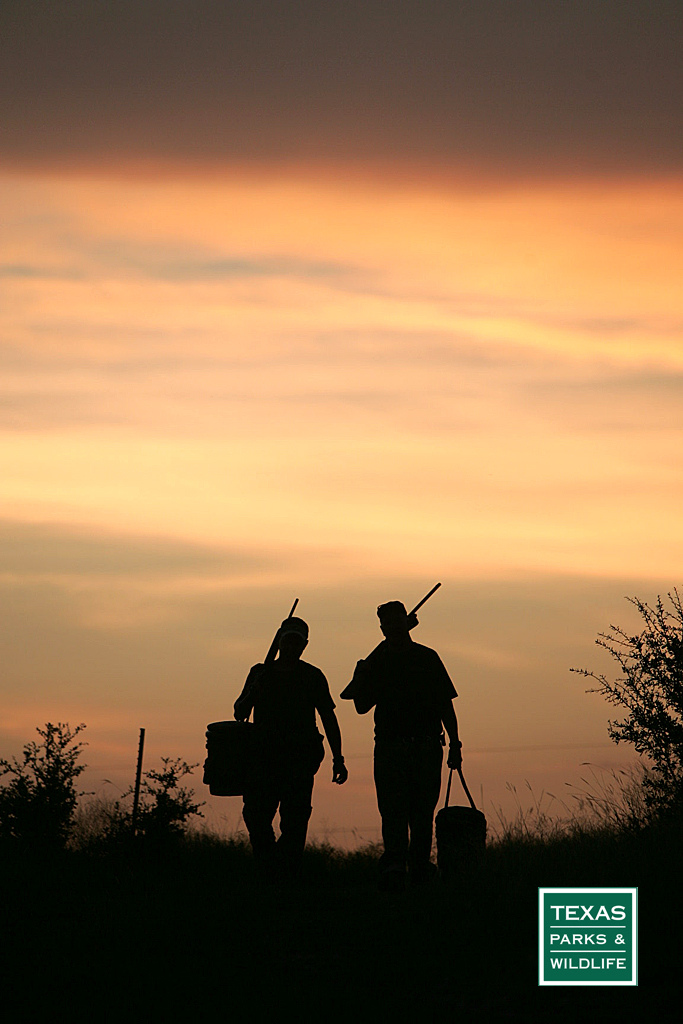
Dove hunters at sunset

Silhouette of dove hunters at end of day with sunset


This is Passport to Texas

Texas leads the nation in dove hunting with roughly a quarter million hunters bagging 5 million mourning doves each fall.

03—Dove hunting is kind of a rite of passage for fall for many hunters.

Corey Mason is Wildlife Region Three Director. He says in December (2014), the agency released results of a two year study examining the lethality of lead versus non-toxic shot for mourning dove.

07— Long story short, what this [analysis] told us is that bagging, wounding and missing rates, they really did not differ across ammunition types.

Mason said the most commonly used shot is a 2 3/4-inch 12-guage shell, one and one-eighth ounce 7 1/2 lead shot.

10— We compared that to a one ounce seven steel, and a once ounce six steel. It came out with very comparable results. So that statistically speaking, there was really no difference.

Texas Parks and Wildlife staff, trained as observers, spent two years in the field collecting birds bagged by hunters at commercial hunting operations.

14—There were over 5-thousand shots fires; there were over 11-hundred birds bagged. Every bird that was shot was necropsied, x-rayed, and examined. We took information gained in the field – as well as the terminal ballistics – [to determine] the effects those particular pellets had on the birds.

Again, researchers discovered negligible differences between ammunition types. But why study this at all. That’s tomorrow.

The Wildlife and Sport fish Restoration Program supports our series.

For Texas Parks and Wildlife…I’m Cecilia Nasti.

Hunt | Food: Doing your Own Processing

Thursday, December 18th, 2014


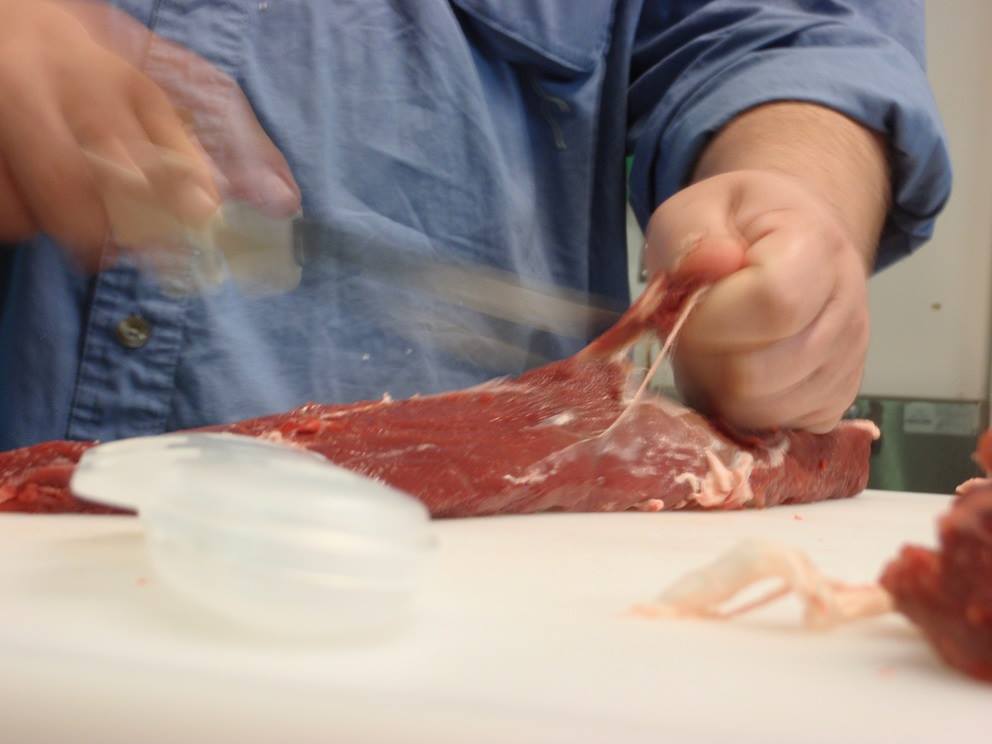
Processing venison at Feral Kitchen

Processing venison.


This is Passport to Texas

Chris Houston of Austin is a hunter and home cook; he butchers and processes what he harvests; but that’s not always been practical.

05—We have a decent sized [kitchen] counter space, but certainly a limited area and limited equipment.

Hunters, says Houston, go to processors because of limited workspace, equipment, and a lack experience. He adds processors are decent folks who provide a good service – but he still wonders what comes back to him.

06—Am I getting back my animal in the sausage? Am I getting all the meat that I had taken in there?

Chris Houston taught himself to butcher and process, and excels at it now. To empower others to do the same, he offers a fully equipped commercial kitchen and his knowledge as Feral Kitchen, a wild food workspace.

23—Butchering and sausage-making tends to feel complicated. However, it can be really simplified. And so, we really want to pass on that education and that confidence to others. We’ve been offering some classes on general game butchering, and some other classes on sausage-making to kind of help people take that step in the learning curve to doing it themselves. And, really, to just try and simplify the entire process.

Learn more about butchering and processing wild game on the Texas Parks and Wildlife website and at feralaustin.com.

The Wildlife and Sport Fish Restoration Program supports our series.

That’s our show… For Texas Parks and Wildlife…I’m Cecilia Nasti.