Archive for the 'Shows' Category

Black Bear Boom or Bust

Monday, March 20th, 2017
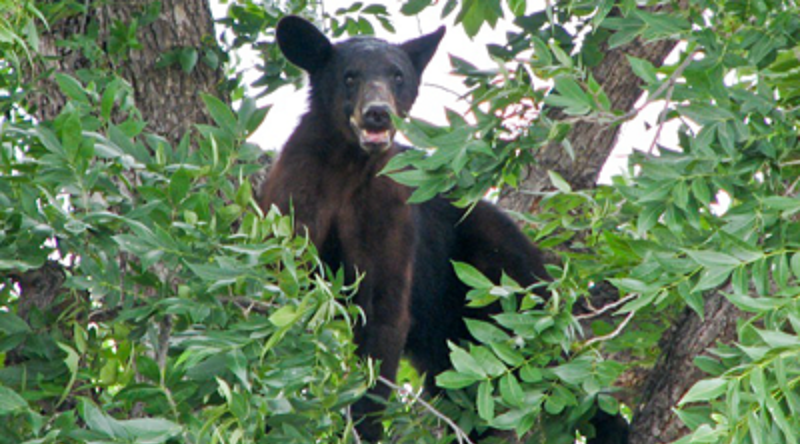
Black bear up a tree.

Black bear up a tree.

This is Passport to Texas

A few years back we spoke with Texas Parks and Wildlife mammologist, Jonah Evans, about increased sightings of black bear in West Texas.

A few years ago during the drought, we had a major boom in bears. What was happening is, when food resources were very low, they started dispersing, looking for other places to make a living. And, a lot of those bears came across—from those big mountain ranges in Mexico—into Texas.

Black bears have, in effect, been absent from West Texas for years. So this was good news…but it did not persist.

In the years since that big drought and that big dispersal period— 2011 and 2012—we really haven’t seen nearly as many bears. In fact, last year [2016] we only had one bear report in West Texas. Not counting Big Bend National park, where, of course, they have many reports every year.

The big bear boom went bust. But Jonah Evans says that’s typical of this natural system of checks and balances.

It’s a bit disappointing, but I think it’s also a little dose of realism, I guess—that this is probably the way that recolonization is going to happen. I haven’t given up on the bears.

Learn more about black bears on the Texas Parks and Wildlife website.

The Wildlife Restoration program supports our series and funds diverse conservation projects in Texas.

For Texas Parks and Wildlife, I’m Cecilia Nasti.
TPW TV–Casting Call with Neighborhood Fishin’

Friday, March 17th, 2017
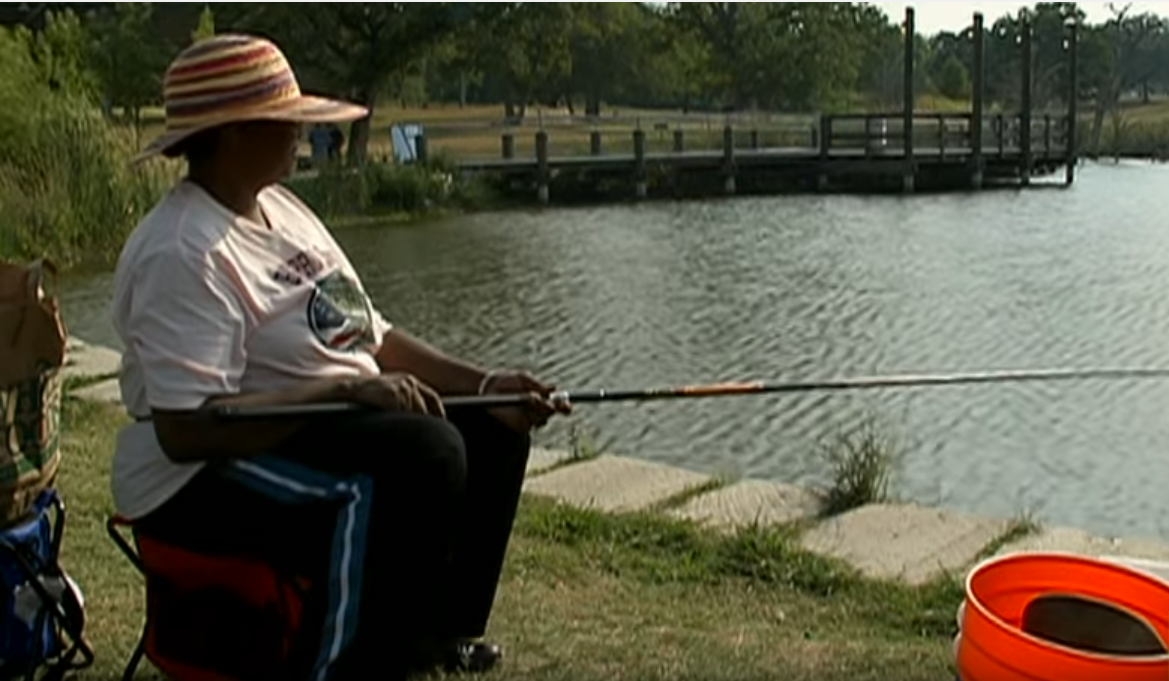
Effie Dukes at her Neighborhood Fishin' pond.

Effie Dukes at her Neighborhood Fishin’ pond.

This is Passport to Texas

Texas Parks Wildlife’s Neighborhood Fishin’ program creates convenient and close-to-home fishing opportunities for city-dwellers by stocking urban lakes.

Our goal with the neighborhood fishin’ program is to bring the focus back to the outdoors.

Effie Dukes and her husband David took the bait. In a segment of the Texas Parks and Wildlife TV show next week, viewers wait along with them at East Metropolitan Park in Travis County for the stocking truck to arrive.

I think they’ll be coming momentarily, because they said between 9 and 9:30. Yeah, look. They’re coming with the fish.

Marcos de Jesus is a natural resource specialist with Texas Parks and Wildlife. He says the fish they stock are big, healthy, and fun to catch. As Effie and David discovered.

What we try to do is to actually bring fishing close to home. Most people in Texas are moving into bigger and bigger towns. Having these opportunities in your backyard, basically, is what it’s all about. [Effie] Yeah! Got a big one! [David] That’s what I’m talking about.

The Neighborhood Fishin’ Program provides an outdoor experience with fishing at its core. Perhaps her successful experience means the program reeled in Effie Dukes as its newest recruit.

It’s a big catfish. And I caught it with a net. With the help of my husband. With a rod and reel that I don’t know how to use. [laughs]

Catch the segment, Casting Call, next week on the Texas Parks and Wildlife TV show on PBS. Check your local listings. The Sport Fish Restoration program supports our series.

For Texas Parks and Wildlife…I’m Cecilia Nasti.

Benefit of Bats to Agriculture

Thursday, March 16th, 2017
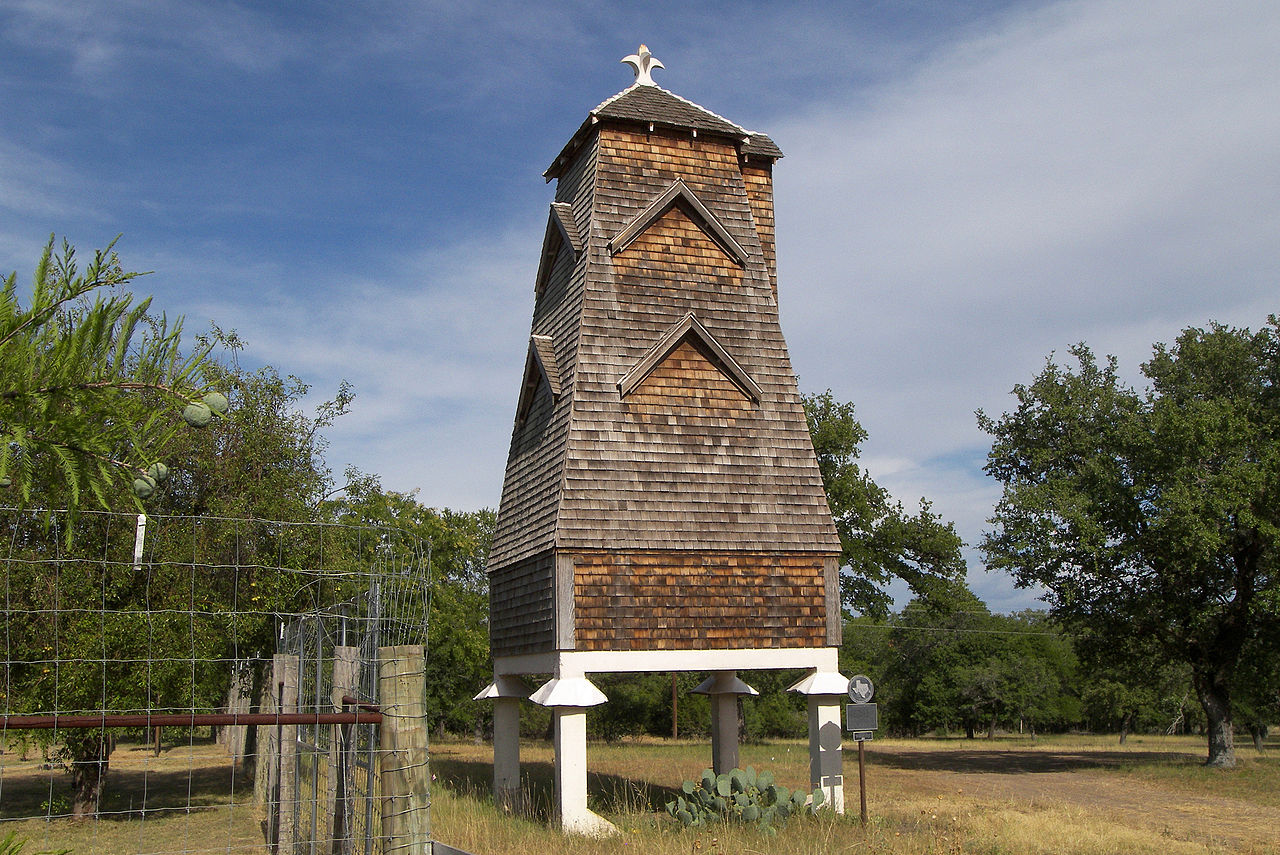
A Hygieostatic Bat Roost located off Farm to Market Road 473 east of Comfort, Texas, United States was built in 1918. The roost was designated a Recorded Texas Historic Landmark in 1981 and listed on the National Register of Historic Places on March 28, 1983.

A Hygieostatic Bat Roost located off Farm to Market Road 473 east of Comfort, Texas, United States was built in 1918. The roost was designated a Recorded Texas Historic Landmark in 1981 and listed on the National Register of Historic Places on March 28, 1983.

This is Passport to Texas

Farmers know how costly it can be to spray crops with insecticides to prevent pest damage. What some may not know is…bats can be partners in pest eradication.

The Mexican free tail bat, in particular, is really valuable for agricultural purposes.

Meg Goodman is a former Parks and Wildlife’s bat biologist.

Current research has shows that these bats can save farmers up to two sprays of pesticides per year because of all the insect pests that they’re eating, like the corn earworm moth and the cotton boll worm moth, among other crop pest species.

In the early 20th century, San Antonio physician Charles A. Campbell designed and tested artificial roosts to attract bats to eat mosquitoes blamed for the spread of malaria. Eventually Campbell developed a bat tower, which he installed at Mitchell Lake, south of the city, which attracted hundreds of thousands of the flying mammals. The spectacle of the bats’ nightly emergence drew spectators in the 1920s…as it does today, wherever bats roost.

Their numbers and nightly emergences bring in a lot of tourist dollars to a lot of smaller communities—and big communities like Austin… It’s one of our top tourist destinations. But they do provide a lot of tourist dollars through nature tourism through a lot of our smaller communities throughout the state.

Learn how to attract bats at passporttotexas.org. That’s our show…we receive support from the Wildlife Restoration program.

For Texas Parks and Wildlife…I’m Cecilia Nasti.

Don’t Fear Bats

Wednesday, March 15th, 2017
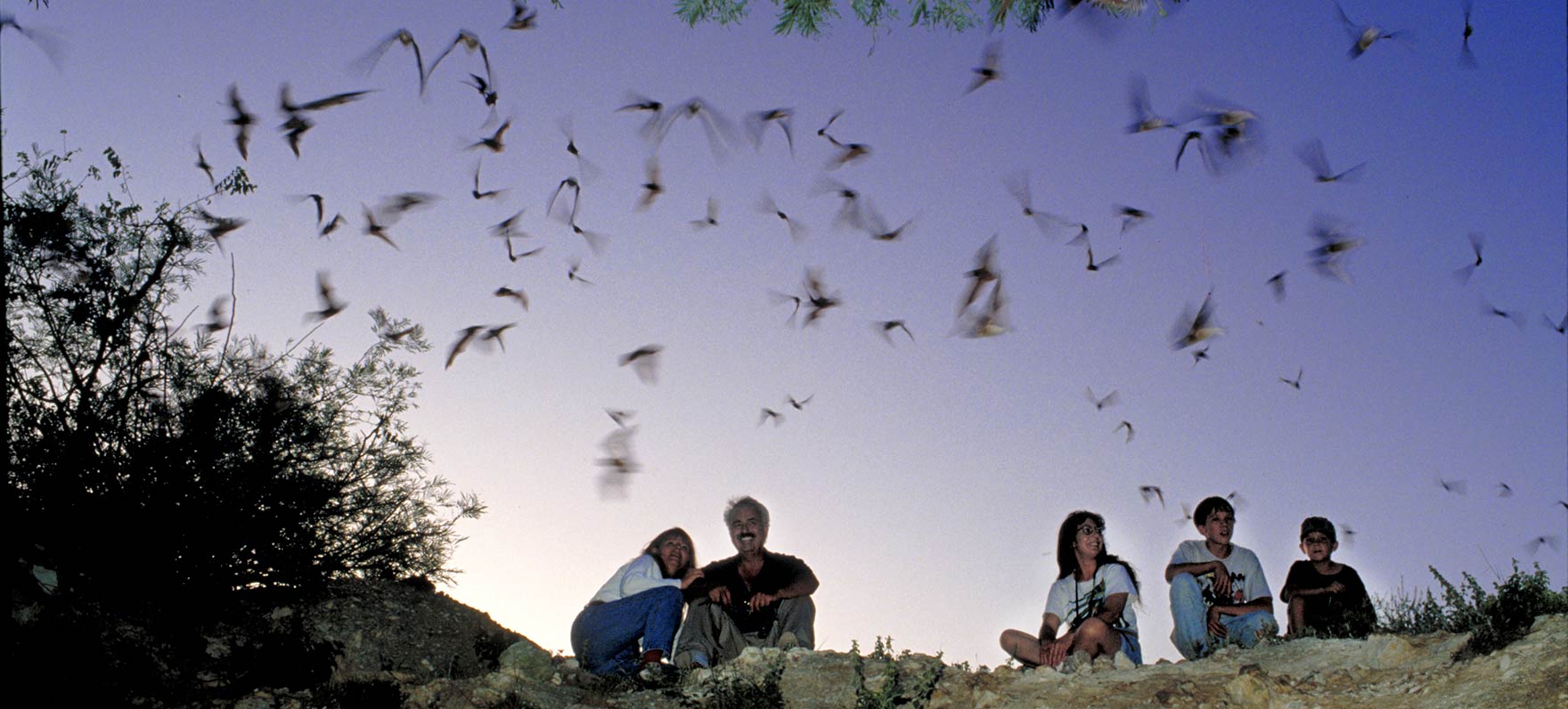
Bats emerge from their roost at Kickapoo Cavern State Park

Bats emerge from their roost at Kickapoo Cavern State Park

This is Passport to Texas

Despite improved public relations, people remain—if not terrified—then at least apprehensive of bats.

A lot of people fear bats because of a lot of myths and superstitions associated with them.

Meg Goodman, former Parks and Wildlife’s bat biologist, says bats will not purposely entangle themselves in your hair, nor will they attempt to suck your blood.

We do a lot of work to get the message across that bats are actually very, very beneficial for us, and they’re very gentle creatures and very interesting to learn about and learn from.

With education, more people are beginning to appreciate bats than fear them. In fact, we’ve even started looking forward to seeing certain bats—such as Mexican free-tails—that winter in Mexico and summer in Texas.

The Mexican free-tailed bat is probably one of our most common bats in the state, and people know it because it lives in such large numbers in places such as bridges and caves and makes nightly emergences that many people can come out and watch.

Tomorrow: the benefits of bats.

The Mexican free-tailed bat, in particular, is really valuable for agricultural purposes.

That’s our show for today… we receive support from the Wildlife Restoration Program…working to restore wildlife habitat in Texas…we record our series at the Production Block Studios in Austin…Joel Block engineers our program…

For Texas Parks and Wildlife…I’m Cecilia Nasti.

Baby Bird Rehab

Tuesday, March 14th, 2017
Rescuing baby bird from fallen nest.

Rescuing baby bird from fallen nest.

This is Passport to Texas

Spring is in the air and so are some baby birds as they prematurely exit their nests. If you find one grounded in your yard, resist rescue. The parents may be nearby.

Mom and dad know how to raise baby birds a lot better than we do.

If the bird is a featherless nestling, return it to the nest, says ornithologist Cliff Shackelford. If it is a feathered, yet flightless fledgling, it may be under mom and dad’s supervision. But if parents are absent, call a rehabilitator.

You would work with that person on trying to get the bird to them. Keep in mind the rehabilitator’s busy 24/7 tending to the wildlife they have – so don’t expect them to come all the way to you. So you should probably make the point of, ‘Okay. I’m committed to this; I’m going to see it through. So, I’m going to drive the bird even though it’s an hour away to the rehabilitator.

Rehabilitators are not evenly distributed, and the nearest one might be a two hour drive away, and Cliff says rescuers need to be prepared for that.

And we have on the Parks and Wildlife website, a list of the licensed rehabilitators in the state. That is something that has to be permitted. You have to have state and federal permits to be a rehabilitator. You don’t just take it down the road to grandma and hope that she can do it, because the reason they’re permitted is they have to go through training, and they have to have the right facilities to be successful.

Find that list of wildlife rehabilitators listed by county on the Texas Parks and Wildlife website. The Wildlife Restoration program supports our series.

For Texas Parks and Wildlife…I’m Cecilia Nasti.