Archive for the 'Shows' Category

How White Nose Syndrome Kills Bats

Tuesday, November 8th, 2016
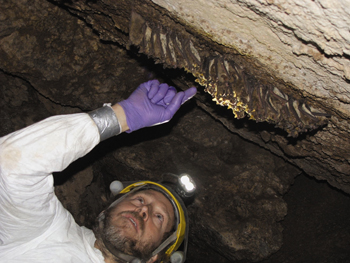
Checking caves for White Nose Syndrome

Checking caves for White Nose Syndrome, Photo © Mylea Bayless, Bat Conservation International, www.batcon.org

This is Passport to Texas

White nose syndrome is a fungal disease that attacks hibernating bats.

So, the way that white nose hurts them and is fatal to them is by irritating their skin while they’re hibernating.

Jonah Evans is a mammologist with Texas Parks and Wildlife. A skin irritation doesn’t sound fatal, but expending energy reserves is.

Hibernation for a bat is a very narrow budget of energy that they’re trying to make last for many months. And the process of waking up, cleaning off your wings, and fidgeting around a little bit, burns off critical energy—and the result is starvation. They’re just not able to make it through hibernation.

It seems not all bats are affected by White Nose Syndrome even if infected.

If a bat does not hibernate, it means that bat is active all winter long. Some of those stay here in the southern part of the state, but other ones migrate down to Mexico and Central America. And even if those bats get the disease, because they’re active year round, there’s hope that they’ll be constantly replenishing their calories and they won’t perish because of the disease.

Mexican free-tailed bats—the ones in the big caves in Texas—are migratory. Currently, Texas is White Nose Syndrome free. Yet, as a priority species researchers are doing what they can to understand the issue and to develop a management plan should it come to our state.

The Wildlife Restoration program supports our series.

For Texas Parks and Wildlife…I’m Cecilia Nasti.
Bat Killing Disease Flanking Texas

Monday, November 7th, 2016
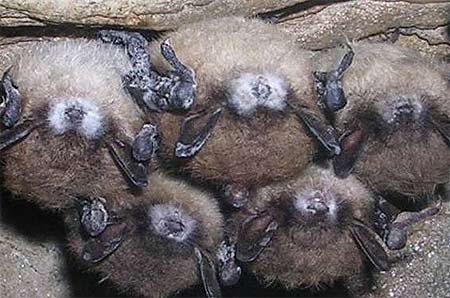
White Nose Syndrome, Photo: USFWS

White Nose Syndrome, Photo: USFWS

This is Passport to Texas

Discovered 10 years ago in upstate New York, white nose syndrome—a fungal disease that kills hibernating bats—traveled a predictable path.

For the previous 10 years it has spread incrementally. From New York State to the neighboring states; one step at a time in a very predictable way. And then, all of a sudden to have it show up in Washington State was out of sequence.

Jonah Evans is a mammologist with TPW. This year’s discovery in Washington State is the first recorded occurrence of WNS in western North America. Prior to that, researchers predicted the disease would eventually reach the western states by way of the Texas Panhandle.

In some ways I like to think of it as the enemy has flanked us. We had clear battle lines drawn. We knew which direction the enemy was advancing. And all of a sudden, it’s coming from behind us as well. It’s definitely not encouraging. It’s actually quite alarming in the bat and white nose research communities.

While researchers do not know for sure how the disease got to Washington, many suspect it may have been transported by people. So, prevention starts with cavers.

Especially people who are frequent cavers who might go from one spot to another and then travel to another state, and go into multiple caves. We’re really encouraging caving communities and other people going into caves to be really cautious and to use decontamination whenever they can.

Find a link to decontamination protocols at passporttotexas.org.

The Wildlife Restoration program supports our series.

For Texas Parks and Wildlife…I’m Cecilia Nasti.
Busting Myths About Bats

Friday, November 4th, 2016
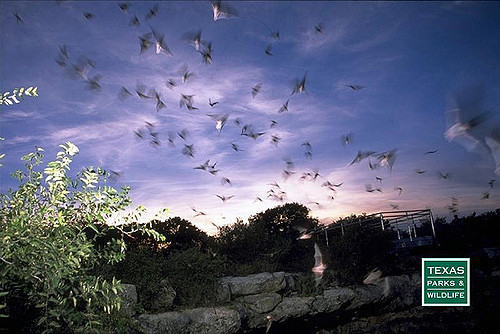
Bats at Devil's Sinkhole State Natural Area.

Bats at Devil’s Sinkhole State Natural Area.

This is Passport to Texas

Bat have been maligned for centuries.

Most people don’t know anything about them because they don’t have any interaction with them.

Fran Hutchins is with Bat Conservation International.

People know a lot about birds, and most people aren’t afraid of birds because they see ‘em all day long. Bats are flying around at night when most of us are home sleeping. And unless we see ‘em around a street light or dipping down into somebody’s swimming poll to get a drink of water—most people don’t have any contact with bats. So, what they know about them is what they’ve seen on TV. And most of the time on TV—especially if it’s Hollywood—they’re bloodsucking monsters that are flying in and dragging someone off into the tree line and sucking them dry.

There are no blood sucking bats in Texas. And of the 1300 bat species worldwide, Hutchins says only three feed on blood.

The rest of them are insect eating bats and pollinating bats, and fruit bats that are really important to us.

Hutchins adds bats are not blind, they won’t tangle up in your hair, and they do not carry rabies.

People think all bats have rabies—and they don’t. Rabies is a virus that’s out there in the environment that bats, as mammals, can get as we do. They’re not carriers. If a bat gets sick with rabies, it dies.

That’s why we never handle bats that are on the ground. They could be sick. Other than that—they are beneficial mammals that deserve our respect.

The Wildlife Restoration program supports our series.

For Texas Parks and Wildlife…I’m Cecilia Nasti.
Hunting as an Act of Conservation

Thursday, November 3rd, 2016
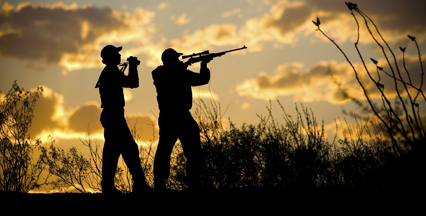
Big Time Texas Hunt at Black Gap WMA

Big Time Texas Hunt at Black Gap WMA

This is Passport to Texas

Hunting is not only a tradition in Texas—it is also a commitment to wildlife conservation.

Hunters started to see declines in certain game species populations and habitat. And realized if they want to enjoy perusing game (it doesn’t even have be for harvest), just if they want to see that perpetuated so their kids, and future generations can enjoy that, they realized they needed to protect it.

Alan Cain, Texas whitetail deer program leader, says in the early 20th century, hunters chose to conserve wildlife through taxation.

In 1937, you had the Sport Fish and Wildlife Restoration Act – called the Pittman-Robertson Act – [signed into law]. Basically it’s a user pay system where the hunters said, ‘okay, we’re going to tax ourselves to help pay for wildlife conservation.’ And that’s been a huge success. In my opinion, that’s why North America has the best wildlife management conservation model in the world – because hunters pay for that.

Hunters pay with the licenses they buy, and the excise tax levied on firearms, ammunition and other equipment, which goes directly to fund conservation.

And then the second part of that is that hunters not only play a role in funding conservation that benefits everybody, but they also play a role in managing deer populations out there.

By removing deer from the landscape, they help keep habitat in balance for all wildlife.

The Wildlife Restoration Program supports our series and funds whitetail research in Texas.

For Texas Parks and Wildlife…I’m Cecilia Nasti.
Fall Events in State Parks 2016

Wednesday, November 2nd, 2016
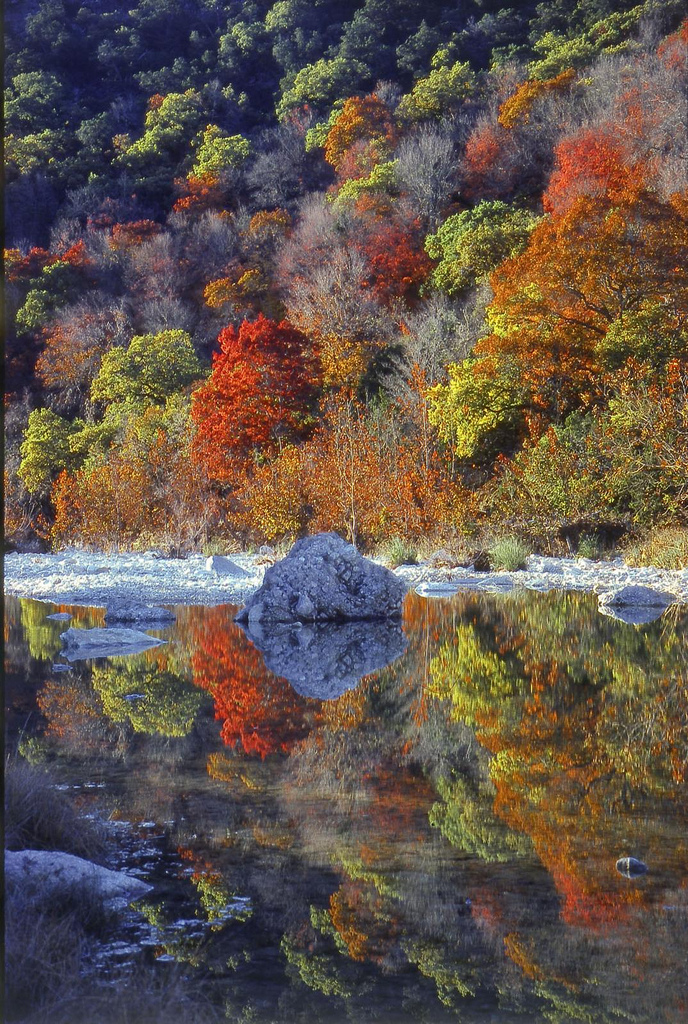
Fall Color at Lost Maples State Natural Area

Fall Color at Lost Maples State Natural Area

This is Passport to Texas

Texas has more than 90 state parks, and nearly all offer year round activities for visitors. But fall is by far a favorite time to enjoy these natural areas.

It’s cooler weather. The fall foliage changing always brings everybody out. Everybody loves to see that.

Aaron Friar works with Texas state parks.

We do have the fall foliage hikes. Come out and they’ll take you on a hike; they’ll teach you about the different trees, which ones are changing, what colors you’re seeing, and what kinds of tree species change at what time

Come for the colorful foliage and stay for the family friendly holiday crafts.

Several parks are doing different kinds of crafts events. One that I think would be really neat is at LBJ—at the farm, Sauer Beckmann—you know they have the traditional German family holidays. They’re having cookie decorating, and they’re having crafts for the tree—coming up for the Christmas holiday season—as well. So, that should be a really fun one in terms of arts and crafts.

No matter where you live, a state park is just a short drive away. Make plans to visit one today.

Find a comprehensive list of all fall, winter and holiday events at state parks in the calendar section of the Texas Parks and Wildlife website.

We record our series at the Block House in Austin, Texas.

Funding provided in part by Ram Trucks. Guts. Glory. Ram

For Texas Parks and Wildlife…I’m Cecilia Nasti.
