Archive for the 'Shows' Category

The Birding Classic’s Big Sit

Tuesday, April 5th, 2016
Big Sit Tournament

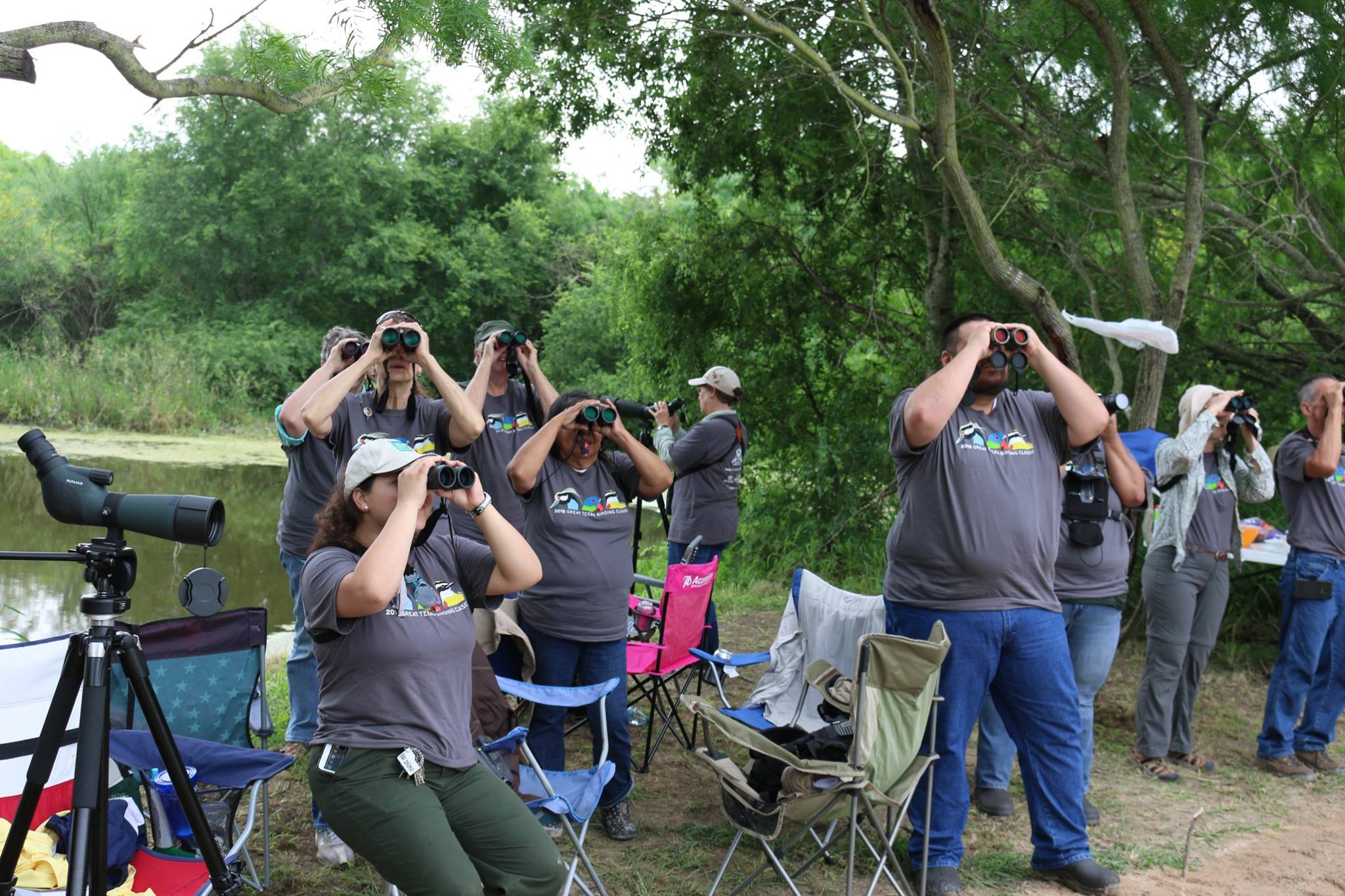
Friends working together to identify birds in the Birding Classic’s Big Sit Tournament.

This is Passport to Texas

Does sitting outdoors in a circle with friends and family sound like a birding tournament to you? It is, and it’s called The Big Sit.

 We call them lovingly the tailgate party for birders. Because really it’s wherever you can set up a 17-foot diameter circle. Be that your backyard, a local park, a state park – anywhere that makes sense for you to be able to see a good group of birds and to spend a day with friends and family.

The Big Sit is one of the tournaments of the Great Texas Birding Classic, in its 20th year. Shelly Plante, nature tourism manager at TPW, coordinates event.

You can have as few as one person on your team, to as many as you can fit in that circle throughout the course of the day. And people can come in shifts. They don’t have to stay for the whole 24 hours. So, you could have a morning group, a midafternoon group. You could have them come throughout the day. No one has to stay there the entire time.

The Big Sit tournament is ideal for novice birdwatchers.

The Big Sit is great for beginners, because it lets you get your feet wet in the Birding Classic, and see what a bird watching tournament really is. Once you get your confidence in The Big Sit it’s easier to move on to doing a Sunrise to Noon tournament; it’s easier to say hey, I want to do a Big Day where I drive around to a lot of places. And so we have tournaments for that as well.

The Great Texas Birding Classic is April 15 through May 15th. Team registration closed April 1st, but you can stay on top of the action at birdingclassic.org.

The Birding Classic for Beginners

Monday, April 4th, 2016
The Great Texas Birding Classic

The Great Texas Birding Classic

This is Passport to Texas

For those who don’t know how the various birdwatching tournaments of The Great Texas Birding Classic unfold…

Groups of people go out and birdwatch for a half a day or a day and even as much as a week. And, they go out with their friends and family to see how many birds they can identify in a short amount of time, and the team with the most species on their list wins. Except for one tournament.

That one tournament is The Big Sit. Shelly Plante is the nature tourism manager at Texas Parks and Wildlife, and coordinates the Great Texas Birding Classic, now in its 20th year.

The Big Sit is a fun one. In the Birding Classic, most of the tournament categories, everyone has to ID a bird for it to go on a list, but not the Big Sit.

In the Big Sit, Plante says only one team member has to ID a bird for it to make the list, either by sight or sound.

It’s the perfect event for the new birder. You can have a team with all people who are beginning, and then they just have to be sure they have a ringer or two on their team who can ID the bird for them for it to go on their list. And it turns into a really fun day for people.

The Great Texas Birding Classic is April 15 through May 15th. Team registration is closed for this year, but you can stay on top of the action at birdingclassic.org.

That’s our show for today… Funding provided in part by Ram Trucks. Guts. Glory. Ram

For Texas Parks and Wildlife…I’m Cecilia Nasti

Masters of Deception

Friday, April 1st, 2016
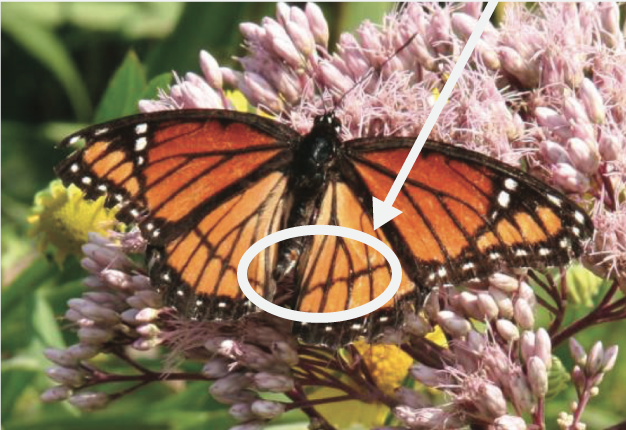
Adult viceroy butterflies have a solid black line on the hind-wings.

Adult viceroy butterflies have a solid black line on the hind-wings.


This is Passport to Texas

In nature, deception can mean the difference between life and death for certain species; animals use camouflage and mimicry to fool predators and prey alike.

Stick insects look like slim twigs and-when among the branches of woody plants-go largely undetected by rodents, bats, and birds that would make a meal of them.

Eastern screech owls use cryptic coloration to blend into their surroundings. When perched in trees their feathers resemble bark; their prey may not notice them until it’s too late to elude capture.

By mimicking the color and pattern of the Monarch butterfly which is poisonous if eaten, the Viceroy butterfly manages to stay off the menu of species that
would otherwise make a snack of it.

Southern flounder, a species of flatfish, are predatory animals. Their coloring is similar to the gulf floor where they lay in wait unnoticed for potential prey-which they ambush once spotted.

A whitetail fawn’s spots help to camouflage it from predators. It works best when they are in a wooded setting, as their reddish coat with white spots resembles
dappled sunlight on the forest floor.

Even though in the human world deception seems like a cheap trick, in the natural world, it’s just the trick some animals need to survive.

For Texas Parks and Wildlife … I’m Cecilia Nasti

Calling Critters at Night

Thursday, March 31st, 2016
Tree limbs.

You never know what you might see in the treetops at night.

This is Passport to Texas

Wildlife viewing at night presents a challenge. Yet, some species become more vocal when the sun sets, and will “talk to you” and even come into view if you know how to speak their language. State park interpreter, Kelly Lauderdale, has a few tips for enticing wildlife to come out of the shadows.

There are apps you can download for free or for minimal cost – like Audubon Reptiles. I use it for my night hikes to play those calls and to identify those different calls. Visitors can easily use those themselves. And this is what I do on my hike: I play the call, and do it for a little while and see if anything answers. If using a recorded call – and animals might call back – but does that ever draw the animals to you? And if it does, what should you do? I have had success with calling in an eastern screech owl. So, I play the call, it answers back, and it comes in. If you’re lucky you may be able to see the full owl sitting up in the tree talking to you. In that case – enjoy it! Don’t shine your flashlight up and blind him or her. Just sit and listen and enjoy and then go on.

State parks frequently offer guided night hikes. Find one near you on the Texas Parks and Wildlife website.

For Texas Parks and Wildlife, I’m Cecilia Nasti.

Hikes After Dark

Wednesday, March 30th, 2016
Night Hike

Night Hike

This is Passport to Texas

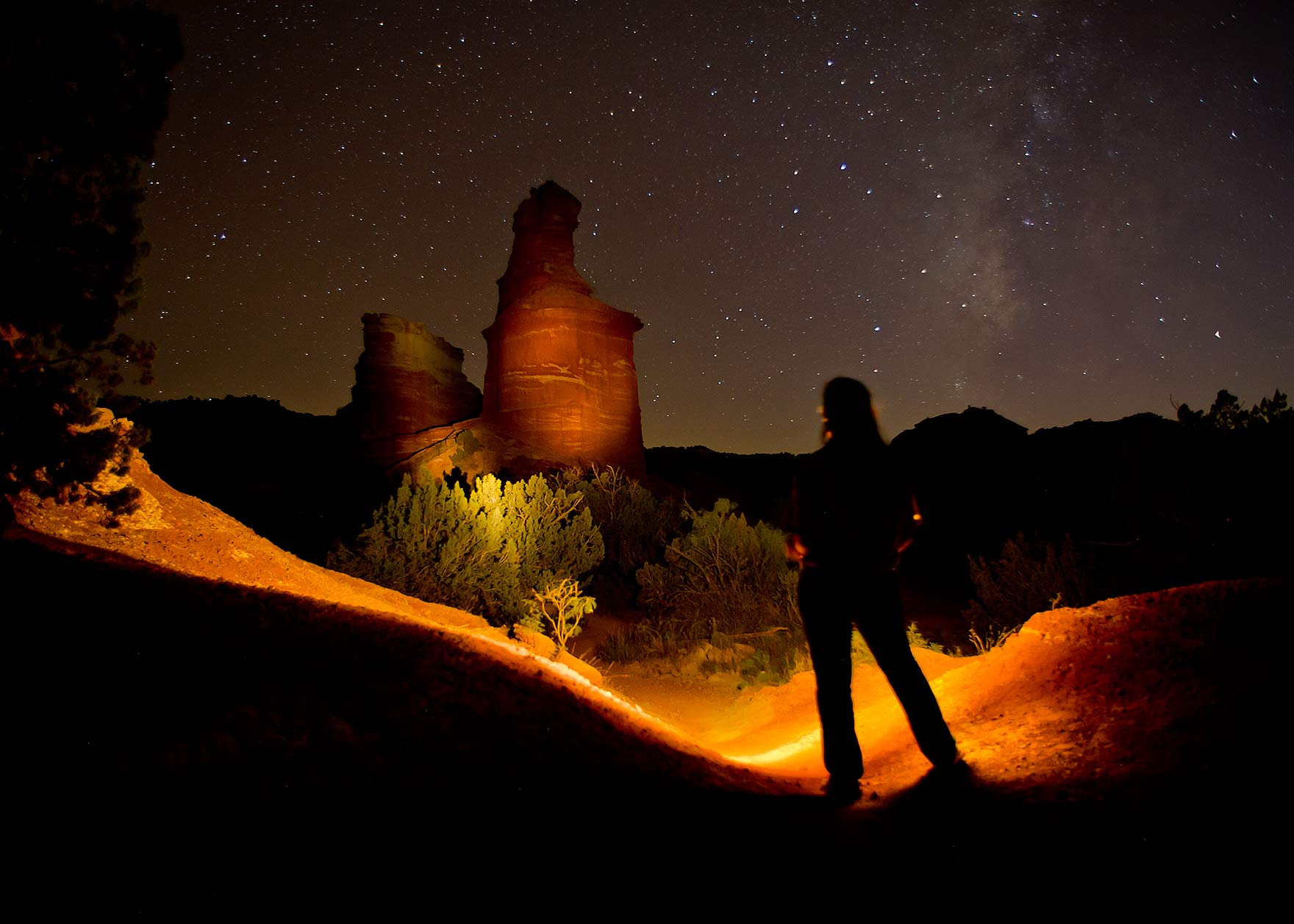
Don’t let the dark keep you indoors. With a flashlight, a friend, and a little daring, a night hike in a state park can be exhilarating.

One thing that’s really kind of fun, too, is to not use your flashlight.

When we spoke, Kelley Lauderdale was an interpretive specialist at Ray Roberts Lake State Park north of Denton.

If you let your eyes adjust to the dark and the moonlight, you’d be surprised at how well you can actually see. And sometimes when you do it that way, it really reveals a whole new wilderness. You see a lot more than when you get this tunnel vision with the flashlight and only see what’s illuminated.

Kelly recommended hiking with others on familiar trails, and to be prepared to experience wildlife by ear.

There are lots of amphibians that are active at night. And that’s one of the really fun things to listen for, because they’re pretty easy to hear. And oftentimes, once you learn to identify the sound of an amphibian, you’ll say: “Hey! That’s what I’ve been hearing all this time? I know that!”

Frogs and toads aren’t the only animals active at night.

There are owls that are active. Eastern screech owls are very nocturnal. Another bird that a lot of people hear at night is the Chuck Wills Widow; and they’ll sing and call all night long. Sometimes campers get a little bit tired of it if it’s really close to their campsite.

So step outside when the sun sets and get an earful of wildlife.

For Texas Parks and Wildlife, I’m Cecilia Nasti.