Archive for the 'Shows' Category

Blue Quail Translocation

Wednesday, January 6th, 2016

This is Passport to Texas

Five…four…three…two…one… [Birds flutter].

That’s Dale Rollins Director of the Rolling Plains Quail Research Ranch. Along with Texas Parks and Wildlife his group released 88 wild-caught blue quail on the Matador Wildlife Management Area early last year.

So we’ve been trapping wild birds out in the San Angelo area and moving those here and testing two release styles to see which one, if either, is going to be an effective way of restoring blue quail to this country.

Blue quail, once plentiful in the Rolling Plains, have been absent for years. Various partners joined to reestablish populations of blue quail on public and private land. Researchers outfitted thirty-nine of the birds with tiny radio collars to track their movements. Texas Parks and Wildlife Biologist, Kara Campbell.

We’ll try and keep tabs on them, are they staying on the area, are they leaving the area, where they are moving and also survival. We’re just really excited to be part of it. This is the beginning stages and so you know it phase one pilot stage. And to be part of that is pretty neat. And we’ll see where it goes in the future.

Learn about blue quail on the Texas Parks and Wildlife website.

The Texas Parks and Wildlife Foundation supports our series and helps to keep Texas wild with the support of proud members across the state. Find out more at www.tpwf.org

For Texas Parks and Wildlife, I’m Cecilia Nasti.

Outdoor Story: From Birds to Bugs

Tuesday, January 5th, 2016
Mike Quinn on Central Texas Gardener with Tom Spencer. Photo credit: KLRU-TV, Austin

Mike Quinn on Central Texas Gardener with Tom Spencer. Photo credit: KLRU-TV, Austin

This is Passport to Texas Outdoor Stories

Mike Quinn is an entomologist whose interest in bugs developed through his family’s interest in birds.

My parents were birdwatchers, and I had an interest in outdoors as a child. But it wasn’t until I was in my twenties… I was helping ornithologists at UT study painted buntings at McKinney Falls State Park, and walked around the bend, and we saw this large butterfly there sunning itself – absolutely gorgeous in the sun – and Anita Fauquier says, “I think that’s a giant swallowtail.” And it hit me like a ton of bricks. It was an epiphany for me that you could put a name on an insect. Why that was a revelation to me I still don’t quite don’t know, because I could identify birds by sight and sound, and plants and herps and etcetera. But putting a name on an insect was somehow a foreign concept. And I went home and I borrowed my mother’s butterfly field guide (which I haven’t quite returned yet), and just from that point on I started paying much closer attention to insects, and that led me to my degree now that I have in entomology.

Do you have an Outdoor Story? Go to passporttotexas.org, and share it with us…and we might share it with Texas.

For Texas Parks and Wildlife…I’m Cecilia Nasti.

________________________________________________

A YouTube video of Mike Quinn on the KLRU-TV Austin (PBS affiliate) show Central Texas Gardener with Tom Spencer


Seasonal Bird Counts

Monday, January 4th, 2016
Birding at Resaca De La Palma State Park

Birding at Resaca De La Palma State Park

This is Passport to Texas

The Christmas Bird count, wraps up Tuesday. Volunteer counters add the understanding of wintering species, says biologist Marsha May.

16—Well, this is a great way to look at the bird populations in the winter time—the wintering species. And we’re able to look at changes through time; this count’s been going on since 1900, so we’re looking at lot of good data there.

Did you miss the Christmas Bird Count? Marsha says more opportunities are on the way.

33—There are other counts that look at spring birds, and then also at breeding birds in the summer. The North American Breeding Bird survey through USGS is another way of looking at breeding birds in the summertime. Then, local Audubon societies hold bird-a-thons in the spring, and that’s looking at all your migratory spring birds. So, there’s lots of things to do with birding, and we do have good birding information on our website. As well as information on the Birding Classic. So, if you really want to get competitive, I’d recommend you get out there and try the Great Texas Birding Classic.

The Great Texas Birding Classic Is April 15 through May 15 and celebrating its 20th year!

Find registration information for the Birding Classic, as well as videos about the birding on the Texas Parks and Wildlife YouTube channel.

That’s our show for today… Funding provided in part by Ram Trucks. Guts. Glory. Ram

For Texas Parks and Wildlife, I’m Cecilia Nasti.
Winter Hummers

Thursday, December 31st, 2015
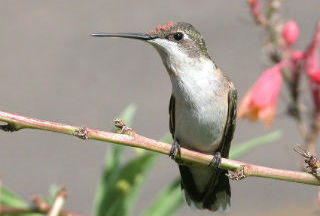
Female Lucifer hummingbird. Photo credit: Mark Klym

Female Lucifer hummingbird. Photo credit: Mark Klym


This is Passport to Texas

Fall hummingbird migration peaked in mid September, and spring migration won’t peak until February. Until then what’s a hummingbird lover to do—just wait?

08—Not at all. A lot of people will take their feeders down in October, and that’s really one of the worst things you can do, because we get hummingbirds here in Texas all year round.

Mark Klym coordinates the Hummingbird Roundup, an ongoing citizen survey of backyard hummers. Some birds, he says, arrive in late summer and stay until spring.

09—They’re not going to go down into Mexico. And so, we can keep them fed and keep them sheltered, and if we have the right habitat, we can enjoy hummingbirds 365 days a year.

You may see ruby-throats and black-chins in winter, but the Rufus and Buff bellies are more numerous in the colder months, and if your landscape has plenty of trees and shrubs, you may see some this winter. Just remember to keep your feeders refreshed and thawed.

20—During the winter, it’s a good idea to increase the number of feeders that you have. Continue with that typical, one part sugar, four parts water solution—no red food coloring, please; that’s not good for the birds. If we get a snow, which has happened a few times—yeah, you have to go out there and brush that snow off and get those feeders opened up. The birds need them; as soon as they wake up that’s where they’re going to head—for those feeders.

Find more hummingbird information on the Texas Parks and Wildlife website.

For Texas Parks and Wildlife…I’m Cecilia Nasti.

Hummingbird Roundup

Wednesday, December 30th, 2015
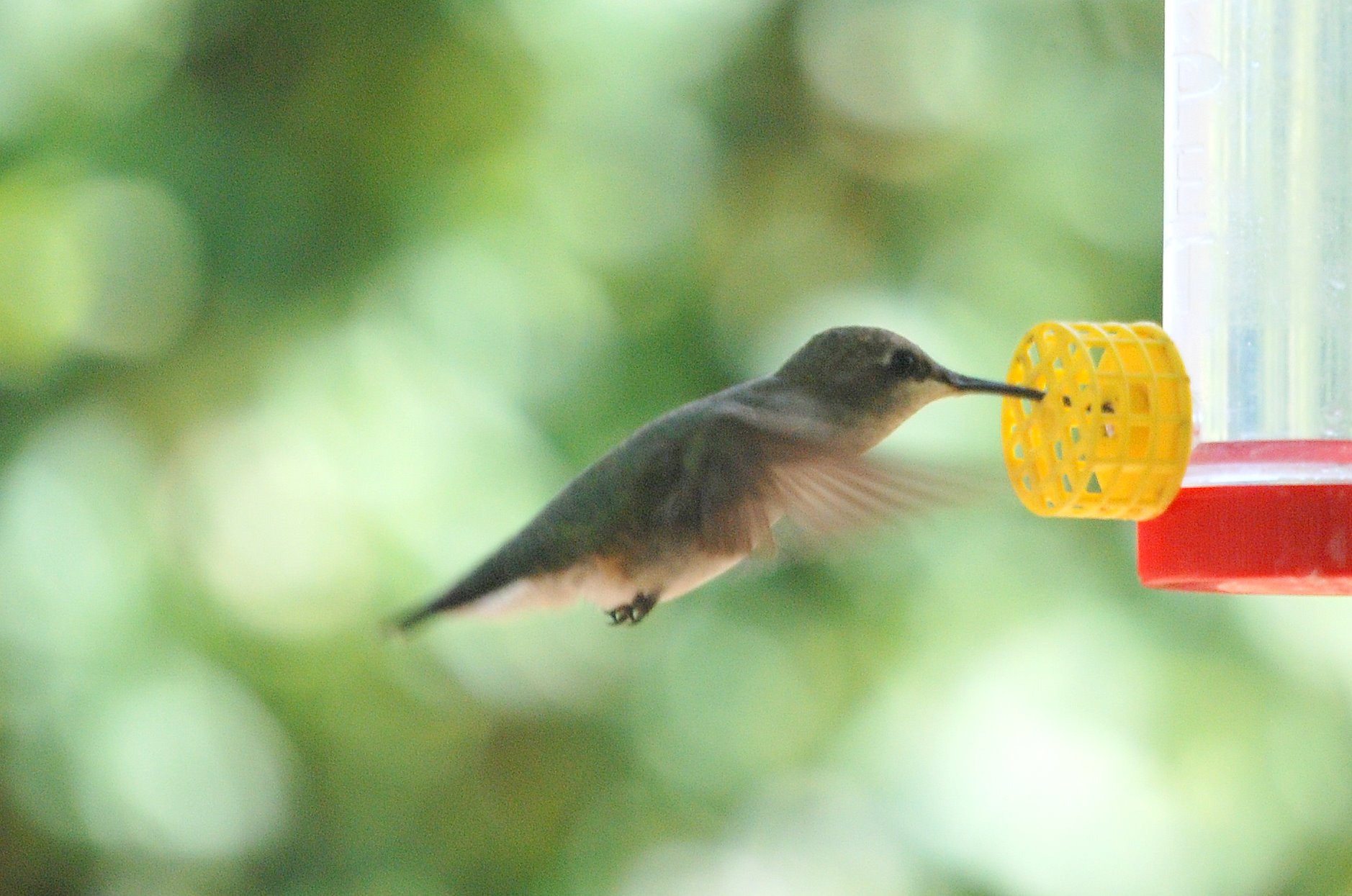
Hummer photographed in the Davis Mountains.

Hummer photographed in the Davis Mountains.


This is Passport to Texas

Hear the word “roundup” and you might think of herding cattle. But Mark Klym, who coordinates the Hummingbird Roundup, thinks of counting tiny birds.

Well, the Hummingbird Roundup is a backyard survey of hummingbirds that we do every year. You can participate at any time. You can download the forms directly off of our website, or you can send us a letter. We appreciate a donation to help with the cost, but we can send you the forms and get you started.

And, so what does it mean to you as a scientist to get this kind of data back?

Well it’s very important. It helps us to understand where the hummingbirds are being see, when they’re being seen. What resources they’re using. It helps us to get an idea how people are responding to them, whether they’re feeding them appropriately, and it gives us an opportunity also to learn a little bit about these hummingbirds. When the survey started, we thought we had 14 species in the state and that some of them were extremely rare. Now we’re finding that these birds are not as rare as we thought, some of them are actually nesting in Texas, and we’ve got 18 species of hummingbird in Texas. These are native non-migrating species? Well, these are all migrating species, but they’re all naturally occurring in the state of Texas.

Download the Hummingbird Roundup forms from the Parks and Wildlife website.

That’s our show… For Texas Parks and Wildlife…I’m Cecilia Nasti.