Archive for the 'Shows' Category

TPW TV: Good Guzzlers

Friday, September 25th, 2015


This is Passport to Texas

For most of us, the word “guzzler” has a negative connotation, but not for the groups working to restore bighorn sheep.

04— A guzzler is essentially a rainwater collection system for wildlife.

Mark Garrett is Texas Parks and Wildlife Project Leader for Trans-Pecos Wildlife Management Areas.

09— We’ve got two large panels of sheet metal that collect the rainwater, funnel that down into storage tanks that feed to wildlife friendly watering stations.

Adequate fresh water is essential for the restoration of big horn sheep. During a segment on next week’s Texas Parks and Wildlife PBS Television Series, see how volunteers from the Big Horn Society, Like Kathy Boone, install new guzzlers on the Black Gap Wildlife Management Area.

13— Work projects normally last a couple of days, and they are always in extremely remote areas. For this work project, we’ve had over a hundred people here to help us build two water catchment devices we call guzzlers.

Workers must travel by helicopter to the mountain tops to construct the guzzlers, but volunteer Charlie Barnes says the challenges that come with the work are worth it.

11— This land is suitable for all the game that live here. It was missing one thing. Water. And now it’ll have water. That’s conservation right there.

View the segment on Good Guzzlers next week on the Texas Parks and Wildlife PBS TV series. Check your local listings.

The Wildlife and Sport Fish Restoration Program supports our series. Through your purchases of hunting and fishing equipment, and motorboat fuels, over 40 million dollars in conservation efforts are funded in Texas each year.

For Texas Parks and Wildlife, I’m Cecilia Nasti.
Unusual Year for Alligators in Texas

Thursday, September 24th, 2015
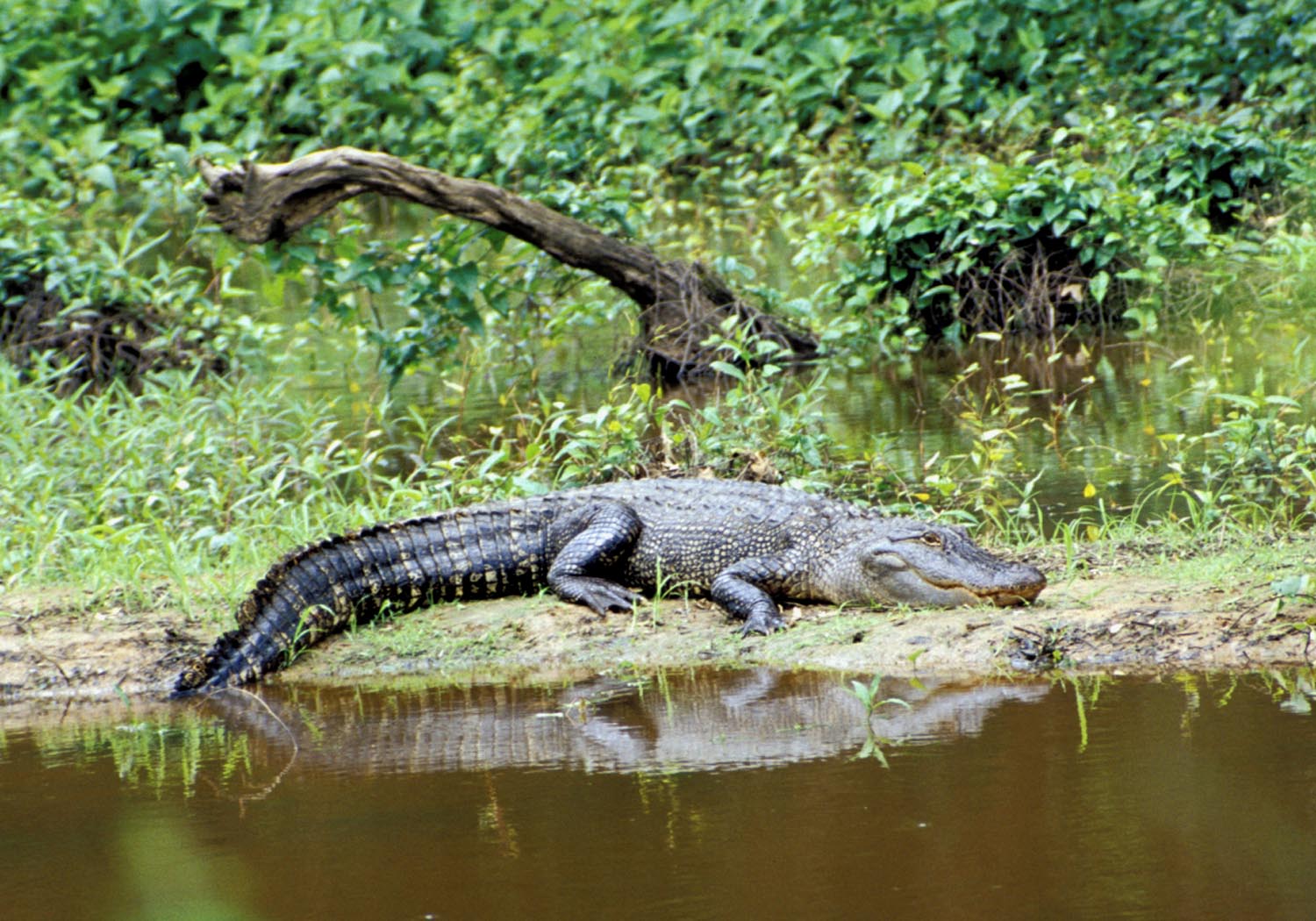
American Alligator, photo TPWD

American Alligator, photo TPWD


This is Passport to Texas

The American alligator is native to Texas and found primarily in the Eastern third of the state. According to Steve Lightfoot, 2015’s been an unusual year for this species.

11— More so because the timing of the flooding events that we had in May—right at the time when alligators are out. They’re doing their nesting and breeding. And so they’re active that time of year.

Lightfoot is TPW spokesperson. He says the flush of fresh water into Texas’ river systems caused alligators to pop up in unexpected places.

31—The number of calls we get at the department saying ‘We’ve got an alligator here; what do I need to do?’ Those obviously have gone off the charts. We recently had some video tape that showed an alligator in the surf along one of our popular beaches along the coast. And people were really concerned. ‘Oh my gosh! What if my kids had gone out there?’ Well, guess what. That alligator was doing what that alligator does. He was out there because the fresh water came down. Salinity levels were low. It was an opportunity for him to get out in the salt water and wash the parasites off his hide. That’s all he was doing. And he left after he got through with that.

And in places where alligators are a common sight: do not feed them, do not swim in waters where they they’re known to spend time, and if you leave alligators alone, they will leave you alone.

The Wildlife and Sport Fish Restoration Program supports our series. Through your purchases of hunting and fishing equipment, and motorboat fuels, over 40 million dollars in conservation efforts are funded in Texas each year.

For Texas Parks and Wildlife…Cecilia Nasti

Mysterious Caddo Lake State Park

Wednesday, September 23rd, 2015
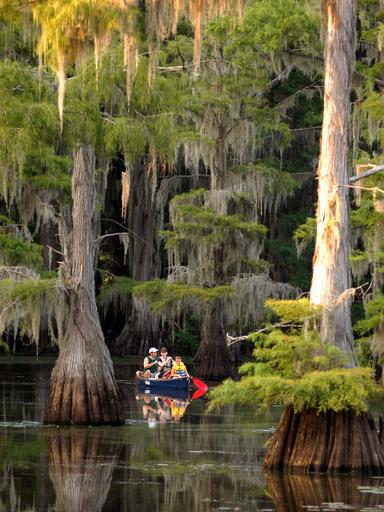
Caddo Lake

Caddo Lake


This is Passport to Texas

When mist cloaks Caddo Lake it’s easy to understand how the lore and legend about this east Texas water body came to pass.

Native American legend says a giant flood created Caddo Lake. Others say an earthquake was responsible.

Meanwhile, scientists believe the lake formed when floodwaters, blocked by massive log jams on the Red River, backed up into the Cypress Bayou watershed, forming the lake.

One thing that is true: Caddo Lake’s beauty. And visitors to Caddo Lake State Park/Wildlife Management Area not only experience nature at her most beguiling, they also have a plethora of recreational opportunities — from hiking to hunting – to choose from.

With an annual public hunting permit, hunters may harvest deer, eastern wild turkey, and quail during appropriate seasons. Licensed anglers find largemouth bass, catfish and brim plentiful in the lake.

Find more on Caddo Lake SP/Wildlife Management Area on the Texas Parks and Wildlife website.

That’s our show. The Wildlife and Sport Fish Restoration Program supports our series. Through your purchases of hunting and fishing equipment, and motorboat fuels, over 40 million dollars in conservation efforts are funded in Texas each year.

For Texas parks and wildlife…I’m Cecilia Nasti.

Best Backyard Birdbaths

Tuesday, September 22nd, 2015
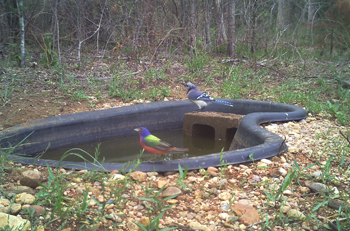
Ground level birdbath in a backyard wildscape.

Ground level birdbath in a backyard wildscape.


This is Passport to Texas

Attracting birds to your backyard is as simple as adding water…to a birdbath.

05— They’ll use that birdbath year-round. They’ll use it for drinking. They’ll use it for bathing…

Cliff Shackelford is a non-game ornithologist with Texas Parks and Wildlife. Decorative ceramic birdbaths often make better art than they do watering stations for birds.

09—The simpler the better. What I found, is the basin needs to be a little rough and not smooth. It needs to have a gradual dip to it.

Concrete pedestal birdbaths can be too deep for birds, and the porous material encourages algae and sediment buildup. The Cornell Lab of Ornithology says a good birdbath mimics shallow puddles, which are nature’s birdbaths. They suggest digging a shallow hole in the ground, lining it with plastic to make it watertight, and then putting sand in the bottom so birds can get their footing. Place a few plants around the perimeter, and you have a bird spa.

The only thing that could make it better is dripping water, says Cliff Shackelford.

12— Bird drips are really good; you can hang a milk jug up with a little pin prick hole in it. Just the sound of the water dripping could be attractive to birds. And also, they may like to get under that drip a little bit.

Find more birding information on the Texas Parks and Wildlife website.

For Texas Parks and Wildlife, I’m Cecilia Nasti.
What’s Better for Birds: Feeders or Birdbaths?

Monday, September 21st, 2015
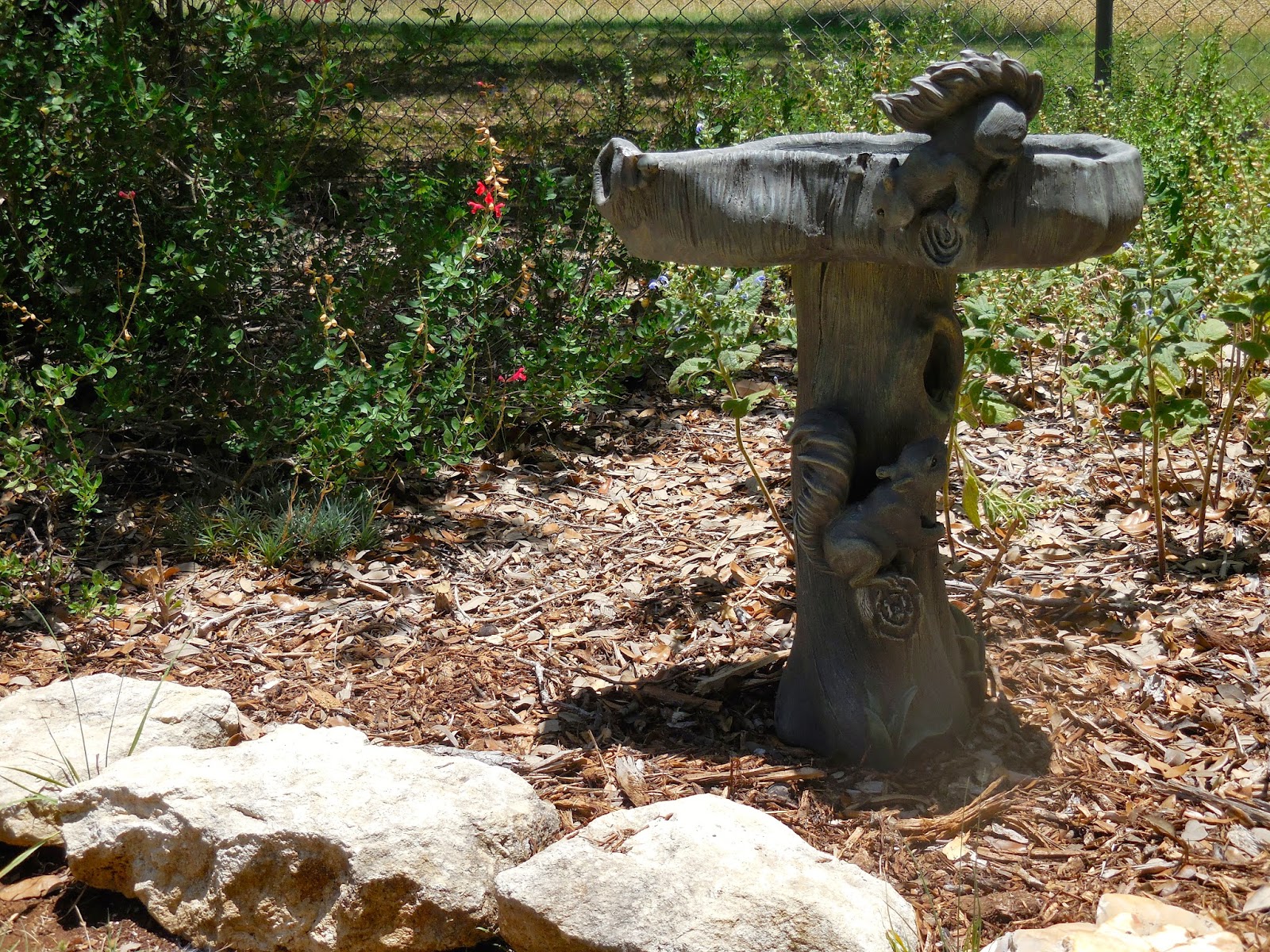
Birdbath in a wildscape. Photo courtesy of Sheryl Smith-Rodgers.

Birdbath in a wildscape. Photo courtesy of Sheryl Smith-Rodgers.


This is Passport to Texas

Which would you rather have in your yard: a bird feeder or a birdbath?

05— A birdbath to me is way more important than a bird feeder.

Cliff Shackelford is a non-game ornithologist with Texas Parks and Wildlife. Why add a birdbath? Enjoyment: yours and the bird’s.

11—You’ll get much more enjoyment watching your backyard birds if you put up a birdbath than a bird feeder. They’ll use that birdbath year-round. They’ll use it for drinking. They’ll use it for bathing.

Sounds like easy, inexpensive entertainment that helps wildlife. Yet, Cliff says there’s more to a birdbath than just keeping it filled.

21— You want to make sure you keep it clean. Now, I don’t mean you have to get out there every day and scrub it. But, every couple of weeks, you want to probably hose it out and let the sun bake and dry it. You don’t want to use harsh chemicals. But, a birdbath is a welcome sight. And especially if you’re in areas where you don’t get a lot of rainfall—or in times of drought—a birdbath is going to be essential for our birds.

Not all birdbaths are created equal. I’ll have tips on the best kinds of birdbaths tomorrow.

For birding and wildscaping information, visit the Texas Parks and Wildlife Website.

That’s our show… Funding provided in part by Ram Trucks. Guts. Glory. Ram

For Texas Parks and Wildlife, I’m Cecilia Nasti.