Archive for the 'Shows' Category

Conservation: Bird Friendly Coffee

Friday, October 4th, 2013

Dr. Robert Rice (back row, right), with colleagues from Smithsonian Migratory  Bird Center.

Dr. Robert Rice (back row, right), with colleagues from Smithsonian Migratory
Bird Center.


This is Passport to Texas

Coffee is an agricultural crop that thrives in the tropics.

14—These areas oftentimes are coincident with biodiversity hot spots; that is, areas of really high biodiversity, whether in birds, or insects, amphibians—what have you.

Dr. Robert Rice works with the Smithsonian Migratory Bird Center, which certifies coffees “Bird Friendly” when growers meet certain stringent criteria. Studies suggest shade grown coffee offers the greatest benefit as habitat.

15—Where coffee still is managed with a shade cover of the kind that we like to see and have defined with “bird friendly” criteria, then coffee oftentimes is some of the last remaining canopy cover—even though it’s not forest—it’s acting very much like a forest.

With habitat loss from deforestation, shade grown coffee estates serve as refuge for neo-tropical migratory bird species that travel through Texas, including the Black and White Warbler, the Baltimore Oriole, the Cerulean Warbler and others.

:15—So, they just hang out there. They might be running around with mixed species flocks, and trying to stay alive and ultimately fatten up before they make the trip back north again. So this quality habitat becomes quite important for them in terms of making the trip back.

So next time you order a cup of coffee, you might ask your server if it’s for the birds.

That’s our show…Funding provided in part by Ram Trucks. Guts. Glory. Ram.

For Texas Parks and Wildlife…I’m Cecilia Nasti.
_______________________________________________
Smithsonian Migratory Bird Center:
http://nationalzoo.si.edu/scbi/migratorybirds/coffee/default.cfm
Event: Big Time Texas Hunts

Thursday, October 3rd, 2013

Big Time Texas Hunts

Big Time Texas Hunts


This is Passport to Texas

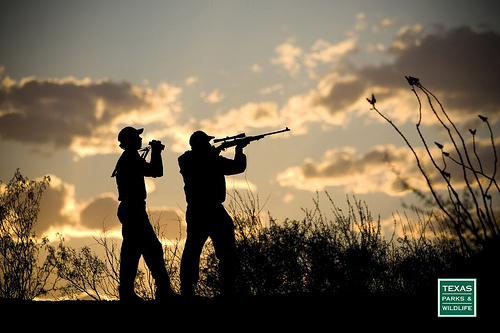
Big Time Texas Hunts provides hunters an opportunity to enter for a chance to win one of 8 hunt packages.

04— You can enter through the deadline of October 15th.

Linda Campbell oversees Private Lands and Public Hunting at Texas Parks and Wildlife Website. Entries for a hunt of a lifetime are $9 online (with a one-time $5 admin charge) or $10 at license retailers, by phone and by mail.

20— Big Time Texas Hunts is a revenue generating program for Texas Parks and Wildlife; we offer eight hunt packages. Awesome experiences for hunters – really great hunting packages – for deer, and birds and waterfowl, alligator. We even have a new one this year called the Wild Hog Adventure.

Funds collected from entries support wildlife conservation projects in Texas.

13—These are fully guided hunts, and so everything is provided – lodging and food – all the guiding is also provided. You just have to get yourself there to the location. But other than that, everything is taken care of – including the taxes on the hunt itself.

Most hunt packages allow winners to bring either hunting or non-hunting guests. Whether or not draw your name, Linda Campbell says: everyone wins.

05—You’re adding to the opportunity to support wildlife conservation and public hunting.

Find details on the Texas Parks and Wildlife Website.

For Texas Parks and Wildlife…I’m Cecilia Nasti.

Event: Toyota Texas Bass Classic (Oct. 4-6)

Wednesday, October 2nd, 2013

Toyota Texas Bass Classic at Lake Conroe

Toyota Texas Bass Classic at Lake Conroe


This is Passport to Texas

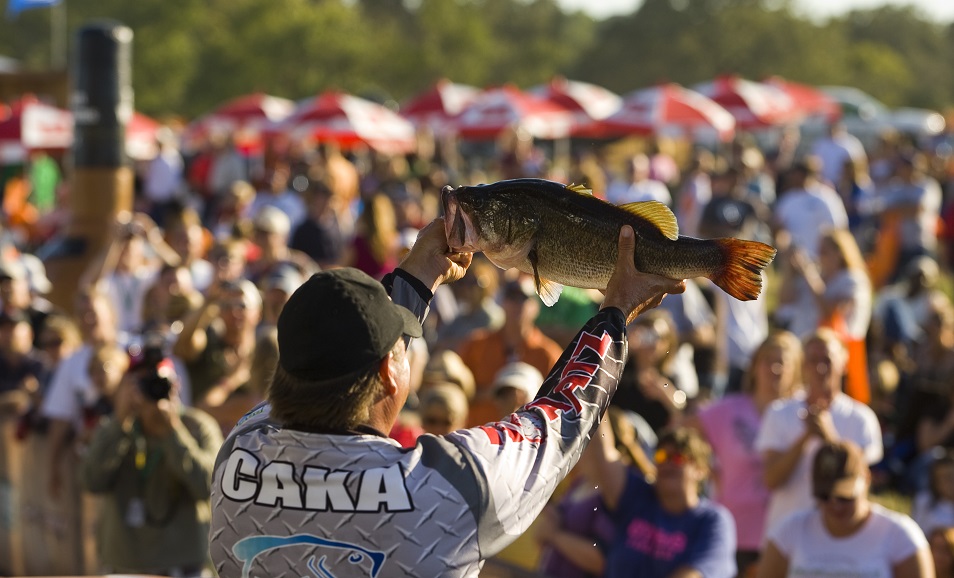
This weekend – October 4th through the 6th – 50 world class bass anglers will converge on Lake Conroe for the seventh annual Toyota Texas Bass Classic.

06 — This is a great opportunity for Texas Parks and Wildlife Department to promote the great fishing we have in our state.

Dave Terre is with Texas Parks and Wildlife’s Inland Fisheries Division. Texas is known worldwide for its great bass fishing, and Lake Conroe is recognized as one of the best bass lakes in the state.

04—Anybody coming to the event will likely see some pretty good sized fish.

The bass classic raises money for youth fishing programs throughout Texas. In addition to the fishing and philanthropy, attendees can also expect fun.

33—The Bass Classic is not only a world class professional bass tournament; it’s also a huge outdoor expo and concert series. There is something to do for all families there. Lots of activities for kids to enjoy and become involved in the outdoors. For instance, this year, we’ll feature a much broadly expanded outdoor zone. There’s going to be lots of hands on activities for the kids. Bring your whole family. This is a great opportunity to celebrate the good work of Texas Parks and Wildlife and the great fishing we have in our state.

Find times, ticket, and band information for the Toyota Texas Bass Classic, this weekend—October 4 through 6—at toyotatexasbassclassic.com.

For Texas Parks and Wildlife…I’m Cecilia Nasti.

Angling: ShareLunker Season

Tuesday, October 1st, 2013

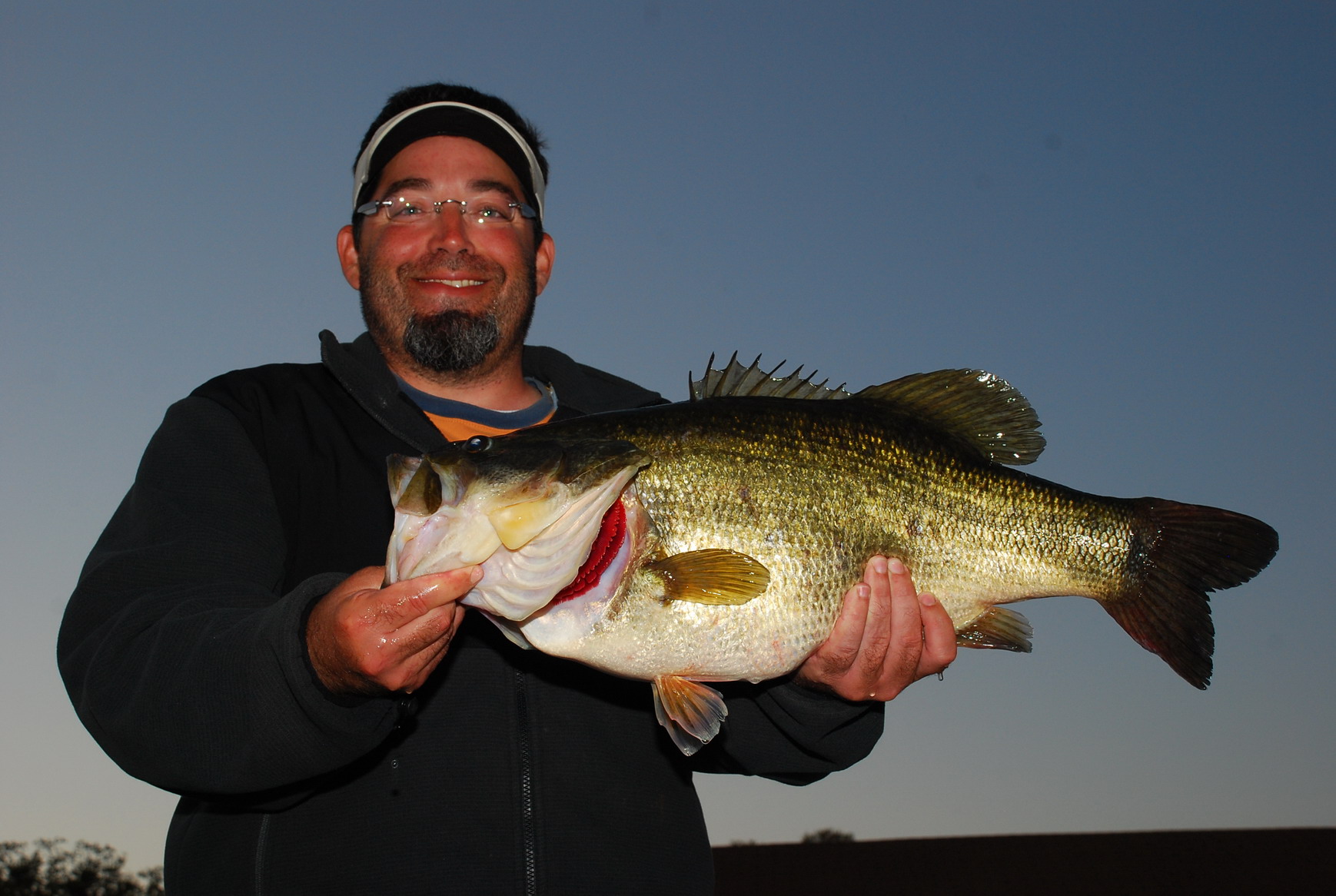
Proud angler with his ShareLunker

Proud angler with his ShareLunker


This is Passport to Texas

Juan Martinez, a hatchery biologist, is the guy anglers call to donate lunkers (largemouth bass 13 pounds or larger caught in Texas waters) to the Sharelunker program.

06 — I became a hatchery biologist in 2005 here at the Texas Fresh Water Fisheries Center in Athens. And since my years here. I’ve essentially taken care of the lunkers from the point that they come in until they go home.

The Sharelunker program is an angler recognition program which involves anglers in largemouth bass conservation. Since taking over the job of “the lunker
guy” last year, Martinez says he’s had a few extra duties added to his job description.

10 —The only additional duty that I got is coordinating with the anglers on the picking up of the fish and talking to the media as well as far as educating them about our program.

I’m introducing you to Juan Martinez now, because October first through April 30th is when anglers may share their lunkers with the program to help Texas Parks and Wildlife breed bigger, better largemouth bass.

24—The main reason we do it during that time is because that’s when the weather is cool enough so we can handle fish. We had experimented in the past when the program was in its infancy stage, and we picked up fish in the summer. But the water gets too hot for the fish – the warmer water stresses the fish. We
want the best for the fish, and that’s to return it back into the lake where it’s alive. So, by doing it during this month, it allows us to take better care of the fish.

After one breeding season the fish is returned to the angler or to the water body where it was caught. Find more information on the Texas Parks and Wildlife website.

The Wildlife and Sport Fish Restoration program supports our series.

For Texas Parks and Wildlife…I’m Cecilia Nasti.
_____________________________________________________________
CONTACT INFORMATION IF YOU REEL IN A LUNKER:

ShareLunker Program — Juan Martinez (903) 670-2285, (903) 681-0550
or pager (888) 784-0600 to report a lunker only from Oct. 1 through April 30

Invasives: Combating Fire Ants

Friday, September 27th, 2013
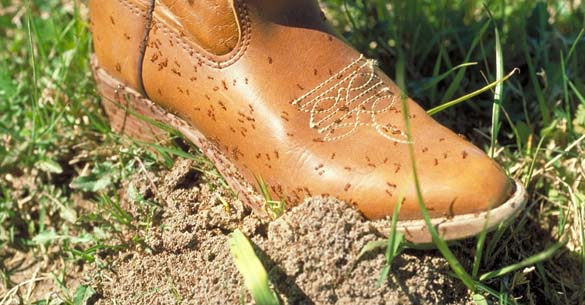
Fire ant swarm on the attack, Image from http://fireant.tamu.edu/.

Fire ant swarm on the attack; image from http://fireant.tamu.edu/.


This is Passport to Texas

[NS: fire ant stridulations]

That’s the sound of the imported red fire ant. A sad truth: they’re most active outdoors during nice weather.

08—We typically see most activity in the spring and in the fall. It’s nice, and that’s generally when we like being outside, too, unfortunately.

Elizabeth “Wizzie” Brown, an entomologist with AgriLife Extension, says the insect—native to South America—found its way into the U.S. in the 1930s through the port of Mobile, Alabama; perhaps in soil used for ships’ ballasts. We discovered them in Texas in the 1950s.

Brown says researchers continue to work on ways to manage this invasive exotic pest.

29—We have had things that we’re working on…things like fungus, and there’s organisms that live in the fire ant body that reduce the reproductive capabilities of the fire ants. They have brought in parasitizing flies, that are called phorid flies that they use that attack the fire ants and pretty much eat them from the inside out. So we are working on it, but the fire ants are here—they’re always going to be here; these are just tools in our tool belts to help up manage those populations.

Tomorrow Wizzie Brown tests a home remedy to control fire ants. Find out if it works.

That’s our show… For Texas Parks and Wildlife…I’m Cecilia Nasti.