Archive for the 'Shows' Category

Monarch Malaise

Wednesday, November 15th, 2017
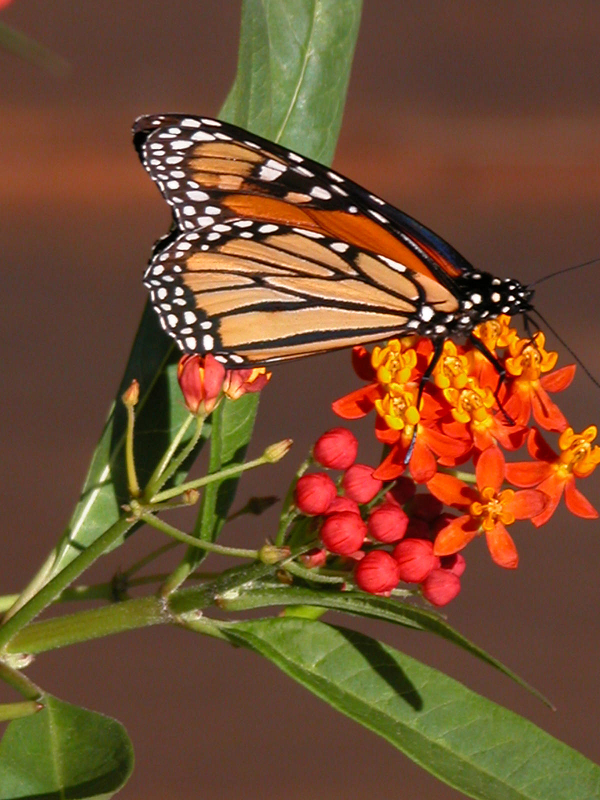
Monarch on milkweed.

Monarch on milkweed.

This is Passport to Texas

Habitat loss along its migration route may be one reason the Monarch butterfly is in decline. While feeding on nectar, Monarchs pollinate wildflowers along their route, which benefits our ecosystem.

There are two primary ways that habitat supports pollinators.

Johnnie Smith oversees outreach and education at Texas Parks and Wildlife.

And one is, the adult pollinators oftentimes feed on nectar of flowers. So, flowering plants that are a food source for the pollinator is very important. But also, is the food source that the pollinator’s larvae rely on as they’re growing up and becoming an adult. And so, that is just as important as the flowering plants that support the adults.

For Monarchs, native milkweed is an important plant. By cultivating them in our yards, along with other nectar and larval plants, we can all play a part in their survival.

There is no effort that is too small to be counted worthy. And there’s no spot of land that is too small to contain pollinator habitat. So, we really want to empower everybody—tht they can make a difference. Right where you stand. Right where you live—you can crate pollinator habitat, and help turn around this negative trend with the monarchs.

Find native and adapted plants for pollinators on the Texas Parks and Wildlife website.

The Wildlife Restoration program supports our series.

For Texas Parks and Wildlife…I’m Cecilia Nasti.
Go on a Nature Scavenger Hunt

Tuesday, November 14th, 2017
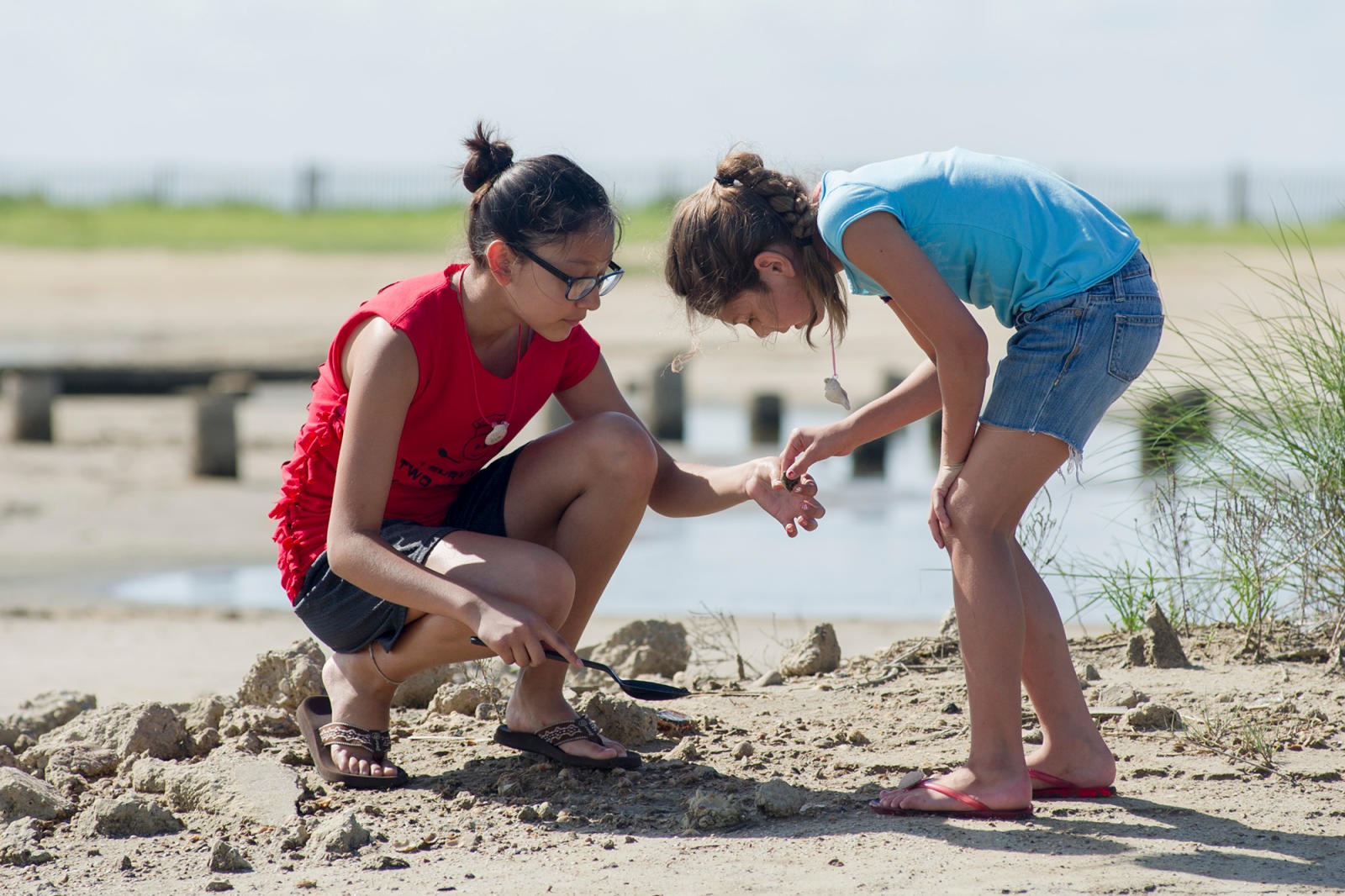
Enjoying a nature scavenger hunt.

Enjoying a nature scavenger hunt.

This is Passport to Texas

Most of us will overindulge during the long Thanksgiving weekend. Instead of letting the family collectively slip into a food-induced coma, get outside for some fresh air.

And maybe even have some fun in terms of a challenge or game or scavenger hunt.

Richard Heilbrun is a wildlife biologist with the wildlife diversity program. Personally, I’m intrigued by the sound of the scavenger hunt.

One of my favorite things to do with young kids is to give them a set of objectives: I want you to find a bug. For older kids: I want you to find a butterfly; I want you to find a moth; I want you to find this kind of caterpillar; I want you to observe ten different types of songbirds and tell me what they eat by what kind of bill they have.

Be sure to have a few field guides for reference, as well as binoculars, a digital camera and even a sketch book.

When you give them a challenge, it becomes a game. And they get into it and they get excited. Then, before you know it, they’ve spent their whole day interacting with nature, searching, discovering, and developing a sense of wonder with wildlife. And it’s that sense of discovery that endears them to nature and wildlife and conservation as adults.

And it works up an appetite, too.

The Wildlife Restoration program supports our series.

For Texas Parks and Wildlife…I’m Cecilia Nasti.
Interacting With Wildlife

Monday, November 13th, 2017
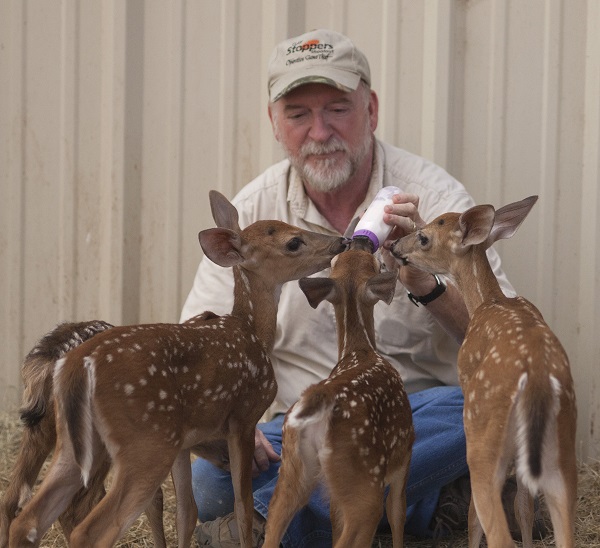
TPWD staff photographer, Earl Nottingham, helps feed fawns

TPWD staff photographer, Earl Nottingham, helps feed orphan fawns

This is Passport to Texas

There’s only one way to see wildlife in its natural state.

You have to spend time where the animals are.

That means outside. Richard Heilbrun, a wildlife biologist with the wildlife diversity program, says cooler fall temperatures makes extended time outdoors more pleasant and improves your chance of seeing wild things.

And with a little bit of patience; a little bit of perseverance—and maybe some education—we can really enjoy, enjoying the wildlife.

Whether you check out the critters in your backyard, neighborhood, or spend the day at a Texas state park, Richard says, there are ways to enhance the experience.

The best thing to take with you when you go out into wildlife habitat is something to enjoy wildlife with—whether it’s a digital camera, a pair of binoculars, or a field guide.

A sketch pad is also fun, and slows you down even more, so you can truly savor your wildlife viewing experience. The one thing you want to avoid, however, is direct contact with the animals.

The best way to enjoy wildlife is to enjoy it from a little bit of a distance. And that camera and binoculars really help you get close without actually needing to pick up that animal. Because, unless you know what you’re handling, it’s really a better idea just to observe them, draw them, photograph them, and watch them.

The Wildlife Restoration program supports our series.

For Texas Parks and Wildlife…I’m Cecilia Nasti.
Outdoor Story: Otter Hissy Fit

Friday, November 10th, 2017
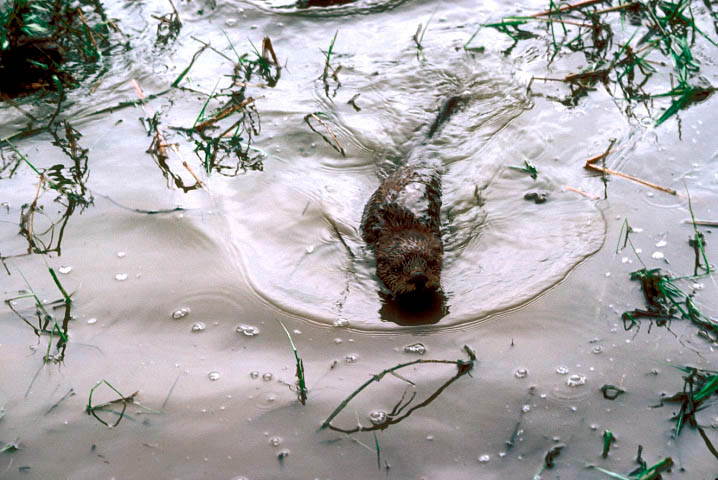
Texas River Otter

Texas River Otter

This is passport to Texas Outdoor Stories

Leslie McGaha wanted to try out her new bass kayak on Sam Rayburn Lake. Shortly after she got on the water, she had company–an otter!

So it was about 9:30 in the morning and I paddled across a branch of the lake, and I was hot. And so I saw a shady spot and figured I would go ahead and park there and see what I could see. And it was amazing: I saw a giant black crawdad crawling out of the bank; I was listening to the fish noises and the birds; the gar. Then, all of a sudden there was this bright flash of silver off to my right and I thought it was a gar or a carp. I keep watching, and then I see this head pop up out of the lily pads and look straight at me. And it wasn’t very happy that I was there, and he let me know. He made this sound like [makes hissing sound] And I didn’t know what it was. And he went back down after he told me his displeasure and then he comes back up and he makes this noise at me again [makes noise]. So, I decided I wanted to play the game, too, and I hissed right back at him [hisses]. And then he stopped for a second and looks straight at me and he and he starts hissing, kind of like he’s yelling at me. So I hissed back. So we have a pretty good conversation for a few minutes, and he pops down again, pops back up, and we start the whole thing over again two or three times before he goes on his merry way a little bit farther up the creek channel. It was just the funniest thing that had ever happened to me; it was amazing.

Share your Texas outdoor story with us; just go passportotexas.org, and click on Outdoor Stories.

That’s our show—funded in part by Ram Trucks. Guts. Glory. Ram.

For Texas Parks and Wildlife…I’m Cecilia Nasti.
Items to Bring on an Overnight Campout

Thursday, November 9th, 2017
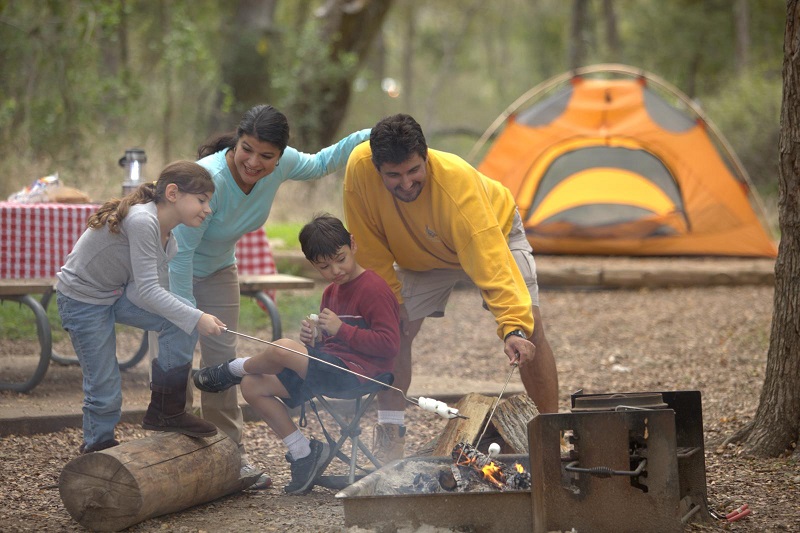
Prepared camping, is fun camping.

Prepared camping, is fun camping.


This is Passport to Texas

Do you avoid overnight camping because you’re afraid you won’t get your beauty rest?

The folks that do avoid camping tend to think that it’s not comfortable. Well, it doesn’t have to be that way.

If you’re concerned you’ll be counting sheep instead of sawing logs on your overnight campout, Robert Owen with the Texas Outdoor Family Program says a blanket and pillow and a few other items will have you sleeping like a baby in Mother Nature’s embrace.

I always like to bring either a foam pad to sleep on or an air mattress – and even cots are getting especially popular now. Sleeping bags often have a temperature rating on them, so you’ll want to make sure that you know what your overnight lows are going to be; maybe even subtract a couple of degrees from that just to be safe, and make sure your sleeping bag is rated for that temperature. We have some tips for folks who are going to spend the night outdoors when the temperature starts to drop: air mattresses –they can actually cool you off over night. They might be very comfortable, but it’s like sleeping on a pillow of cold air. If you can insulate yourself against that pillow of cold air, it’s really going to make you more comfortable overnight. All that means is laying a blanket or sleeping bag below you – between you and the air mattress – and that goes a long way.

Reserve your site at your favorite state park at texasstateparks.org.

For Texas Parks and Wildlife…I’m Cecilia Nasti.
