Archive for the 'Wildlife' Category

Texas Big Game Awards

Friday, May 1st, 2015
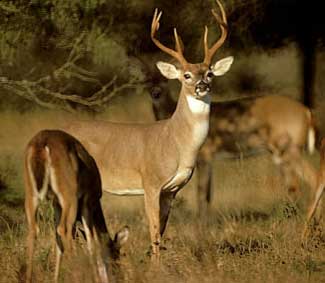
White-tailed buck

White-tailed buck

This is Passport to Texas

2015, marks the 24th year of Texas Big Game Awards.

17-Texas Big Game Awards started in 1991 as a partnership between Texas Wildlife Association and Texas Parks and Wildlife, as a means to document the great, big game resources that we have in the state. And also, to celebrate our hunting heritage and recognize young and new hunters.

Justin Dreibelbis is the new Private Lands and Public Hunting Program Director at Texas Parks and Wildlife Department. When we spoke, he was the Hunting Heritage Director at the Texas Wildlife Association. Texas hunters sent in their entries, which trained scorers evaluated using criteria specific to each region.

22- And then, we also have unscored categories, which are our youth division and our first harvest division. A youth division entry is any youth hunter who takes a native big game animal in the state. A first harvest division is for a person who take their first native big game animal in the state of Texas-whether they-re eight years old or 80 years old.

The Texas Big Game Awards recognizes large antlers with the understanding that they are a direct result of well-managed habitat, said Dreibelbis. Winners receive their awards at regional banquets. The first is May 16 for regions 5, 6 & 7 in Lufkin. Find additional information at texasbiggameawards.org

The Wildlife Restoration program supports our series.

For Texas Parks and Wildlife…I’m Cecilia Nasti.
Texas Hummingbird Roundup

Wednesday, April 29th, 2015
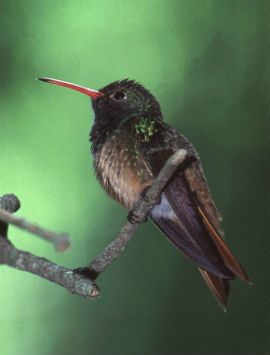
Buff bellied Hummingbird

Buff-bellied Hummingbird

This is Passport to Texas

Until recently, I did not know hummingbirds ate insects.

11—Well, if you think about it, an animal that’s swinging it’s arms at 72 times a second, needs something to rebuild those muscles that it’s exercising in there. And, without protein, they’re not going to build muscle.

So, if you find insects, such as bees, snacking at your hummingbird feeder, Mark Klym says, don’t panic.

09—People get all excited when bees get around their hummingbird feeder. And, bees are a great food for hummingbirds. I’ve watched them take bees out of the air.

Klym coordinates the Texas Hummingbird Roundup, a citizen science project with Texas Nature Trackers where folks like you help biologists take stock of hummers.

24—We ask people to have a look out in the backyard once a week, about fifteen, twenty minutes a week, and give us a count of what birds [hummingbirds] you’re seeing out there. How many? What Species? What are they using? And then, if you see anything unusual—you find a nest, you see mating behavior—we ask you to record it and let us know about it.

Download a survey kit and forms for the Hummingbird Roundup from the Parks and Wildlife website. While you’re there, you’ll also discover gardening tips for attracting hummers and a species identification guide.

That’s our show for today… Funding provided in part by Ram Trucks. Guts. Glory. Ram

For Texas Parks and Wildlife…I’m Cecilia Nasti.
Attracting Hummingbirds

Tuesday, April 28th, 2015
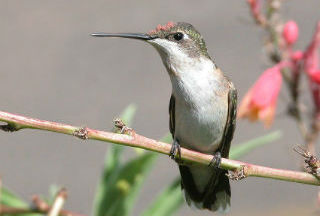
Hummingbird

Hummingbird


This is Passport to Texas

If you’ve never seen a hummingbird in your part of Texas, it’s not because they aren’t around.

10—There’s not a county in Texas that can’t see at least two species of hummingbird. In fact, there’s not a state in the United States—with the exception of Hawaii—that cannot expect to find at least two hummingbirds.

Okay, maybe that is not a lot of hummers, but they are out there. Mark Klym coordinates the Texas Hummingbird Roundup for Texas Parks and Wildlife. He says Texas has 18 species of hummingbirds, and one region boasts the most.

07—Certainly the greatest variety would be in the Davis Mountains area. The Davis Mountains and the Chisos Mountains—out in West Texas.

If you want to attract hummingbirds passing through the area, you could put up feeders, but Klym says there is a better way.

14—That feeder, even in a good garden, is nothing more than a fast food stop. You want to provide plants that these birds can go to for nectar. But also, you want to provide plants that will attract insects, because these birds are heavy insect eaters.

If you do put up a feeder, the nectar recipe is as follows: one part regular table sugar to four parts tap water. Use very warm water (not hot) right out of the tap. Stir briskly to dissolve the sugar and you’re done. Let it cool before setting out a feeder. Change the mixture every four days and never use food coloring.

That’s our show… For Texas Parks and Wildlife…I’m Cecilia Nasti.
Springtime is Watch out for Snakes Time

Monday, April 27th, 2015
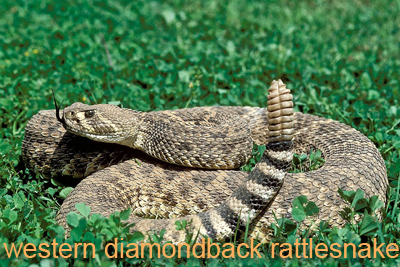
Western Diamondback Rattlesnake

Western Diamondback Rattlesnake


This is Passport to Texas

Now that spring is here, you know you’ll be spending more time outdoors. And, when you do, my advice: watch your step…literally.

07—Probably most people who spend any amount of time hiking in Texas have been within arm’s reach of a diamondback and never knew it.

Andy Gluesenkamp is a herpetologist with Texas Parks and Wildlife. Don’t let what he just said about the big, scary venomous Western Diamondback Rattlesnake — the deadliest snake in North America –keep you locked up indoors.

07—Diamondbacks would by and large much prefer to avoid contact than get in some sort of fisticuffs with a large animal like a human.

These snakes play defense. They usually hang out in the vicinity of fallen logs, brush piles, and rocks. If they think you don’t see them, they’ll lie perfectly still and let you proceed on your merry way. They don’t court trouble. However…

14—If they feel threatened by you, the first thing that they’ll do is buzz that rattle. On rare occasions when somebody reaches their hands into a crevice, or is picking up firewood and grabs a snake or steps on a snake—then they’re going to react violently. And that’s when people tend to get bitten.

You know what you have to do. Find more information about snakes on the Texas Parks and Wildlife Website.

The Wildlife Restoration program supports our series and works to restore native habitat in Texas.

For Texas Parks and Wildlife…I’m Cecilia Nasti.
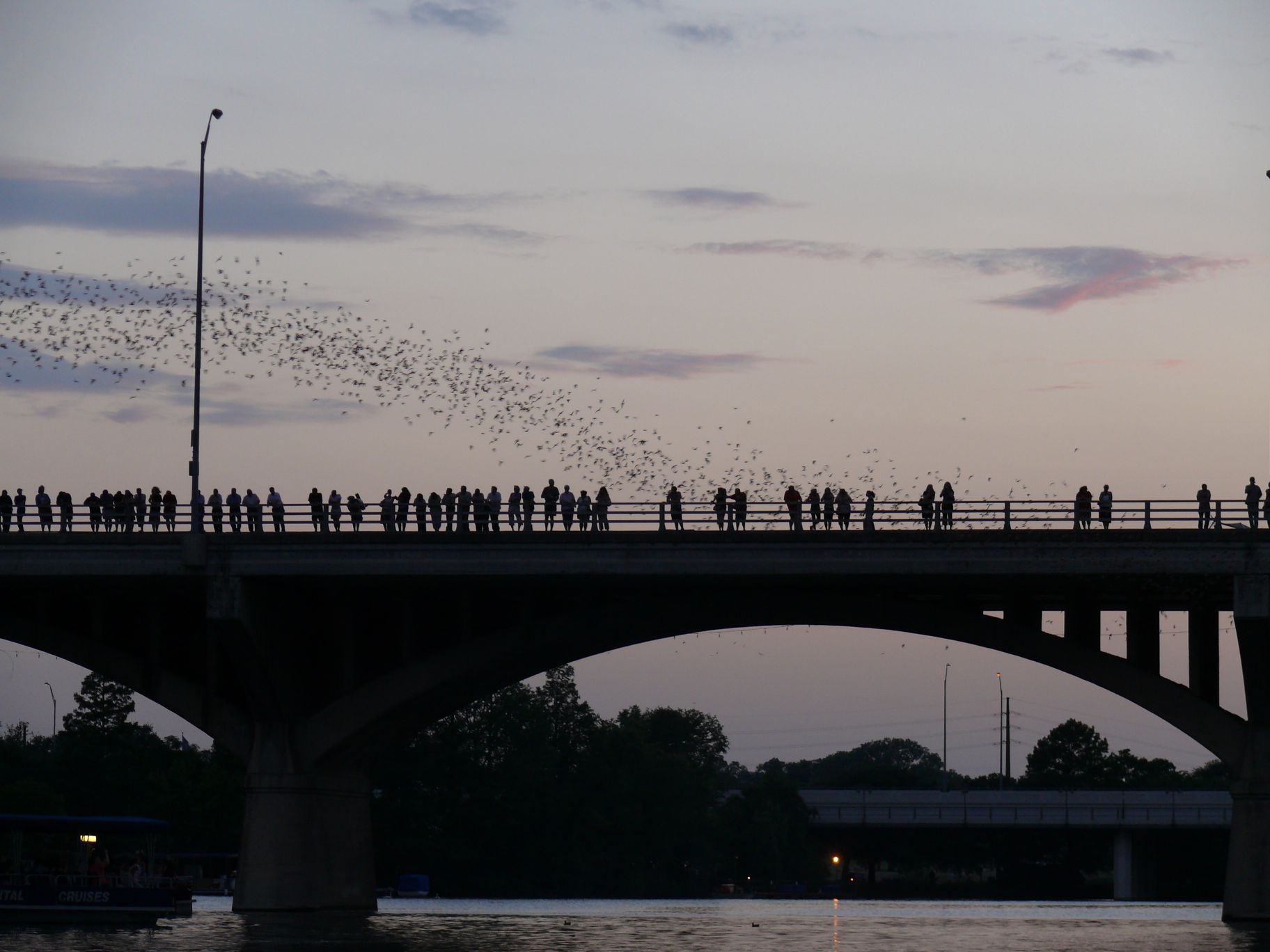
Wildlife: Bats and Bridges

Tuesday, April 21st, 2015
Bat watching in Austin

Bat watching in Austin


This is Passport to Texas

When it comes to living arrangements, bats are adaptable. In Texas, for example, millions of Mexican free-tailed bats live comfortably in crevices under bridges.

06—We know from our studies of bats that there’s a very high percentage, especially in Central Texas that, if you build it they will come.

Mark Bloschock, retired from the Texas Department of Transportation as a special projects engineer with the bridge division, and earned the moniker “Batman of TxDOT” due to his passion for the mammals. He said to accommodate bats’ needs he had to “listen” to them.

18—Bats can’t speak to us in English, so they can’t tell us whether this housing that they find in the made environment – or let’s say the man-made environment – is preferred housing or whether it’s desperation housing. But when they go in there to raise their young in these nursery colonies, we think that it must be preferred housing.

It generally costs the same to construct bat friendly bridges, yet when bats colonize under these structures, especially in agricultural areas, everyone profits thanks to their voracious appetite for insect pests.

11—And that means the farmers have to spray less insecticides, or they spray significantly less insecticides. It’s good for us because we eat food with less use of insecticides and we eat food that’s produced cheaper.

You don’t have to build a bridge in your backyard to attract bats. Find information on how to build a bat house on the Texas Parks and Wildlife Web site.

For Texas Parks and Wildlife…I’m Cecilia Nasti.
