Archive for the 'Wildlife' Category

Wildlife: Invertebrates

Wednesday, May 28th, 2014
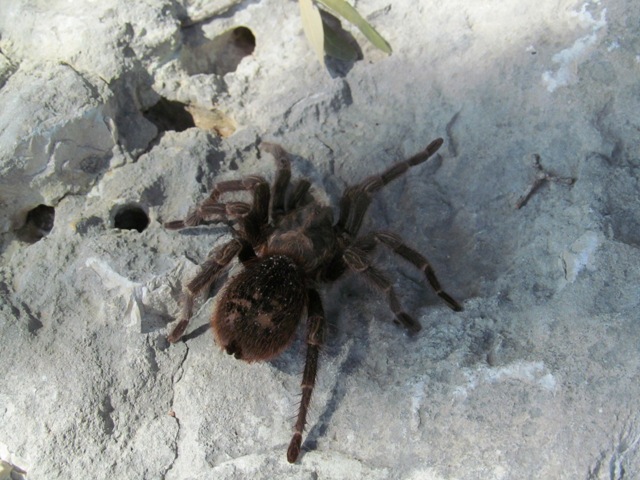
Tarantula outside TPWD HQ in Austin, Texas

Tarantula outside TPWD HQ in Austin, Texas


This is Passport to Texas

What are invertebrates? The first thing you need to know is they vastly outnumber us humans.

08— Invertebrates are any animal that doesn’t have bones. So, most of the animals on the planet are invertebrates.

Think: insects, snails, worms, flies and all manner of boneless animal on land and in the sea. Biologist, Ben Hutchins has a soft spot for these spineless creatures.

09— As an invertebrate biologist, I’m interested in where these animals occur, why we find them where they are, and what are they doing on a day-to-day basis.

To a lot of us, invertebrates are creepy crawlies; the angst-producing members of the animal kingdom. Ben says good bad or otherwise – they all have their place.

18— A lot of these are economically important: they pollinate our plants, they pollinate our crops. Some are pests; they eat our plants and eat our crops. Some of them are parasites, and some of them have very interesting interactions with other animals. So, they play a really important role in the environment.

And there’s one class of invertebrates that’s captured Biologist Ben Hutchins imagination and we go underground to learn about them tomorrow.

We record our series at the Block House. Joel Block engineers our program.

For Texas Parks and Wildlife, I’m Cecilia Nasti.
Wildlife: Sanderson Snake Days

Friday, May 16th, 2014

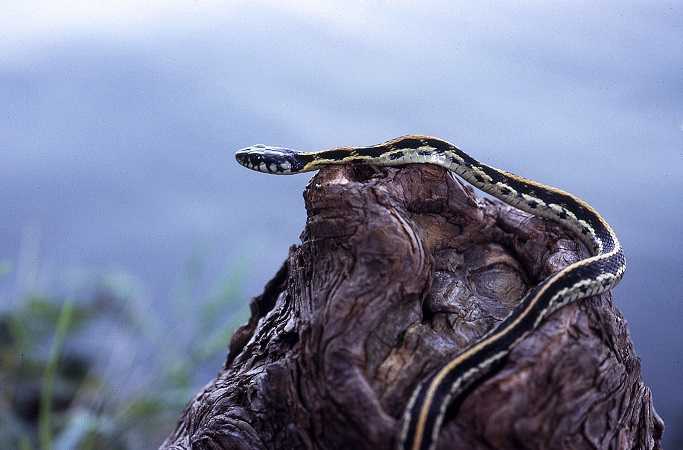
Checkered Snake

Checkered Snake


This is Passport to Texas

Beautiful is not the first word that pops into mind when I think about snakes.

03— In all honesty, snakes are living jewels.

Andy Gluesenkamp would say that—he’s TPW’s herpetologist. I suppose snakes are pretty – from a distance.

11— Particularly gray banded King snakes and milk snakes – the sort of snakes that people like to go out and look for in west Texas are incredibly gorgeous and variable and you never know what you’re going to see next.

Later this month snake lovers will travel to west Texas for Sanderson Snake Days. Herpers – as they’re called – attend lectures, revel in camaraderie of like-minded folks, and hunt for snakes in the dark of night. Doesn’t it seem herpers take more risks than birders for their hobby?

33— I beg to differ. There’s nothing more terrifying than riding in the car with a birder driving. Herpers do the same thing – you know, they may be distracted by a snake in the road, but in Texas, it’s actually illegal to stop and pick up snakes in the middle of roadways. So, our herpers aren’t going to be swerving and stopping as birders tend to do. And you know who you are.

Good times. Sanderson Snake Days is May 30 through June 1; find details at www.snakedays.com.

That’s our show for today… Funding provided in part by Ram Trucks. Guts. Glory. Ram.

For Texas Parks and Wildlife, I’m Cecilia Nasti.
Wildlife: New Theories about Alligators

Wednesday, May 14th, 2014

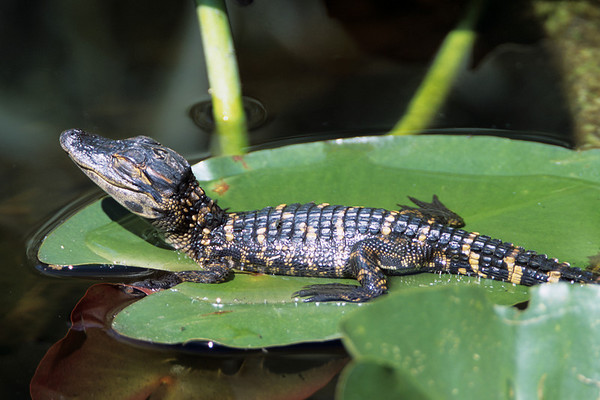
American alligator, image courtesy of www.exploreitnature.com

American alligator, image courtesy of www.exploreitnature.com


This is Passport to Texas

Drought affects different species in different ways. In the case of the American Alligator, recent dry conditions have affected this once-threatened species’ reproduction.

15— What we found was the size of the clutch of eggs – or the number of eggs in the clutch – that females lay doesn’t change during drought years. But, the number of hatchlings that are produced from a clutch of eggs decreases substantially.

Cord Eversole is a graduate student at A&M-Kingsville and a research assistant at Caesar Kleberg Wildlife Research Institute. He studies gators.

12— We thought that what we were going to end up finding was during these drought years the clutch size would decrease, but the number of alligators produced from the clutch would stay constant across the years. We found the opposite.

He said turning old theories inside out is exciting.

26— The exciting thing about alligator research in general is that — believe it or not –there’s been very few studies conducted on them throughout their range, but more specifically in Texas, there’s only been a handful of studies conducted in the state. And so, a lot of the information we gather from my study and studies that are coming up in the future, they’re going to produce brand new information, put new twists on old thoughts of how things work with alligators in general.

The more we understand environmental effects on species like the American Alligator, the better able we are to manage them.

The Wildlife and Sport Fish Restoration program supports our series and funds diverse conservation projects throughout Texas.

For Texas Parks and Wildlife, I’m Cecilia Nasti.
Wildlife: Alligators and Drought

Tuesday, May 13th, 2014

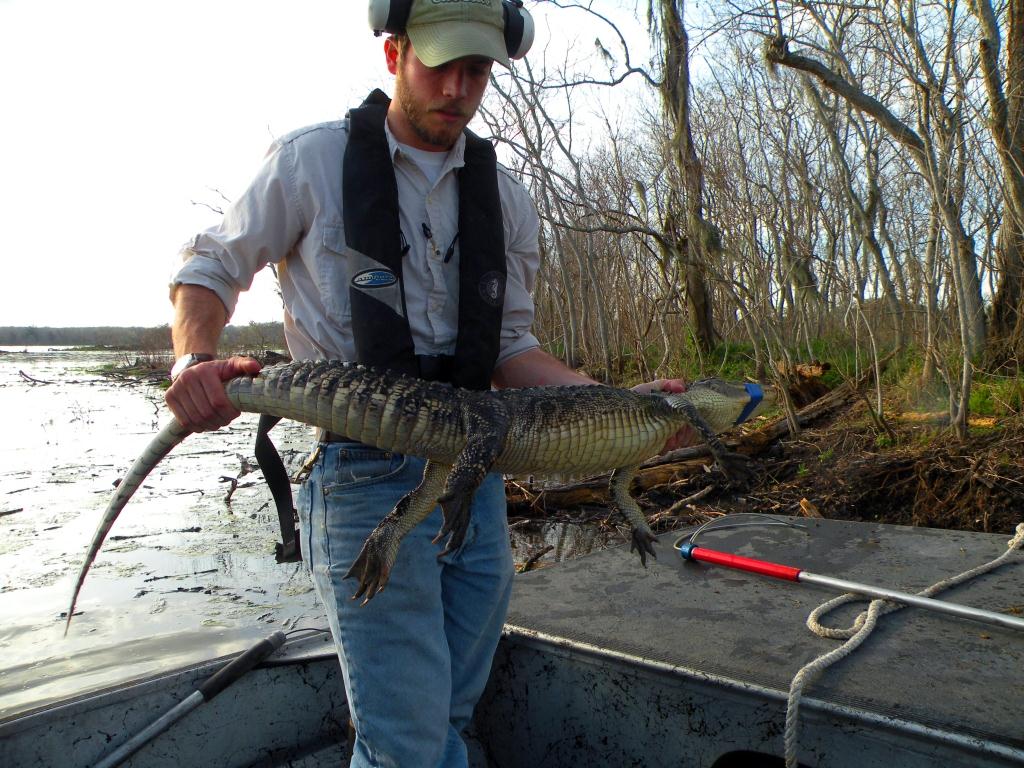
Cord Eversole with a small alligator.

Cord Eversole with a small alligator.


This is Passport to Texas

Tussling with alligators isn’t just for reality TV.

09— Typically, anything that’s under about seven feet in length, we capture from a boat. The real small ones, like the hatchlings, you can grab with your hand; they’re pretty harmless.

The bigger ones take more caution, finesse, and duct tape, says 25-year-old Cord Eversole, a graduate student at A&M-Kingsville.

09— We’re real fortunate to be able to be involved in a study looking at reproduction – in particular – and how drought affects hatching success of the eggs.

He studies the reptiles in his role as a research assistant at the Caesar Kleberg Wildlife Research Institute.

22— A large majority of our data was collected through mark/recapture, and so we tagged roughly 250 alligators at Brazos bend SP, and then captured [them] a year later, so that we could look at how much they had grown in a year’s time, and how the data that we gathered differs from data that was gathered in other parts of their range in the United States.

Thus far, his data reveals something rather unexpected. And we’ll hear about that tomorrow.

The Wildlife and Sport Fish Restoration program supports our series and funds diverse conservation projects throughout Texas.

For Texas Parks and Wildlife, I’m Cecilia Nasti.
Safety: When Face-to-Face with a Black Bear

Wednesday, April 30th, 2014

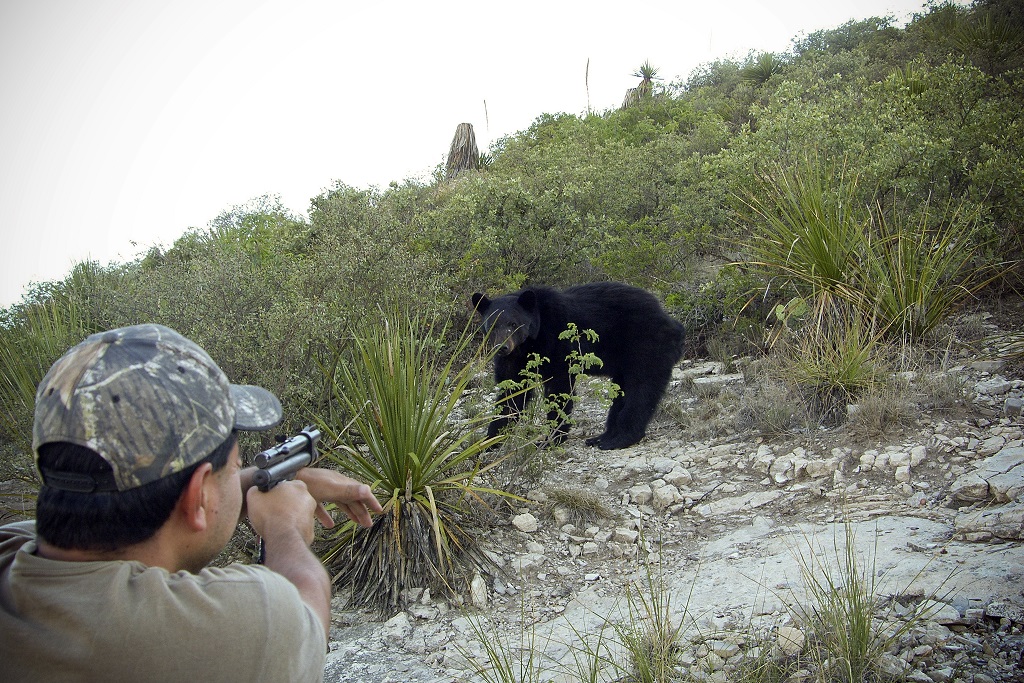
Mexican researcher preparing to shoot tranquilizer at bear. Image courtesy the Government of Mexico.

Mexican researcher preparing to shoot tranquilizer at bear. Image courtesy the Government of Mexico.


This is Passport to Texas

Black bears are returning to Texas after a long absence. No need for concern, though. While they aren’t cuddly teddy bears, they aren’t ferocious 800 pound grizzlies, either.

07—Black bears are much smaller animals. A very, very big black bear in Texas is 400 pounds.

They’re still big wild animals –emphasis on wild. Black bears keep a low profile, but Texas Parks and Wildlife mammalogist, Jonah Evans, says it is possible to come into contact with one because—well—they’re a lot like us.

13—Bears are a masterful generalist; this is where they can end up causing a problem with people, because they love human food. You know, humans are generalists, too. We can eat nuts and berries and meat and bears do as well.

Bears follow the food, making it wise when camping to keep your food at least 100 feet away from your sleeping area. However, if you do come face-to-face with one of these mammals…

24—What you want to watch out for is any kind of predatory behaviors, which are extremely rare. Most often what people think is threatening is a bear might stand up on its hind legs, growl, slam its feet down on the ground, pop its jaw – what we call ritualistic behaviors. And what that bear is doing is trying to communicate in as clear a way as it can that we are invading its territory, and just to back away.

Jonah Evans says attacks on people are rare, and primarily by solitary males, not females with cubs.

The Wildlife and Sport Fish Restoration program supports our series and funds diverse conservation projects in Texas. For Texas Parks and Wildlife, I’m Cecilia Nasti.
