Archive for the 'Wildlife' Category

Conservation: Texas Tobusch Fishhook Cactus

Friday, April 25th, 2014
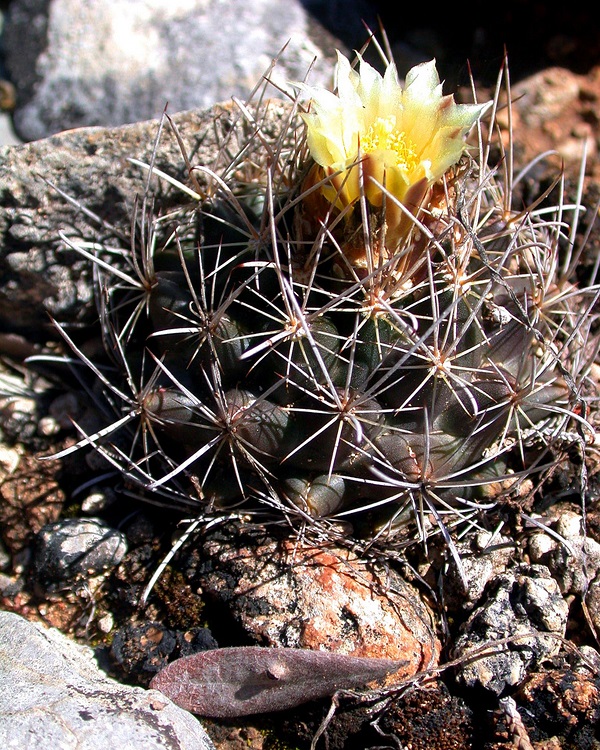
Tobusch Fishhook Cactus

Tobusch Fishhook Cactus


This is Passport to Texas

Sometimes the best course of action is no action at all. At least that’s the stance Texas Parks and Wildlife botanist, Jackie Poole, takes when it comes to the endangered Tobusch Fishhook Cactus and the insect grubs that eat it.

09— And that’s a real problem, because one of these insects is only known to lay its eggs in Tobusch Fishhook Cactus; so, it’s basically as rare as the cactus.

Jackie says in the case of the Tobusch cactus – and its nemesis the Tobusch weevil – the best botanists can do is observe.

28—We’ve just been studying it for the last 10 or 15 years to see if there’s some kind of cyclical nature to this predator/prey relationship—where you have a big prey population buildup, like a lot of Tobusch fishhook cactus are out there, and then all of a sudden the insect population starts to boom because it has so many cactus to lay its eggs in. And then the cactus goes away and then it crashes, and then you just go through this cycle back and forth.

Other variables could also come into play to explain these fluctuations, making a hasty solution no solution at all. Patience is necessary.

13—That’s right. And that’s the main thing I think with endangered species. I often tell people to just to take a deep breath, because you just need to sit back and think about it and look at it and not think that the sky is falling.

The Wildlife and Sport Fish Restoration program supports our series and funds diverse conservation projects in Texas.

For Texas Parks and Wildlife, I’m Cecilia Nasti.
Wildlife: Texas Conservation License Plates

Monday, April 14th, 2014

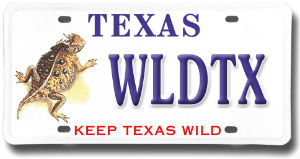
Horned Lizard Conservation Plate

Horned Lizard Conservation Plate


This is Passport to Texas

How many times have you seen a Texas license plate with a drawing of a horned lizard on it and wondered what it meant.

09— The horned lizard license plate is a critical source of funding that helps us do a lot of work on non-game animals.

Twenty-two dollars of the $30 cost of the plate funds non-game study. Michael Warriner is non-game program supervisor with Texas Parks and Wildlife.

13—If you think about it, most wildlife in Texas is non-game. So, these are the species that are helping to shape Texas ecosystems; and helping to support populations of animals that we do hunt.

Compared to funding for game species, monies for studying these “less loved” species are not as robust. Moreover, it’s not just about studying VICs – very important critters.

10—It also enables us to do work on native plants, and also to fund educational programs regarding non-game and Texas habitats.

Tomorrow: we find out how sales of the horned lizard license plate are helping…well…the horned lizard.

That’s our show for today…Funding provided in part by Ram Trucks. Guts. Glory. Ram

For Texas Parks and Wildlife, I’m Cecilia Nasti.

Wildlife: Legality of Helping Wildlife

Thursday, April 10th, 2014

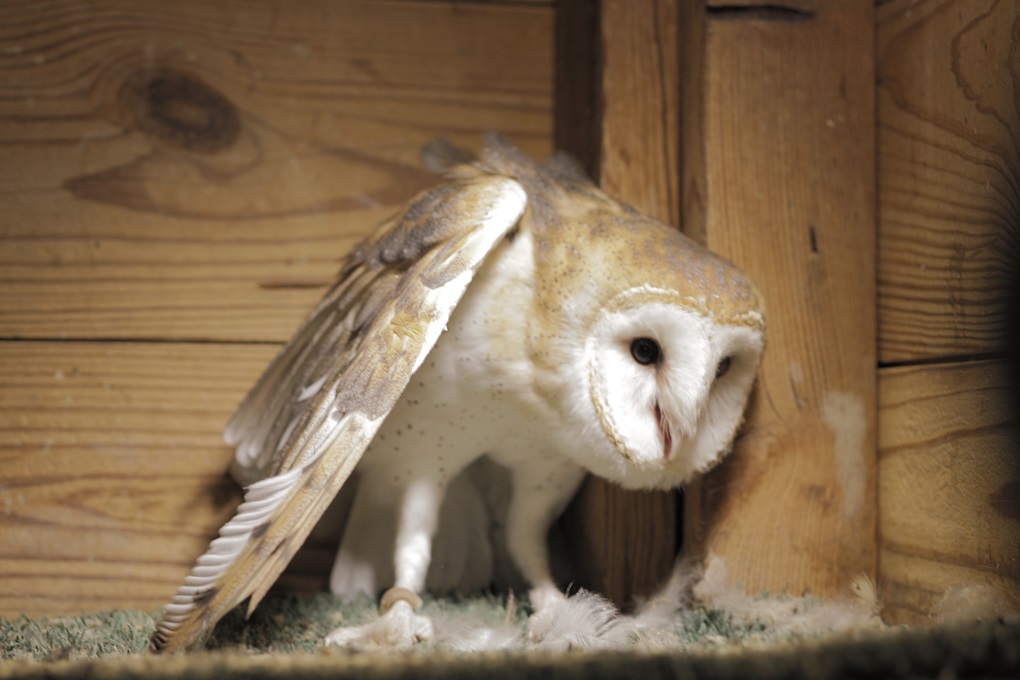
South Plains Wildlife Rehabilitation Center, Lubbock, TX.

South Plains Wildlife Rehabilitation Center, Lubbock, TX.


This is Passport to Texas

You know the story of spring: reawakening, renewal, and baby animals. That last part – baby animals – can be tricky. You see, sometimes we find infant wildlife when we’re outdoors, and want to “rescue” them, which might actually be more like kidnapping.

08—For example, a baby dear [or fawn] will hide quiet and mama will almost always come back. That’s their strategy.

See what I mean. Jonah Evans is a mammalogist at Texas Parks and Wildlife; he says unless an animal is injured or clearly in distress, leave it alone, but monitor it at a safe distance if you’re concerned. Even then…

06— I recommend, before touching an animal, call a rehabilitator and ask them.

Licensed rehabilitators know animal behavior and can provide guidance, which may also include instructions to leave the animal alone because of legal considerations.

12—There are actually some regulations about possessing certain wildlife that you have to make sure you’re not violating. Possessing a non-game animal without a license, could be in violation of certain laws.

That can be avoided when you know who to call. Find a list of licensed wildlife rehabilitators—by county—on the Texas Parks and Wildlife website.

The Wildlife and Sport Fish Restoration Program supports our series and funds diverse conservation projects in Texas. For Texas Parks and Wildlife, I’m Cecilia Nasti.
Wildlife: Baby Mammals

Wednesday, April 9th, 2014

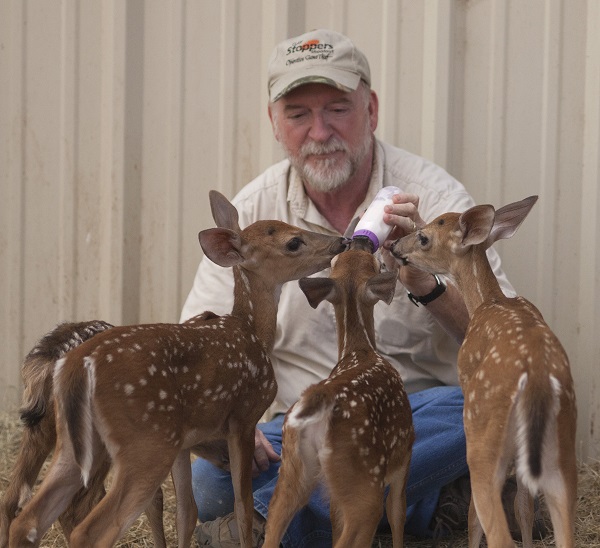
TPWD staff photographer, Earl Nottingham, helps feed fawns

TPWD staff photographer, Earl Nottingham, helps feed fawns


This is Passport to Texas

This time of year, reports start rolling in to Parks and Wildlife from people who think they’ve discovered abandoned baby animals.

09—What could have happened is you walked up there, and mama ran off and hid – and baby is hiding there. And, as soon as you leave, mama will come back.

That’s not true in every case, though, says Jonah Evans, Texas Parks and Wildlife mammalogist. If you see an abandoned baby possum, for example, mom could be gone for good.

14—With 184 some odd mammals in the state, it’s probably pretty difficult to give you a list of which mothers will come back wand which ones won’t. So, what I recommend is before touching and animal – call a [wildlife] rehabilitator.

Licensed rehabilitators know animal behavior and can tell you which critters may benefit from intervention.

09—If you contact one of the many throughout the state – and there’s a whole long list of them on our website – they are really the experts in this. Not Parks and Wildlife.

Jonah Evans says although—as a mammalogist—he researches and studies warm-blooded animals, rehabilitators are the ones with skills suited to helping citizens’ where abandoned baby animals are concerned.

Find a list of licensed rehabilitators by county on the Texas Parks and Wildlife website.

The Wildlife and Sport Fish Restoration Program supports our series…For Texas Parks and Wildlife, I’m Cecilia Nasti.
Wildlife: Baby Bird Down! Now What?

Thursday, March 27th, 2014

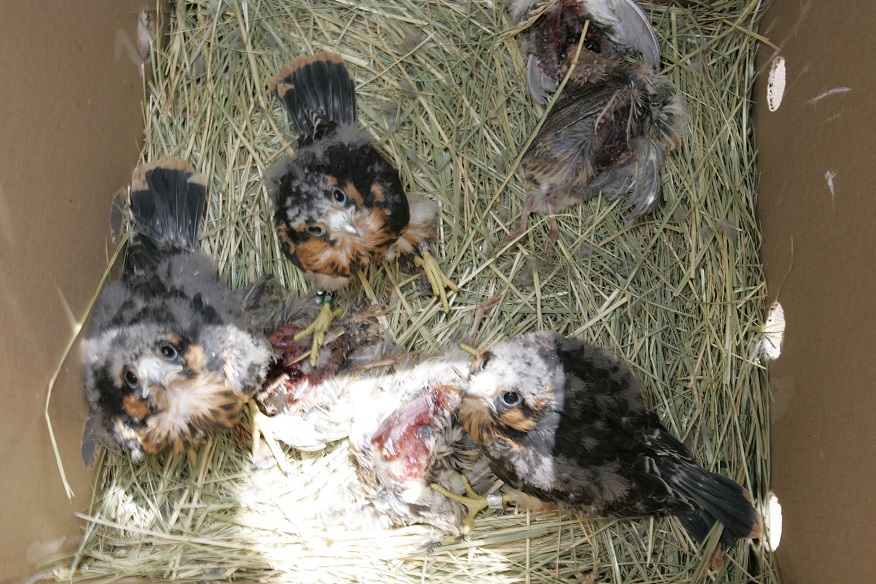
Baby aplomado falcons

Baby Aplomado Falcons


This is Passport to Texas

As spring approaches it’s good to know what to do if you find a baby bird out of its nest. And the babies most likely to try and get a jump on spring are blue jays.

12— I don’t know what happens. They just jump the nest a couple days early, and the problem is they’re in the backyard where the dogs and cats and kids are. So you really have to focus on not trying to pick up the bird.

Cliff Shackelford, Parks and Wildlife’s non-game ornithologist, says the baby is not abandoned; mom and dad are nearby.

16—The better thing to do would be to pull the cats, dogs and kids in for that day or two and let the baby blue jay make it on its own with mom and dad. Because the fate is not the same if you pick it up and try to rehabilitate it. Mom and dad know how to raise baby birds a lot better than we do.

Even so, it‘s good to be prepared if you do find a baby bird that is vulnerable and unattended.

14— On your refrigerator, where you have the numbers of 9-1-1 and poison control, you should have [the number for] your local rehabilitator on your refrigerator ahead of time. Once you do get that baby bird — you don’t have a lot of time.

Find a list of wildlife rehabilitators by county on the Texas Parks and Wildlife website.

For Texas Parks and Wildlife…I’m Cecilia Nasti.