Archive for the 'Wildlife' Category

Nature/Wildlife: Native Texas Bees

Monday, September 23rd, 2013

Native Solitary Bee. Image from www.txnativebees.com.


This is Passport to Texas

Although we’re concerned about the loss of honeybees from colony collapse disorder, this might ease your mind:

12— You have to think of honeybees as a farm animal. We can grow more of those. And we can produce more honeybee queens, which can in turn, grow more honeybee colonies.

That’s TPW invertebrate biologist Michael Warriner. While we focus on replaceable non-native European honeybees, we’re neglecting our irreplaceable native bee populations, also in decline.

17—If we lose native bees, we can’t necessarily breed more of those because we don’t know how. We don’t necessarily know what kinds of things they prefer – because we’re not managing them. They’re existing in natural habitat that we’re losing. Honeybees are pretty much a domesticated animal we can breed
more of.

Native bees play a valuable role in the ecosystem.

18— They play the biggest role in maintaining native plant communities. And a lot of those plants have to be pollinated by bees. As we lose bees, those plants will be less able to produce viable seed, which means that they just slowly disappear off the landscape.

How to help native bees…that’s tomorrow.

That’s our show…the Wildlife and Sport Fish Restoration program supports our series, and funds diverse conservation projects in Texas.

For Texas Parks and Wildlife…I’m Cecilia Nasti.
Wildlife: White Nose Syndrome in Bats

Tuesday, September 10th, 2013

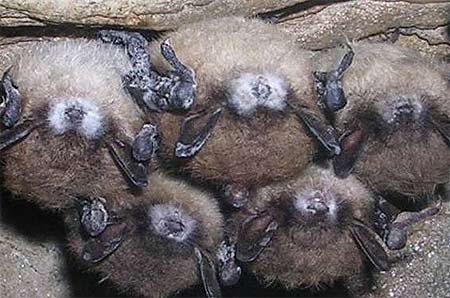
White Nose Syndrome, Photo: USFWS

White Nose Syndrome, Photo: USFWS


This is Passport to Texas

Texas boasts healthy bat populations. Bats living in other parts of the country are not as lucky due to something called:

02— Pseudogymnoascus destructans.

Commonly called White Nose Syndrome, the disease, caused by a fungus—which originated in Europe—first appeared in a cave in New York in 2006. Bat biologist, Tara Poloskey.

19— What happens is it grows on the bat during hibernation when they aren’t cleaning themselves. And then it makes them wake up; every time a bat wakes up in hibernation, they use valuable resources. And they only have a certain amount of fat reserves to get them through the winter. And so it keeps waking them up until they eventually starve. Or they are so dehydrated that they die.

The disease has killed an estimated 6-million bats in the US. Reported in both Oklahoma and Arkansas, White Nose Syndrome is on Texas’ doorstep.

12— This winter, Texas Parks and Wildlife will be doing surveys in Texas for White Nose, and really cranking up our White Nose monitoring and education, and really trying to spread the word about it.

We have tips for preventing spread of White Nose fungus at www.passportotexas.org.

The Wildlife and Sport Fish Restoration program supports our series, and funds diverse conservation projects in Texas.

For Texas Parks and Wildlife…I’m Cecilia Nasti.
Wildlife: Beneficial Bats

Monday, September 9th, 2013

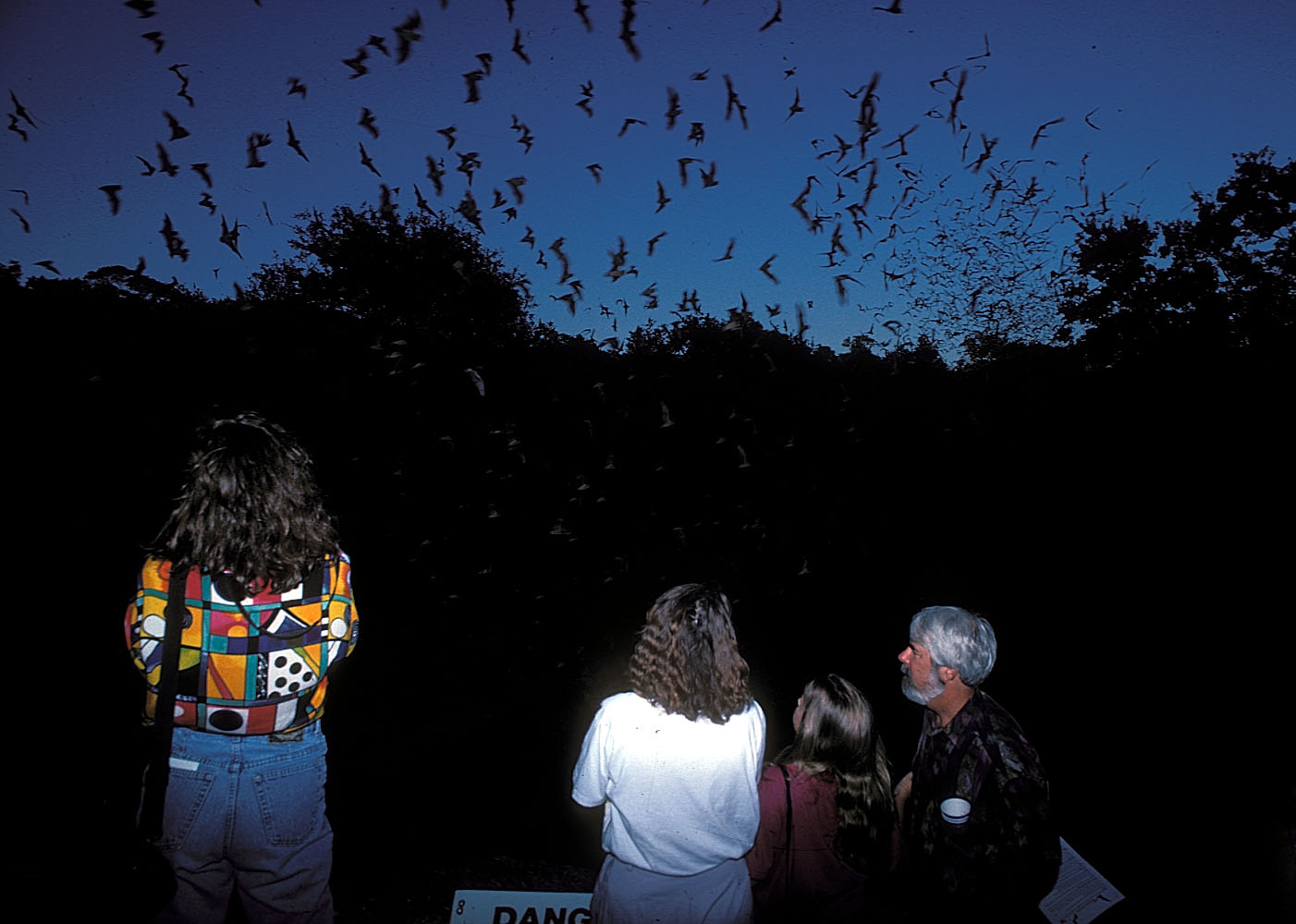
Bats emerging for nightly insect feast.

Bats emerging for nightly insect feast.


This is Passport to Texas

Bats have earned a bad reputation, which is unfair to the flying mammals, says bat biologist Tara Poloskey.

07— Bats are sort of like the underdog. A lot of people don’t appreciate them, because they’re night flying creatures and typically nightly flying creatures are scary.

Then there are myths about bats: they fly into your hair, they’re aggressive, and they spread disease.

13— I have found them to be so important agriculturally, economically – around the world. There are 12-hundred species, and they live in just about every niche you can imagine; They’re just such amazing creatures.

Poloskey says bats eat their weight in agricultural pests every night, reducing the need for chemical intervention by farmers; and they pollinate a variety of ornamental and edible plants worldwide. Without bats, earth would be a very different place.

19— We wouldn’t have all of the beautiful trees that bats disperse seeds for. We wouldn’t have our lovely tequila that we love so much. So, we would have a lot of insets. We would have less diversity. We would have flowers that don’t bloom anymore. It would be a sad place.

Tomorrow: a fungus is spreading across the US, threatening these beneficial animals.

The Wildlife and Sport Fish Restoration program program supports our series, and funds diverse conservation projects in Texas.

For Texas Parks and Wildlife…I’m Cecilia Nasti.
Conservation: The Rules of Frogging

Tuesday, July 9th, 2013

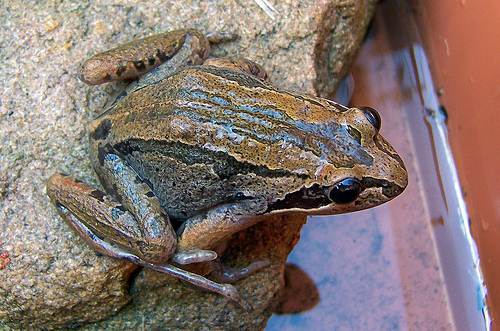
Brown Striped Frog, Image Creative Commons, Brenda Starr

Brown Striped Frog, Image Creative Commons, Brenda Starr


This is Passport to Texas

[Chorus of frogs]

Have you ever been frogging?

06 — It’s what we call when you just get out at night and you start listening for frogs and see what’s living out there around you.

Lee Ann Linam coordinated Texas Amphibian Watch for Parks and Wildlife. Frogging involves volunteers who collect information on amphibian species they hear.

10 — When we suggest that folks do something kind of unusual like that, we like to give them some guidelines to keep them safe, and to keep the frogs safe, and to respect the rules around them. So, that’s what the rules of frogging are for.

Volunteers must obtain permission before accessing privately owned land. Of utmost importance is the safety of the amphibians.

23 — Amphibians are sensitive to things like insect repellents that contain deet, which many of them do. Things like sunscreen and other chemicals that might be on your hands. And so we always say to people, before handling frogs, make sure that you wash your hands, keep your hands moist. And then the other thing we say is to go ahead and wash up afterwards because some frogs have compounds on their skin that protect them from being eaten.

And those compounds can be irritants. We have a link to the complete rules of frogging at passporttotexas.org.

The Wildlife and Sport Fish Restoration program supports our series… and provides funding for diverse conservation project throughout Texas.

For Texas Parks and Wildlife…I’m Cecilia Nasti.
Wildlife: Alligator in the Hood

Tuesday, June 11th, 2013

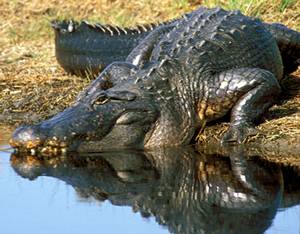
Alligator, Image by Earl Nottingham, © Texas Parks and Wildlife Department

Alligator, Image by Earl Nottingham, © Texas Parks and Wildlife Department


This is Passport to Texas

With more alligators spotted by the public in residential areas, you might think you’d be better off selling your home. The fact is… there’s no need to panic if and when you see a gator in your neighborhood.

10 — We’re just trying to help people put it in perspective. People will begin to see more and more alligators in the future and not every alligator is going to be a problem.

Greg Creacy is a wildlife biologist currently based in Bastrop. He says horror movies and attacks by the more dangerous, and non-native crocodiles have caused people to be afraid of Texas alligators.

16 — The number of attacks by alligators in the US each year is less than injuries and fatalities from dogs, scorpions, snakes and sharks…all of those are much more dangerous to people than alligators.

So what do you do if you see an alligator? Keep a safe distance from them and keep pets away from them. Don’t swim in an area where there are alligators…and don’t feed them.

07 — Because people have fed that alligator they’ve broken down their natural fear that alligator has for people.

That’s our show for today…For information on living with alligators, as well as research reports and basic natural history, visit the Texas Parks and Wildlife Website.

For Texas Parks and Wildlife, I’m Cecilia Nasti.
