Archive for the 'Wildlife' Category

Wildlife/Hunting: Why We Don’t Eat Road Kill

Thursday, November 15th, 2012
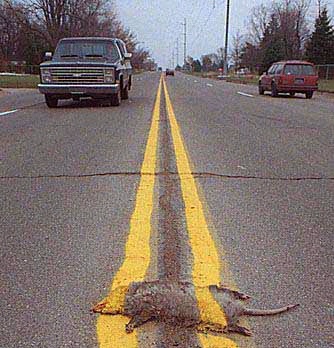
Roadkill image from, www.wildthingsblog.blogspot.com

www.wildthingsblog.blogspot.com


This is Passport to Texas

You may have heard about the flap that transpired after a Fort Worth reporter ran a story about a Pflugerville man who blogged about cooking and eating a white wing dove that died after flying into the side of his home.

04— This is highly unusual. This is not something I do…ever, actually.

Food blogger, Ryan Adams, did this time; it was dove season, and he says he doesn’t waste food. Parks and wildlife learned of Adams’ dove dinner via the reporter…and when the story went viral, Adams contacted the agency to make things right, and that’s when officials told him he’d broken the law.

06 – The subject was educated and it was over for everybody except the people who decided to make something out of nothing.

There was no investigation and no citation. Officer Scott Vaca, Assistant Chief of Wildlife Enforcement says to only harvest game in season by legal means and methods. In addition to being illegal, possessing and eating road kill or other “found” game is potentially unsafe.

22 – Road kill animals could have been there for awhile and may not be edible. They could be badly bruised by the impact of being hit by a vehicle. Also, found animals that may have run into a building or window – that’s not typical behavior for that animal. So, there could be some health issue for the animals, to being with, that would make it unsafe to consume.

Luckily Ryan’s dove was disease free and delicious.

For Texas Parks and Wildlife…I’m Cecilia Nasti.
Wildlife/Hunting: Rules of the Road (Kill)

Wednesday, November 14th, 2012

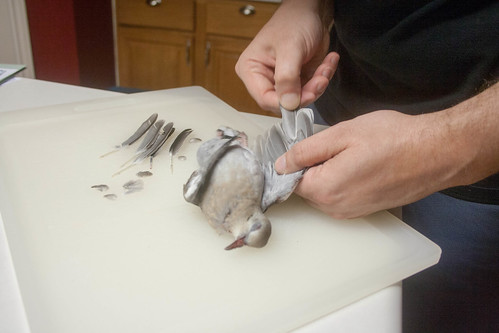
Ryan Adams Plucking Dove, from www.nosetotailathome.com

Ryan Adams Plucking Dove, from www.nosetotailathome.com


This is Passport to Texas

Ryan Adams was watching television with his wife when a white winged dove crashed into the side of their Pflugerville home and died. It was dove season, which made him think of his hunter friends in the field.

16— These people are going to go out, spend time, spend money and shoot doves. I just had one given to me; I was going to use it. So, I took it inside, plucked all the feathers, cleaned it, took care of all the innards, and then the next day I cooked it and ate it.

What Ryan, who is a food blogger, didn’t know was while his found feast was delicious and free, it was not legal.

09 – In order for game animals and game birds to be legally possessed, they need to be harvested during seasons, and with lawful means and methods appropriate for that game animal or game bird.

Officer Scott Vaca, Assistant Chief of Wildlife Enforcement says the side of a house does not constitute lawful means or methods. A reporter in Fort Worth saw Ryan’s blog, contacted TPW, and then wrote a story erroneously claiming Ryan was under investigation. It went viral, and the agency received heated criticism from the public.

24 – As soon as I found out I may have broken the law, there was no question: I contacted the department. I was just like, what do I need to do to set things right? Every single person has been beyond kind. It’s disheartening for me to see people who have done nothing wrong being demonized this way. Are there reasons to be upset about lots of things? Yes, but this is not one of them.

Tomorrow: why we don’t eat road kill…or house kill.

For Texas Parks and Wildlife…I’m Cecilia Nasti.
Wildlife: Hunting in a Time of CWD

Thursday, November 8th, 2012

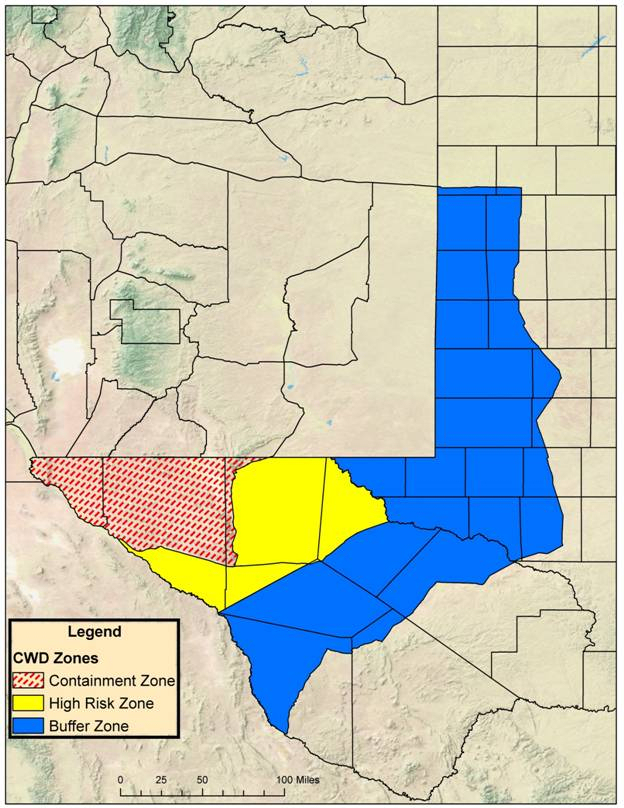
CWD Containment, High Risk & Buffer Zones

CWD Containment, High Risk & Buffer Zones


Passport to Texas with support from the Wildlife and Sport Fish Restoration Program

Chronic Wasting Disease (CWD) is fatal to deer infected with it, but is not known to be transmissible to other animals or humans. Detected earlier this year in far West Texas, hunters may harvest deer from that area, with this caveat:

14— As far as hunters are concerned, the only changes that we have proposed at this time is that for any deer that is harvested in a containment zone, we are requiring that those deer be presented at a check station.

Mitch Lockwood is Texas parks and Wildlife big game program director. The containment zone is where the disease was first identified in the state.

18 – We have two check stations established for the mule deer season this year: one being in van Horn and one being in Cornudas. And, so any deer that’s harvested within that containment zone, those deer would need to be presented at the check station, where we would collect a CWD sample.

Lockwood says voluntary check stations will be set up in the high risk and buffer zones, which are adjacent to the containment zone.

14 –Texas Parks and Wildlife department will pay for the test and we will post the testing results on the website so hunters can find out the test results from the deer they harvested just as soon as they’re made available from the lab.

It will take about two weeks for results to be posted. Go to the Texas Parks and Wildlife website for more information about the CWD management strategy.

The Wildlife and Sport Fish Restoration Program…supports our series and funds diverse conservation projects throughout Texas…

For Texas Parks and Wildlife…I’m Cecilia Nasti.

Wildlife: Stopping the Spread of CWD

Wednesday, November 7th, 2012

Deer with CWD

Deer with CWD


Passport to Texas with support from the Wildlife and Sport Fish Restoration Program

The New Mexico Department of Game & Fish contacted Texas Parks and Wildlife earlier this year with some concerning news:

18— Back in February of this year, we received a call from NM Game & Fish, notifying us that they had detected CWD (Chronic Wasting Disease) in three of four hunter harvested deer within 2 miles of our border in the Hueco Mountains. So, that certainly grabbed out attention.

Mitch Lockwood, Texas Parks and Wildlife big game program director, says the state’s management strategy for dealing with Chronic Wasting Disease has been updated to include three zones: containment, where the disease is known to exist; high risk, where no infected animals have been discovered, but the likelihood is high; and…

14 – Adjoining the high risk zone is an area we call the buffer zone, which is an area of less risk when compared to the containment zone or high risk zone, but there’s still an elevated risk of CWD occurring there as compared to the rest of the state.

This week the Texas Parks and Wildlife commission will consider a proposal to prohibit transport of deer in and out of the containment zone… limited transport of deer from captive facilities in the high risk zone with increased testing of animals…and it would also allow for the trapping and transport of wild deer in the buffer zone.

05 …but not until an adequate number of CWD tests have been performed for that population.

And what about hunters who harvest deer in these zones? We’ll tell you about that tomorrow.

The Wildlife and Sport Fish Restoration Program…supports our series and funds diverse conservation projects throughout Texas…

For Texas Parks and Wildlife…I’m Cecilia Nasti.
Wildlife: What is Chronic Wasting Disease

Tuesday, November 6th, 2012

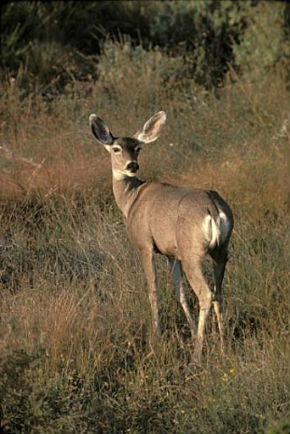
Mule Deer

Mule Deer


Passport to Texas with support from the Wildlife and Sport Fish Restoration Program

Mule deer taken earlier this year from the Hueco Mountains in Far West Texas tested positive for Chronic Wasting Disease.

15—It’s what they call a transmissible spongiform encephalopathy, or TSE, which is similar to scrapie in sheep or BSE [mad cow disease] in cattle. I think it’s important to note that CWD is not known to infect livestock or humans for that matter.

Mitch Lockwood is Texas Parks and Wildife big game program director. The agency sampled more than 26-thousand hunter-harvested deer for the disease over the past decade; this recent discovery marks the first known cases inside Texas.

30—The incubation period for CWD is long. It can be two to three years, and it could possibly be longer than that in some cases. And so that’s one of the challenges of the disease; the deer doesn’t show any outward signs of being infected. There could be a long time between the deer actually being infected with CWD…before it actually shows any outward sign. So, that disease is able to manifest itself long before we detect that disease in the population.

In the latter stages of the diseases, symptoms may include listlessness, weight loss, weakness, and no fear of humans. Contact Parks and Wildlife is you encounter a deer displaying these symptoms.

Tomorrow: the CWD management strategy.

The Wildlife and Sport Fish Restoration Program…supports our series and funds diverse conservation projects throughout Texas…

For Texas Parks and Wildlife…I’m Cecilia Nasti.
