Archive for 2014

Recreation: State Park Trails

Wednesday, June 4th, 2014
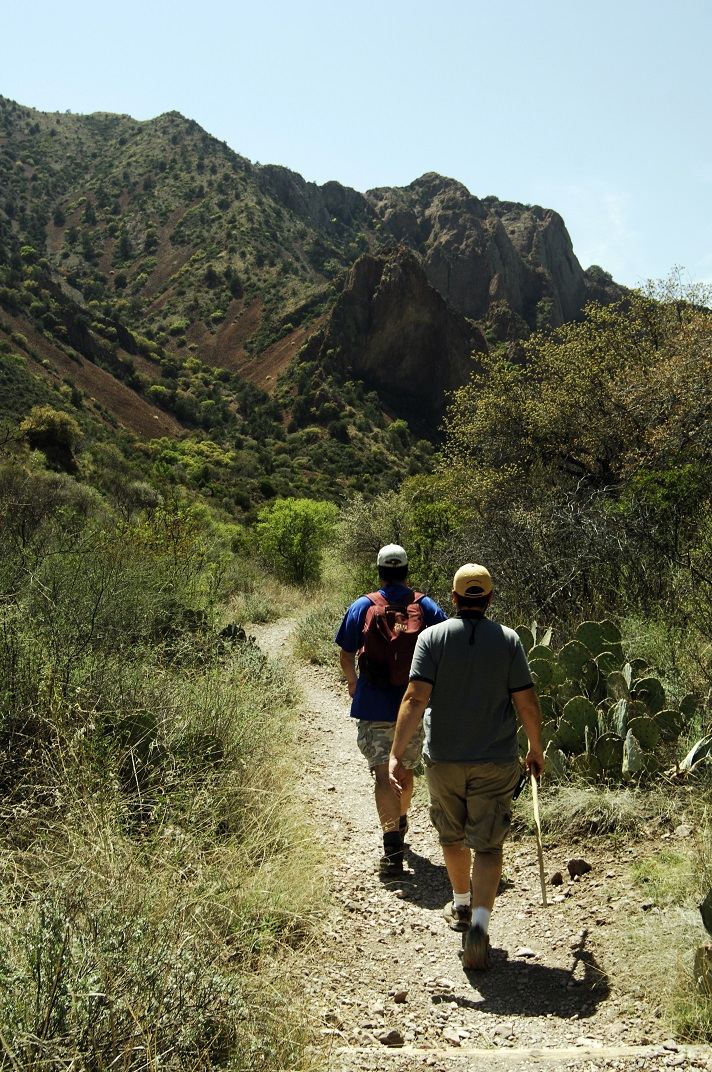
Hiking in Big Bend State Park

Hiking in Big Bend State Park


This is Passport to Texas

Hiking is a popular outdoor activity at Texas State Parks.

07— Our trails really give people an opportunity to experience everything about state parks without getting too involved.

Thomas Wilhelm works with state parks. He says while hikers and walkers do get closely involved in the appreciation of nature, they do not need to involve themselves in training or even buy specialized equipment to spend meaningful time on the trails.

12— We have hikes from beginner level paved hikes all the way to very difficult hikes. So, regardless of your skills or your interests – there’s a trail that’s perfect for you [in a state park].

This includes equestrian trails and ADA Accessible trails. The trails in Texas State Parks offer hikers opportunities to experience native flora and fauna, as well as solitude, peace and calm. And, for those who like to exercise their brain along with their bodies…

15—There’s also opportunities with interpretive hikes that have panels along the way that explain what’s happening. So, you’re either learning something about nature or about history — or whatever it may be. So it’s both a relaxing experience or an enlightening experience.

Find trail information at texasstateparks.org.

That’s our show for today…Funding provided in part by Ram Trucks. Guts. Glory. Ram.

For Texas Parks and Wildlife, I’m Cecilia Nasti.
Fishing: Learning to Fish

Tuesday, June 3rd, 2014

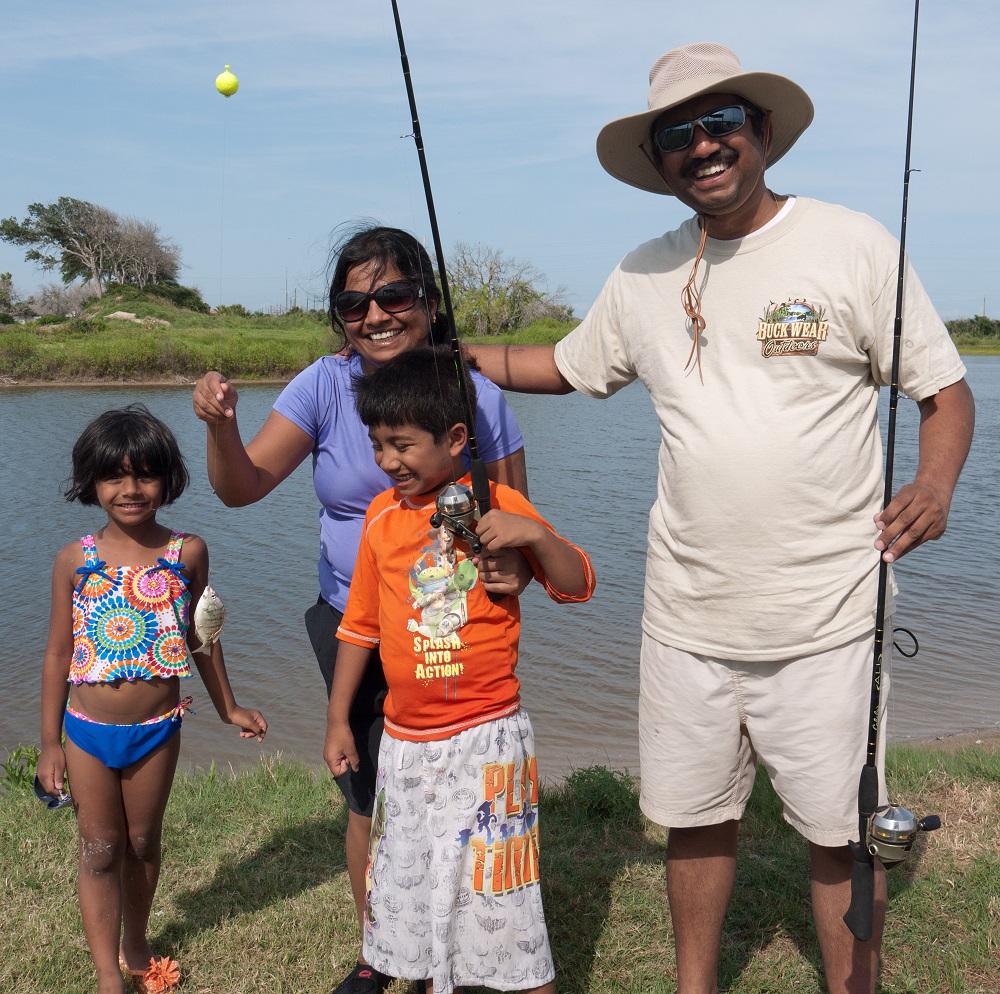
A family sharing fishing fun at a state park.

A family sharing fishing fun at a state park.


This is Passport to Texas

Fishing is an enjoyable way to spend time with family and friends.

06— We think it’s a valuable thing for people to be connected with fishing and the outdoors, and we’d like to facilitate that connection.

Aquatic education training specialist, Caleb Harris, says the neighborhood fishin’ program is just one way TPW facilitates that connection between people and nature.

05— Every metropolitan center has a neighborhood fihin’ pond. And all those locations are on the [TPW] website.

He’s referring to the Texas Parks and Wildlife website. This time of year, the inland fisheries division stocks neighborhood fishin’ ponds with catfish. Harris says although spending time with family and friends catching fish is fun, something deeper transpires among those who connect with the outdoors.

09—When people are connected to the outdoors in a way that they enjoy it – like fishing – they become stewards of it. They want to protect it. Conserve it. Be good users of it.

June 7 is National Free Fishing Day! Find a nearby neighborhood fishin’ pond as well as tackle loaner programs when you log onto the Texas Parks and Wildlife website.

The Wildlife and Sport Fish Restoration program supports our series and is funded by your purchase of fishing and hunting equipment and motorboat fuel.

For Texas Parks and Wildlife, I’m Cecilia Nasti.
Fishing: Tackle Loaner

Monday, June 2nd, 2014

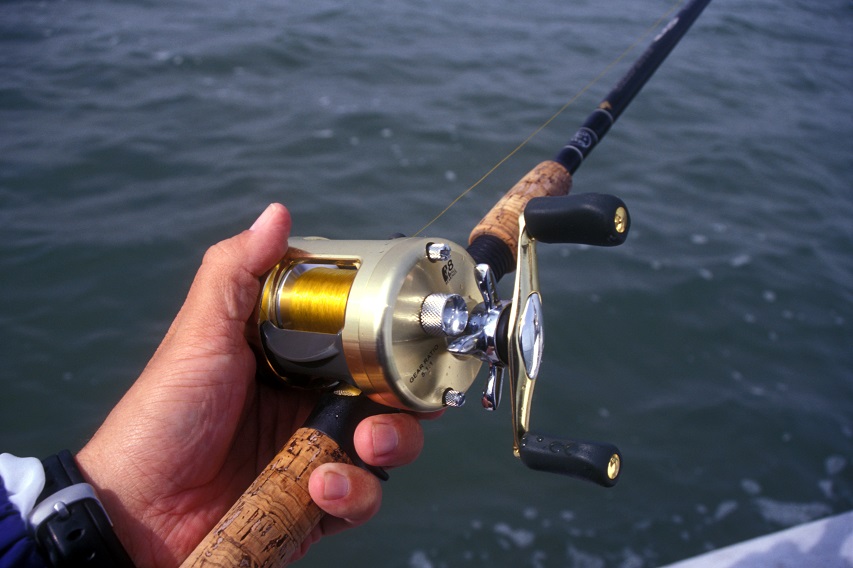
Rod and reel, image by Bryan Frazier

Rod and reel, image by Bryan Frazier


This is Passport to Texas

June 7 is National Free Fishing Day. Yet, when you fish in state parks – once you pay your entrance fee –fishing is always free. If you’re new to angling, though, you may not have tackle. But we do. And…we’ll share.

07— Many of our state parks that have water for fishing, have fishing poles that people can borrow.

Caleb Harris is an aquatic education training specialist. He says it’s easy to borrow rods, reels and tackle boxes with hooks, sinkers and bobbers.

09— [Just] sign a paper that says they’ll bring the fishing poles back, and they can borrow the fishing poles for up to a week, sometimes, as they’re camping in the park. Or, if they just come for the day, they can borrow them and return them back to the park.

You are, however, responsible for your own bait. Even so – what could be easier than fishing in state parks with borrowed tackle?

04— If people are interested in getting into fishing, we try to make that accessible as much as possible.

Find state parks with fishing opportunities and tackle loaner programs when you log onto the Texas Parks and Wildlife website.

The Wildlife and Sport Fish Restoration program supports our series and is funded by your purchase of fishing and hunting equipment and motorboat fuel.

For Texas Parks and Wildlife, I’m Cecilia Nasti.
Wildlife: Evolving to Live in Caves

Friday, May 30th, 2014

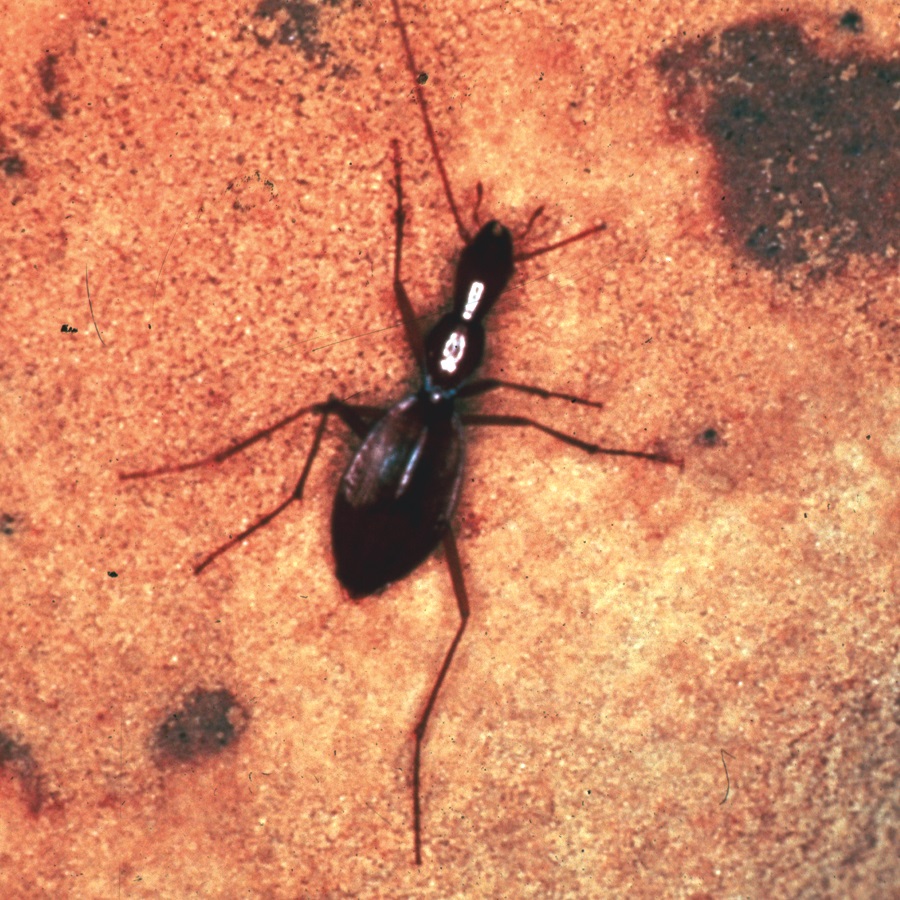
Rare Toothcave Beetle

Rare Toothcave Beetle


This is Passport to Texas

Biologist, Ben Hutchins, studies animals that live full-time in cave environments, including a wide range of invertebrates.

07— Crickets, beetles, spiders, scorpions, harvestmen – that’s kind of like a Daddy Longlegs….

How and why these creatures evolved in dark, dank cave ecosystems is an area of active research. One theory: they’re relics of the past.

14— They’re leftover from a period of Texas history when it was cooler, more moist. In the Ice Age, these animals were widespread on the surface. As the climate changed, they became restricted to the cave environment.

Over time, these creatures physically adapted to their new surroundings. They lost their eyesight and pigmentation; their metabolisms slowed and their antennae elongated, among other adaptations. Biologists want to understand why.

23— Another [thing we want to know] is, why do we see in some places lots and lots of species such as in the Edward’s Aquifer, and in other places, we see very few – or almost none. So, some of our very dry caves farther west have much lower diversity. So, caves are an interesting laboratory to study what are the environmental controls that influence where biodiversity occurs.

Learn more about karst invertebrates on the Texas Parks and Wildlife website.

For Texas Parks and Wildlife, I’m Cecilia Nasti.
Wildlife: Karst Invertebrates

Thursday, May 29th, 2014

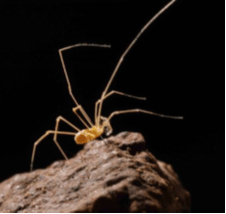
Harvestman spider, Photo by: J. Krejca

Harvestman spider, Photo by: J. Krejca


This is Passport to Texas

In most ecosystems living plants are the foundation of the food web, but dark caves – which occur in a landscape known as karst – are not most ecosystems.

04— And because there’s no light, there’s no photosynthesis, so there aren’t any plants.

Biologist, Ben Hutchins, studies caves. More to the point, he studies invertebrates that live in them full-time.

08— Animals that live in karsts have had to have a lot of unique adaptations to deal with that lack of plant material.

Including evolving to survive on the droppings of other cave dwelling creatures, like cave crickets that leave the karst at night to forage on vegetation. In a way, full-time cave dwellers do eat vegetation – it’s just processed. Another adaptation is a much slower metabolism thus reducing their nutritional requirements. So who are these denizens of the dark?

21— Crickets, beetles, spiders, scorpions, harvestmen – that’s kind of like a Daddy Longlegs. Then, there’re all these aquatic species as well. A lot of people don’t know we have cave adapted catfish, salamanders. And then, all kinds of aquatic beetles, aquatic crustaceans… So, lots of interesting things in Texas. It’s an interesting place to study cave biology.

How did these invertebrates end up living inside caves? That’s an active area of study we explore with Ben Hutchins tomorrow.

For Texas Parks and Wildlife, I’m Cecilia Nasti.
