Archive for 2014

Wildlife: Invertebrates

Wednesday, May 28th, 2014

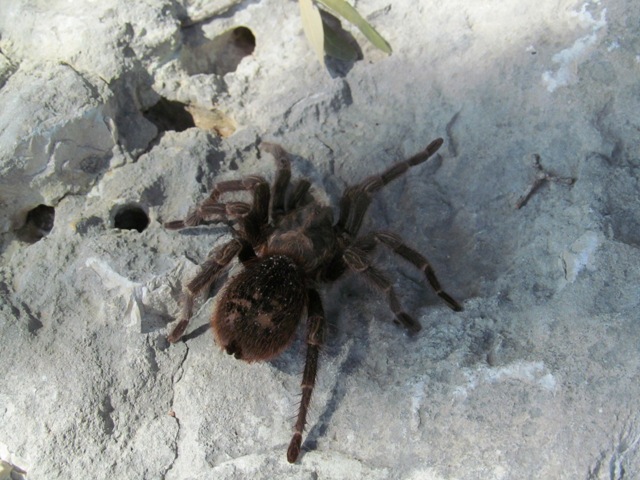
Tarantula outside TPWD HQ in Austin, Texas

Tarantula outside TPWD HQ in Austin, Texas


This is Passport to Texas

What are invertebrates? The first thing you need to know is they vastly outnumber us humans.

08— Invertebrates are any animal that doesn’t have bones. So, most of the animals on the planet are invertebrates.

Think: insects, snails, worms, flies and all manner of boneless animal on land and in the sea. Biologist, Ben Hutchins has a soft spot for these spineless creatures.

09— As an invertebrate biologist, I’m interested in where these animals occur, why we find them where they are, and what are they doing on a day-to-day basis.

To a lot of us, invertebrates are creepy crawlies; the angst-producing members of the animal kingdom. Ben says good bad or otherwise – they all have their place.

18— A lot of these are economically important: they pollinate our plants, they pollinate our crops. Some are pests; they eat our plants and eat our crops. Some of them are parasites, and some of them have very interesting interactions with other animals. So, they play a really important role in the environment.

And there’s one class of invertebrates that’s captured Biologist Ben Hutchins imagination and we go underground to learn about them tomorrow.

We record our series at the Block House. Joel Block engineers our program.

For Texas Parks and Wildlife, I’m Cecilia Nasti.

Hunting/Food: Making Wild Game Jerky

Tuesday, May 27th, 2014

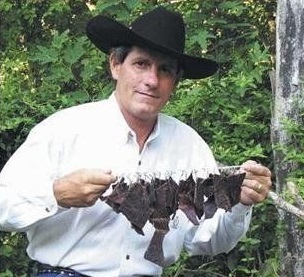
Larry Burrier with some homemade wild game jerky.

Larry Burrier with some homemade wild game jerky.


This is Passport to Texas

May is when Parks and Wildlife celebrates al fresco feasting; also known as picnicking. And, if you’re Larry Burrier, you always pack along some homemade wild game jerky.

08— First off, it’s more nutritional and better for you than everyday snacks. Plus – the most important thing—you know what’s in it.

People who say they don’t like jerky because it’s like trying to eat a leather belt, haven’t had good jerky says Burrier.

08— It’s supposed to be pliable. If you can take a piece of that meat and bend it without it cracking or breaking, that’s when it’s jerky. You don’t want it hard.

From-time-to-time Burrier teaches traditional jerky-making classes at Lockhart State Park. He says making this treat from wild game you’ve harvested brings your food full circle when you eat it outdoors – where it originated.

08— It’s self-sustaining. It teaches them how to live off the land. What to do with the meat after you harvest it. Of course, this state has so much game in it, it’s ridiculous.

Ridiculously delicious, that is. Find a jerky recipe to use with any animal protein, and that requires no special equipment to make, at passporttotexas.org.

We record our series at the Block House. Joel Block engineers our program.

For Texas Parks and Wildlife, I’m Cecilia Nasti.
______________________________________________

Larry Burrier’s Country Style Jerky in the Oven
From Texas Link to Jerky Making
Recipe for use with 8 pounds of venison or lean beef.

Wet Marinade:
2 teaspoons curing salt
2 teaspoons curry powder
3 teaspoons cayenne pepper
4 teaspoons black pepper
8 tablespoons salt
3 tablespoons onion powder
2 tablespoons garlic powder
2 cups soy sauce
2 cups Worcestershire Sauce
3 cups water

Mix all ingredients together to make marinade for your meat.

Directions for preparing meat and making jerky:

1. Trim fat, gristle and membrane from the meat
2. Freeze the trimmed meat for approximately 2-3 hours to make slicing easier.
3. Slice meat into 1/4 to 3/8 inch slices.
4. Place meat in marinade mixture; cover and refrigerate overnight.
5. Once fully marinated, spray your oven with nonstick cooling oil spray, and preheat oven to 140 degrees (or lowest setting for your oven).
6. Place a cookie sheet or aluminum foil on the bottom of your oven to catch the drips.
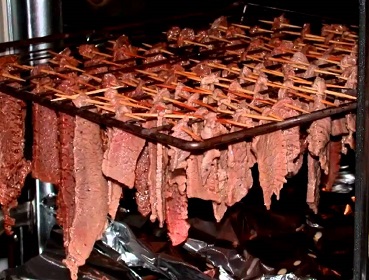
7. Skewer meat strips with metal or wooden skewers and hang along racks 1/4 inch apart to provide for better heat and smoke circulation (see picture).
drying_jerky_lead

8. close the oven door, but use a utensil like a wooden spoon to hold open the door slightly for the first hour, as that allows more air circulation and moisture to escape.
9. After an hour close the door completely and check every hour until your jerky is dried, but flexible enough to bend. Store in air tight containers in your refrigerator.
Conservation: New Conservation License Plate

Monday, May 26th, 2014

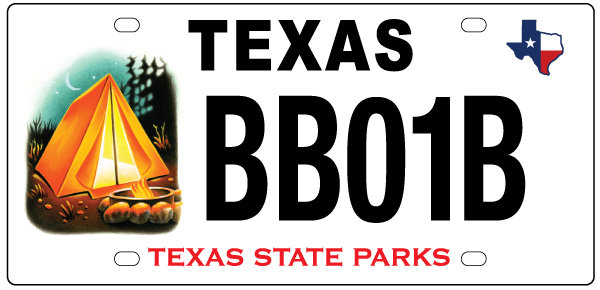
New State Park Tent Plate

New State Park Tent Plate


This is Passport to Texas

Before long you’ll be able to express your driving passion for Texas state parks with the latest addition to the conservation license plate lineup.

11— For the first time in about a decade, we are releasing a new plate; and it’s a beautiful yellow tent – the iconic boy scout-looking tent – with a campfire and stars in the sky at night.

Janis Johnson is with the Texas Parks and Wildlife marketing Group. She says the new design evokes a sense of nostalgia and fun with family and friends at state parks.

06—Yes, we are looking to create that nostalgic feeling: taking fun memories home with you – even if it’s putting them on the back of your car.

The Camping plate joins the Bluebonnet design, both of which benefit operational activities and visitor programs at state parks. Available online, the plates, themselves, cost $30 each, not including the registration fee; $22 of cost of the plate supports parks.

15— One common misconception is that you have to wait until your renewal date comes up for your license plate – and, in fact you don’t! So, you can just go online and order the plate – fill out some information – and they will mail it to you, or you can pick it up at your local tax assessor office.

Find the camping plate and other conservation license plate designs at conservation plate dot org.

That’s our show for today… Funding provided in part by Ram Trucks. Guts. Glory. Ram. For Texas Parks and Wildlife, I’m Cecilia Nasti.

TPW TV: Fitting in, Standing Out

Friday, May 23rd, 2014


This is Passport to Texas

When you’re on the water this summer, or any time, and a Texas Game Warden approaches your boat – relax. They’re just looking out for your safety. [03 ambience]

07— How’re y’all doin’ today? Fine. How’re y’all doin? Pretty good. We’re doing a water safety check; if I could see one life jacket for each person on board, please. You betcha.

[03 ambience] Cynthia Guajardo is an East Texas Game Warden who lives in the community she serves. Keeping her neighbors safe on the water is part of her job.

08— Do you have your fire extinguisher? Yes ma’am. Have a seat for me. Here it is. Will you have a seat for me? I don’t want you fallin’.

In addition, Officer Guajardo works with philanthropic organizations in her community to raise money to take children from Cherokee County to an outdoor camp in Central Texas.

07— I enjoy it. There’s nothing like seeing a kid do something that they’ve never done before and seeing the look on their face is priceless; it’s worth all the months of preparation.

As a game warden she straddles the line between law officer and educator. And you can see more of her story on the Texas Parks and Wildlife PBS TV series the week of June 1.

13— Being a game warden is a large part of who I am. Where else can you have the freedom that we have in law enforcement, which I love, and deal with the outdoors and have the freedom to educate kids. I mean, it’s a bunch of different jobs rolled into one. You can’t beat it.

Our show receives funding from Ram Trucks. Guts. Glory. Ram. For Texas Parks and Wildlife, I’m Cecilia Nasti.

Angling: Learn to Fish!

Thursday, May 22nd, 2014

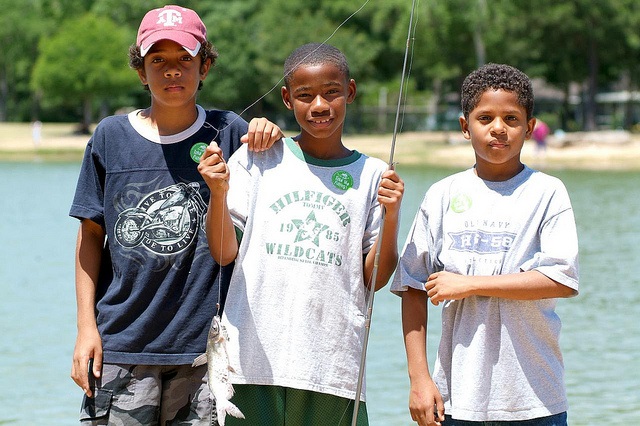
Kids enjoying a day of  fishing

Kids enjoying a day of fishing


This is Passport to Texas

Why is fishing growing in popularity?

07— Access Is there. It’s not expensive. There’s a draw to water. And young kids are excited to get into fishing typically, [because] it’s weird. [laughs].

Caleb Harris, an aquatic education training specialist, says access may be the top reason why people fish.

06—There’s significant access to fishing in Texas. We have lots of lakes and lots of parks. Within ten minutes of most homes you can find a place to stick a hook in the water.

Find neighborhood fishing locations on the Texas Parks and Wildlife website. And if you’re new to fishing, Harris suggests attending a Go Fish! Learn-to-Fish Events at Texas State Parks.

34— The Go Fish events are free events in the park, and they start in the morning – typically – and they’ll have education stations. And, they’re very specific for exactly those people who say I’m interested in fishing but I really don’t even know where to start. And after about an hour and a half to two hours of basic hands on activities to learn these things, then there’s an opportunity to borrow some fishing poles and go fishing right there in the park. And after that, most people would have an example of where they could fish, what type of bait to use, how to tie on lures and hooks, what different fish they could expect to catch with certain types of bait – they would get that information at these events. It really is a good starting point.

Find Go Fish events in the calendar section of the Texas Parks and Wildlife website.

The WSFR program supports our series and is funded by your purchase of fishing and hunting equipment and motorboat fuel.

For Texas Parks and Wildlife, I’m Cecilia Nasti.