Archive for 2014

Wildlife: New Theories about Alligators

Wednesday, May 14th, 2014
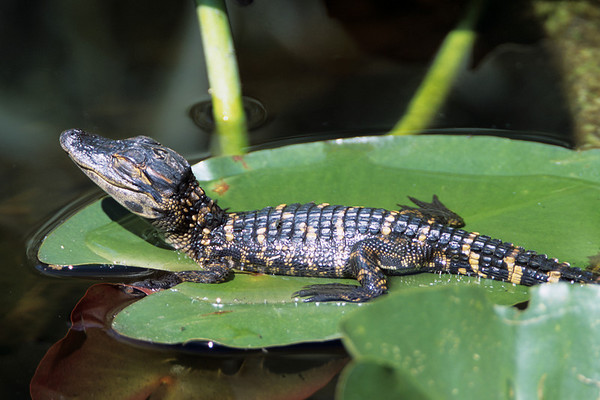
American alligator, image courtesy of www.exploreitnature.com

American alligator, image courtesy of www.exploreitnature.com


This is Passport to Texas

Drought affects different species in different ways. In the case of the American Alligator, recent dry conditions have affected this once-threatened species’ reproduction.

15— What we found was the size of the clutch of eggs – or the number of eggs in the clutch – that females lay doesn’t change during drought years. But, the number of hatchlings that are produced from a clutch of eggs decreases substantially.

Cord Eversole is a graduate student at A&M-Kingsville and a research assistant at Caesar Kleberg Wildlife Research Institute. He studies gators.

12— We thought that what we were going to end up finding was during these drought years the clutch size would decrease, but the number of alligators produced from the clutch would stay constant across the years. We found the opposite.

He said turning old theories inside out is exciting.

26— The exciting thing about alligator research in general is that — believe it or not –there’s been very few studies conducted on them throughout their range, but more specifically in Texas, there’s only been a handful of studies conducted in the state. And so, a lot of the information we gather from my study and studies that are coming up in the future, they’re going to produce brand new information, put new twists on old thoughts of how things work with alligators in general.

The more we understand environmental effects on species like the American Alligator, the better able we are to manage them.

The Wildlife and Sport Fish Restoration program supports our series and funds diverse conservation projects throughout Texas.

For Texas Parks and Wildlife, I’m Cecilia Nasti.
Wildlife: Alligators and Drought

Tuesday, May 13th, 2014

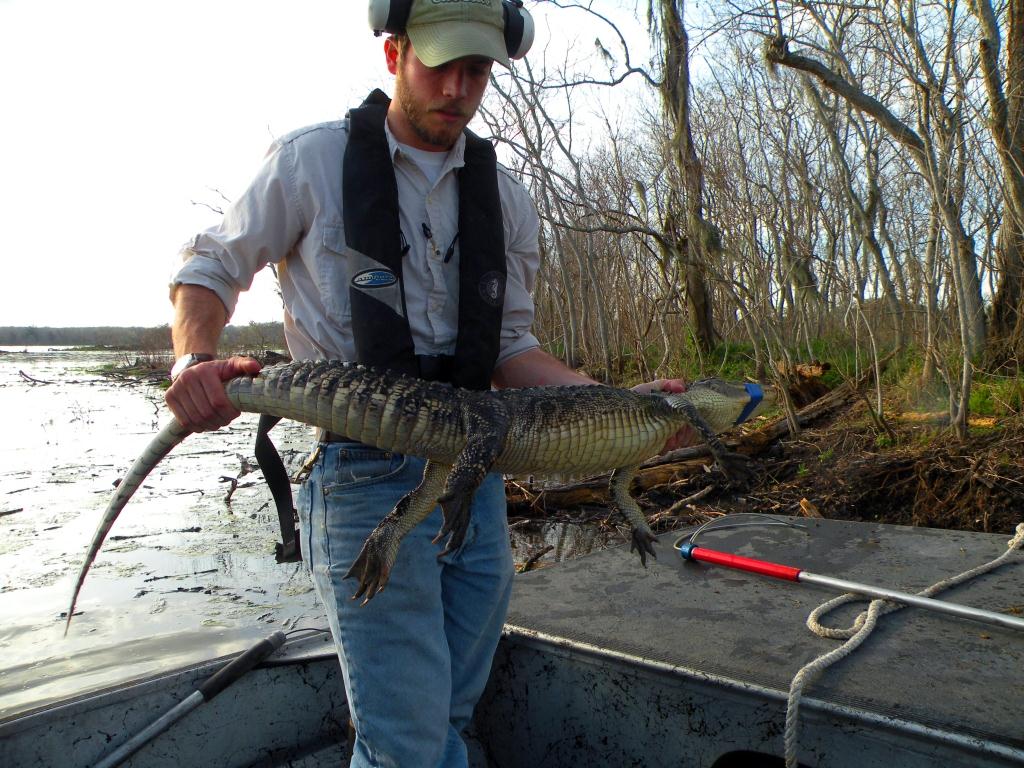
Cord Eversole with a small alligator.

Cord Eversole with a small alligator.


This is Passport to Texas

Tussling with alligators isn’t just for reality TV.

09— Typically, anything that’s under about seven feet in length, we capture from a boat. The real small ones, like the hatchlings, you can grab with your hand; they’re pretty harmless.

The bigger ones take more caution, finesse, and duct tape, says 25-year-old Cord Eversole, a graduate student at A&M-Kingsville.

09— We’re real fortunate to be able to be involved in a study looking at reproduction – in particular – and how drought affects hatching success of the eggs.

He studies the reptiles in his role as a research assistant at the Caesar Kleberg Wildlife Research Institute.

22— A large majority of our data was collected through mark/recapture, and so we tagged roughly 250 alligators at Brazos bend SP, and then captured [them] a year later, so that we could look at how much they had grown in a year’s time, and how the data that we gathered differs from data that was gathered in other parts of their range in the United States.

Thus far, his data reveals something rather unexpected. And we’ll hear about that tomorrow.

The Wildlife and Sport Fish Restoration program supports our series and funds diverse conservation projects throughout Texas.

For Texas Parks and Wildlife, I’m Cecilia Nasti.
Wildlife: Urban Alligators

Monday, May 12th, 2014

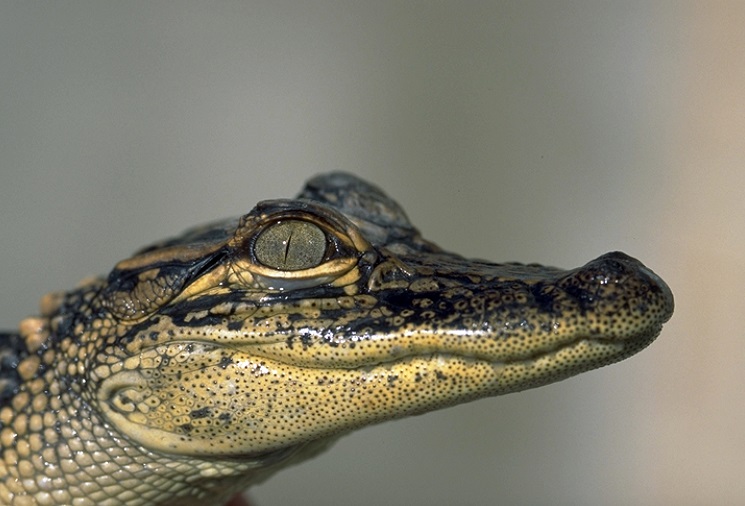
American Alligator

American Alligator


This is Passport to Texas

The American alligator is a large leathery reptile found in Texas. Once endangered, it has rebounded due to thoughtful conservation and management practices; but not everyone is happy about this.

05— The public generally has this exaggerated fear of alligators.

Cord Eversole is a grad student at A&M Kingsville, and studies alligators as a research assistant with the Caesar Kleberg Wildlife Research Institute. He says reality TV shows sensationalize human/alligator encounters and feed public fear.

14— From that, whenever alligators turn up in residential areas or on the road, or public areas, they’re quick to call parks and Wildlife to try to come and remove these alligators whether the alligators are really posing a threat or not.

The animals travel from one wetland area to another in search of mates and – in the case of young males – territory. Eversole adds, although gators do not generally stay long in residential areas, we’ll likely see them more often.

09— The alligator population is expanding, but the amount of available habitat is decreasing. That’s why it’s becoming more and more of a problem through the years.

If you do find an alligator in your yard, use common sense and keep a safe distance, don’t feed them, but do enjoy them.

04— Enjoy the opportunity to be able to see them up close and in person.

If one becomes a nuisance or a threat, call Texas Parks and Wildlife. The Wildlife and Sport Fish Restoration program supports our series and funds diverse conservation projects throughout Texas. For Texas Parks and Wildlife, I’m Cecilia Nasti.
Outdoor Activity: Picnicking in State Parks

Friday, May 9th, 2014


This is Passport to Texas

May kicks off picnic season in Texas and Angela Shelf Medearis—an Austin-based author and cook whose moniker is The Kitchen Diva—shares tips for a stress-free picnic in the park.

62— Well, let me give you Diva Picnic 101. For one – make foods that you could do in advance. If I was doing a picnic, I would have something like a really good roast chicken; just cut the pieces up and pack those in there. I do a Carolina Cole Slaw; you toss it up, throw it in the refrigerator – it gets better day-by-day. So, if you want to do that ahead you could. You don’t have to worry about having to do everything that day. That takes all the fun out of the picnic to me if you’re trying to do all the food prep, and pack everything, and get everybody to the park. So, start your picnic a few days ahead. Use a lot of fresh fruits for dessert. The thing about a picnic that I love is you can totally unplug and really focus on the people you should be paying the most attention to. You can get out in nature; we have some beautiful parks. Some beautiful places to go in Texas. And, it gives you a chance to really focus on the most important things: your family, nature, the beauty of life… So, do a little planning ahead, and pick dishes that will be fine hot or cold, and you can’t go wrong for a great picnic.

Watch the Diva prepare her Cole Slaw recipe at passporttotexas.org.

For Texas Parks and Wildlife, I’m Cecilia Nasti.

Conservation: Texas Wild Rice

Thursday, May 8th, 2014

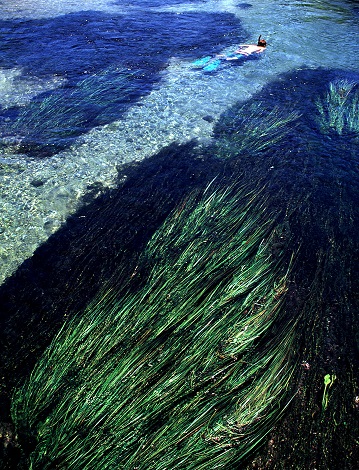
Texas Wild Rice

Texas Wild Rice


This is Passport to Texas

Texas Wild Rice is an endangered species that exists only in a two mile stretch of the San Marcos River.

06— Just in that two-mile stretch. Because, what happens is, you go further down the river and the river‘s character changes.

Botanist, Jackie Poole says where the rice grows, the spring-fed river is clear and a constant 72 degrees; but, farther downstream…

10— It’s very different. It starts to become more turbid, and loses that constant temperature quality. So, it’s just not as good habitat further downstream.

When asked to describe the plant, Poole laughed and said it’s like flowing hair.

15— [chuckle] That’s probably the best way to say it. If you envision someone with long, flowing hair, the leaves are submerged under water. And they can be up to 10 to 15 feet long, and so they just wave underneath the water with the current.

So here we have a very rare and endangered plant that only grows underwater along a two mile stretch of river. So, does that mean we never see it?

17— It does flower. And when it flowers, the flowering stalks are produced above the water. So then you would see flowering stalks that look like, um, maybe most grasses – like a Johnson grass. I hate to use that example of a noxious, invasive species. But it does resemble that.

The Wildlife and Sport Fish Restoration Program supports our series. For Texas Parks and Wildlife, I’m Cecilia Nasti.