Archive for 2014

How to Help Monarchs

Wednesday, March 26th, 2014
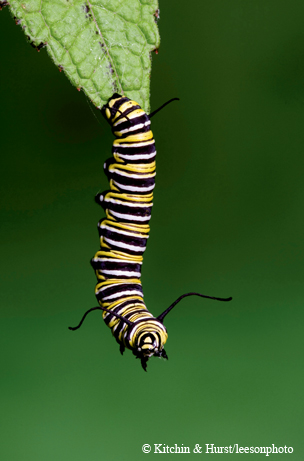
Monarch butterfly life cycle..4th Instar on Joe-Pye Weed.

Monarch butterfly life cycle..4th Instar on Joe-Pye Weed.


This is Passport to Texas

Loss of grasslands to farming and development means fewer “refueling stations” for monarchs during their migration. Master naturalist and writer, Rob McCorkle, says when homeowners living along the butterfly’s migratory route plant milkweed they provide food and habitat for adults and their young.

13— There are different milkweeds in Texas – there are about three predominant types of milkweed: antelope horn, green antelope horn and zizotes is the third one. They’re now becoming more available.

Grasslands aren’t the only monarch habitat disappearing. Logging of fir trees in Central Mexico where monarchs overwinter has severely reduced their roosts. So why provide food and shelter along their migration route if in the end, there’s no place for them to hibernate?

27— That is a good point. The Mexican government in collaboration with the US and Canada have formed a trilateral commission that has studied this impact for several years now. And they’ve taken steps to limit logging and protect the remaining habitat – and have had some success. A single monarch female can lay 300 to 400 eggs. So, the potential is there for the population to rebound to some degree.

Find links to follow monarch’s migration route, learn about installing a monarch friendly garden, and more at passporttotexas.org.

For Texas Parks and Wildlife, I’m Cecilia Nasti.

Monarch Migration Routes:
http://www.learner.org/jnorth/maps/monarch_spring2014.html

Butterfly Garden:
http://www.monarchwatch.org/garden/
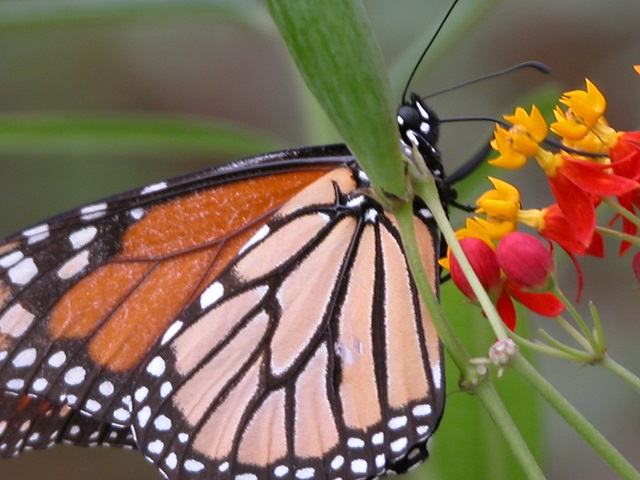
Why Monarchs are in Decline

Tuesday, March 25th, 2014

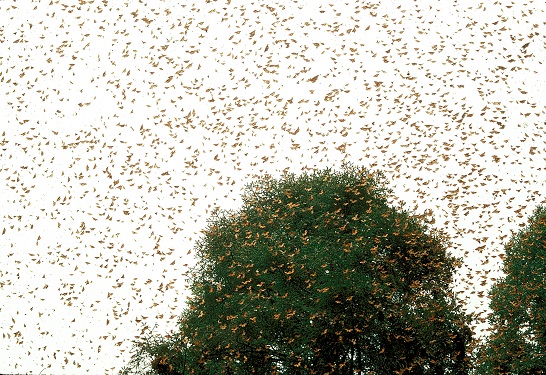
Monarch butterfly

Monarch butterfly


This is Passport to Texas

Fragmentation and loss of habitat creates hardships for monarch butterflies during migration and hibernation.

14— That is being propelled by the elimination of grasslands in the Midwest [where monarchs fuel up during migration] to plant GMO (genetically modified organisms) soybean and corn crops, and to plant crops for biofuels.

Logging in the mountains of Mexico where monarchs overwinter also affects the species. Rob McCorkle wrote an article about the decline of the monarch population for the March issue of Texas Parks and Wildlife Magazine.

At their peak, a billion monarchs filled the skies; today that number is under 50-million. Yet, each of us along their migratory path can help them on their travels by doing one simple thing.

16— The most significant thing scientists say you that you can do is plant milkweed, because that is the sole species the monarchs depend on to lay eggs for emerging caterpillars to feed on.

Find more information about the kinds of milkweed to plant for monarchs at www.plantmilkweed.org. Tomorrow, the kinds of milkweed best suited for monarchs, and how the US, Canada and Mexico are working together to save this iconic species.

For Texas Parks and Wildlife, I’m Cecilia Nasti.

TPW Magazine: Monarch Decline

Monday, March 24th, 2014

Monarchs at their overwintering site.

Monarchs at their overwintering site.


This is Passport to Texas

Extreme weather and vanishing habitat, have taken a toll on monarch butterflies.

14—To use the oft-worn cliché about a “perfect storm,” that’s sort of what’s happened to the monarchs, unfortunately, and has caused their populations to plummet almost 80% since the winter of 2012.

Rob McCorkle wrote an article about the monarch decline for the March issue of Texas Parks and Wildlife Magazine. Monarchs migrate to Mexico from Canada and the US.

18—The first hit [to the monarchs] was in 2002 when they had a severe freeze in the mountains of Mexico where the population overwinters. Monarchs can take cold weather, but if it rains, or snows and they get wet – they can’t survive. They died off by the millions that year.

Weather is only part of the equation. Habitat loss is the other.

33—That is being propelled by the elimination of grasslands in the Midwest to plant GMO soybean and corn crops, and to plant crops for biofuels. What that’s done, obviously, is to limit the places where the monarchs go to fuel up for their migration. Also, the overwintering forests in the mountains of Central Mexico have been logged heavily and are being impacted by [tourism] people going to see the monarchs that overwinter there in the fir trees.

More on why monarchs are in decline and how to help — that’s tomorrow. For Texas Parks and Wildlife, I’m Cecilia Nasti.

Fishing: Drought and the White Bass Run

Friday, March 21st, 2014

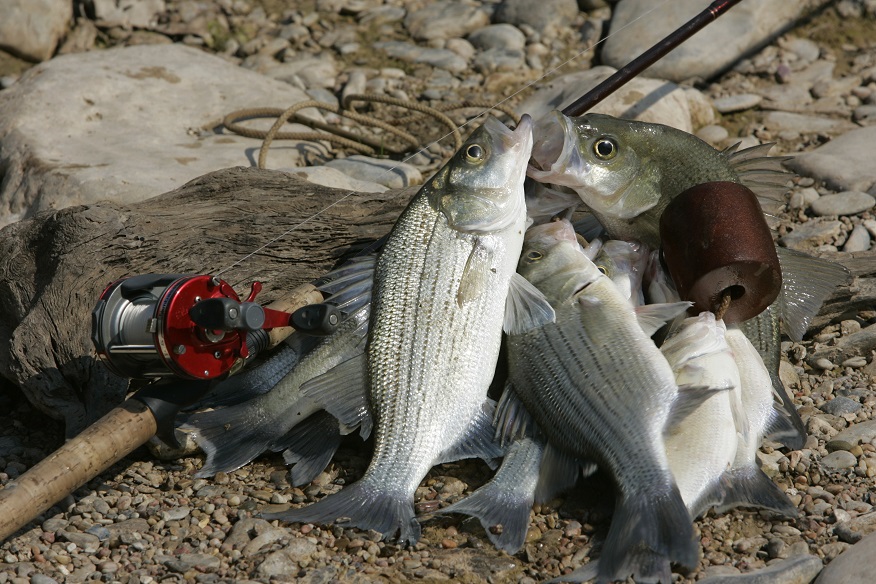
A stringer of White Bass at Colorado Bend State Park

A stringer of White Bass at Colorado Bend State Park


This is Passport to Texas

The springtime white bass run is among the most anticipated freshwater angling events in the state.

14—Generations after generations seek these fish during this time, and it’s a good way to get kids involved in fishing. So there are a lot of traditional values to this fishery. And, there’s also a big economic impact by this fishery. It’s very important to our economy.

Marcos De Jesus is a fisheries biologist. Water levels in reservoirs are at historic lows, and river flows are also down due to severe drought, and that spells trouble for spring’s white bass run.

23—Because the water is so low, the connectivity between the lakes and the rivers are being lost. So, without the flows that the fish need, they’re not running up river [to spawn]. So, our concern is the fishery is not there for our anglers, and number two, these fish are not reproducing properly. And that starts to concern us because these fish are short lived, and we need them to reproduce within the second or third year.

De Jesus says east Texas isn’t experiencing flow issues like the Hill Country; so, there will be fish runs available in the state.

12—Anglers need to understand that these drought cycles occur, and that the fish still can be caught in the main reservoirs. It’s just that they may not be able to catch them in those typical areas upriver where people traditionally catch them.

Find the fishing forecast on the Texas Parks and Wildlife website.

For Texas Parks and Wildlife, I’m Cecilia Nasti.

Fishing: White Bass Run

Thursday, March 20th, 2014

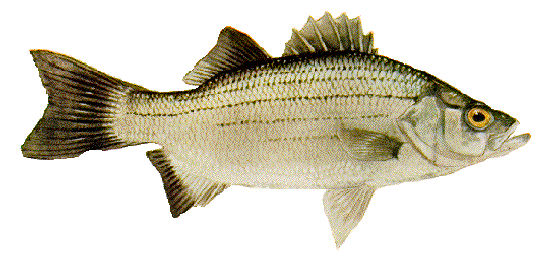
White Bass

White Bass


This is Passport to Texas

In December and January, while we’re busy with the holidays and staying warm indoors, white bass begin to congregate where rivers and reservoirs meet.

06—And those fish are getting ready for those environmental cues to happen so they can actually all start migrating and running up river.

Environmental cues like changes in temperature and water flows. Marcos De Jesus is a fisheries biologist. When the time is right, white bass move up river to spawn, which is something anglers eagerly anticipate each year.

10—Some of them go up pretty far – as far as they can swim to complete their spawning run. So, they become congregated and create excitement for the anglers, because once they’re congregated they’re really fun to catch.

East and Central Texas offer many white bass fishing opportunities. De Jesus says while they’re active year round, springtime runs practically set up anglers for success.

27—As we get into the springtime, they congregate towards the mouth of the river waiting for those cues. Right when they’re at the mouth of the river, they’re easy to catch. But, the easiest time to catch them is when they’re running up river spawning in those shallow waters, because you can actually catch them from the bank.

Do these fish give you a good fight?

Definitely. They’re very great fighters. They become aggressive, and they take on many types of lures and live bait. Once they hook on – they’ll fight pretty hard.

How will the lingering drought affect this year’s white bass run? That’s tomorrow.

For Texas Parks and Wildlife, I’m Cecilia Nasti.