Archive for 2014

State Parks: Ambassadors and Millennials

Wednesday, February 26th, 2014
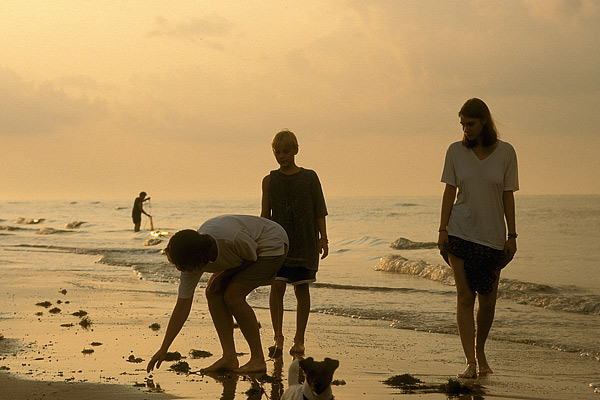
Enjoying the Texas Beach

Enjoying the Texas Beach


This is Passport to Texas

If you’re under 30 years old chances are you’ve spent less time outdoors than previous generations.

Ky Harkey is the outdoor education and outreach coordinator for state parks, and oversees the Texas State Park Ambassador Program, which targets these “millennials.”

21— The millennial generation, if you will—roughly 16 to 28 year olds or so—is a particular focus for us – trying to bring that audience into parks. The millennials that are out there right now that love Texas State Parks, and are already our advocates, the Ambassador program gives them the tools that they need to help promote Texas State Parks, and the benefits of outdoor recreation with their peers.

Volunteer Ambassadors work to increase visitation of young adults in State Parks.

15— In a hyper, online digital world today, we see that actually word-of-mouth marketing is still one of the best ways to bring new audiences into our parks. Through videos, and photos and inspiring stories, it’s trying to light a fire under these millenials that are not getting outdoors right now.

Ambassadors receive free admission and camping sites at state parks, and then share their experiences and help others create memories.

06— They have created videos promoting Texas State parks; they’ve hosted concerts in the parks. So, we see the success not only in the individual touches that they’ve had with new audiences, but in the work that they are doing to pioneer the future of the Ambassador program.

Visit texasstateparks.org and find out how to become a SP ambassador.

For Texas Parks and Wildlife, I’m Cecilia Nasti.
State Parks: Ambassadors

Tuesday, February 25th, 2014

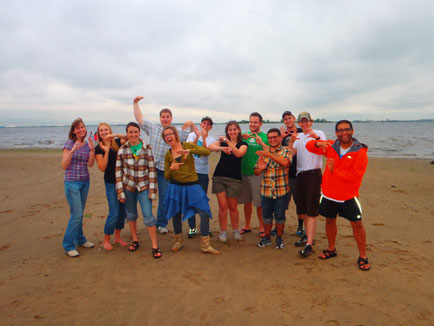
State Park Youth Ambassadors, image from America's State Parks

State Park Youth Ambassadors, image from America’s State Parks


This is Passport to Texas

If you’re of a certain age, when you were growing up, the outdoors was your primary source of entertainment, and probably continues to play a role in your quality of life.

20— A decade back or so, we did a visitation study to get a sense of who are our most common visitors. What we found was a 48 year old couple with no children was the average visitor. In the years since, we saw that number go to 49 year olds. And that showed us that we were missing out on some our younger generations, including kids and young adults.

Today, young people occupy themselves with electronic gadgetry, which keeps them willing captives indoors. Ky Harkey is the outdoor education and outreach coordinator for state parks.

19— We want to make sure that we have a new generation that’s going to be stewards to the parks. [We want them to] get out and enjoy the parks. The younger generation today, is the next generation that will be raising kids, and they will have the choice to either take the kids to Texas State Parks or not. We want to make sure that the parks are on the radar of the younger generations already.

State parks developed an outreach program whereby it recruits young people currently engaged in the outdoors, and asks them to invite their peers to join in.

08— The millennial generation, I you will – roughly 16 to 28 year olds or so – is a particular focus for us. Trying to bring that audience into parks.

Ky Harkey returns tomorrow to tell us about the Texas State Park Ambassador program.

For Texas Parks and Wildlife, I’m Cecilia Nasti.
Recreation: Biking in State Parks

Monday, February 24th, 2014

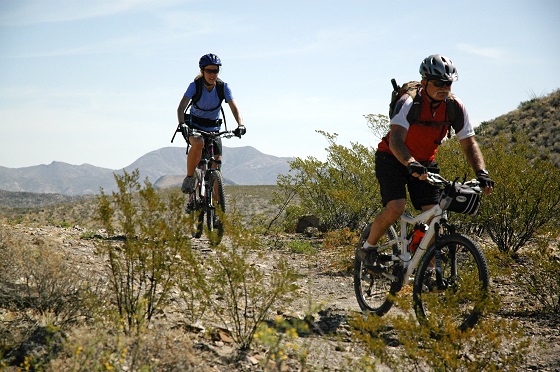
Biking in Texas

Biking in Texas


This is Passport to Texas

Biking is a practical way to stay fit, as well an environmentally conscience style of transportation. Use your two-wheeled transportation to escape the hectic urban jungle and ride with nature for a change of scenery.

Many Texas state parks offer a wide range of biking trails for your enjoyment. There are trails for all abilities, from beginner to advanced, making it easy for anyone to get outdoors to enjoy the natural world in an intimate way.

Designated biking trails are numbered to indicate their difficulty level. Beginner Level is a course that only requires basic riding skills.

Intermediate Level cyclists must have off-road experience and knowledge. Difficult Level tracks demand an advanced biker who can navigate various terrain conditions.

You will enjoy your ride more when you ride with safety in mind. Always wear a helmet. Be aware of hazards in your path such as ruts, rocks and even wildlife. Also, check the air in your bicycle tires regularly to avoid flats and accidents. Pack a large bottle of water—at least eight ounces for every hour of riding.

Find information about biking on the Texas Parks and Wildlife website.

That’s our show for today…For Texas Parks and Wildlife…I’m Cecilia Nasti.

Hunt/Cook: Alligator Ancho Rellenos

Friday, February 21st, 2014

Alligator Ancho Relleno, image from El Chile Café y Cantina

Alligator Ancho Relleno, image from El Chile Café y Cantina


This is Passport to Texas

Hunting alligator in Texas is an adrenaline pumping experience, but cooking it shouldn’t be. Chef Jeff Martinez, chef at El Chile Café y Cantina in Austin, whips up a Mexican inspired treat with alligator meat.

57—So, what I’ve done is I’ve taken the meat and I’ve ground it up in my food processor. And so what we’re going to do with this today is we’re going to make an alligator ancho chile relleno. I’ve got a hot pan here; we’re going to start by adding extra virgin olive oil in the bottom. We’re going to add our white onion which has been diced up. We’re going to add our garlic. Oh, I can smell it already; it’s already starting to smell good. Okay, so after that, we’re going to add our tomato. Now, we’re going to go ahead and add our alligator meat. It’s pretty much going to look the same as cooked chicken. And it doesn’t take very long. And that’s just about it. So, we’re going to add a little bit more flavor to this dish by throwing in some sliced green olives; and then we’re going to add some of these raisins, and we’re going to finish it off with slivered almonds that have been toasted. You see everything in there and it looks great. There’s a lot of color in there – a lot of color also means a lot of flavor. And then we’re going to finish it off with some fresh chopped parsley that’s going to add some freshness to the dish. And then to finish it off, we’re going to salt – just to taste. And we are ready to stuff some chiles.

See Chef Martinez in action, and find the complete recipe on the TPW YouTube Channel.

That’s our show for today. For Texas Parks and Wildlife, I’m Cecilia Nasti.

TPW TV/Hunting: Alligators

Thursday, February 20th, 2014

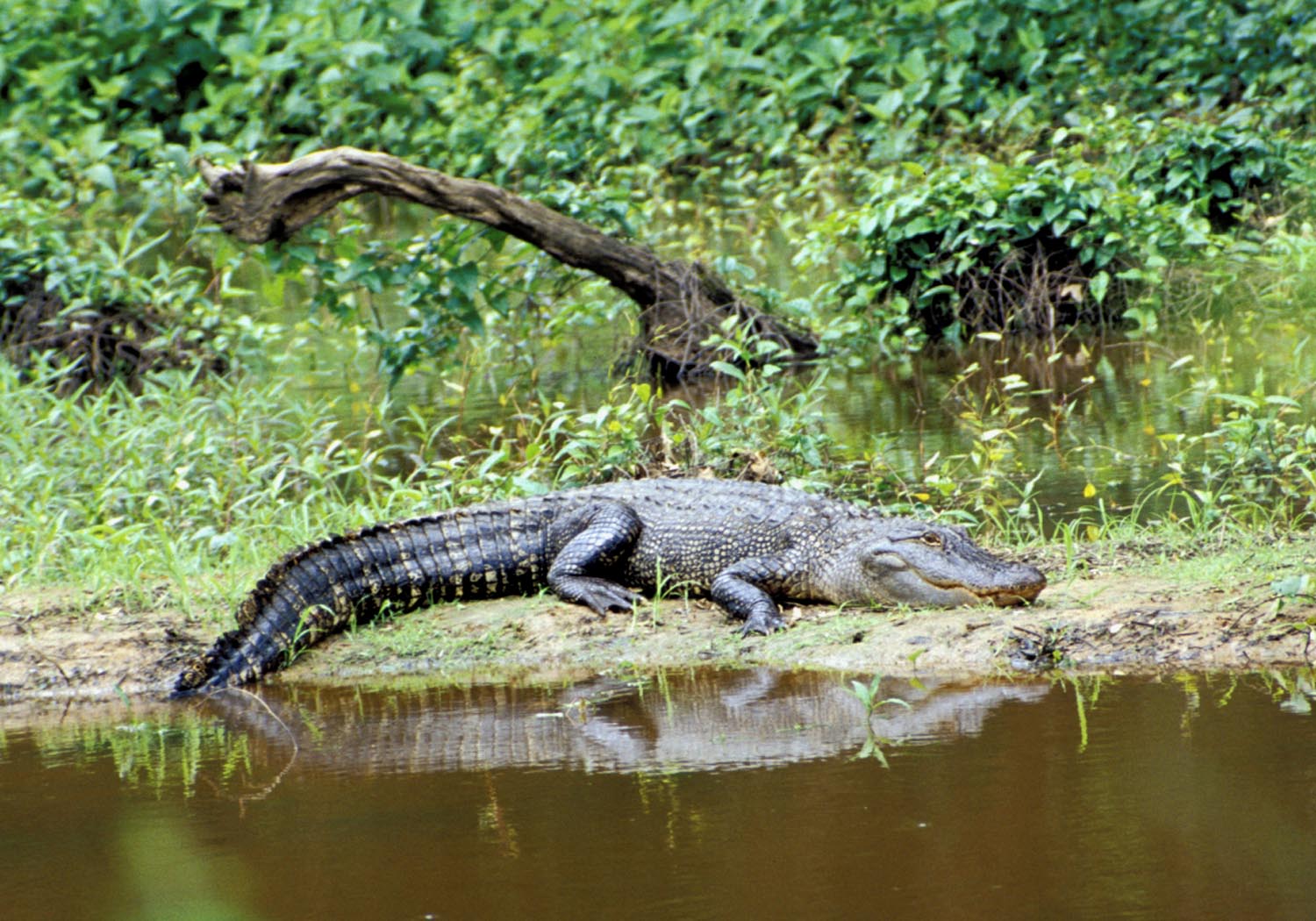
American Alligator, photo TPWD

American Alligator, photo TPWD


This is Passport to Texas

It’s a hot muggy afternoon in an east Texas marsh, and it’s time to hunt for alligators. We tag along with some lucky hunters that get a chance of a lifetime to hunt alligators at J.D. Murphree Wildlife Management Area.

54—The area that we’re hunting in, it’s a vast bayou of swamps and marshes, with canals running through. The adrenaline rush is way more than deer hunting or anything else because you’re after something that can actually get you.

There’s one probably about 10 foot and two seven footers right up here. In about 150 yards we’re going to try and put a set.

Never been gator hunting before. You know you see ‘em on TV. See the alligator shows. And, this is exactly what it looks like.

Our bait is chicken thigh quarters…

Those smell savory.

It’s savory; that’s for sure. Mmmm.

And we let ‘em sit out in the sun for a day or two and it got quite ripe.

Upwind is better than downwind when you get those things out. [distant laughter] I am amped up; adrenaline’s pumping, and then it’s on!

Alligator hunting – it’s just not like anything else I’ve ever done. You know, there’s one on the line and you start pulling me in. I don’t know. You get anxious, you get excited. You get nervous.

But did they get their gator? Find out on the Texas Parks and Wildlife TV series the week of February 23. Check local listings.

The Wildlife and Sport Fish Restoration program supports our series… For Texas Parks and Wildlife, I’m Cecilia Nasti.