Archive for the 'Food' Category

Beyond Bacon: Dove Carnitas a la Killer Chefs

Tuesday, September 5th, 2017
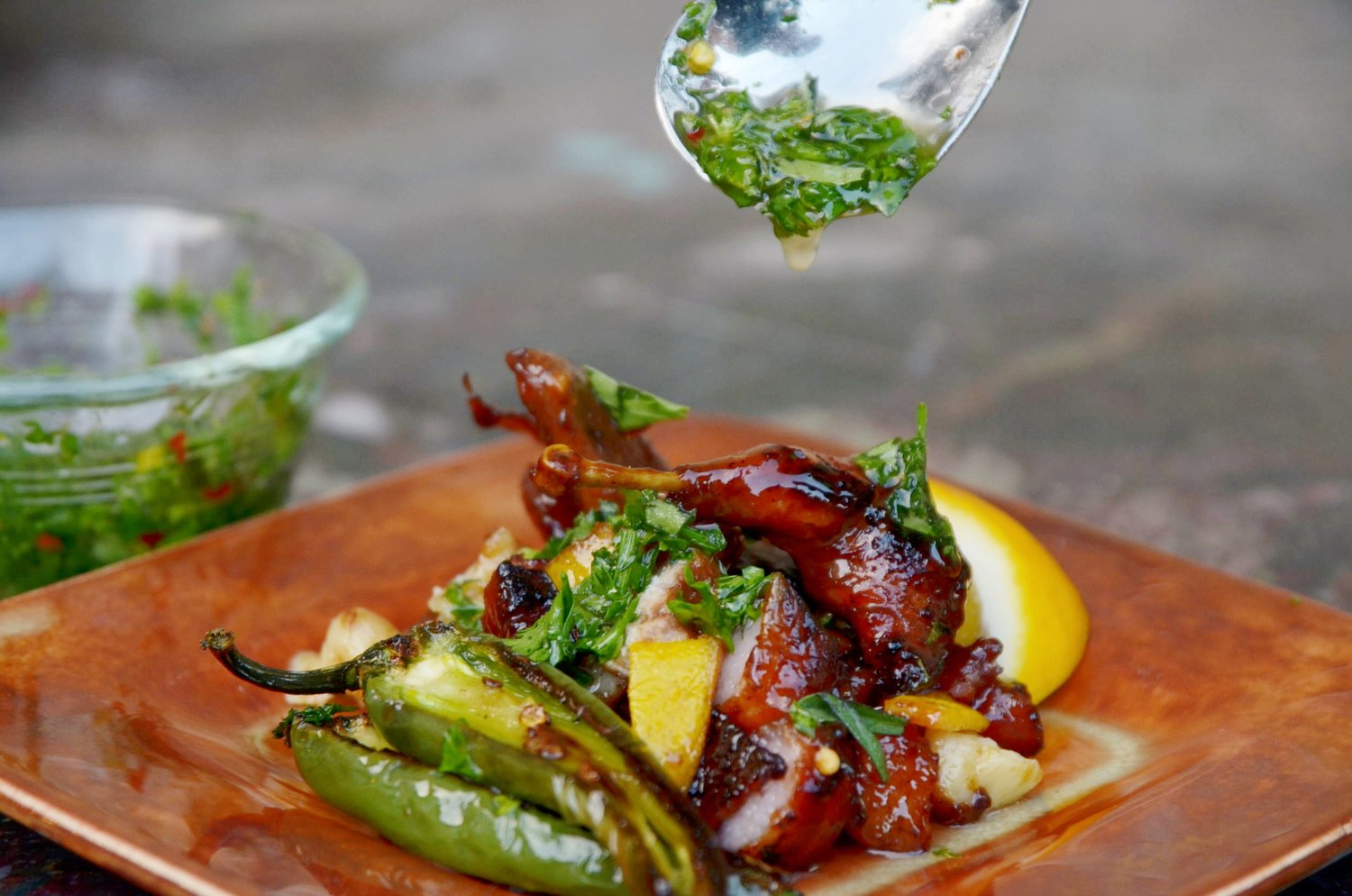
Dove Carnitas a la Killer Chefs. Photo: Jesse Morris.

Dove Carnitas a la Killer Chefs. Photo: Jesse Morris.

This is Passport to Texas

With dove season underway in the north and central zones, bacon wrapped dove breasts will soon show up on the tables of hunters everywhere.

People don’t really like eating doves, they like eating bacon, if that’s the only way that they cook it.

Jesse Morris is a hunter and chef with Killer Chefs in Richardson, Texas. He says there are more inventive ways to enjoy dove—including carnitas.

Everybody’s go-to recipe—and there’s nothing wrong with it – is bacon wrapped dove. It’s nice to actually use all the bird. So, you can use the heart in the carnitas, and the legs, and the breast meat, and everything. Cooking that down low and slow; finishing it off, letting all the sugars come out in the product. It’s something good.

If you’re a new hunter and longtime foodie, you may be tempted to “go gourmet” when preparing dove or any game. Jesse recommends to start simply.

People get off on wanting to cover them in sauces or gravy, and things like that – when they’re really not tasting the bird, or whatever game that it is that they’re eating. When you’re first starting out cooking wild game, cook it simply: grill it; salt and pepper. See what the flavors that the actual game is, and then work with that.

We have Jesse Morris’ dove carnitas recipe at Passport to Texas dot com.

For Texas Parks and Wildlife…I’m Cecilia Nasti.

____________________________________

Killer Chef’s Dove Carnitas Recipe
by Jesse Morris
One of my all time favorites and go to recipe is carnitas. They are flavorful and easy to cook. My version of the recipe is not totally traditional. I like to lighten it up and use things that I can find around me in the late August early September months. If you don’t like the idea of using real sugar cokes, then don’t use it. You may substitute piloncillo, an unrefined sugar, and water.

Ingredients
1 pound salt pork, large cubed
Pig skin or pig ears, you may use the skin from the salt pork
1 white onion, rough chopped
6 cloves garlic, peeled
1 pound block of lard
10 dove plucked and cleaned doves quartered and hearts (trust me)
1 bunch fresh thyme, whole
1 bunch fresh oregano, whole
2 sticks Mexican cinnamon
1 Meyer lemon (or small orange), peeled, rind and juice
3 Mexican real sugar cokes

Instructions
In a deep, heavy bottom pan or Dutch oven brown the salt pork.
Add onions and garlic to pan and sauté for a few minutes.
Then add lard and allow it to melt and begin to slightly fry ingredients in pan.
Next add dove and remainder of the ingredients and simmer for about an hour on medium/high heat until meat is tender and the cloudy look of the coke and lard turns semi clear.
Pick all the meat and some of the lemon peel out. Pull apart the meat to prep for serving.
Finish off on flat top or cast iron pan till caramelized.
I prefer to garnish with charred jalapeno, chimichuri and a slice of lime or Meyer lemon.


Dove: Good Flavor Begins in the Field

Monday, September 4th, 2017
Ready for dove.

Ready for dove.

This is Passport to Texas

Jesse Morris is a hunter and professional chef; he traded his chef’s jacket for a new career that allows him to spend more time with his family.

I felt that I needed to have a creative outlet to continue food. Two of my greatest passions were food and hunting, so I decided what better way to celebrate what I was doing than to put those together; and that’s how Killer Chefs was born.

He shares these passions through the Killer Chefs website. Dove season is underway in the north and central zones. Jesse says: don’t expect this bird to taste like chicken.

When people think about wild game, the thoughts in their head are: ‘It tastes livery.’ That’s the word that they use. It has a flavor to it. But, what will give it that ‘off taste’ is not handling it properly.

Dove has a good flavor, but needs proper handling to ensure full enjoyment.

The very first thing in terms of food that you really want to think about, especially it being as hot as it is, is getting that animal cooled down. I always put the birds in a cooler right after they’re shot. Getting that body temperature cooled down as quickly as possible – that’s the most important thing.

That one act can mean the difference between delicious and disaster. Tomorrow: beyond bacon.

That’s our show… Funding provided in part by Ram Trucks. Guts. Glory. Ram

For Texas Parks and Wildlife…I’m Cecilia Nasti.

Buy a License, Feed the Hungry & Help a Veteran

Monday, August 7th, 2017
You can help support Hunters for the Hungry and Fund for Veterans at the time you buy a hunting or fishing license.

You can help support Hunters for the Hungry and Fund for Veterans at the time you buy a hunting or fishing license.

This is Passport to Texas

When licenses go on sale August 15, Texas hunters and anglers may donate to one of two worthy non-profits.

You can make the voluntary contribution of either one dollar, five dollars, ten dollars or twenty dollars to either the Fund for Veterans Assistance, or to help feed Texas families with a donation to Hunters for the Hungry.

Justin Halvorsen is revenue director at Texas Parks and Wildlife, and says donating is voluntary and easy.

It’s through any one of our sales channels. Either online, over the phone, at a retail agent, or any one of our parks and wildlife locations.

The agency keeps close tabs the donations.

And then, at the end of every month, it’ll go into a separate pot, and we’ll send it along to those respective entities [nonprofits].

The program debuted last season and Texans were generous; Texas Parks and Wildlife distributed, $193-thousand to the Fund for Veteran’s, and $106-thousand to Hunters for the Hungry. You may ask: is my donation tax deductible?

That is a great question. And there will be a receipt that gets printed as part of this that specifically says that this is a donation to the Veteran’s Fund or Hunters for the Hungry. And then, really, it’s up to the individual and their tax preparer to make that ultimate decision.

Request an itemized receipt from retailers, and find more information on the TPW website.

That’s our show… Funding provided in part by Ram Trucks. Guts. Glory. Ram

For Texas Parks and Wildlife…I’m Cecilia Nasti.

Alligator Ancho Relleno Recipe

Tuesday, July 18th, 2017
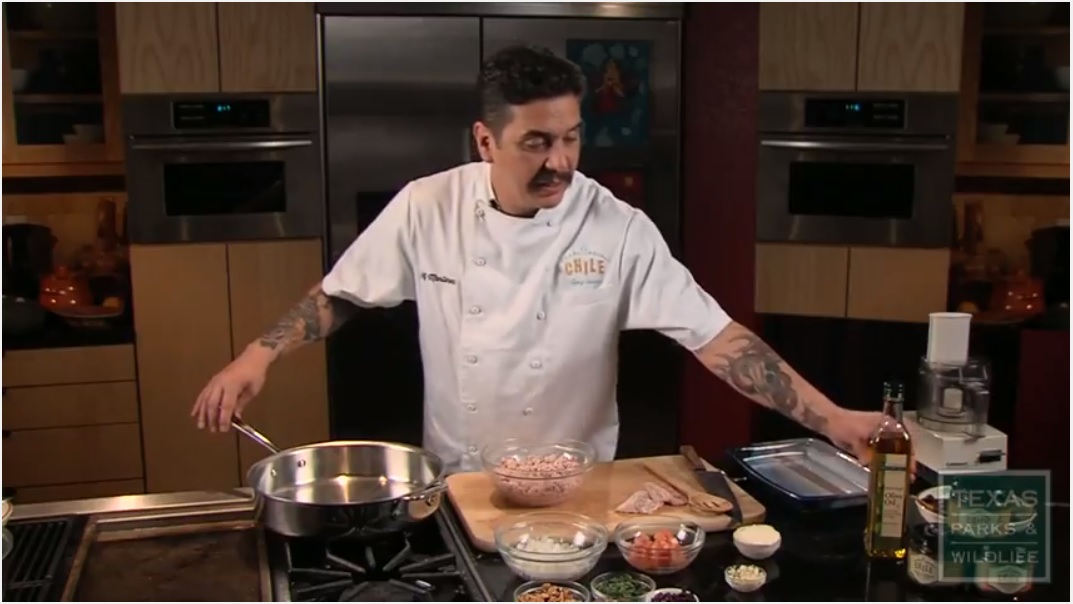
Chef Jeff Martinez preparing Alligator Ancho Relleno.

Chef Jeff Martinez preparing Alligator Ancho Relleno.

This is Passport to Texas

If you’ve never eaten alligator, its flesh is firm like pork, with a mild flavor of chicken and fish. Chef Jeff Martinez.

Most of the time when you get alligator meat, it’s going to be the jaw or the tail.

Using ground alligator tail meat, Chef Jeff prepares a recipe for ancho alligator chile relleno.

I’ve got a hot pan here. We’re going to add some extra virgin olive oil to the bottom. We’re going to add our white onion that’s been diced up. We’re going to let this sauté.

Next Chef adds diced garlic, tomatoes and ground gator.

Alligator is a very lean meat, so the cooking time is minimal. So, we’re going to add a little more flavor to this dish by throwing in some sliced green olives. And then we’re going to add some of these raisins. And we’re going to finish it off with slivered almonds that have been toasted, and fresh chopped parsley. And once you put that parsley in, you don’t want to leave it on the stove cooking for too long, because you still want that brightness, that freshness from the parsley.

He salts to taste and then stuffs the mixture into ancho chiles that he rehydrated in hot water and brown sugar.

I’m going to make sure it’s nice and full, but you want to leave enough room so you can take the ancho chile and wrap it back around the meat. And I’m going to set that into an oven proof baking dish.

That goes into a 400 degree oven for 10 minutes. When done, he garnishes them with crema and parsley.

Find the recipe and instructions at passporttotexas.org.

For Texas Parks and Wildlife…I’m Cecilia Nasti.

__________________________________________

Alligator Ancho Relleno Recipe

Preparing the Chiles:

8-10 large ancho chiles
10 qts boiling water
3 cups piloncillo or brown sugar
Add piloncillo to boiling water. Let dissolve, stirring occasionally. Slit the anchos down the side, lengthwise. Remove seeds from inside. Place anchos in container that’ll hold anchos and piloncillo water. Pour hot piloncillo water over anchos and let sit for 2 hours or until anchos are rehydrated. They’ll become softer to the touch and brighter red in color.

Once 2 hours have passed. Drain anchos from piloncillo water and allow them to cool.

Making the Stuffing:

2 lbs ground alligator tail meat
2 medium onions, diced
5 cloves of garlic, minced
3 medium tomatoes, chopped
1 bunch parsley, chopped
1/2 cup green olives, chopped
1/2 cup sliced almonds, toasted
1/4 cup raisins
Salt and pepper to taste
Sautée onions and garlic for about 3 minutes. Throw in tomatoes. Let cook for about 5 minutes. Add ground alligator tail meat and let cook for 5 minutes. Mix in olives, almonds, raisins and parsley. Remove from pan and let cool.

Assembling the Rellenos:

Divide stuffing into 8 equal portions and stuff them into the anchos, being careful not to rip the skin. Once stuffed, place all rellenos on a baking dish and place in preheated oven set to 400 degrees. Leave in oven for 15-20 minutes or until hot all the way through.

Remove all anchos from oven and place on a serving plate. Garnish with Honduran crema or regular sour cream and chopped cilantro. Serve with white rice and beans.

Some New Twists on Cooking Fish and Game

Monday, May 1st, 2017
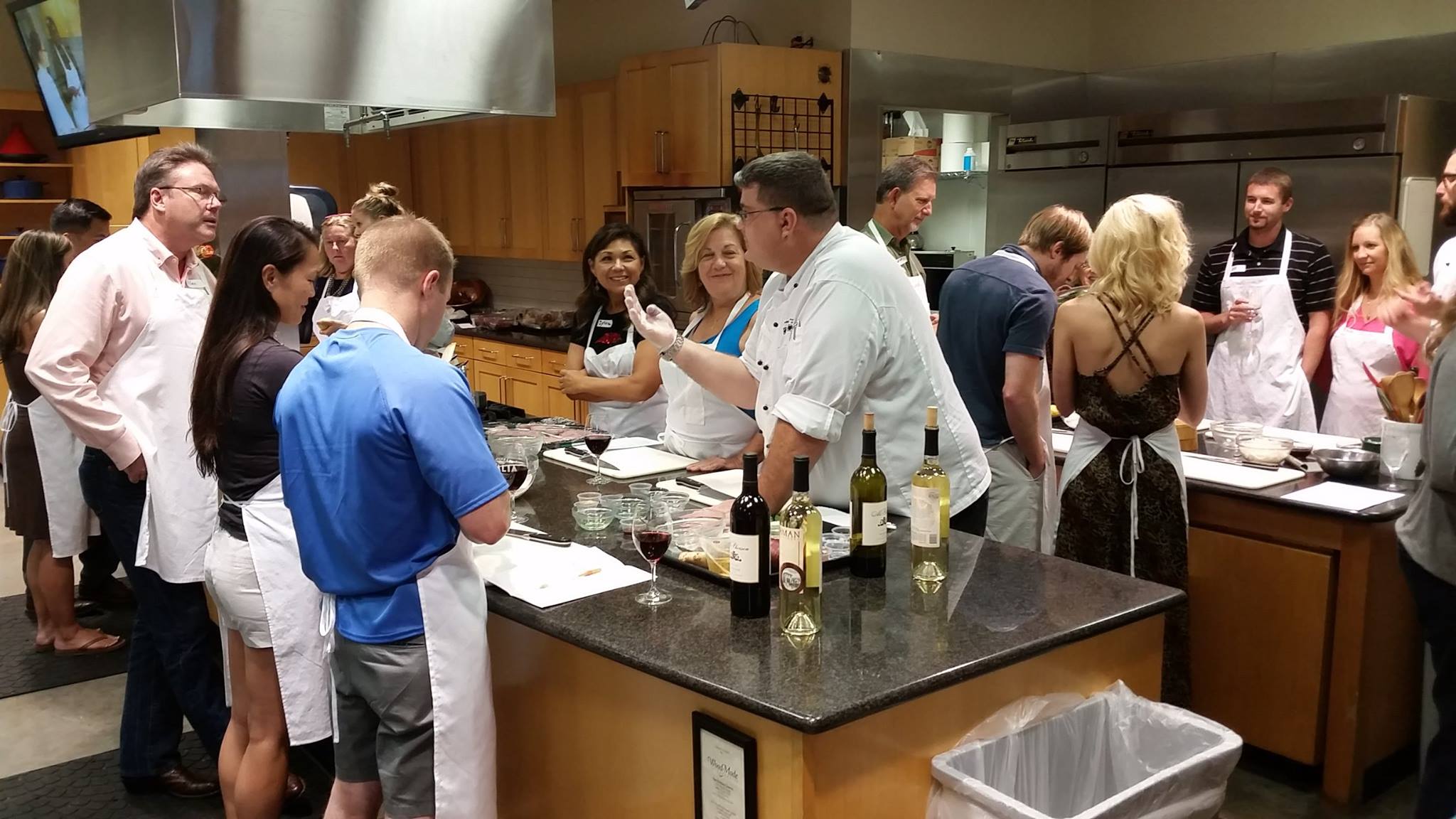
Learning to cook wild game and fish at Central Market Cooking Schools

Learning to cook wild game and fish at Central Market Cooking Schools

This is Passport to Texas

When Texas Parks and Wildlife collaborates with Central Market Cooking Schools on Wild Game and Fish cooking classes, we like to keep it interesting.

Take the May 9th class, for example: attendees will make Crawfish Beignets; Salt-baked Striped Bass with Olive Oil, Herbs, Lemon & Garlic Salsa; and Prosciutto-wrapped, Maple-glazed, Roasted Turkey Breast.

The meats used in the recipes are farm raised. Yet, each has a wild equivalent available for harvest with the right licenses and gear. May 14 is the last day of spring turkey hunting in the north zone for Rio Grande turkey—and for eastern wild turkey, too.

Crawfish and striped bass live in freshwater throughout Texas. Find crawfish around ponds, lakes, rivers and streambeds; tricky to catch, but lots of fun. Also check out the Texas Parks and Wildlife website for best striper lakes in the state.

A few seats remain for the May 9th Texas Parks and Wildlife & Central Market cooking classes in Austin, San Antonio, Fort Worth, Dallas, Plano and Southlake [Note: we just received notice the Southlake class has been cancelled.]

Let me know where you live and the kinds of game and fish dishes that interest you. Find a link for cooking class registration and my contact details on the Passport website.

That’s our show…Funding provided in part by Ram Trucks. Guts. Glory. Ram

For Texas Parks and Wildlife…I’m Cecilia Nasti.

_________________________________________

Find a Central Market Cooking Class Near You when you visit their website.

Contact me and let me know what kinds of wild game and fish cooking classes you would  like to attend: cecilia.nasti@tpwd.texas.gov.