Archive for the 'Food' Category

Ask a Game Warden – Seafood Regulations

Monday, October 31st, 2016
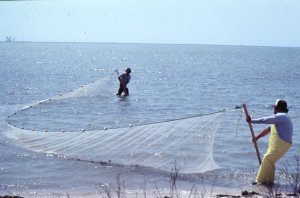
Using fishing nets to harvest from the gulf.

Using fishing nets to harvest from the gulf.

This is Passport to Texas Ask a Game Warden

Is it okay to sell, barter or trade your fresh gulf catch? To find out, we asked Game Warden Brandi Reeder.

Whenever you have a recreational license, those products [you harvest] are for recreational purposes [only]. At the point that you conduct a sale, barter, or exchange for some sort of gain, that is now a commercial purpose. Therefore, you must be commercially licensed.

Reeder is Assistant Commander Fisheries Law Administrator. She says anglers may purchase licenses that cover commercial harvest and sale.

There are fishermen licenses, and there are dealer licenses. And so the two are a little bit different. One authorizes—obviously—the harvest. The other would authorize the purchase for sale, and the subsequent resale.

If your license is for recreational fishing only, and your cooler runneth over after a coastal fishing trip, invite folks to the house for a meal of gulf fish, or give away some of your catch. But Game Warden Reeder says that’s all you can do legally with a recreational license.

If they are such a successful fisherman—which I have known a few—and they would like to pursue a commercial market, and possibly sell, themselves, they need to do their due diligence. And, they’re always welcome to call Parks and Wildlife law enforcement offices in order to gain more insight and information.

We have a link on passporttotexas.org where you can find additional information.

The Sport Fish Restoration program supports our series.

For Texas Parks and Wildlife…I’m Cecilia Nasti.

___________________________________

Additional Information:

Texas Commercial Fishing Guide [PDF]

Shrimp Regulations and Restrictions
Oyster Regulations


Benefits of Hunters for the Hungry

Thursday, October 27th, 2016
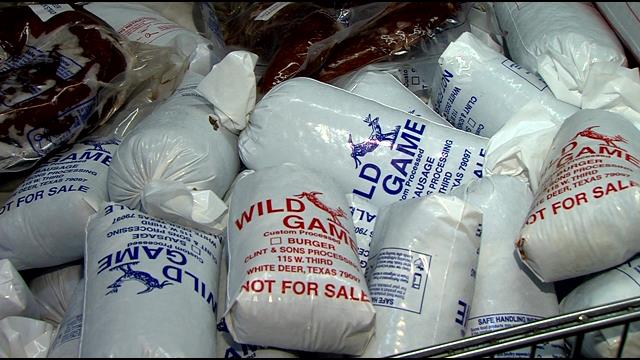
Donated Venison via Hunters for the Hungry program, Image courtesy of http://www.newschannel10.com/

Donated Venison via Hunters for the Hungry program, Image courtesy of http://www.newschannel10.com/

This is Passport

Texas meat processors can help feed fellow Texans by distributing hunter-donated venison to needy families through the Hunters for the Hungry program.

Well, this is a wonderful program that helps us both fight hunter and promote environmental stewardship.

Removing deer from the landscape each year promotes healthier habitat and deer populations. Celia Cole is Executive Director of Feeding Texas, which facilitates Hunters for the Hungry. She says the key to making the program work is an active network of processors.

We ask them to provide the processing at a minimal cost—we suggest around $40—and then the hunter makes that donation. So, let’s say the hunter drops off a deer, the processor will package it. And then, we provide them with a list of hunger relief agencies in their area. And they can either contact that agency to come pick it up, or they can drop it off. And, of course, they receive a tax deduction for their donation, as well.

Hunters who donate deer to the program should check with their tax preparers to see if they can claim a deduction as well. Meanwhile, Hunters for the Hungry encourages meat processors to join the program. Find more information at feedingtexas.org.

And processors can go there to sign up. We also recruit directly off of lists that we have from the health department. So, we will reach out and ask processors to participate.

Hunters and processors who participate in the program are responsible for providing more than 9 million servings annually of venison to needy families.

The Wildlife Restoration program supports our series.

For Texas Parks and Wildlife…I’m Cecilia Nasti.

Meat Processors Help Feed Hungry Texans

Wednesday, October 26th, 2016
Huinters for the Hungry

Hunters for the Hungry helps feed Texans

This is Passport

Feeding Texas is a non-profit association that represents food banks in the state. Hunters for the Hungry is one of the programs it oversees.

The way it works is, we recruit meat processors to help us get venison out to the families that we serve. For hunters it’s an opportunity to donate back to their communities. And, for our food banks, it’s an opportunity to have access to a really great lean source of protein that the families that we serve really need.

Celia Cole is CEO of Feeding Texas. She says Hunters for the Hungry enjoys enthusiastic hunter participation among deer hunters. Yet, Cole says they need more processors.

Our greatest challenge is bringing in enough processors. So, in all of the areas where there is a lot of hunting, we are in need of more processors. And that is the key to making this program work.

Cole says it’s easy for processors to sign up.

We have our website and processors can go there to sign up. Really, all they need to do is enroll with us and show a copy of their inspection and be willing to package the meat in the packaging that we provide. So, it’s fairly simple for a processor to register and become involved in the program.

Tomorrow: how Hunters for the Hungry benefits processors, hunters, and the community.

The Wildlife Restoration program supports our series.

For Texas Parks and Wildlife…I’m Cecilia Nasti.

A Hunter / Cook with Tips on Cooking Game

Thursday, October 13th, 2016
Solana Ranch near Salado, TX.  Photos for TPW Magazine story "Hunting with Chef Marcus"

Solana Ranch near Salado, TX. Photos for TPW Magazine story “Hunting with Chef Marcus”

This is Passport to Texas

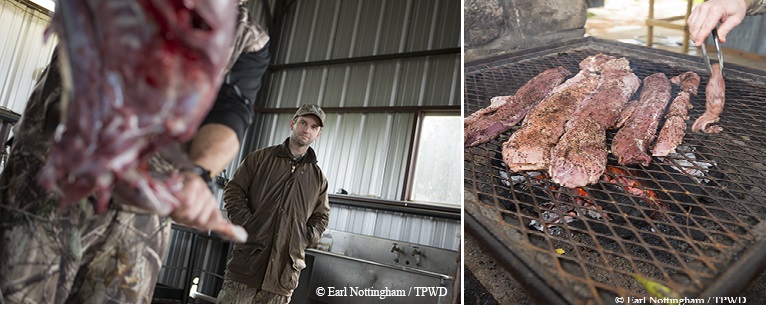
To coax the best flavor from deer hunters will harvest this fall, proper care from field to plate, is a must. Just ask Marcus Paslay [paz-LAY]. He’s chef and owner of Clay Pigeon Food & Drink in Fort Worth.

Every step of the way—the way it’s handled—drastically affects flavor. You know, in the field, it’s something you want to get cleaned out as soon as you can, and get it cold as soon as you can. It keeps that flavor a little bit more clean.

Clean and less gamey, but not without some gaminess.

It is an acquired taste. So, I think whoever’s eating it is going to have to have a sense of adventure to a certain extent. But there are ways to overcome it a little bit. I always like using brines. Soaking the meat in a sugar, citrus, salt bath overnight—or whatever it takes. That really helps out well with big game such as venison, or hog.

Brining is just one method Chef Paslay uses to impart flavor into game.

Another way I really love on venison is rubbing it down with coffee grounds. And the tannins in the coffee help break down the proteins and they also impart a pretty strong flavor themselves, which masks the gaminess of the meat.

Find Chef Marcus Paslay’s recipe for coffee rubbed venison loin is in the October issue of Texas Parks and Wildlife magazine.

For Texas Parks and Wildlife…I’m Cecilia Nasti.

TPW Mag – Hunting with a Chef

Wednesday, October 12th, 2016
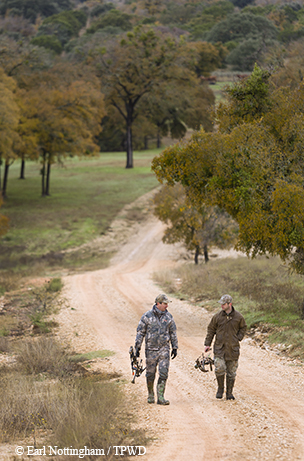
Chef Marcus Paslay hunting at Solana Ranch

Solana Ranch near Salado, TX. Photos for TPW Magazine story “Hunting with Chef Marcus”


This is Passport to Texas

Marcus Paslay, chef and owner of Clay Pigeon Food and Drink in Fort Worth, says he started hunting in Texas when he was around eight years old.

You know, I’d go with my Dad and my Granddad. We’d go hunt and fish. And then, you know, as I got older, and a little more responsible, I was allowed to hunt on my own. [laughs]

The restaurant offers a changing seasonal menu of made from scratch dishes that often include game.

Being a hunter, and using game, it just gives you a deeper appreciation for the ingredients in its raw state. You become a little bit more sensitive to throwing stuff away when you’ve seen it alive. And that’s what we do at Clay Pigeon. You know we’re a from scratch kitchen, so we’re buying everything in its whole, raw state. So, it’s just one of those deals that allows us, you know, a little bit more responsibility with our food.

Reid Wittliff wrote an article for the October issue of Texas Parks and Wildlife magazine where he invited Chef Paslay to bow hunt on the Solana Ranch in Central Texas.

Any time that I can go out and hunt, and we can make a deal of it, where it’s eating what we hunted the next day, I mean, that’s pretty cool. And to be able to put that in an article for people to hear about it pretty awesome.

The October issue of Texas Parks and Wildlife magazine is on newsstands now, and includes Chef Marcus Paslay’s recipes from the hunt.

For Texas Parks and Wildlife…I’m Cecilia Nasti.