Archive for the 'Food' Category

How to Humanely Dispatch a Fish

Thursday, June 2nd, 2016
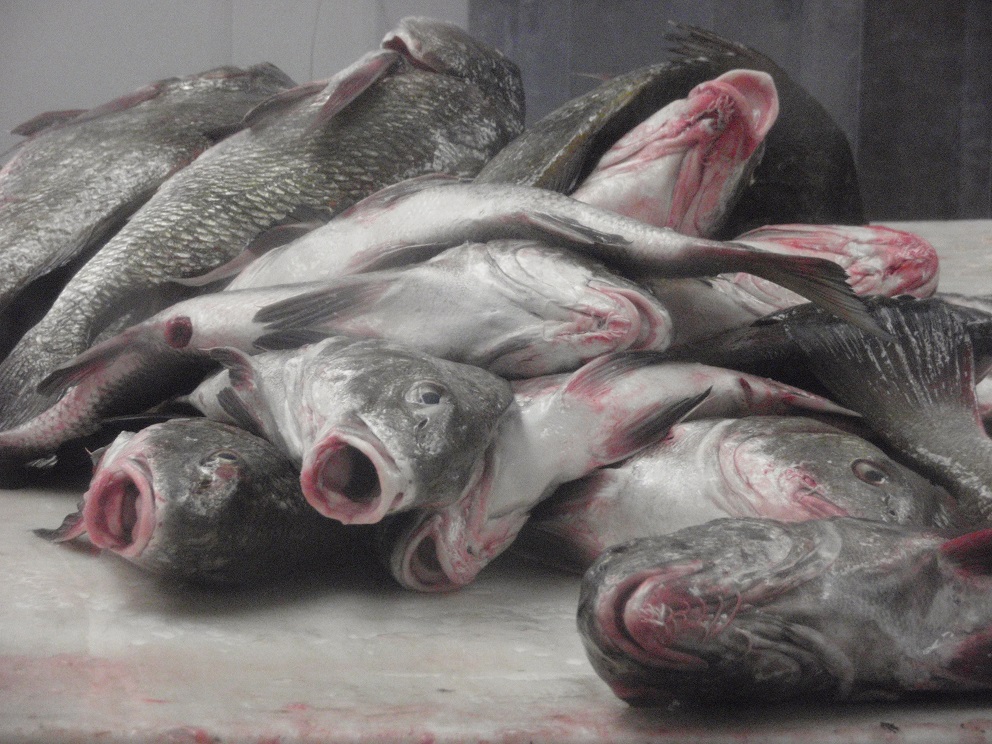
Black drum ready to be filleted or frozen.

Black drum ready to be filleted or frozen.

This is Passport to Texas

Like to fish? Then you should know this Saturday, June fourth, is Free Fishing Day in Texas.

People don’t need a fishing license to fish on that first Saturday in June.

Great news, right? Texas Parks and Wildlife aquatic training specialist, Caleb Harris, says everyone can fish free in state parks with fishing opportunities any day, but Free Fishing Day opens all public waters for your angling pleasure. Harris says when you reel in a fish you intend to keep, there is a humane way to dispatch your catch before it becomes dinner.

Most people say that the kindest way to care for a fish that you want to keep [for dinner] is to put it on ice as fast as possible.

The cold temperature, says Harris, causes the fish’s bodily functions to slow down…way down.

The ice will anesthetize it; it’ll be virtually painless at that cold temperature; the fish will get cold and will slowly pass. So, yeah. If you have a boat, and you have the ability to bring an ice chest, you know—catch the fish—if you intend to keep it, make sure it’s a legal size, and put it right on ice.

When you get the fish home, you’ll want to immediately filet it and either cook it up right away, or freeze it. Find a video on how to filet fish, and a link to information on the best way to freeze fish at passporttotexas.org.

The Sport Fish Restoration program supports our series.

For Texas Parks and Wildlife…I’m Cecilia Nasti

___________________________________


New Catfish Management Plan

Friday, May 27th, 2016
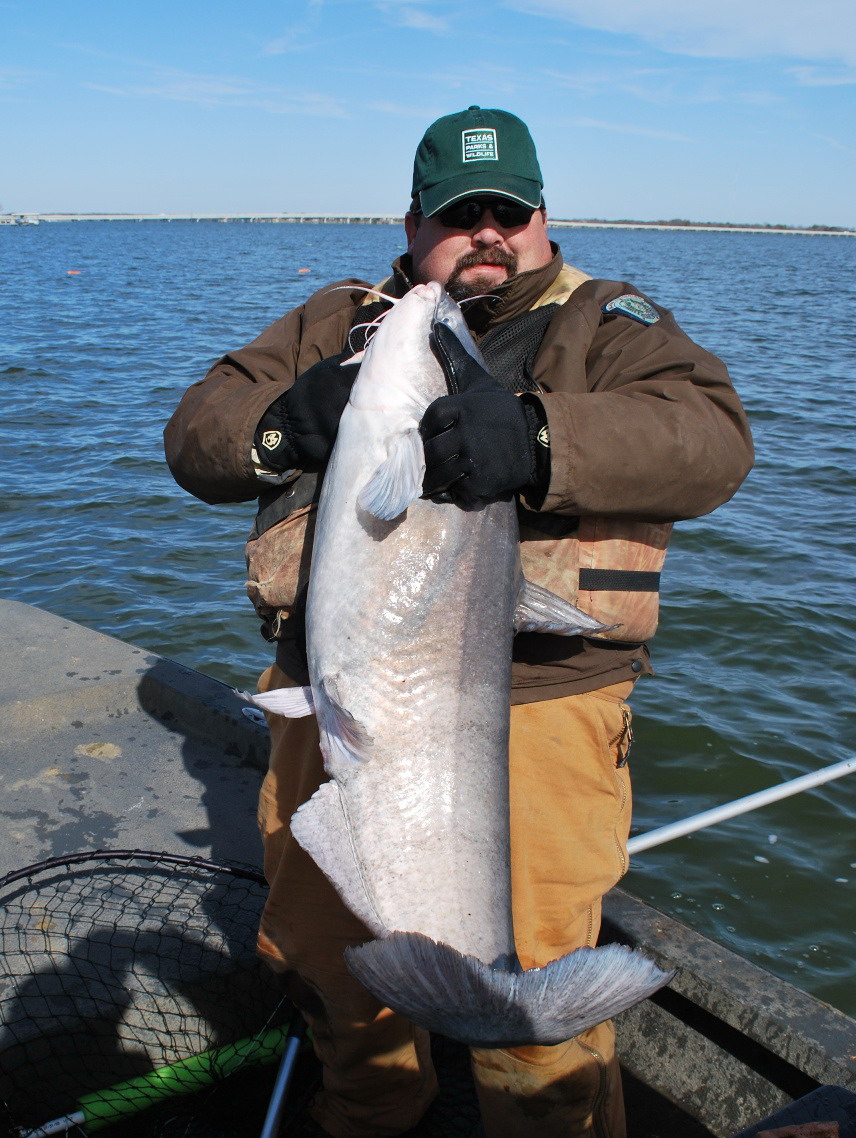
TPWD technician Jeff Bowling holds a 42.5-inch, 39-pound blue catfish caught on a jugline at Richland Chambers Reservoir on December 10, 2009.

TPWD technician Jeff Bowling holds a 42.5-inch, 39-pound blue catfish caught on a jugline at Richland Chambers Reservoir on December 10, 2009.

This is Passport to Texas

Catfish are more adaptable to changing environmental conditions than other game fish, are popular among anglers, and are good eating. For those and other reasons, the Texas Parks and Wildlife Commissioners approved a new Catfish Management Plan earlier this year. Dave Terre.

The first step in this plan was to go to our anglers and ask them what they want for the future of catfish angling in Texas. And we took their opinions and their needs and desires for catfish fishing in the future, and we tried to look to see what we could do with our catfish populations to make fishing better for them.

Terre is chief of fisheries management and research at Texas Parks and Wildlife. Stocking, habitat management, and regulations, are among the tools they’ll use to implement the plan. In addition, he says, they’ll bring fish to the fishermen.

People want good, quality fishing opportunities close to home. So, what we strive to do is to use catfish to create good catfish fishing opportunities on smaller, public water bodies in major metropolitan areas close to where people live in cities. So, look for us [to be] doing more of that in the future.

Find the complete catfish management plan on the Texas Parks and Wildlife website.

All these strategies have been confirmed with our anglers as things tht they want us to do. So, for the next decade or so, this is the direction that we’ll be moving with our catfish program.

The Sport Fish restoration program supports our series.

For Texas Parks and Wildlife, I’m Cecilia Nasti.

White Bass Run = Fishing Fun

Tuesday, March 15th, 2016
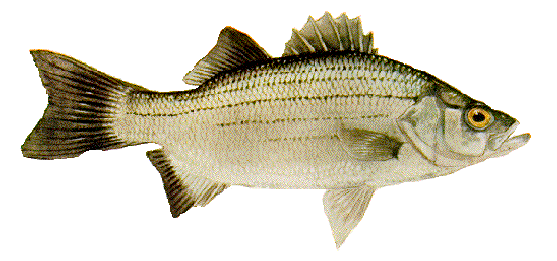
White bass

White bass

This is Passport to Texas

In December and January, while we’re busy with the holidays and staying warm indoors, white bass begin to congregate where rivers and reservoirs meet.

And those fish are getting ready for those environmental cues to happen so they can actually all start migrating and running up river.

Environmental cues like changes in temperature and water flows. Marcos De Jesus is a fisheries biologist. When the time is right, white bass move up river to spawn.

Some of them go up pretty far – as far as they can swim to complete their spawning run. So, they become congregated and create excitement for the anglers, because once they’re congregated they’re really fun to catch.

East and Central Texas offer many white bass fishing opportunities. De Jesus says while they’re active year round, springtime runs practically set up anglers for success.

As we get into the springtime, they congregate towards the mouth of the river waiting for those cues. Right when they’re at the mouth of the river, they’re easy to catch. But, the easiest time to catch them is when they’re running up river spawning in those shallow waters, because you can actually catch them from the bank. Do these fish give you a good fight? Definitely. They’re very great fighters. They become aggressive, and they take on many types of lures and live bait. Once they hook on – they’ll fight pretty hard.

Find out when and where white bass are biting when you log onto the Texas Parks and Wildlife website.

The Sport Fish Restoration program supports our series.

For Texas Parks and Wildlife, I’m Cecilia Nasti.

On the Hunt for Snipe

Monday, February 8th, 2016
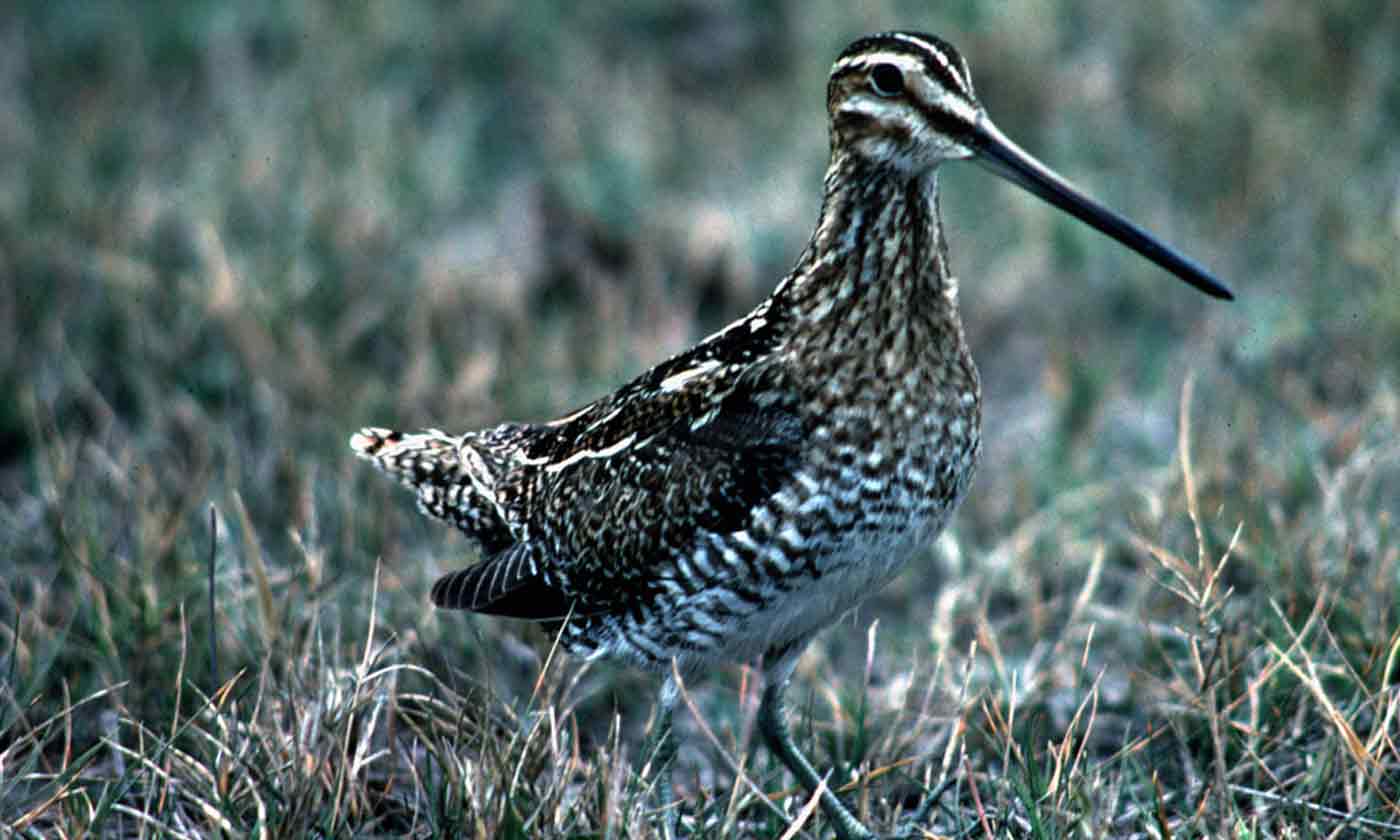
Wilson's Snipe (Common Snipe or Jacksnipe)

Wilson’s Snipe (Common Snipe or Jacksnipe) Photo credit: USFWS


This is Passport to Texas

An invitation to participate in a snipe hunt fills young hearts with anticipation and anxiety. In my youth, snipe hunts were cloaked in mystery; and that’s what made them deliciously terrifying.

Taken at night to a wooded area and outfitted with a burlap bag…a flashlight with weak batteries…and a whistle to call for help… hunters enter the woods alone in search of dreaded snipes. And how would they recognize them? They would know them when they saw them.

Before long, panicked whistles and screams from deep within the woods pierced the silence, as vivid imaginations got the best of the young snipe hunters. Eventually everyone, including the hunter, had a good laugh.

Today we know snipe are small, long billed, brownish shorebirds in the sandpiper family. Their habitat includes freshwater marshes, ponds and flooded fields. They breed across much of North America, but like to spend their winters in the southern states, including Texas.

Snipe are game birds here, and the season to hunt snipe ends on February 14th. So if you want to go snipe hunting, and not be left holding the bag, time is running out.

Learn more about snipe and see an image of this not so terrifying creature when you log onto our web site: passporttotexas.org.

That’s our show for today… Funding provided in part by Ram Trucks. Guts. Glory.

For Texas Parks and Wildlife…I’m Cecilia Nasti.

_________________________________________________________

More about Snipe:

Snipe winter throughout Texas and huntable numbers can be found in suitable habitat. Generally hunting of snipe is in association with waterfowl hunting, but it has the potential of providing more recreational sport hunting days. Most hunters are unaware of the quality hunts provided by this species. Federal harvest surveys estimate a total statewide harvest of 5,000 birds annually.

Can You Eat Snipe?

Of course you can. But, be prepared for how small they are.  Hank Shaw, who curates the blog Hunter*Angler*Gardener*Cook and is author of three game focused cookbooks, including “Duck, Duck, Goose” says: “[Snipe] is a bird with a flavor all out of proportion to its size. As small as it is, one bird makes a great appetizer, and four a hearty meal. They taste like a combination of squab and duck, with something else. Maybe its the wormy things they eat?”

Hank says the smaller the bird, the higher the heat for cooking. His preparation of snipe is simple: He says he sets his oven to the highest setting (most go to 500° F),  greases up the birds with lard or butter, sprinkles them inside and out with salt, and places them in an oven proof pan with a little bit of water  in the bottom of the pan to help keep the snipe moist.

He says he puts the pan with the snip into the oven for about 5 minutes; after which time he removes the birds from the oven and bastes them with more butter or lard, before putting them back in the heat for another 5 to 7 minutes. He removes the birds from the oven, and lets them rest a few minutes before plating them. He says right before serving, give them a good dusting with black pepper and a drizzle of balsamic vinegar.
SB 1978 Will Help Feed Hungry Texans

Thursday, December 17th, 2015
Hunter in Texas

Hunger in Texas is real, and the problem is growing.


This is Passport to Texas

Last legislative session, SB1978 passed into law, which is good news for hungry Texans. Justin Halvorsen, Parks and Wildlife Revenue director explains.

SB 1978 is a legislatively mandated bill that mandates that Parks and Wildlife allow a hunter to opt-in to donate to the Feeding Texas nonprofit, when they purchase a hunting license. And that money would go to that nonprofit, and to their program Hunters for the Hungry.

Halvorsen and Feeding Texas are working out the details of the program, including how much hunters may donate.

This would be at the time of purchase at the very end of the transaction. Either online or through any of our license agents—they will ask would you like to make a donation. It’s almost like when you check out at the super market and they ask if you want to chip in a couple of bucks.

Currently hunters pay a fee to processors when they donate an animal. Processors grind, package and then distribute the meat to local hunger relief agencies. Celia Cole is Executive Director at Feeding Texas.

And right now, typically, when a hunter donates a deer, they pay up to $40 to cover the processing. So, we hope ultimately we’ll have enough revenue to be able to offset some of those costs, which also, I think, will increase the donations.

Last year Texas hunters donated more than 100,000 pounds of healthy, lean venison to Hunters for the Hungry. Learn how to help at feedingtexas.org.

The Wildlife Restoration program supports our series.

For Texas Parks and Wildlife…I’m Cecilia Nasti.