Archive for the 'Habitat' Category

Plant Native Trees Before Spring

Tuesday, February 9th, 2016
by Tree planting photo by woodleywonderworks via Flickr, Creative Commons

by Tree planting photo by woodleywonderworks via Flickr, Creative Commons


This is Passport to Texas

Now is an ideal time to plant trees throughout most of Texas…and you might wonder why.

Two reasons: the two most important constituents in tree planting—the people planting the trees and the trees. It’s just much easier on them.

Scott Harris is a certified arborist in Austin. Tree planting season in Texas started in October and continues through March.

Getting the trees in the ground in the fall [and winter], they have the entire cool season, dormant season, to spread roots out before the big demands on roots and water start in the spring.

Just because a tree will grow in Texas, doesn’t mean it should grow here. Harris advises that we all exercise caution about what we plant in our yards.

The biggest thing to avoid is non-natives. Our natives have all of the features you would want, but they’ve spent thousands and thousands of years getting used to being here, and with all of the wildlife used to having them, too. It’s all a web, and you can’t tell which string you can pull out without upsetting things.

Tomorrow we’ll have a few tree planting tips to help you and your newly planted tree enjoy a long and happy life together

That’s our show…For Texas Parks and Wildlife…I’m Cecilia Nasti.
Land Stewardship at Lavaca Rio Ranch

Monday, November 30th, 2015


This is Passport to Texas

A group of coastal landowners in Jackson County turned their 5,000-acre ranch into what Texas Parks and Wildlife biologist Doug Jobes calls “the pinnacle of what natural resource management should be.”

04—The practices that are taking place on that ranch, I’d put ‘em up against any ranch in the state.

Lavaca Rio Ranch is a 2015 Lone Star Land Steward Regional Award winner for their land management, which Brent Friedrichs oversees.

11—What’s cool about this ranch is you’ve got these big, deep sand hills, and the vegetation is awesome. We’ve got little bluestem, switch grass, gulf coast muhly—which is all good nesting sites for quail.

About 300 acres at Lavaca Rio Ranch is coastal prairie, and support rare plant communities, says Texas Parks and Wildlife botanist Jason Singhurst.

13—They’re high-quality prairies. They have a lot of plant diversity in them. And they have some plants that are very special within the state. Now we’re down to about 150 thousand acres of coastal prairie, and the fact that this ranch has about 300 plus acres of intact prairie is unique.

Know a landowner who’s doing great work preserving their property? Nominate them for a Lone Star Land Steward Award. YOu can find information on the Texas Parks and Wildlife website.

The Wildlife and Sport Fish Restoration Program supports our series.

For Texas Parks and Wildlife…I’m Cecilia Nasti.
TPW TV: The State of Quail

Friday, November 13th, 2015


This is Passport to Texas

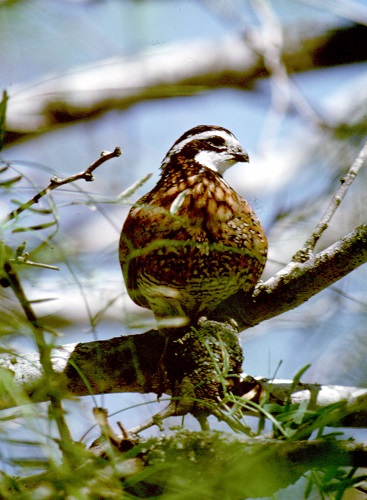
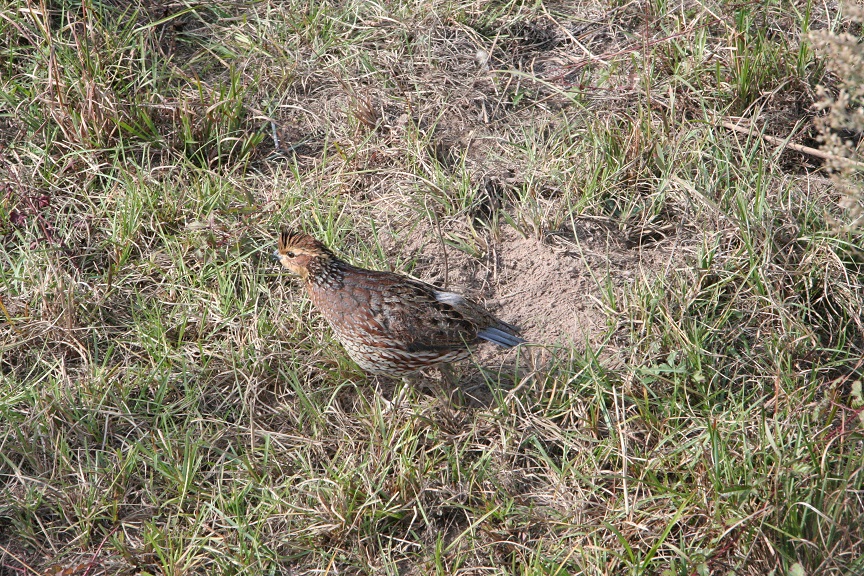
Grassland birds throughout North America, including the bobwhite quail, have been in decline.

06—Over the past 20, 30 years—we’ve seen serious declines across its entire range, including Texas.

Robert Perez is upland game bird program manager for Parks and Wildlife. He and others concerned about this enigmatic species’ survival appear in a segment called The State of Quail on the Texas Parks and Wildlife TV series on PBS.

07— Fundamentally, conservationists agree that the root cause is the changes in the quality and quantity of habitat.

During the segment, airing next week, watch conservation groups and private landowners, like Jim Willis, collaborate to improve habitat for quail, by planting native grasses, which provide shelter, seeds and insects for the birds.

19— This is a sample of a native grass. This plant contributes to the health of the land. This is the way you conserve moisture. Man has come in and ripped out a lot of this native grass and planted what we call improved grasses, which is really not improved, they’re invasive species, like Bermuda grass, and Bahia grass, and they don’t give back to the soil. They take from the soil.

The State of Quail airs the week of November 15 on the Texas Parks and Wildlife TV series on PBS. Check your local listings.

For Texas Parks and Wildlife…I’m Cecilia Nasti.

Quail Going Gangbusters

Thursday, October 15th, 2015
Bobwhite Quail

Bobwhite Quail


This is Passport to Texas

Late winter through early summer rainfall created ideal breeding conditions for quail in most parts of Texas.

14-We’re getting reports from all over from our staff that they’ve not seen this many quail in several years in some places–in other places, in decades. We’re talking about a species that has the potential to boom. And I think in some part of the state that’s what we’re seeing.

Before this, quail were in decline throughout much of the state, says upland game bird program leader, Robert Perez. Currently, large broods of chicks in all age classes dot the landscape.

07-This tells us that the window of opportunity was wide [due to abundant resources], and that when bobwhite hens had a nest failure, they were able to start again.

Perez is quick to point out that drought, alone, is not the cause of quail decline. Habitat loss is another factor.

23-And that’s where Parks and Wildlife has gone to great lengths to work with partners and landowners and wildlife cooperatives to bring quail back. And it’s important to remember that the rangelands of south Texas and the rangelands of the Rolling Plains, up into the Panhandle–quail are there because its big open spaces, and the land use is [mostly] compatible with bobwhite quail. And when the weather is great, we see that response. But, in other parts of the state,
we’ve really lost a lot of the available habitat.

Find information about quail restoration on the Texas Parks and Wildlife website.

The Wildlife and Sport Fish Restoration Program supports our series.

For Texas Parks and Wildlife…I’m Cecilia Nasti.

Quail on the Rebound

Wednesday, October 14th, 2015
Bobwhite quail

Bobwhite quail


This is Passport to Texas

Quail’s short life span makes them vulnerable to extended drought.

07-During dry years there’s just not enough moisture to hatch out eggs, and there aren’t enough insects to really feed chicks and raise a brood.

Robert Perez is upland game bird program leader at Texas Parks and Wildlife.

16-So, they shrink down on the landscape and then they’re waiting on rain. How long do quail live? Their average lifespan is only several months. A better way to look at it is: each year’s crop–everything that’s produced in the summer–by the following spring, anywhere from 70 to 80% will be gone. They will be consumed, basically.

Texas eventually got some rain; the timing of the rainfall was as important the rain itself.

26-Late winter there was enough moisture to produce the forbes: all the plants that quail need to eat during January and February; those were available pretty much everywhere, and that gets those birds into breeding condition. And then as we moved into spring, it continued to rain. There was a flush of vegetation, lots of insects, soil moisture. And it kept raining intermittently: off and on, off and on, off and on–all the way up to about the second week of July for most of the entire state.

And that created a huge window for quail to breed, which, hunters in most areas of the state will notice when the season opens at the end of the month, says Perez.

The Wildlife and Sport Fish Restoration Program Program supports our series.

For Texas Parks and Wildlife…I’m Cecilia Nasti.