Archive for the 'Habitat' Category

TPW TV: Bear Creek Ranch

Friday, May 22nd, 2015

This is Passport to Texas

Just west of Fort Worth, Bear Creek Ranch employs old school grazing practices.

12-What we do here at Bear Creek Ranch is we have a native prairie, and we apply a process of where we take the cattle, and graze them in a way that mimics the way the bison grazed the prairie.

Robert Potts is President of Dixon Water Foundation, which operates the ranch.

06-[MOO] They go where the grass is fresh, they move, and then they don’t come back to the place that they are today for a long time.

This type of management has enhanced wildlife on the ranch. And Texas Parks and Wildlife Wildlife Biologist Nathan Rains says, it is one reason why Bear Creek Ranch is a Lone Star Land Steward Award winner.

18-By allowing rest in these pastures and their unique grazing program you get residual grasses and that provides nesting cover and habitat for species like Bobwhite quail and other grassland birds that are declining.

Texas once had 20 million acres of tall grass prairies; because of development and agricultural uses, less than one percent of the original prairie ecosystem remains.

10-In an area like this, on the periphery of the Dallas Fort Worth Metroplex–in an urbanized environment–it’s really neat and encouraging to see ranches like this that are dedicated to preserving tall grass prairies.

Learn more about Bear Creek Ranch in a segment next week on the PBS Texas Parks and Wildlife TV series. Check your local listings.

For Texas Parks and Wildlife…I’m Cecilia Nasti.
Possum Kingdom Lake After Golden Algae

Tuesday, May 19th, 2015
Possum Kingdom Lake

Possum Kingdom Lake


This is Passport to Texas

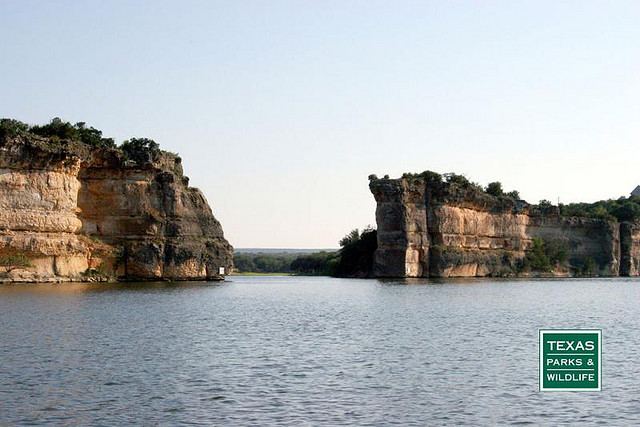
Possum Kingdom Lake, approximately 75 miles west of Fort Worth, had a golden algae problem.

10-Golden algae is an algae that gives off a toxin to fish and inhibits their uptake of oxygen by eating away at their gills.

Fisheries biologist Robert Mauk, out of Wichita Falls, says they first noticed fish kills from the algae in 2001. When that happened, it was monitor and wait.

12- There’s nothing we really can do but wait it out. Luckily at Possum Kingdom, it seems like the intervals between the blooms have been lengthening, and we haven’t had a major fish kill since 2010.

The jury’s still out on what causes golden algae blooms to occur. Meanwhile, according to recently completed gill net surveys by the Wichita Falls Texas Parks and Wildlife fisheries office, fish populations in the reservoir have bounced back since 2010.

19- Since it’s been five years, we have five-year-old–especially striped bass–out there. There are a lot of them up in the 30-inch range. So, we’re starting to see bigger, heavier fish out there. And, for the angler that likes to catch a big, bragging sized trophy–they’re out there now.

Check out fishing conditions and reports for Possum Kingdom on the Texas Parks and Wildlife website.

The Sport Fish Restoration program supports our series, and reminds Texans that Saturday, June 6th, is Free Sport Fishing Day.

For Texas Parks and Wildlife…I’m Cecilia Nasti.
Beating Down Zebra Mussels in Lake Waco

Thursday, May 14th, 2015
Zebra mussels

Zebra mussels

This is Passport to Texas

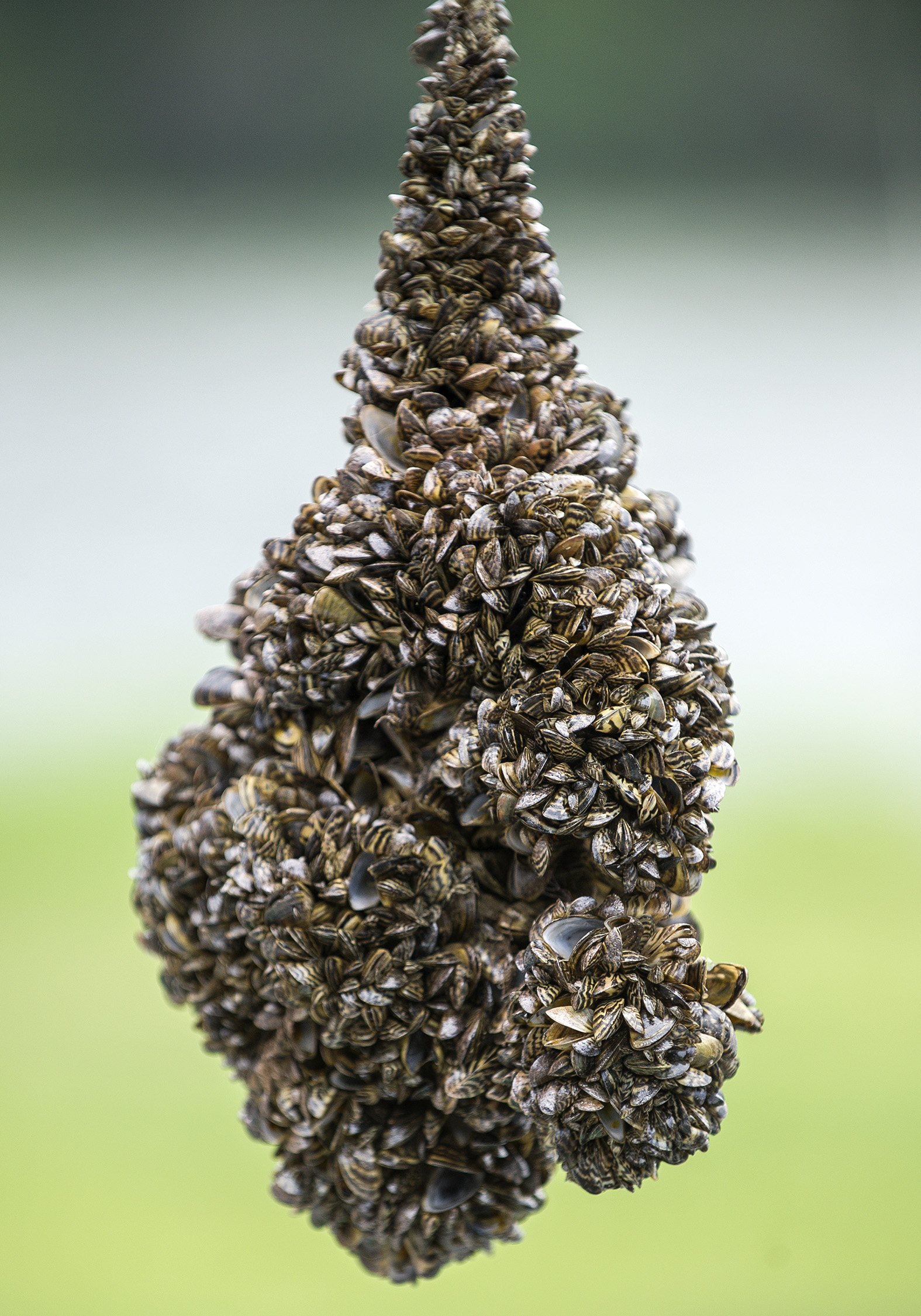
In September 2014, when City of Waco employees found zebra mussels near a boat ramp in Lake Waco, Texas Parks and Wildlife, the City of Waco, and Texas Army Corps of Engineers moved quickly to stop this non-native aquatic invasive in its tracks.

06-The City of Waco ordered up tarps, they hired commercial divers, set the plan, and last fall we put ’em all in place.

Brian Van Zee, Inland Fisheries Regional Director, says there wasn’t time to obtain permits for chemical treatments, so divers and staff positioned the eight thick, rubber tarps on the lake bottom over the infested area to block sunlight and oxygen below.

15- We just recently pulled those tarps from lake Waco, and it was really looking very good; we could tell by the condition of the tarps– underneath them–that we had reached anoxic conditions. You could smell the hydrogen sulfide smell and these black conditions you typically see when you have anoxic conditions.

Although divers found two live zebra mussels on rocks they brought up, Van Zee is optimistic.

14-Maybe we knocked back the number of zebra mussels that were in that area, far enough to where they cannot create a viable, reproducing population. We don’t know if that’s the case or not. We really won’t know probably until this spring or summer, actually; maybe even next fall.

Until then, all partners will continue to monitor the lake and enforce the clean, drain and dry law for all boaters. Learn more on the TPW website.

The Wildlife and Sport Fish Restoration program supports our series. Learn about combating zebra mussels and other aquatic invasives at texasinvasives.org.

For Texas Parks and Wildlife…I’m Cecilia Nasti.
Combating Zebra Mussels in Lake Waco

Wednesday, May 13th, 2015
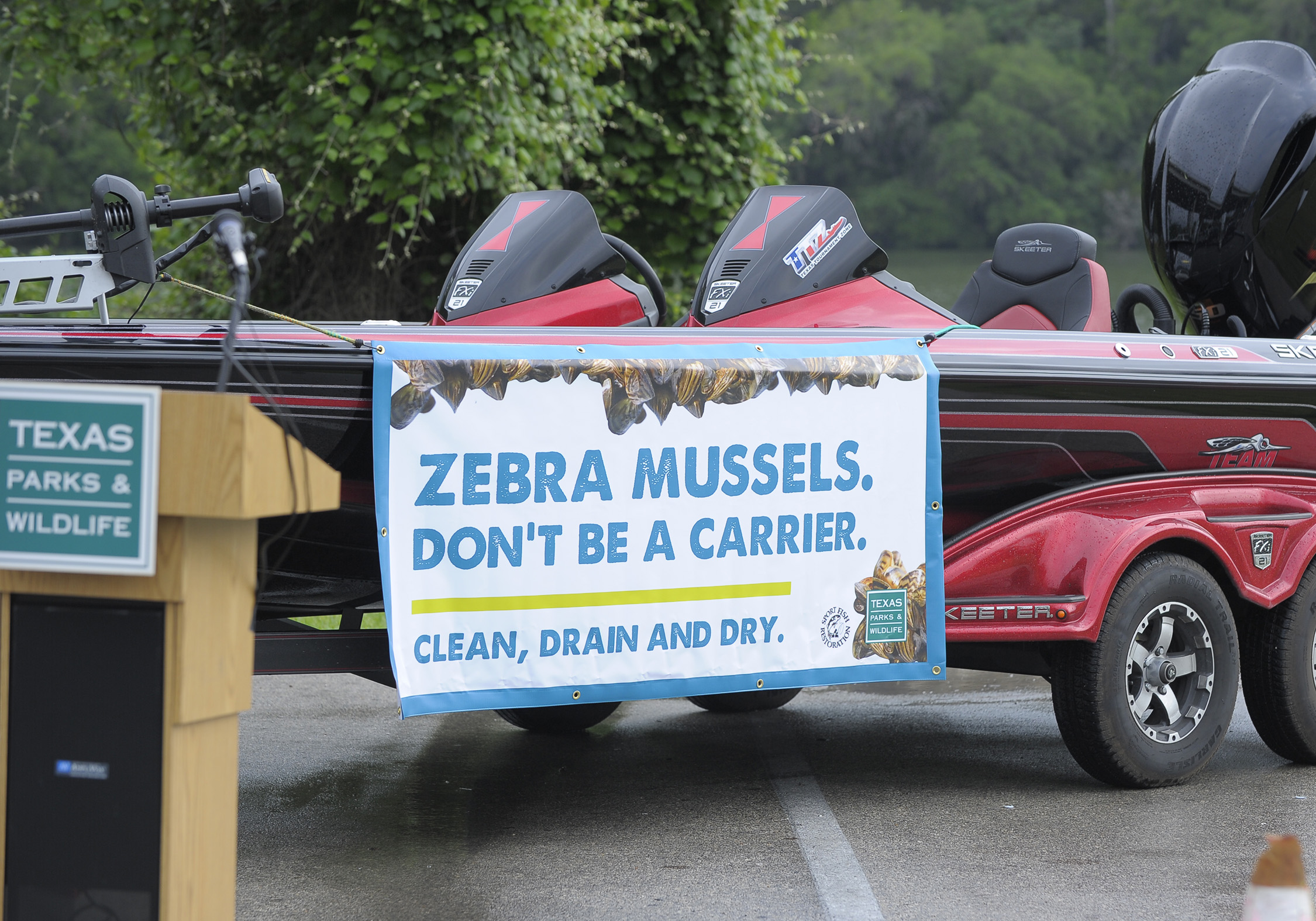
Clean, drain and dry your boats to prevent the spread of zebra mussels.

Clean, drain and dry your boats to prevent the spread of zebra mussels.


This is Passport to Texas

Before zebra mussels appeared in Lake Waco, Texas Parks and Wildlife, the City of Waco and the Army Corps of Engineers worked on ways to prevent an infestation, which involved close monitoring of arriving vessels.

06–They city hired summer interns to conduct boater education and boater surveys and inspections, in an effort to try and prevent the introduction [of zebra mussels] to Lake Waco.

Brian Van Zee, Texas Parks and Wildlife Inland Fisheries Regional Director, says despite their best efforts, in the summer of 2014, a vessel previously in zebra mussel infested Lake Belton evaded their scrutiny and launched in Lake Waco. In September, City of Waco employees found zebra mussels near the boat ramp. And everyone mobilized.

27– [We thought] if we can act quickly, before the water temperature begins cooling down in the fall again, we might be able to get on top of these things. And, we had heard and seen studies where they had used these big, heavy, thick pond liners and covered an area; and you can suffocate them [zebra mussels]. So, we knew that we could get approval from the Corps of Engineers to install those and get that done pretty quickly, So, the City of Waco ordered up the tarps, they hired commercial divers, set the plan, and last fall we put ’em all in place.

Brian Van Zee shares the results of their efforts tomorrow.

The Wildlife and Sport Fish Restoration program supports our series. Get  more information about zebra mussels at texasinvasives.org.

For Texas Parks and Wildlife…I’m Cecilia Nasti.
Zebra Mussels Come to Lake Waco

Tuesday, May 12th, 2015
Zebra Mussels

Zebra Mussels


This is Passport to Texas

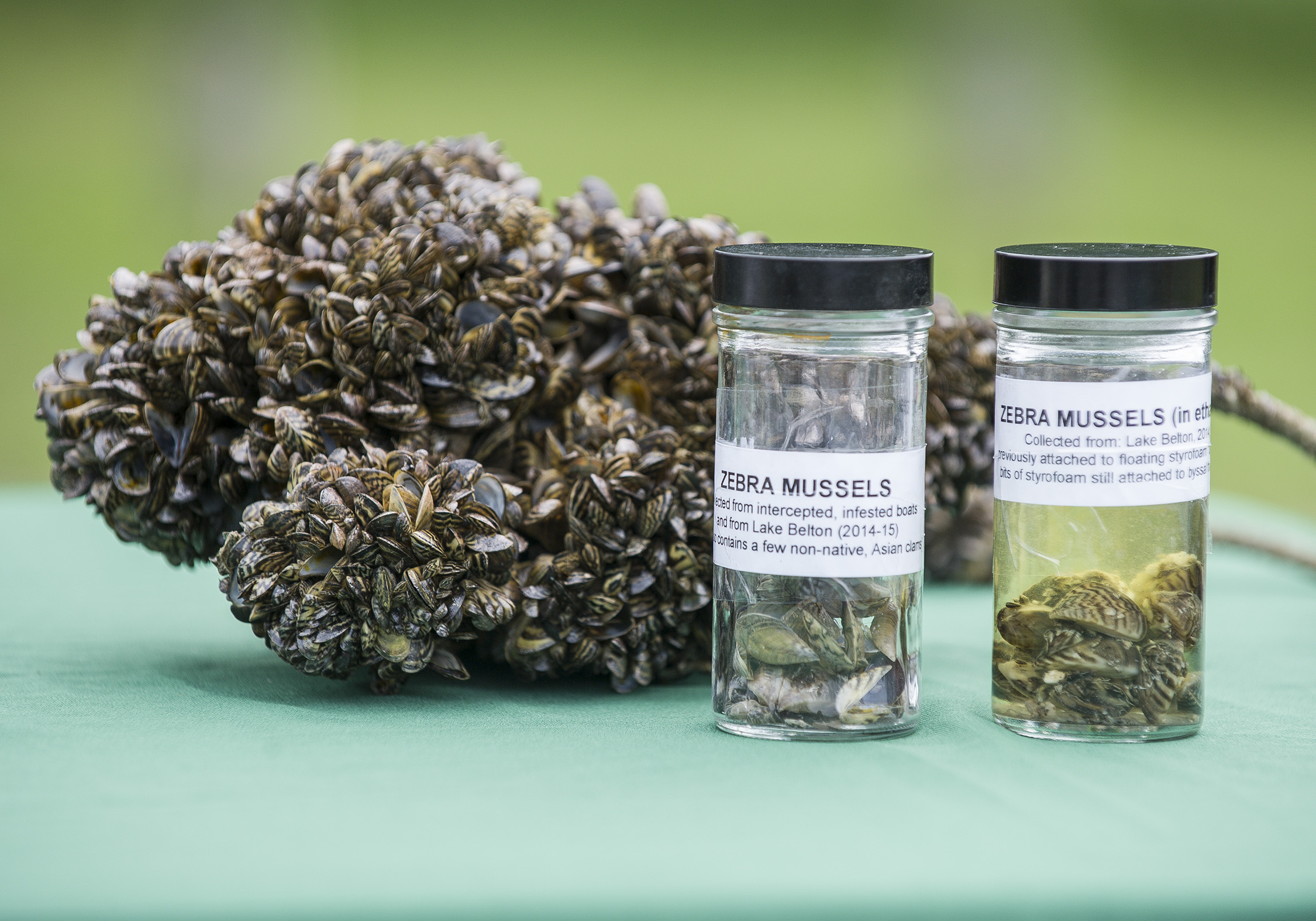
Non-native zebra mussels pose potential ecological and economic damage wherever there’s an infestation. In September 2014, they showed up in Lake Waco.

06-Unfortunately there was a vessel that was launched on Lake Waco last summer; it had come from Lake Belton.

Brian Van Zee, Texas Parks and Wildlife Inland Fisheries Regional Director, says Lake Belton has an established population of zebra mussels; they hitched a ride to Lake Waco on the vessel in question.

15- It was heavily infested with those individuals when they left Lake Belton. They did not inspect it; they did not clean it. So, they launched on Lake Waco and introduced these mussels to the lake.

The zebra mussel larvae are microscopic, which is why it is imperative boaters clean, drain and dry their vessels when going from one water body to the next.

24-Texas Parks and Wildlife department enacted the law last year requiring boaters–anytime they leave or approach a freshwater lake or river system in the state–their boats have to be dry. And that’s all aimed at preventing the spread of these microscopic organisms. So, take those three simple steps of clean, drain, dry; it doesn’t take long. It’s very simple to do. It’s better for your boat in terms of maintenance, anyway; so go ahead and do it.

What Texas Parks and Wildlife, the City of Waco and Army Corps of Engineers is doing to combat zebra mussels in Lake Waco–that’s tomorrow. Learn more about zebra mussels at www.texasinvasives.org.

The Sport Fish Restoration program supports our series.

For Texas Parks and Wildlife–I’m Cecilia Nasti.
