Archive for the 'Habitat' Category

Monarch Week: Monitoring Milkweeds

Wednesday, January 7th, 2015
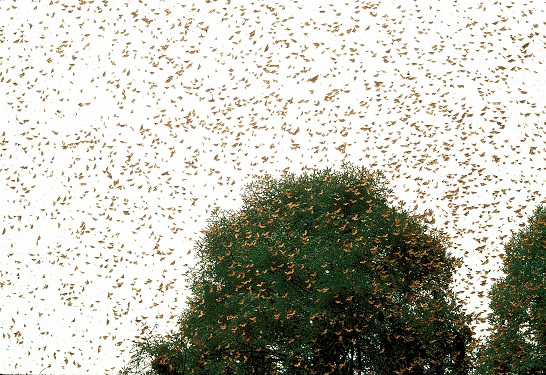
 

Monarchs at their overwintering site in Mexico.

Monarchs at their overwintering site in Mexico.


This is Passport to Texas

You’ll document milkweed species as a volunteer with the Texas Milkweeds and Monarch Citizen Science project.

07— What this project is addressing is, this widespread decline in availability in milkweed plants.

Monarch butterflies, also in decline, depend on these plants, says Ben Hutchins, Texas Parks and Wildlife’s invertebrate biologist.

12— There are a couple of different genera; these genera are used by monarch caterpillars. And those caterpillars only feed on these milkweed species.

No matter where you live in Texas, you’ll find milkweeds; when you do, share your observations at iNaturalist.org.

31— Wherever you happen to see a milkweed, we ask that you take your phone or take a camera, and snap a picture. When you upload that picture, then, onto the website, there are a couple of questions that we have: where were you, when did you make this observation, was it out in a park or was it in a garden, and also – how many were there? Just a rough estimate. And finally, did you notice any monarchs using that plant. Make the observation whenever you see the plant; but, if there are monarchs using it, we would be interested to know that.

Find a milkweed identification guide on the Texas Parks and Wildlife website. Tomorrow – questions researchers hope this project answers.

For Texas Parks and Wildlife…I’m Cecilia Nasti.
TPW TV: Sinking the Kinta

Friday, December 26th, 2014

This is Passport to Texas

The Gulf of Mexico has a lot going for it; but one thing it lacks is substrate. Substrate is hard material on which an organism can live and grow. That’s where this guy comes in.

05—[I’m] Dale Shivley; I’m the program leader for the artificial reef program for Texas Parks and Wildlife

Travel to the gulf with Shively and his crew this week on the TPW TV Series, as they “near shore” reef a 155 foot decommissioned freighter called the Kinta in 77 feet of water 8 miles off the coast of Corpus Christi.

13—Basically, what we have is a huge piece of metal that will benefit the local environment. Marine organisms will begin to grow on it; fish will be attracted to it immediately; it’s been cleaned of environmental hazards and is ready to go. [ambience]

On this TV segment, witness the hulking ship begin its new life on the gulf floor, where it will improve angling and diving opportunities. Brooke Shipley-Lozano, a marine biologist with Parks and Wildlife was at the reefing, and explains what will happen to the freighter.

19— So, the water will start coming in at the stern. And then gradually the water will fill up the ballast tanks one by one from the stern to the fore, and the rear of the ship should h it the bottom, and then eventually the bow will follow suit, and it will land perfectly upright and everyone will celebrate…

Will there be celebrating? Find when you watch the segment Sinking the Kinta S the week of December 28 on the TPW PBS TV Series. Check your local listings.

The Wildlife and Sport Fish Restoration program supports our series.

For Texas Parks and Wildlife…I’m Cecilia Nasti.
Hunt | Habitat: Texas Big Game Awards

Wednesday, December 10th, 2014


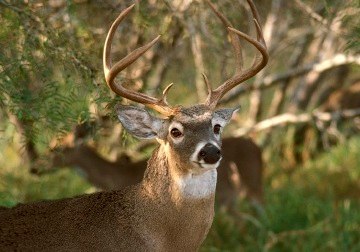
Big Buck at Choke Canyon State Park

Big Buck at Choke Canyon State Park


This is Passport to Texas

Texas Big Game Awards started in 1991 as a partnership between the Texas Wildlife Association and Texas Parks and Wildlife as a means to document the native big game resources we have in the state.

05—And also, to celebrate our hunting heritage and recognize young and new hunters.

Justin Dreibelbis is Hunting Heritage Program Director at the Texas Wildlife Association.

12— We have scored entries that have to meet a certain scoring criteria for that particular region. And then we also have unscored categories which are our youth division and our first harvest division.

Texas Big Game Awards recognizes white-tailed and mule deer, pronghorn antelope, Desert Bighorn Sheep and… this was a surprise… javelina.

08—At this point it’s still kind of a well-kept secret. But it’s something that we do want to publicize that javelinas are actually able to be scored and entered into TBGA, too.

The awards showcase quality big game in Texas, and prove thoughtful land management can produce big healthy game animals, especially deer, anywhere. And, Justin says that makes landowners take notice.

19—It kind of opens up people’s eyes to going, hey, you know what – we’ve never grown any big deer around here before, but it’s possible. And that’s something we’re constantly telling people: if you let a deer get old enough, and you manage the habitat so that it has plenty of groceries at every point during its life, you have the ability to grow a big deer anywhere in the state.

More on the Texas Big Game Awards tomorrow. That’s our show… with support from the Wildlife and Sport Fish Restoration Program. For Texas Parks and Wildlife…I’m Cecilia Nasti.

Hunt | Habitat: Texas Wildlife Association

Tuesday, December 9th, 2014


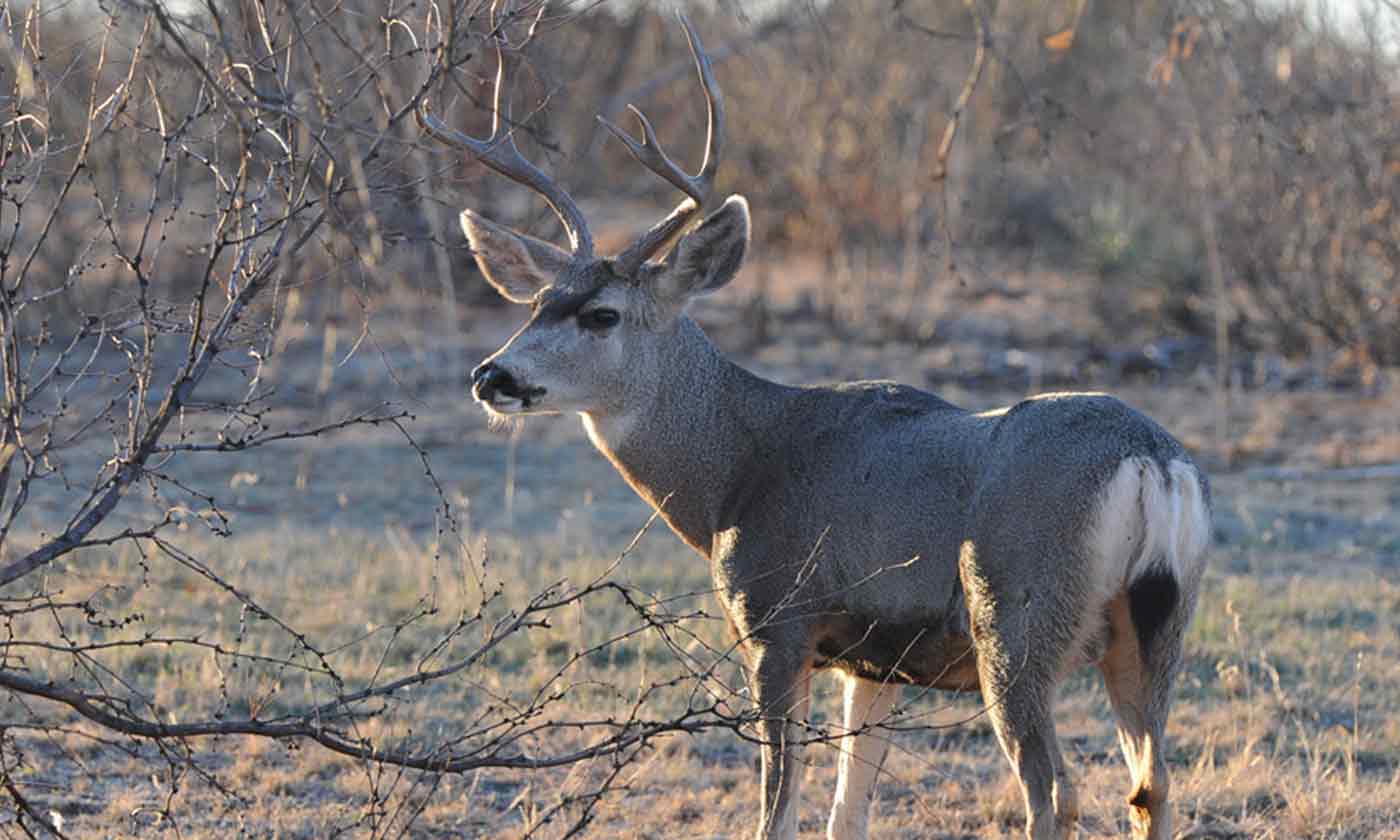
Texas Mule Deer

Texas Mule Deer


This is Passport to Texas

Healthy habitat means healthy wildlife. The non-profit Texas Wildlife Association – a TPWD partner – ensures both by empowering private landowners to embrace good land management practices.

15—With private land, making up, upwards of 95 percent of the land in Texas, [landowners] they’re the ones making the real decisions that affect all the people that live in our state. And, so, we need to give them the tools and resources they need to make wise use of the land that they’re the stewards of.

Justin Dreibelbis is Hunting Heritage Program Director at TWA. The organization documents the result of good land management practices through its annual Texas Big Game Awards Program, which proves quality bucks, for example, are not the sole domain of South Texas.

13—Our Texas Big Game Awards has helped us document those exceptional big game harvests around the state; we’ve been doing it since 1991 as a record-keeping program for the state, identifying those exceptional big game animals that are taken each year.

He says TWA reviews this large dataset and the variables associated with producing exceptional big game animals.

08— And so that data set allows Parks and Wildlife to go back and look at trends with rainfall and land use and make large-scale management decisions around the state.

That’s our show… with support from the Wildlife and Sport Fish Restoration Program.

For Texas Parks and Wildlife…I’m Cecilia Nasti.