Archive for the 'Conservation' Category

Monarch Malaise

Wednesday, October 5th, 2016
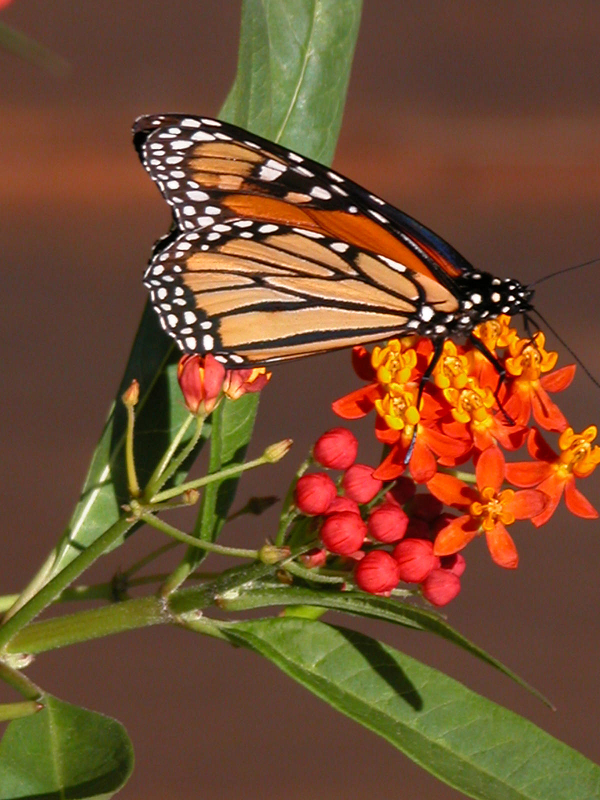
Monarch on milkweed.

Monarch on milkweed.

This is Passport to Texas

Habitat loss along its migration route may be one reason the Monarch butterfly is in decline. While feeding on nectar, Monarchs pollinate wildflowers along their route, which benefits our ecosystem.

There are two primary ways that habitat supports pollinators.

Johnnie Smith is Texas Parks and Wildlife Conservation Education Manager.

And one is, the adult pollinators oftentimes feed on nectar of flowers. So, flowering plants that are a food source for the pollinator is very important. But also, is the food source that the pollinator’s larvae rely on as they’re growing up and becoming an adult. And so, that is just as important as the flowering plants that support the adults.

For Monarchs, native milkweed is an important plant. By cultivating them in our yards, along with other nectar and larval plants, we can all play a part in their survival.

There is no effort that is too small to be counted worthy. And there’s no spot of land that is too small to contain pollinator habitat. So, we really want to empower everybody—that they can make a difference. Right where you stand. Right where you live—you can create pollinator habitat, and help turn around this negative trend with the monarchs.

Tomorrow: the Pollinator Bioblitz, an event to build awareness to help all pollinators.

The Wildlife Restoration program supports our series.

For Texas Parks and Wildlife…I’m Cecilia Nasti.
TPW TV – Pecos Pupfish

Friday, September 23rd, 2016
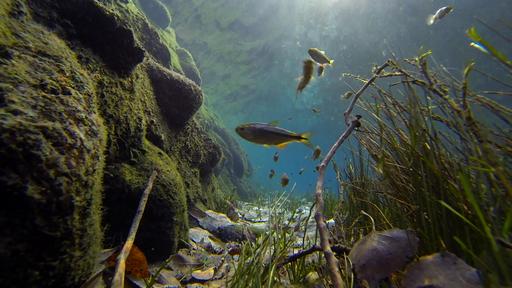
Pecos pupfish

Pecos pupfish

This is Passport to Texas

In the unforgiving terrain of Far West Texas lies the Trans Pecos. Much of the aquatic life that’s adapted to survive in the waters of this harsh Chihuahuan Desert Region are found only here.

Because of lack of water and loss of habitat we have a lot of fish in West Texas that are threatened.

Such as the Pecos pupfish. Fisheries biologist, Ken Saunders works in West Texas monitoring the species.

So we have about three miles left of creek left in the whole state of Texas that has the Pecos pupfish in it. So we are going to be taking DNA samples and shortly we’ll be able to know whether we still have that fish here or not.

We join Saunders as he evaluates Pecos Pupfish during an upcoming segment of the Texas Parks and Wildlife TV Series on PBS.

The science we are doing is really important because it gives us an idea of how the population of fish are doing. Are they declining? We wouldn’t know that if we didn’t come out here quarterly, throughout the year to monitor the population.

The Pecos pupfish is just one fish…in one area…of one desert. Why does it deserve our attention?

It’s part of the natural system, and every time we lose part of our natural system we lose part of us. It’s our world, if we don’t take care of it what are we going to have left….

View the segment on the Pecos Pupfish on the Texas Parks and Wildlife TV series on PBS the week of September 25. The Wildlife and Sport Fish Restoration program supports our series.

For Texas Parks and Wildlife…I’m Cecilia Nasti.
John Graves Legacy Society

Thursday, September 22nd, 2016
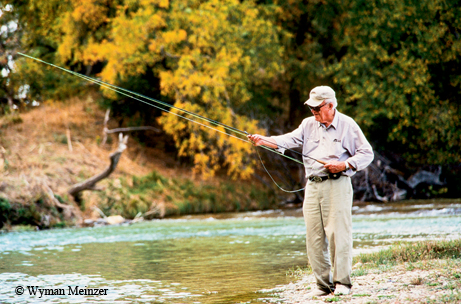
John Graves checking fly rod on the Llano River.

John Graves checking fly rod on the Llano River.

This is Passport to Texas

Planned gifts to Texas Parks and Wildlife Foundation from people who love of Texas will help to ensure the future of our natural and cultural resources for generations to come.

The people that approach us about planned gifts, have such strong feelings towards the mission, and love the idea that they can leave a wild legacy through a gift to the Parks and Wildlife Foundation after they’re gone.

Merrill Gregg, Director of Legacy Giving, says Texas Parks and Wildlife magazine’s October issue has more information about Legacy Giving.

As well as an insert where people can fill in their contact information and send it back to the Foundation. We’ll reach out with additional information on the different types of planned gifts that might be appropriate for you.

Individuals who make planned gifts are remembered via the newly formed John Graves Legacy Society.

And this society is named after John Graves, who was a beloved writer. His book Good-bye to a River, is celebrated by conservationists as raising awareness about the critical need to protect Texas’ natural resources. So, we thought naming our Legacy Society after someone who had left such an incredible legacy on conservation would be a wonderful tribute to him, and also inspire others to embrace that same conservation ethic.

Find a link to more information about Texas Parks and Wildlife Foundation’s planned giving program at passporttotexas.org.

For Texas Parks and Wildlife…I’m Cecilia Nasti.
Leave a Wild Legacy for Texas

Wednesday, September 21st, 2016
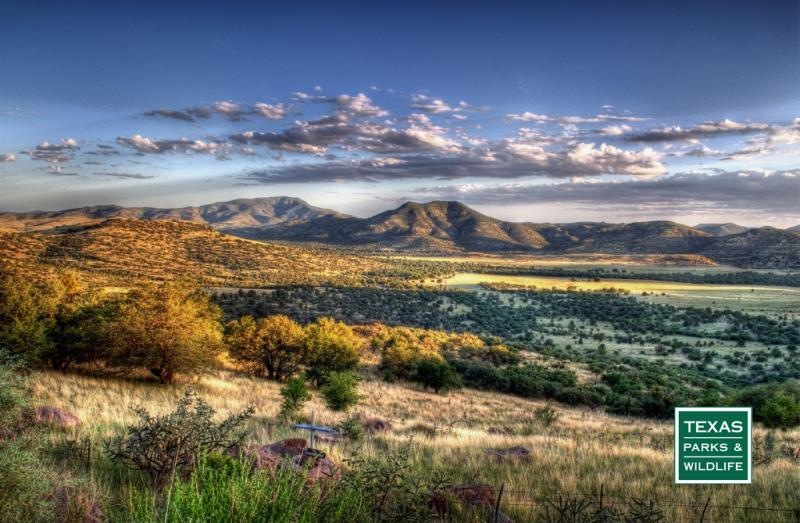
Davis Mountains State Park

Davis Mountains State Park

This is Passport to Texas

To ensure Texas’ beloved wild places and wild things exists beyond their lifetime, some people make planned financial gifts.

Planned gifts are gifts that an individual can make in their will or estate plan.

Merrill Gregg, Director of Legacy Giving at Texas Parks and Wildlife Foundation, says the foundation raises private funds to support Texas Parks and Wildlife Department’s mission.

We’ve been the recipient of planned gifts that we hadn’t necessarily known about in advance. And it made us realized that, we needed to make our mission more known to people—that they could leave gifts to us in their will or estate plan after they’re gone.

A bequest—a few lines in a will or estate plan that sets aside a cash amount—is the most common gift form, yet there’s no single template for planned giving.

There are also ways in which you can gift life insurance assets, retirement assets; you can give a gift of real estate. You can even leave personal property to the foundation after you’re gone. So, it doesn’t necessarily need to be a cash bequest, or a gift of securities. There are many different ways in which your assets could be used to benefit the mission of the foundation through a planned gift.

We have a link to more information about Texas Parks and Wildlife Foundation’s planned giving program at passporttotexas.org.

For Texas Parks and Wildlife…I’m Cecilia Nasti.
Flowers, Boxes, and Bees. Oh My!

Monday, August 29th, 2016
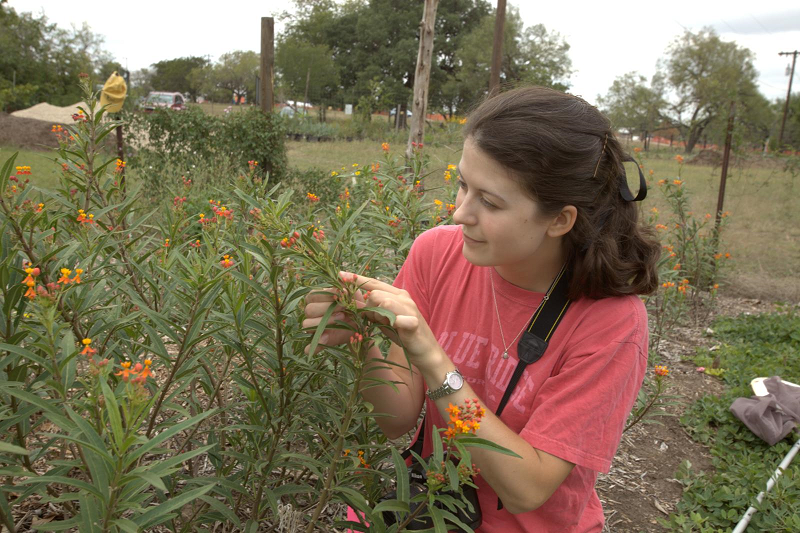
Looking for pollinators on backyard flowering plants.

Looking for pollinators on backyard flowering plants.

This is Passport to Texas

Texas Parks and Wildlife developed a new protocol that addresses land management for pollinators. While the protocols focus on acreage, urban dwellers can still manage for these species in their backyards.

One of the biggest things that urban residents can do is simply plant more good quality flowering plants.

Michael Warriner is non-game and rare species program leader for Texas Parks and Wildlife. He says native plants are best, but noninvasive nonnatives are also useful. He adds that if you’re serious about helping pollinators—scale back your lawn.

And having more flowering plants. Also, another thing is offering nest sites. And especially with our native solitary bees that nest in dead wood, urban folks can put up native bee nesting blocks.

If you’re worried about putting up nesting boxes because of the close proximity it puts you to bees—don’t.

Because solitary bees don’t defend their nest sites, you don’t have to worry about these bees flying out and defending their nests and getting stung. Let’s say like honeybee colonies do. Or, paper wasps. You know, insects that are social.

By planting more flowering species in your landscape, and by hanging bee nesting boxes in your public outdoor spaces, you are not only providing food, shelter and breeding sites for important pollinators, you’re also creating a more beautiful setting for yourself. Win-win.

That’s our Show…Funding provided in part by Ram Trucks. Guts. Glory. Ram

For Texas Parks and Wildlife…I’m Cecilia Nasti.

NOTE: October 7 – 16, 2016 participate in the Texas Pollinator BioBlitz. Learn more when you click here.