Archive for the 'Conservation' Category

TPW TV – Betting on Butterflies

Friday, August 26th, 2016
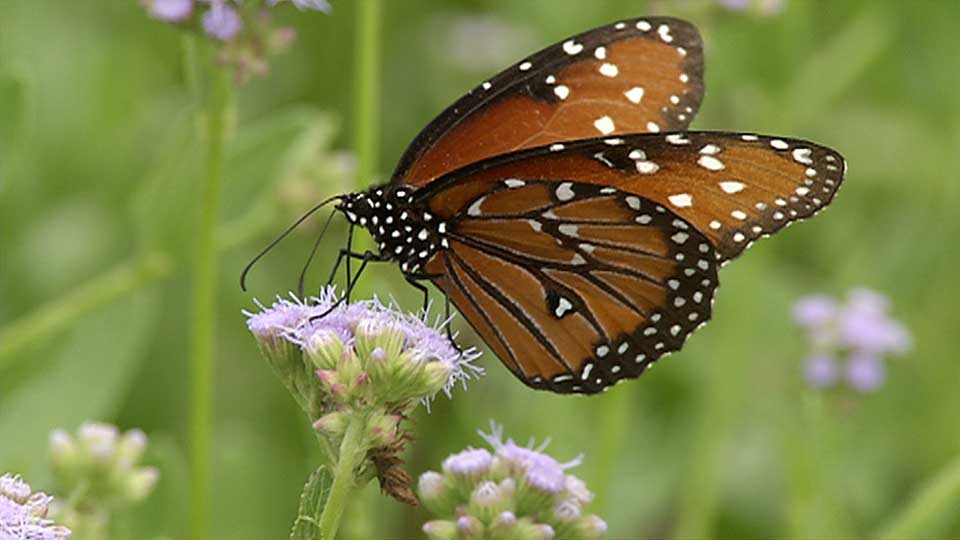
One of the many butterfly species you'll find in the Texas Rio Grande Valley

One of the many butterfly species you’ll find in the Texas Rio Grande Valley


This is Passport to Texas

A diverse array of wildlife viewing opportunities can be had in Texas. Especially in the Rio Grande Valley, where visitors—like David Dauphin—travel to see butterflies.

You can see more species of butterflies than anywhere else in the United States. It’s just another aspect of the wildlife watching that’s so fantastic in the valley.

During the week of August 28, the Texas Parks and Wildlife TV Series on PBS airs a segment called Betting on Butterflies, which looks at this relatively recent wildlife viewing obsession.

Butterfly field guides didn’t really start coming out until the mid-90s, I guess. And like birding, you eventually start checking them off a list, and that sort of thing. Butterfliers are really birders that have gone over to the dark side. It’s just a progression.

Many people visit the valley to add new butterfly species to their list, yet, locals, like Kay Cunningham, find joy in an old favorite—the monarch—during its fall migration.

It’s always a big thrill when they start coming in. This part of Texas is kind of plain. But, there is a beauty in this country that you have to be patient and wait for. And the monarch are one of those.

Immerse yourself in the beauty of butterflies the week of August 28 with the Texas Parks and Wildlife TV Series on PBS, Check your local listings.

For Texas Parks and Wildlife…I’m Cecilia Nasti.
Milkweed for Monarchs

Thursday, August 25th, 2016
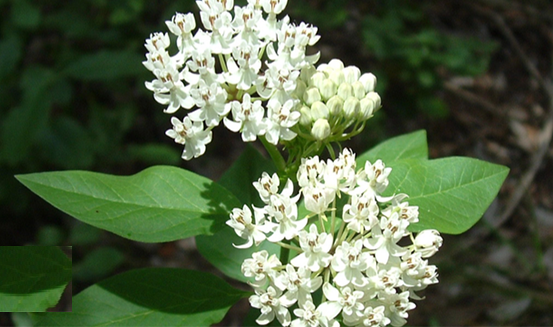
Milkweed for monarchs

Milkweed for monarchs

This is Passport to Texas

More than seventy species of milkweed have been recorded nationwide; over half of those are native to Texas. Including two that are endemic.

These are species that are found nowhere else but within the Texas border. One of them is called Texas Milkweed, which is found in canyons in Central Texas. And then we have a species called Coastal Milkweed that occurs roughly from the Houston area to just north of Brownsville.

Jason Singhurst, a botanist with Texas Parks and Wildlife, says milkweeds provide sustenance to the iconic monarch butterfly during its migration.

So, here in Texas, we know certain species like green milkweed, antelope horns, broadleaf milkweed, and zizotes are some of our most abundant species that we’re seeing monarch larvae and adults visit.

Because milkweed species vary, do monarchs use each species in the same or different ways?

That’s a really good question. That’s something we’re trying to figure out in Texas. And that’s why we started this mapping project called Texas Milkweeds and Monarchs project—using iNaturalist. It’s an app that you can download on your smartphone. We’re using that project to help us identify different species of milkweeds across the state, and then also which species that larvae, or adult monarch butterflies are visiting.

Find a link to the Milkweeds and Monarchs project on iNaturalist at passporttotexas.org.

Find an article about milkweeds by Jason Singhurst in the August/September issue of Texas Parks and Wildlife Magazine.

The Wildlife Restoration program supports our series.

For Texas Parks and Wildlife…I’m Cecilia Nasti.
Save Birds, Save the World

Thursday, August 4th, 2016
Birding in Texas

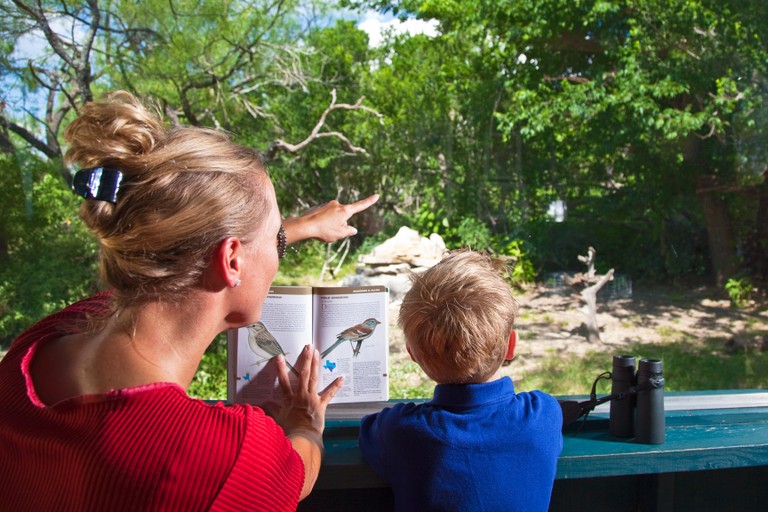
Birds and humans need the same things to live; spend time getting to know them.

This is Passport to Texas

The Convention for the Protection of Migratory Birds, signed in 1916, between the US and Great Britain–which signed for Canada–paved the way for conservation of all migratory birds.

All birds out there, except our upland game birds are covered underneath this act and this convention. It includes songbirds, doves, ducks, cranes… And it includes nearly all the birds that you see on the landscape.

Shaun Oldenburger is a migratory game bird biologist with Parks and Wildlife. Grassroots conservation efforts have been ongoing since the 19th century, but it wasn’t until the Convention, also known as the Migratory Bird Act, that meaningful protections were put into place.

A lot of these laws came forth in the 20th Century, but these ideas have been around a long time. A lot of folks now are engaged in bird conservation; it’s more out there. It’s more, say, in your face. But there are a lot of groups out there doing a lot of good work. And a lot of this is spawned from 100 years ago from this convention.

Oldenburger says birds enrich our lives. We share the planet with them, and as such, we also share that which makes life possible.

We depend on water. We depend on air. We depend on resources. The same as birds. So, if folks start thinking about walking out of their house in the morning and hear birds calling–they can make that connection: we are all here, we’re all depending on the same things, and birds play an integral part of our world.

The Wildlife Restoration program supports our series.

For Texas Parks and Wildlife…I’m Cecilia Nasti.
TPW TV – Owls Underground

Friday, July 29th, 2016
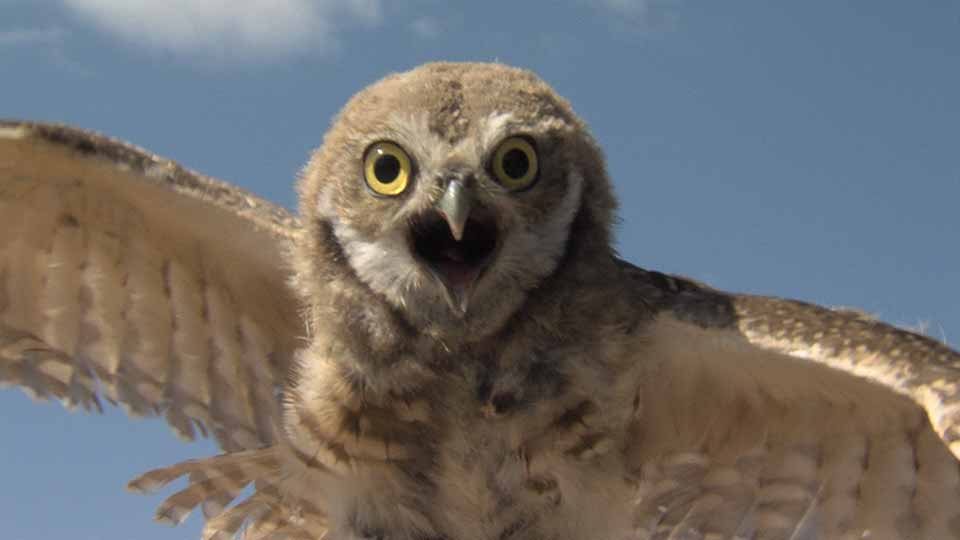
Burrowing Owl

Hey! Outta my burrow, you skunk!

This is Passport to Texas

Birds don’t get much cuter than the burrowing owl. And you won’t have to stay up past your bedtime to see one.

One of the great things about these owls is [unlike most owls] they’re out during the day; they’re active day and night.

The week of July 31, get to know this small sandy colored owl with long legs during a segment of the Texas Parks and Wildlife TV series on PBS. Alan Fisher produced a story that looks at how this species, threatened and endangered in some part of North America, survives its dwindling habitat in El Paso.

So, they’re a species of concern here because of habitat loss. Burrowing owls don’t tend to dig their own burrows from scratch. They will occupy burrows left from prairie dogs or ground squirrels or other burrowing animals. So, as those animals get pushed out burrowing owls lose their habitat as well.

Fisher also talks with Texas Parks and Wildlife biologist Lois Balin, who creates artificial owl nest borrows fitted with video surveillance systems.

Having the cameras underground, gives the biologists a lot of new tools. It’s pretty awesome.

Not surprisingly, says Fisher, the cameras are revealing much about the hidden lives of burrowing owls, from the number of eggs and nestlings, to prey items, and even visitors.

The skunk discovery is the rather astonishing discovery. Skunks are going into the burrows and occupying them, and in some cases preying on the owls.

To find out how the burrowing owls fare, tune into the Texas Parks and Wildlife TV series on PBS the week of July 31. Check your local listings.

For Texas Parks and Wildlife, I’m Cecilia Nasti.

Preserving Riparian Zones

Friday, July 22nd, 2016
Devil's River

Devil’s River State Natural Area.
TPW Photo by Earl Nottingham

This is Passport to Texas

Recent statewide flooding events beat up native vegetation in riparian zones, leaving behind tangles of uprooted trees and shrubs. Landowners’ first instinct is to clean up the mess, but is that the best action to take?

One of the most important and critical components of a riparian area is fallen vegetation.

Ryan McGillicuddy is a Texas Parks and Wildlife conservation ecologist.

As fallen wood—woody debris—start to decompose, they add nutrients to the soil. They act as fish and wildlife habitat. They act as cages that protect new plants. The next generation of trees. The next generation of grasses. It provides a little refuge for those plants to get started before they’re browsed on by wildlife or they’re trampled by foot traffic.

Despite the unsightly nature of this vagrant vegetation, McGillicuddy says it is a critical component of a healthy functioning riparian area. Provided it’s not creating a safety risk, he says to consider leaving it where it is.

Another thing it does is as flood waters do rise up and spill out of their banks, that wood can help slow some of that water down, and help capture sediment. And, when the sediment falls out of the water, it’s actually building the structure of the banks. Adding sediment and new layers of soil, as opposed to it being washed away when there’s not a diversity of species for something like a mowed lawn. Or an area that’s been over-grazed.

Texas Parks and Wildlife has worked with landowners along the flood ravaged Blanco River to revegetate with native plants.

The Wildlife and Sport Fish Restoration program supports our series.

For Texas Parks and Wildlife, I’m Cecilia Nasti.