Archive for the 'Conservation' Category

Before Summer Ends, Take the Family Camping

Wednesday, July 22nd, 2015
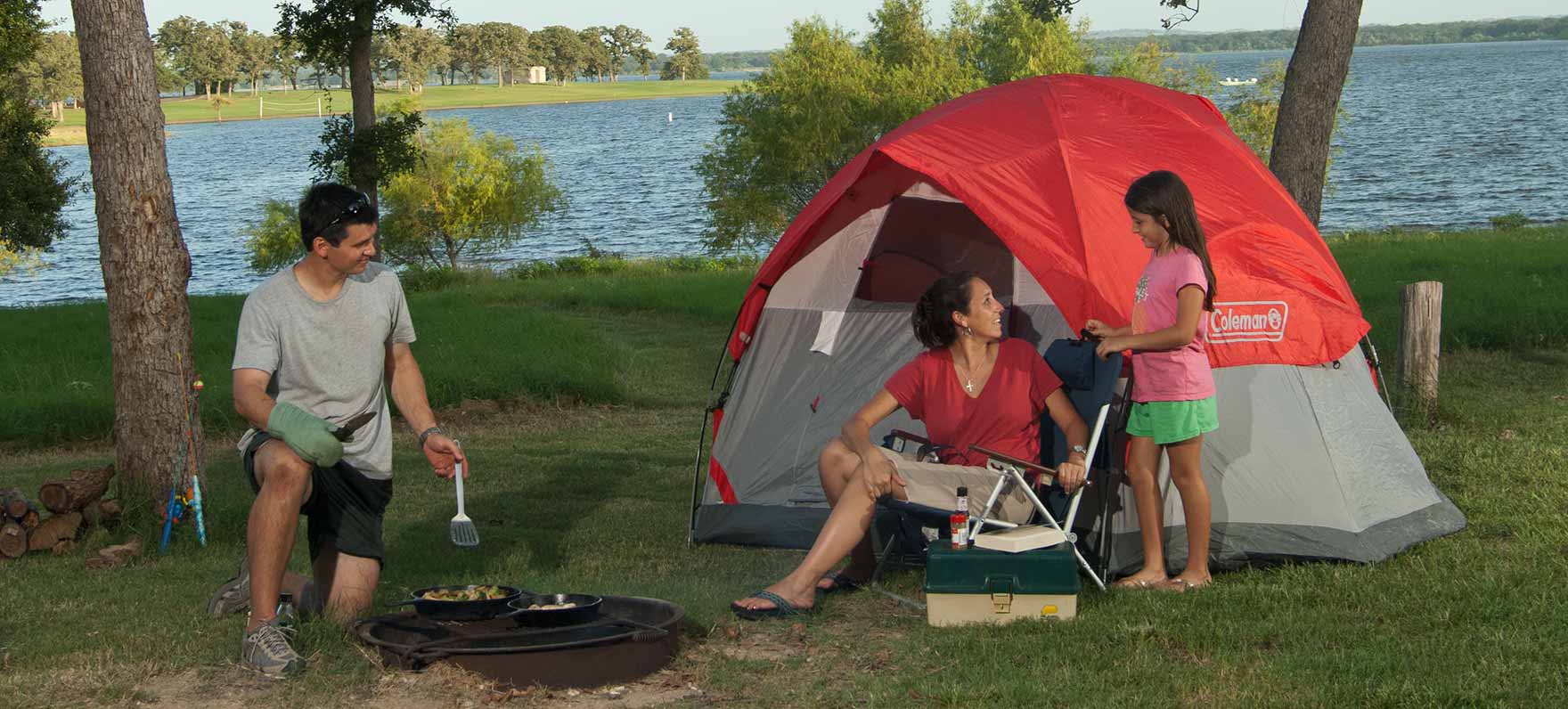
A family camp out at lake Somerville State Park and Trailway.

A family camp out at lake Somerville State Park and Trailway.


This is Passport to Texas

It seems summer just got rolling, and now August and the new school year is nearly here. It’s time to make the most of what’s left of summer, and camping is the perfect way to do that. With state parks throughout Texas, your destination is just a short drive away.

Most state parks have campgrounds, and some of those have water and electric hook-ups. Some parks even accommodate RVs for those who wish to bring a little piece of home with them to the great outdoors. Check ahead to see what RV connections are available at your campsite.

For the pampered camper, check out state parks that offer cabin and lodge rentals. Historic landmarks and secluded ranches make for a relaxing getaway.

When tent camping, remember to properly dispose of food waste to discourage unwanted animals visitors; and always pack out what you pack in.

Whenever you’re outdoors, remember you are not just a visitor, you are part of the natural world, and as such, it is your responsibility to keep it healthy and inviting to others.

If you’ve never been camping before, consider attending a Texas Outdoor Family workshop where Texas Parks and Wildlife staff teaches you and your family the basics in a fun-filled weekend.

That’s our show… Funding provided in part by Ram Trucks. Guts. Glory. Ram

For Texas Parks and Wildlife…I’m Cecilia Nasti
Giving Back to the Land

Friday, July 17th, 2015


This is Passport to Texas

One of Frank Gore’s earliest outdoor memories is of sleeping on the floor of a duck blind under his father’s coat when he was just 4 years old.

03- I come from a long family history of duck hunters.

The tradition continues with his kids and grand-kids on his Jackson County property, which he bought in 2007.

07- We wanted a place for the family to hunt. But, it became much more than that over time. It’s actually turned into a chance to give a bit back.

About 20 miles from Palacios, the Gore Family Farm is in the flyway; Mr. Gore converted it from rice and cattle production into wetlands and upland habitat; restoration work that earned him a Lone Star Land Steward Award.

16- In the cattle grazing days, they had planted Bermuda grass and it was pervasive; it was really detrimental to the native songbirds as well as the upland birds we were trying to foster on the place. So, we began the process of habitat restoration and rehabilitation.

In the end, landowners like Frank Gore preserve Texas– natural heritage for their descendants, and all Texans.

14- The main justification [of the restoration work] is so that my grand-kids will know what a covey of quail sound like calling each other in the morning. And, what it looks like to send up 300 ducks off of a pond, and watch ’em whirl around and come back in. And that’s something your money just can’t buy.

The Wildlife and Sport Fish Restoration Program supports our series.

For Texas Parks and Wildlife…I’m Cecilia Nasti.

Using Sodium Nitrite to Control Feral Swine

Wednesday, July 15th, 2015
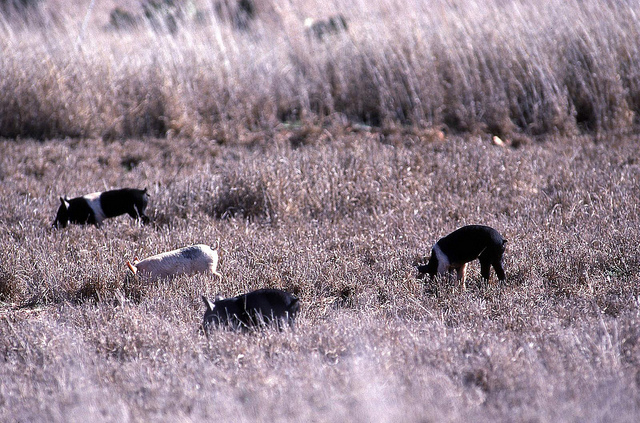
Herd of feral hogs.

Herd of feral hogs.


This is Passport to Texas

When feral hogs ingest sodium nitrite, it reduces their blood’s ability to carry oxygen.

08- We are attempting to exploit that in order to use sodium nitrite as a possible control measure in feral swine.

Since 2010, Texas Parks and Wildlife biologist, Donnie Frels and colleagues have been developing and testing sodium nitrite baits to
control feral swine.

12- What we’re currently doing, is looking at several different bait formulations that are hiding the taste of sodium nitrite and see which one of those is most effective.

The bait delivery system is one only hogs can access. Ironically, sodium nitrite is a compound used to preserve sausage and bacon. Although humans and most other mammals have an enzyme that effectively reduces sodium nitrite toxicity, Frels says he and his colleagues are cautious.

14-There are still a lot of things we have to investigate when it comes to using this as a toxicant. And one is concerns about residuals in tissues, secondary consumers, and how long this will last in the environment.

Preliminary results indicate low residuals in hog meat, so if a hunter bagged a hog that consumed the toxicant, the meat would still be fine to eat.

06-Because sodium nitrite is a food preservative, it is safe for human consumption.

It will be several years before the bait is commercially available. The Wildlife and Sport Fish Restoration Program supports our series.

For Texas Parks and Wildlife…I’m Cecilia Nasti.

Hunting Cannot Control Feral Swine

Tuesday, July 14th, 2015
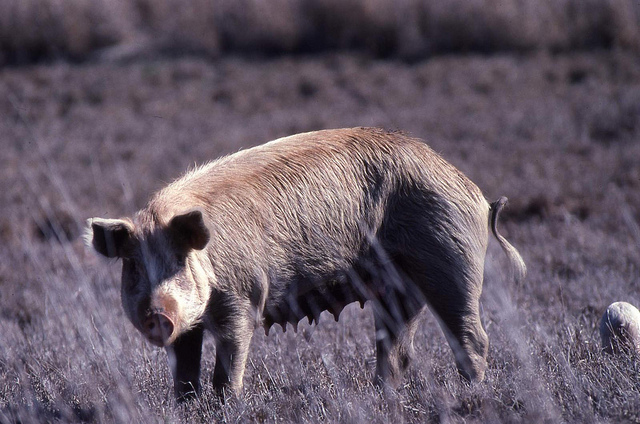
Feral big mama sow.

Feral big mama sow.


This is Passport to Texas

Hunting is not an ideal means of control for feral swine.

09- Although they’re very good to eat, and we have very liberal means and methods to take feral hogs, it’s just not proven effective as a control measure.

Approximately 2.5 million feral hogs roam Texas; wildlife biologist, Donnie Frels, researches controls for feral hogs at the Kerr Wildlife Management Area.

11- They have been documented in just about every county in Texas, although we see higher densities in eastern Texas, along the coast, and in South Texas.

Frels is among a group of researchers studying the use of sodium nitrite in a bait matrix as a control method. The compound is toxic to swine as it reduces their blood’s ability to carry oxygen.

13- We began investigating sodium nitrite as a potential toxicant back about 2010; since that time we’ve come a long way in bait development.

We need up to 70% control of the swine annually to hold the population stable from one year to the next. Frels says the ultimate goal of his study is to develop bait that is economical and environmentally safe.

10-We would like it in a pelleted form that a landowner or land manager could utilize themselves, within a specific feeder, so that it doesn’t provide access to non-targets.

Commercial availability is still several years away.

The Wildlife and Sport Fish Restoration Program supports our series.

For Texas Parks and Wildlife…I’m Cecilia Nasti.

TPW TV: Laborcitas Creek Ranch

Friday, July 10th, 2015

This is Passport to Texas

Landowners, like Rolanette and Berdon Lawrence–of Laborcitas Creek Ranch in Brooks County–are responsible for transformative conservation in Texas.

03-When I come on this ranch, I get goose bumps.

That’s Texas Parks and Wildlife biologist Randy Fugate, who provides technical land assistance to the Lawrence family.

08- It’s so impressive to see all of the improvements that have occurred here since they owned the property–from what it used to look like–25 years ago.

The Lawrence’s received the 2014 Lone Star Land Steward Ecoregion Award for South Texas. Berdon Lawrence says when they bought the ranch it was an overgrazed piece of property that didn’t support much native wildlife.

13– The cattle had just about eaten all the grass. No place for quail to hide, and for the does to hide the little baby deer. And so, the
predators would often get the little baby deer and the little quail.

They invented a device called the “quailorator.” Ranch manager, David Kelly, says pulled behind a tractor, the quailorator gently aerates and improves the land for its namesake species.

09- Right here in this quaileratorated area, we have [native grass] clumps for nesting and cover. And right over here, we have aerated
parts that will provide food for quail.

Watch a segment on Laborcitas Ranch next week on the PBS Texas Parks and Wildlife TV series. Check your local listings.

06- And it’s nice to be able to preserve the wildlife that’s been here for maybe millions of years.

For Texas Parks and Wildlife, I’m Cecilia Nasti.