Archive for the 'Conservation' Category

Beating Down Zebra Mussels in Lake Waco

Thursday, May 14th, 2015
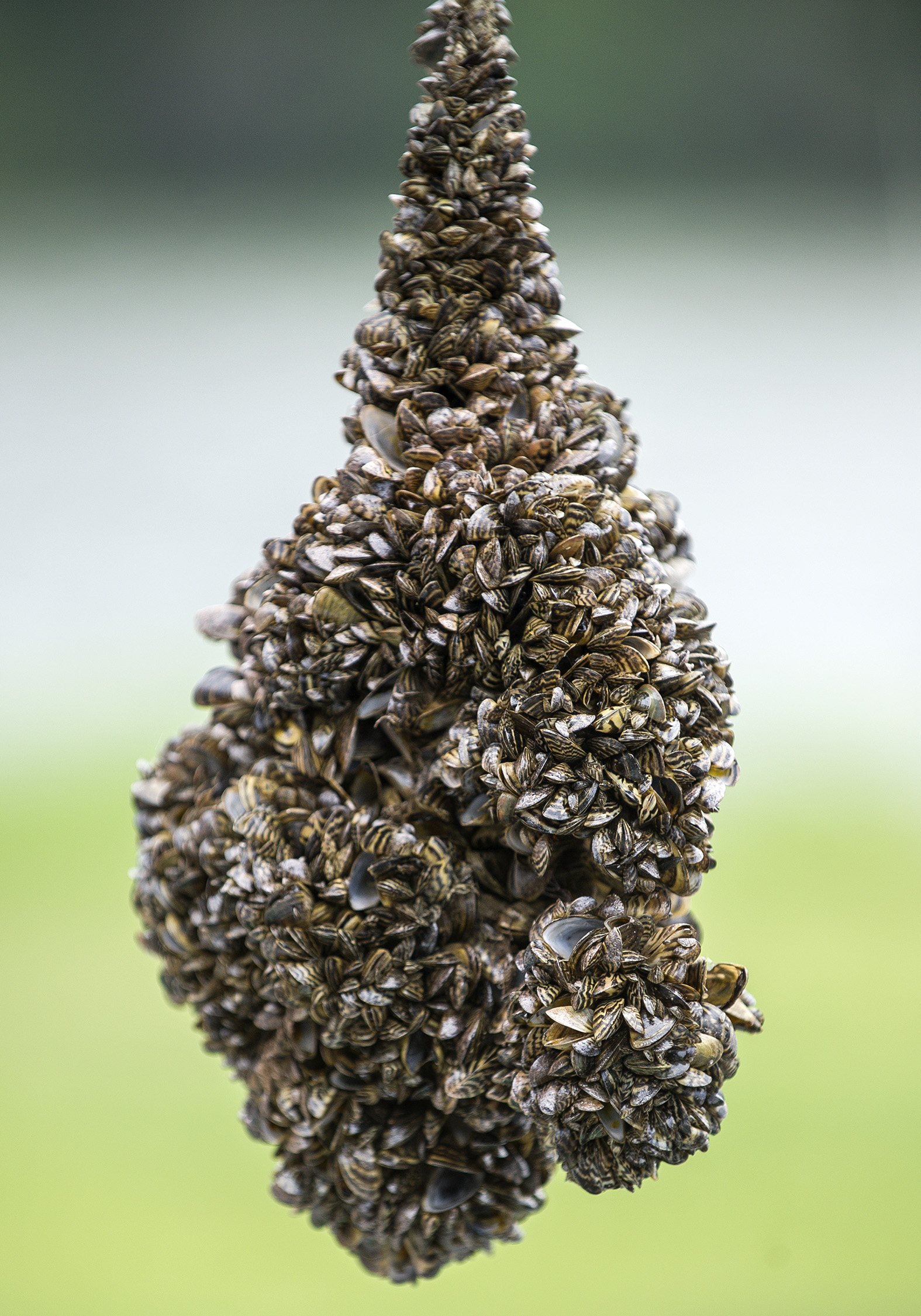
Zebra mussels

Zebra mussels

This is Passport to Texas

In September 2014, when City of Waco employees found zebra mussels near a boat ramp in Lake Waco, Texas Parks and Wildlife, the City of Waco, and Texas Army Corps of Engineers moved quickly to stop this non-native aquatic invasive in its tracks.

06-The City of Waco ordered up tarps, they hired commercial divers, set the plan, and last fall we put ’em all in place.

Brian Van Zee, Inland Fisheries Regional Director, says there wasn’t time to obtain permits for chemical treatments, so divers and staff positioned the eight thick, rubber tarps on the lake bottom over the infested area to block sunlight and oxygen below.

15- We just recently pulled those tarps from lake Waco, and it was really looking very good; we could tell by the condition of the tarps– underneath them–that we had reached anoxic conditions. You could smell the hydrogen sulfide smell and these black conditions you typically see when you have anoxic conditions.

Although divers found two live zebra mussels on rocks they brought up, Van Zee is optimistic.

14-Maybe we knocked back the number of zebra mussels that were in that area, far enough to where they cannot create a viable, reproducing population. We don’t know if that’s the case or not. We really won’t know probably until this spring or summer, actually; maybe even next fall.

Until then, all partners will continue to monitor the lake and enforce the clean, drain and dry law for all boaters. Learn more on the TPW website.

The Wildlife and Sport Fish Restoration program supports our series. Learn about combating zebra mussels and other aquatic invasives at texasinvasives.org.

For Texas Parks and Wildlife…I’m Cecilia Nasti.
Zebra Mussels Come to Lake Waco

Tuesday, May 12th, 2015
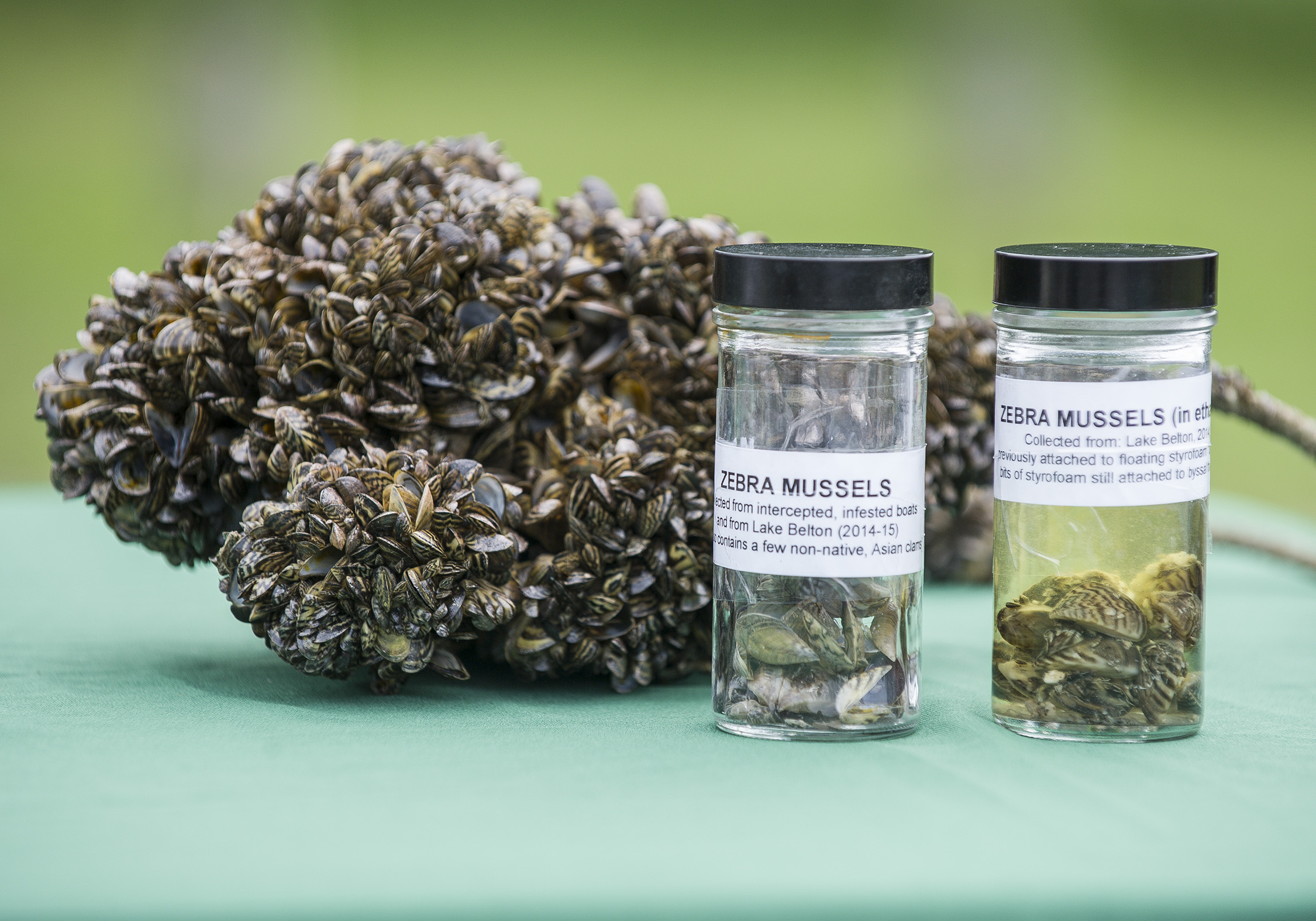
Zebra Mussels

Zebra Mussels


This is Passport to Texas

Non-native zebra mussels pose potential ecological and economic damage wherever there’s an infestation. In September 2014, they showed up in Lake Waco.

06-Unfortunately there was a vessel that was launched on Lake Waco last summer; it had come from Lake Belton.

Brian Van Zee, Texas Parks and Wildlife Inland Fisheries Regional Director, says Lake Belton has an established population of zebra mussels; they hitched a ride to Lake Waco on the vessel in question.

15- It was heavily infested with those individuals when they left Lake Belton. They did not inspect it; they did not clean it. So, they launched on Lake Waco and introduced these mussels to the lake.

The zebra mussel larvae are microscopic, which is why it is imperative boaters clean, drain and dry their vessels when going from one water body to the next.

24-Texas Parks and Wildlife department enacted the law last year requiring boaters–anytime they leave or approach a freshwater lake or river system in the state–their boats have to be dry. And that’s all aimed at preventing the spread of these microscopic organisms. So, take those three simple steps of clean, drain, dry; it doesn’t take long. It’s very simple to do. It’s better for your boat in terms of maintenance, anyway; so go ahead and do it.

What Texas Parks and Wildlife, the City of Waco and Army Corps of Engineers is doing to combat zebra mussels in Lake Waco–that’s tomorrow. Learn more about zebra mussels at www.texasinvasives.org.

The Sport Fish Restoration program supports our series.

For Texas Parks and Wildlife–I’m Cecilia Nasti.

Texas Big Game Awards

Friday, May 1st, 2015
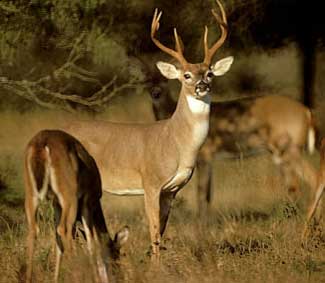
White-tailed buck

White-tailed buck

This is Passport to Texas

2015, marks the 24th year of Texas Big Game Awards.

17-Texas Big Game Awards started in 1991 as a partnership between Texas Wildlife Association and Texas Parks and Wildlife, as a means to document the great, big game resources that we have in the state. And also, to celebrate our hunting heritage and recognize young and new hunters.

Justin Dreibelbis is the new Private Lands and Public Hunting Program Director at Texas Parks and Wildlife Department. When we spoke, he was the Hunting Heritage Director at the Texas Wildlife Association. Texas hunters sent in their entries, which trained scorers evaluated using criteria specific to each region.

22- And then, we also have unscored categories, which are our youth division and our first harvest division. A youth division entry is any youth hunter who takes a native big game animal in the state. A first harvest division is for a person who take their first native big game animal in the state of Texas-whether they-re eight years old or 80 years old.

The Texas Big Game Awards recognizes large antlers with the understanding that they are a direct result of well-managed habitat, said Dreibelbis. Winners receive their awards at regional banquets. The first is May 16 for regions 5, 6 & 7 in Lufkin. Find additional information at texasbiggameawards.org

The Wildlife Restoration program supports our series.

For Texas Parks and Wildlife…I’m Cecilia Nasti.
Great Texas Birding Classic Underway

Friday, April 24th, 2015
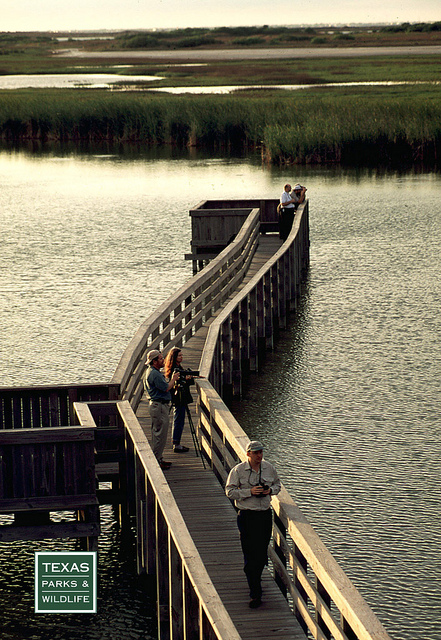
Coastal bird watchers

Coastal bird watchers


This is Passport to Texas

Any novice or seasoned birder worth their field guide comes to Texas for the Great Texas Birding Classic – a statewide bird watching tournament, April 15 to May 15.

08— It isn’t all about winning, it really is about fun. And I’m really happy to see that people are finally realizing this isn’t just
for hardcore birders.

Shelly Plante oversees Nature Tourism for Texas Parks and Wildlife. Don’t be surprised if during the tournament you see out of town birders roaming your communities.

38—We do see some traveling. We have a statewide weeklong tournament and there’s a statewide big day tournament. So, you can do 24 –hours and go wherever you want – from the Hill Country to the coast; you aren’t bounded by regional territory like you are in some of the other big day competitions. The statewide weeklong is six days of birding anywhere in the entire state. And so, we have a lot of teams doing that. Even though it’s a huge commitment, it’s a lot of fun. A lot of them go from west Texas, all the way down to south Texas, all the way to the upper Texas coast to the Pineywoods. So, they’re seeing 350 or more birds in a week; and, you can’t do that in a lot of states.
So, Texas is unique.

Winning teams choose where to direct funds for habitat conservation. Check out what the birders are seeing this year at birdingclassic.org.

That’s our show for today… Funding provided in part by Ram Trucks. Guts. Glory. Ram

For Texas Parks and Wildlife…I’m Cecilia Nasti.
Wildlife: The Birds and the Beans

Thursday, April 23rd, 2015
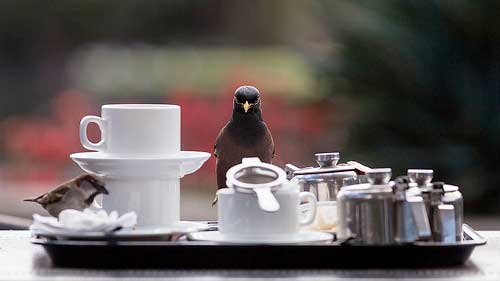
Birds and coffee, image from coffeekrave

Birds and coffee, image from coffeekrave


This is Passport to Texas

If you’re morning ritual includes savoring a cup of coffee, you might want to know what’s in your mug, and how it’s affecting birds.

04— We’re talking about shade grown coffee versus full sun coffee.

Cliff Shackelford is a non-game ornithologist with Parks and Wildlife. Farmers in Mexico, Central and South America who grow coffee in full sun replace migratory bird habitat with coffee shrubs, but not so when its shade grown.

07—They don’t eliminate all the native forest. They take out some of the forest, and plant the coffee within the forest.

Shade grown coffee tastes the same as sun grown, but is better for birds. The remnants of native forest that harbor coffee shrubs attract a variety of overwintering species.

13— This is important for us as Americans because a lot of these birds are backyard birds. If there’s a complete change of the vegetation that the birds are keying in on, then they are going to have to keep moving.

And that could affect what we end up seeing in our backyards in spring and summer. You can help migratory birds by drinking shade grown coffee.

06—We’re also calling it bird friendly coffee. And, even if you drink [bird friendly coffee] part of the time, it’s better than none
of the time.

Look for the bird friendly seal of approval on bags of coffee, or ask your barista if your hot beverage is made in the shade.

For Texas Parks and Wildlife…I’m Cecilia Nasti.