Archive for the 'Conservation' Category

Nature: The Problem of Light Pollution

Wednesday, October 22nd, 2014
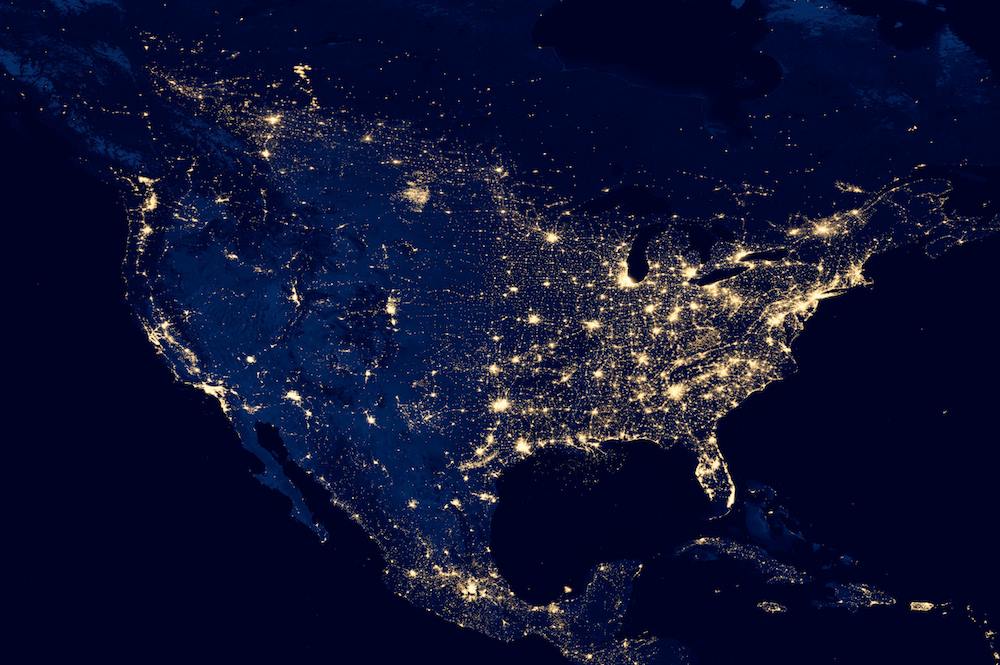
Image courtesy International Dark-Sky Association Facebook Page

Image courtesy International Dark-Sky Association Facebook Page


This is Passport to Texas

Few of us experience dark skies anymore because of light pollution.

08—Most often we see that [light pollution] in the form of what we call skyglow…[something] that people who live in or near cities will be familiar with.

Skyglow is hazy reflected light hovering over cities at night, disrupting nature’s day/night cycle. John Barentine, with the International Dark Sky Association says light pollution isn’t exactly benign.

16—It turns out that there are hormonal pathways throughout the body that are governed by that [day/night] cycle, and when we start disrupting them by putting light in at unusual times of the day, we disrupt those pathways and that’s what we think leads to some of the [potential health] problems.

Blue light (in the spectrum), associated most with sunlight, is most disruptive to our internal clocks.

22—Blue light triggers this hormone that’s called melatonin; in the daytime when the sun comes up that relatively blue sunlight turns down the production of melatonin and tells us to wake up. And then at night, the result is that the production of melatonin goes up, and that’s the cue that tells us to go to sleep. It’s also regulating all these sub systems throughout the body.

We have a link to The American Medical Association’s view of light pollution at passporttotexas.org. What’s being done to prevent light pollution. That’s tomorrow.

For Texas Parks and Wildlife…I’m Cecilia Nasti.
Nature: Dark Skies Over Texas

Tuesday, October 21st, 2014

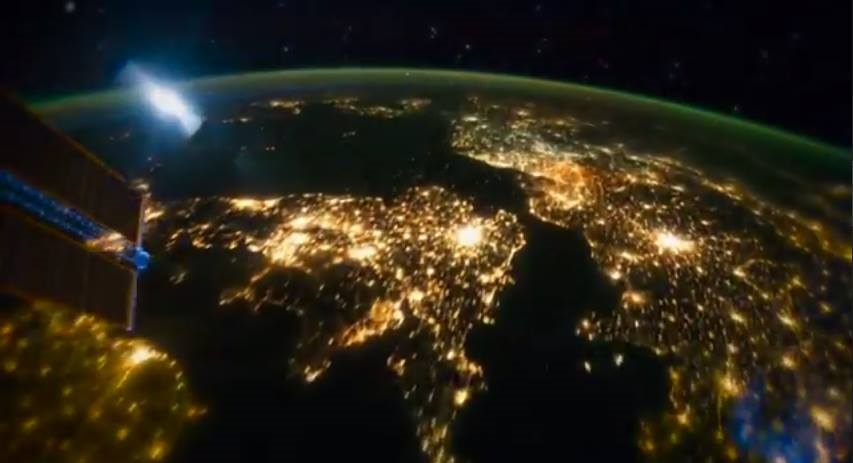
Image courtesy International Dark-Sky Association Facebook Page

Image courtesy International Dark-Sky Association Facebook Page


This is Passport to Texas

Few of us have ever experienced a truly dark sky.

09—A dark sky is what humanity saw for basically its entire history up until the invention of electric light a little more than a century ago.

While we may feel safer outdoors at night because artificial light illuminates our way, over time, it may actually do more harm than good, says John Barentine, with the International Dark Sky Association.

30—We know that artificial light at night has a measurable impact on wildlife; we know that it has an impact on human health. Light governs the night and day cycles of all organisms, so when we put light into the environment when our bodies aren’t expecting it, there are inevitable results—some of which we are just beginning to learn – but turns out that it may be related (at least in humans) to incidents of some types of chronic disease.

Until the advent and widespread use of electric lighting, the sun, and to a lesser extent the moon, governed the cycle of day and night. That set a rhythm among living things we’ve been disrupting ever since.

And we’ll have more about that tomorrow.

For Texas Parks and Wildlife…I’m Cecilia Nasti.
Conservation: Monitoring Species for Change

Thursday, October 16th, 2014

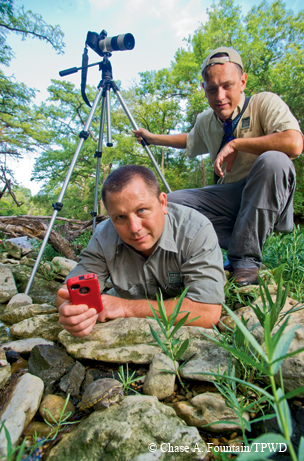
Herpetologist, Andy Gluesenkamp (with phone) and biologist Cullen Hanks monitoring species.

Herpetologist, Andy Gluesenkamp (with phone) and biologist Cullen Hanks monitoring species.


This is Passport to Texas

Texas wildlife has a stake in the climate change lottery.

06—Climate change is going to affect species that are found – and breed – in backyards here in Texas.

Cullen Hanks, with Texas Nature Tracker, says models predicting the impact of climate change on wildlife are not set in stone, and so we need baseline information on each species.

33—To be able to document change, we need to know where things are before they change. And, this highlights the need of documenting the distribution of species that we have today in Texas.

And, there aren’t enough biologists to do all of that. And so, what we do is we reach out to citizens.

That’s exactly right! Texas is a big state with a lot of species, and the community of naturalists and citizens interested in wildlife in Texas can play a huge part in documenting wildlife in Texas.

Monitor species you see in your neighborhood, and then share your observations online.

17—ebird, a citizen science platform, created by the Cornell laboratory of Ornithology is a great way to maintain your checklist of birds. In addition, iNaturalist is a really useful platform for documenting your wildlife sightings of any species — not just birds.

Texas Parks and Wildlife has various projects on iNaturalist. Just go to the Texas Nature Trackers page on the Texas Parks and Wildlife website for details. The WSFR Program supports our series.

For Texas Parks and Wildlife…I’m Cecilia Nasti.
Conservation: Climate Change

Wednesday, October 15th, 2014

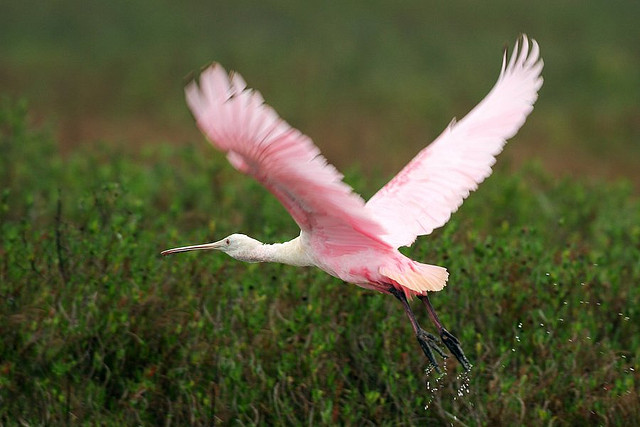
Roseate Spoonbill

Roseate Spoonbill


This is Passport to Texas

When most of us hear the term “climate change” we envision massive glaciers tumbling into the sea, and a lone polar bear floating on an errant chunk of ice.

11—Climate change is not going to just impact species found around the arctic circle. It’s also going to affect species that are found – and breed – in backyards here in Texas.

Cullen Hanks works in Wildlife Diversity at Texas parks and Wildlife, and is a board member of Travis Audubon. The National Audubon Society released a comprehensive study last month that predicts how climate change could affect the ranges of 588 North American bird species.

17—There is quite a bit of uncertainty about how things are going to play out. But there’s not a question about whether there is change. I’m not a climatologist, but considering the fact we know that change is occurring, it is important to pay attention to how this is going to impact wildlife.

Due to warmer conditions, some birds may shift their range farther north.

15—Birds have the benefit of flight, so that they are more capable of colonizing new areas. However, changes to habitat will affect all wildlife. So, for example, reptiles and amphibians will also be impacted by changes to habitat that are affected by climate.

How you can help scientists understand the impact of climate change on all species. That’s tomorrow. The WSFR Program supports our series.

For Texas Parks and Wildlife…I’m Cecilia Nasti.
People: New TPWD Vet Finds His Footing

Friday, October 10th, 2014

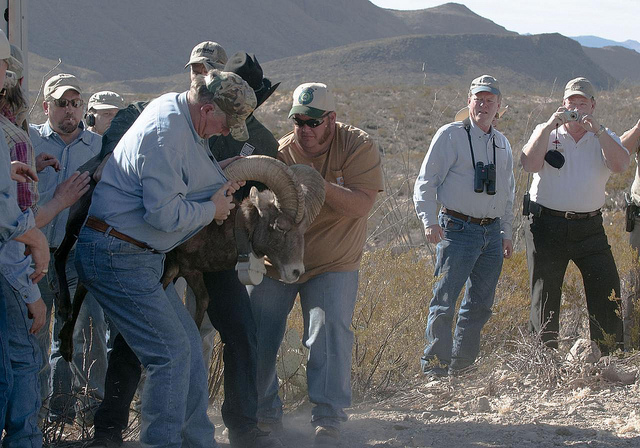
Wrestling with bighorn sheep

Desert Bighorn Sheep translocation project.


This is Passport to Texas

Before Bob Dittmar joined Texas Parks and Wildlife this year as its first-ever staff veterinarian, he was in private practice in Kerrville. In his new position, he’s learning to shift focus from domestic animals and livestock to wildlife.

09—The challenge is that it’s a different situation than private practice. There’s going to be a learning curve for me just to fit into Parks and Wildlife.

He’s no stranger to the agency, though, having assisted with projects including the translocation of desert bighorn sheep and pronghorn antelope. He expects his work will be as varied as the state, itself, and include the collection and analysis of data, as well as hands on work with wildlife.

22—I’ll be working more hands on, and we’ll be looking into whatever situation might occur [among the state’s wildlife], and I’ll continue to work with the capture and translocation projects with the Bighorn Sheep and Pronghorn antelope. And there may be other things that we do as well. As time goes on we may look into more and more research projects in the wild that would involve more hands on work with other species.

Learn more about Texas wildlife and how it’s managed, when you log onto the Texas parks and Wildlife website.

The Wildlife and Sport Fish Restoration program supports our series and funds its work through your purchase of hunting and fishing equipment and motorboat fuel.

For Texas Parks and Wildlife…I’m Cecilia Nasti.
