Archive for the 'Conservation' Category

Habitat: Loss of Longleaf Pines in Texas

Monday, November 11th, 2013
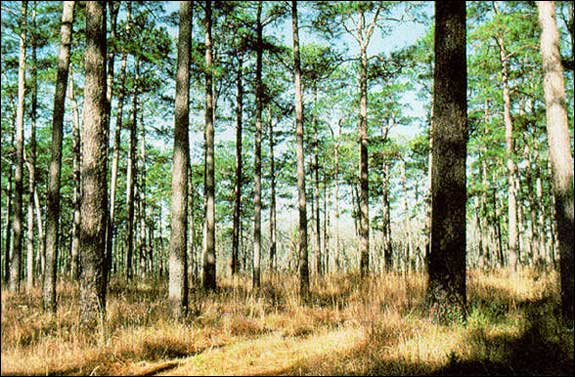
Longleaf Pine Forest

Longleaf Pine Forest


This is Passport to Texas

While we’re familiar with native loblolly pines, the longleaf pine – another native – has struggled for a century.

07— It’s a very, very desirable timber tree. Consequently, by the turn of the last century, it was almost all timbered.

Davis Riskind is director of the natural resource program for state parks.

33—So, there’s very little old growth longleaf pine; it grows on dry upland sites, sandy soils. Or, some of these sites can be very, very wet – they vary from wet to dry. And only longleaf pine is an adapted native species. Of course, what’s happened is, most of the pine has been timbered and has been replaced by exotic species. Slash pine, for example, or even loblolly pine, which used to grow mostly in bottomlands in wet sites. But now it’s a very common fast growing timber tree. So, essentially the habitat has been lost.

Riskind says more than just the trees have been lost.

10—Well, essentially all the wildflowers [associated with that habitat have been lost], a lot of bog plants; orchids, pitcher plants and things like that. And it’s a very open stand, and it usually has a lot of grasses and quite a few of our rare species.

Tomorrow, David Riskind returns to talk about an effort to reforest longleaf pines in an east Texas state park.

For Texas Parks and Wildlife…I’m Cecilia Nasti.
Invasives: Impact of Zebra Mussels

Thursday, November 7th, 2013

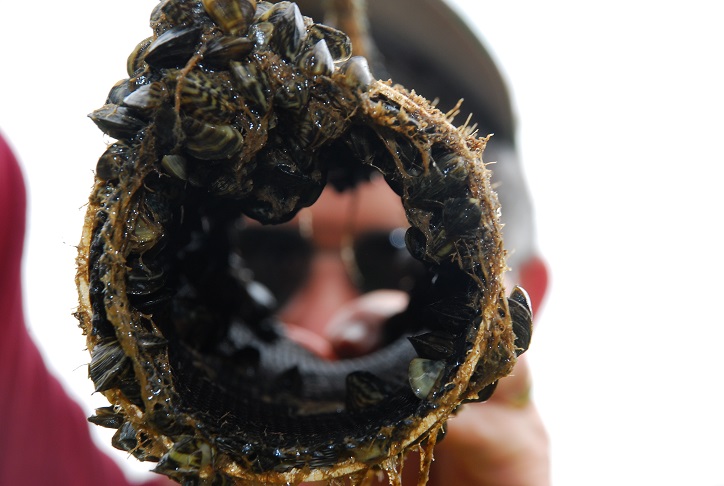
Zebra mussels on water intake pipe.

Zebra mussels on water intake pipe.


This is Passport to Texas

Zebra Mussels, originally from Eastern Europe, ended up in the Great Lakes in the late 1980s in the ballast of ships. Since then…

05— They’ve been pretty steadily moving across much of the eastern and central portion of the United States.

Inland fisheries biologist Brian Van Zee says zebra mussels arrived in Lake Texoma in 2009; now they occupy waters in north and north central Texas – most recently in Lake Belton.

10—They’re primarily moved from water body to water body by boaters, who don’t take the time to clean, drain and dry from an infested lake to a non-infested lake.

Zebra mussels attach to hard surfaces, including rocks, docks, boats and even other animals. As filter feeders, they impact the aquatic food chain, and clog water intake pipes of municipal utility districts, causing significant increases in maintenance and operational costs. So boaters: clean, drain and dry.

20—On a general rule of thumb, we recommend boaters dry their boats for a week before they go from one lake to the next, if at all possible. If they just pull the plug out of the bottom of the boat, lower the engines down, and make sure there’s no water in them, and make sure the live wells are empty, and open those compartments up and let them dry in between going from one lake to the next, you really reduce that risk of moving zebra mussels from one lake to another.

The Wildlife and Sport Fish Restoration Program supports our series. For Texas Parks and Wildlife…I’m Cecilia Nasti.
Wildlife/Citizen Science: Texas Nature Trackers

Tuesday, November 5th, 2013

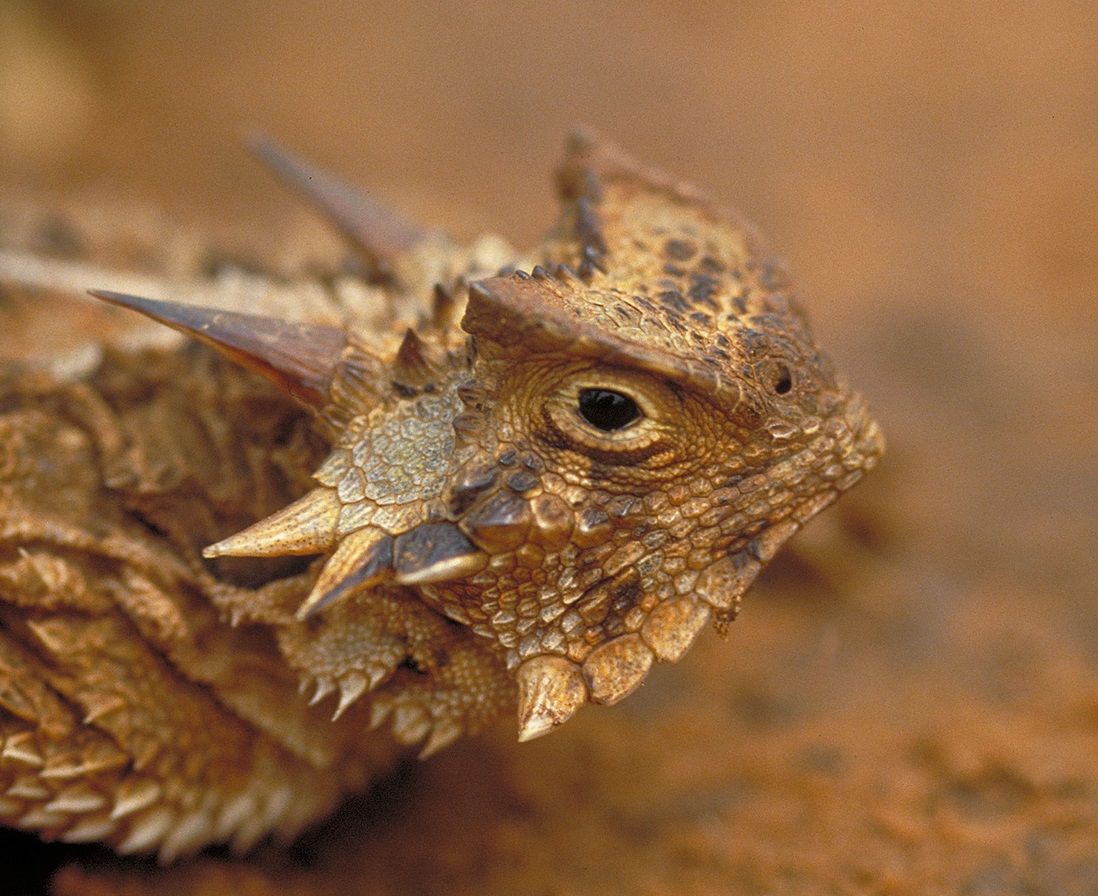
Horned lizard

Horned lizard


This is Passport to Texas

Texas Nature Tracker is a program designed to help citizens learn how to monitor and share data on rare species around the state.

10— This citizen science program is a great one to get citizens involved in collecting data on species that we don’t have enough biologists to actually do the work.

Biologist, Marsha May, coordinates the Nature Tracker Program for Parks and Wildlife. Depending on their interests, volunteers receive training for one or more targeted species…

13— Texas whooping cranes, bumblebees, frogs and toads, the box turtle survey, coastal fisheries has one for tarpon, Texas horned lizards, and Texas mussel watch.

Once trained, volunteers monitor the species and report back to May with their data, which in turn provides value to state biologists.

09— The value comes from not having enough boots on the ground to get out there to find out what’s going on with populations throughout the state.

Tomorrow, we tell you about one Nature Tracker volunteer who discovered a destructive invasive species in a Texas Lake.

05—Well, that particular one that you’re talking about is the zebra mussel.

That’s our show for today… Funding provided in part by Ram Trucks. Guts. Glory. Ram

For Texas Parks and Wildlife…I’m Cecilia Nasti.
Nature: Master Naturalist Program

Wednesday, October 23rd, 2013

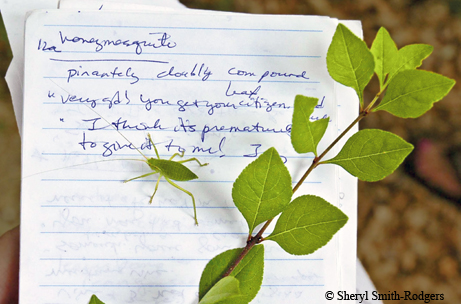
Master naturalist notes, Photo by Sheryl Smith Rodgers

Master naturalist notes, Photo by Sheryl Smith Rodgers


This is Passport to Texas

Protecting Texas’ vast habitat and wildlife resources requires effort from all Texans.

09—Well, as a state agency, we are constrained by our budget, and so we can’t possibly put as many eyes in the sky and boots on the ground as we need.

Kelley Bender, a parks and wildlife Urban Biologist in Central Texas, encourages folks to learn about and conserve resources by becoming a Master Naturalist.

22—The Texas Master Naturalist Program is a really exciting way for people to get involved in nature and wildlife in the state of Texas. There’s a nine-week course that’s provided by professionals in the field, where they get training that includes classroom training as well as field trips. And then we ask for a commitment back to provide 40 hours of volunteer service a year.

Master Naturalist training prepares you to be a leader in community-based conservation efforts.

19—Most chapters offer a get-to-know you class where they introduce all the topics that are going to be discussed. They also talk about what the commitment is and what will be expected of the students as well as what will be expected of the program. And all people are welcome and invited to join. We ask that people be 18 years and over.

Find the Texas Master Naturalist chapter nearest you at passporttotexas.org.

That’s our show… For Texas Parks and Wildlife…I’m Cecilia Nasti.
Wildlife: Quail & Landowner Cooperatives

Wednesday, October 16th, 2013

Landowners restoring quail habitat

Landowners restoring quail habitat


This is Passport to Texas

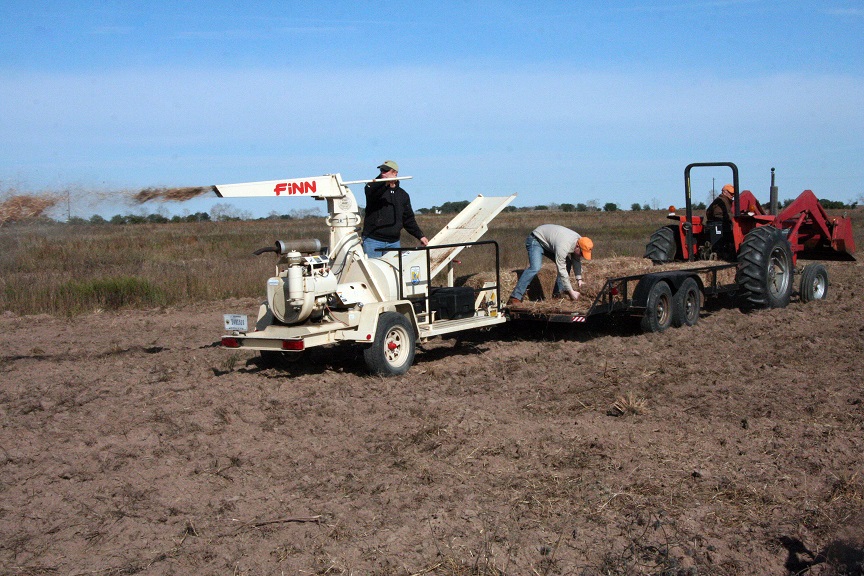
Embracing the “it takes a village model”, Texas landowners are banding together to restore fragmented bobwhite quail habitat in Texas. Think of fragmentation as a puzzle missing many pieces.

09 —Fortunately, we’ve got landowners that are working together with parks and Wildlife that formed landowner cooperatives that have formed specifically to help bobwhite quail.

Robert Perez is the upland game bird program leader at TPW. Quail populations need hundreds and sometimes thousands of acres to prosper. Neighboring landowners work together to manage their properties to support this charismatic game bird –which is primarily a grassland species.

16—Usually dominated by what’s called a bunch grass. And that’s something like little bluestem, Indian grass – grasses that grow in clumps. The growth patterns of these native grasses allow for the passage of adult quail, but more importantly, small, little, tiny chicks that can navigate through these areas.

Why would landowners go through the effort and expense to make their property more welcoming to a small bird?

08—We’re talking to landowners, and they’re not interested in hunting quail. They’re interested in seeing a quail and hearing a quail and having their kids see a wild quail on their farm and on their ranch.

The Wildlife and Sport Fish Restoration Program supports our series and receives funding from your purchase of fishing and hunting equipment and motor boat fuel.

For Texas Parks and Wildlife…I’m Cecilia Nasti.
