Archive for the 'Conservation' Category

Wildlife: Quail & Fragmentation

Tuesday, October 15th, 2013
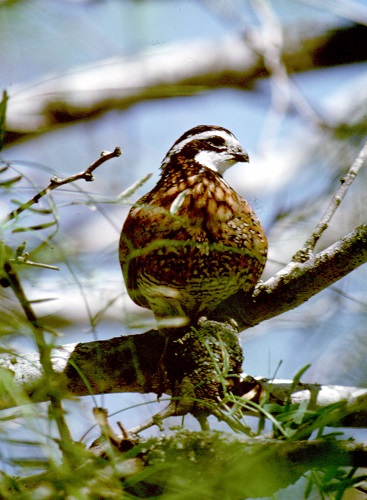
Bobwhite Quail

Bobwhite Quail


This is Passport to Texas

In the rolling plains and south Texas brush land, years of drought has taken its toll on bobwhite quail populations. East of Interstate 35, the problem is fragmentation.

09 —And so it’s more an issue of: how much habitat is left. And the question is: if you build habitat will the birds respond? And I think that they can and they do.

Robert Perez is the upland game bird program leader at Texas Parks and Wildlife.

19—Right now we’re working in three different focus areas of the state, where we are concentrating resources, manpower, habitat funding, working with partners in select counties to do that very thing: to impact enough acreage to reverse the trend of fragmentation and to demonstrate through surveys – through counting birds – a positive response. Because we know it’s possible.

But how much habitat is enough in our modern, highly developed times?

23—In the old textbooks, they talk about a quail living its whole life on 40 acres if it has everything that it needs. While that very well may be the case, you can’t have a viable population on 40 acres in the middle of a shopping mall. So you’ve got to have some area. And there have been researchers that have taken estimates at what that may be. And it ranges anywhere from 800 to 10-thousand acres depending on the quality of the habitat.

How landowners work together to create quail habitat: that’s tomorrow.

The Wildlife and Sport Fish Restoration Program supports our series and receives funding from your purchase of fishing and hunting equipment and motor boat fuel.

For Texas Parks and Wildlife…I’m Cecilia Nasti.
Wildlife: Quail & Drought in Texas

Monday, October 14th, 2013

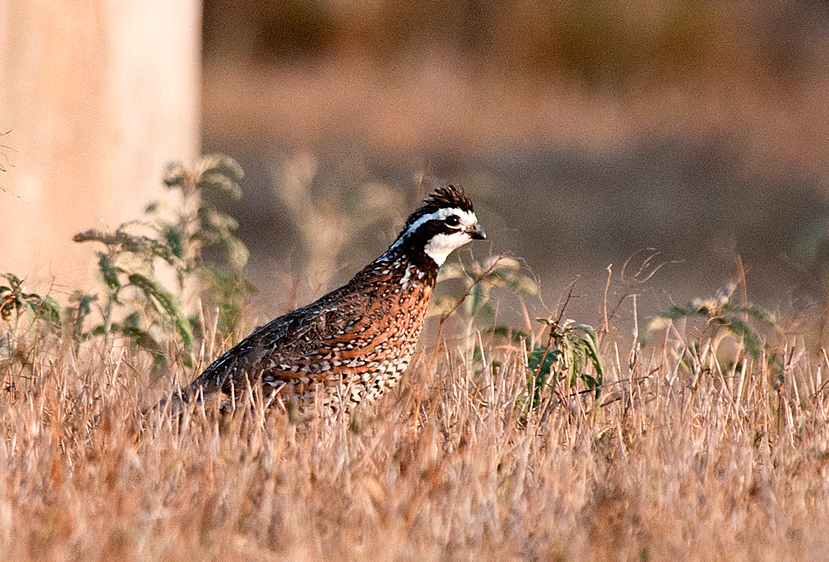
Bobwhite quail.

Bobwhite quail.


This is Passport to Texas

A major issue affecting bobwhite quail in southern brush lands and the Rolling Plains regions of Texas is drought.

06 —Long term drought. I’m talking in some areas eight, ten, eleven years now of below average rainfall.

Robert Perez is the upland game bird program leader at TPW. He says the drought is beginning to take its toll on bobwhite.

16—And it’s really caused some declines in the numbers – at least in recent years. So what we hope is things can turn around weather-wise in those areas that are still holding birds, and they will be able to rebound in those areas. And that’s certainly something that we know the species can do.

I asked Robert if there is a threshold at which the birds will not rebound even if we get relief from the drought.

17—I think that you can get there at some point, but in Texas it’s just not very likely to happen any time soon in the Big Country…because the landowner practices and our traditional land uses in some of these areas just lend themselves to quail if mother nature will just cooperate.

Many areas of the state received meaningful rainfall last month. Whether that improves the quail outlook remains to be seen. Meantime, there’s another threat to the well-being of this charismatic game bird.

04—If you’re anywhere eat of I35, then the issue becomes fragmentation.

That’s tomorrow.

The Wildlife and Sport Fish Restoration program supports our series and receives funding from your purchase of fishing and hunting equipment and motor boat fuel. For Texas Parks and Wildlife…I’m Cecilia Nasti.
Conservation: Bird Friendly Coffee

Friday, October 4th, 2013

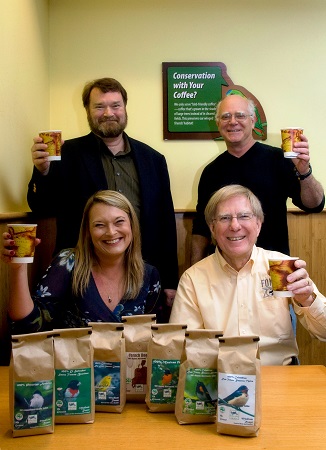
Dr. Robert Rice (back row, right), with colleagues from Smithsonian Migratory  Bird Center.

Dr. Robert Rice (back row, right), with colleagues from Smithsonian Migratory
Bird Center.


This is Passport to Texas

Coffee is an agricultural crop that thrives in the tropics.

14—These areas oftentimes are coincident with biodiversity hot spots; that is, areas of really high biodiversity, whether in birds, or insects, amphibians—what have you.

Dr. Robert Rice works with the Smithsonian Migratory Bird Center, which certifies coffees “Bird Friendly” when growers meet certain stringent criteria. Studies suggest shade grown coffee offers the greatest benefit as habitat.

15—Where coffee still is managed with a shade cover of the kind that we like to see and have defined with “bird friendly” criteria, then coffee oftentimes is some of the last remaining canopy cover—even though it’s not forest—it’s acting very much like a forest.

With habitat loss from deforestation, shade grown coffee estates serve as refuge for neo-tropical migratory bird species that travel through Texas, including the Black and White Warbler, the Baltimore Oriole, the Cerulean Warbler and others.

:15—So, they just hang out there. They might be running around with mixed species flocks, and trying to stay alive and ultimately fatten up before they make the trip back north again. So this quality habitat becomes quite important for them in terms of making the trip back.

So next time you order a cup of coffee, you might ask your server if it’s for the birds.

That’s our show…Funding provided in part by Ram Trucks. Guts. Glory. Ram.

For Texas Parks and Wildlife…I’m Cecilia Nasti.
_______________________________________________
Smithsonian Migratory Bird Center:
http://nationalzoo.si.edu/scbi/migratorybirds/coffee/default.cfm

Nature/Wildlife: Native Texas Bees

Monday, September 23rd, 2013

Native Solitary Bee. Image from www.txnativebees.com.


This is Passport to Texas

Although we’re concerned about the loss of honeybees from colony collapse disorder, this might ease your mind:

12— You have to think of honeybees as a farm animal. We can grow more of those. And we can produce more honeybee queens, which can in turn, grow more honeybee colonies.

That’s TPW invertebrate biologist Michael Warriner. While we focus on replaceable non-native European honeybees, we’re neglecting our irreplaceable native bee populations, also in decline.

17—If we lose native bees, we can’t necessarily breed more of those because we don’t know how. We don’t necessarily know what kinds of things they prefer – because we’re not managing them. They’re existing in natural habitat that we’re losing. Honeybees are pretty much a domesticated animal we can breed
more of.

Native bees play a valuable role in the ecosystem.

18— They play the biggest role in maintaining native plant communities. And a lot of those plants have to be pollinated by bees. As we lose bees, those plants will be less able to produce viable seed, which means that they just slowly disappear off the landscape.

How to help native bees…that’s tomorrow.

That’s our show…the Wildlife and Sport Fish Restoration program supports our series, and funds diverse conservation projects in Texas.

For Texas Parks and Wildlife…I’m Cecilia Nasti.
Conservation: Goals of Taking Care of Texas

Friday, August 30th, 2013

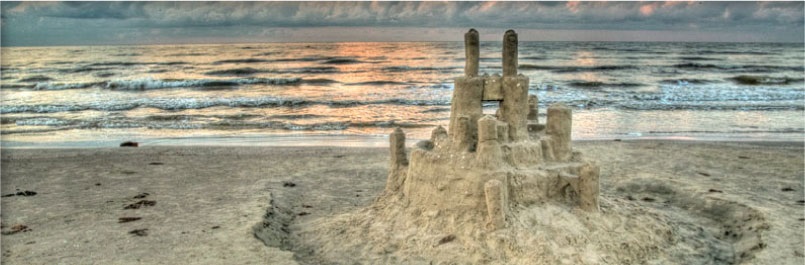
Sandcastle on Texas Beach

Sandcastle on Texas Beach


This is Passport to Texas

Taking Care of Texas, is a non-profit started in 2011, by former first lady Laura Bush. The organization promotes conservation of Texas’ natural resources.

10— Our goals are to really communicate the value of safeguarding our natural resources, and to do that in rural and urban settings, and emphasize conservation is consistent with Texas tradition.

Taking Care of Texas partnered with a who’s who of conservation heavyweights, including Texas Parks and Wildlife. Erin Franz, Executive Director, says the enterprise catalyzes its partner’s initiatives while recognizing conservation and economic prosperity need not be at odds.

21— One of our goals is to showcase there are already a lot of great conservation efforts being done by our business community, and so we want to continue what’s being done and expand on that. And, bring business minds to conservation matters and conservation minds to business matters so that we can really continue to elevate that conversation, and get more and more conservation practices put into place.

Learn more about the conservation efforts around our state, and how you can get involved, at Taking Care of Texas dot org.

Support provided by Ram Trucks. Doing what’s right and good regardless of the degree of difficulty — takes guts. Those are the people who build Ram trucks. RAM.

For Texas Parks and Wildlife…I’m Cecilia Nasti.
