Archive for the 'Conservation' Category

Wetlands: Bahia Grande, 1

Tuesday, May 21st, 2013
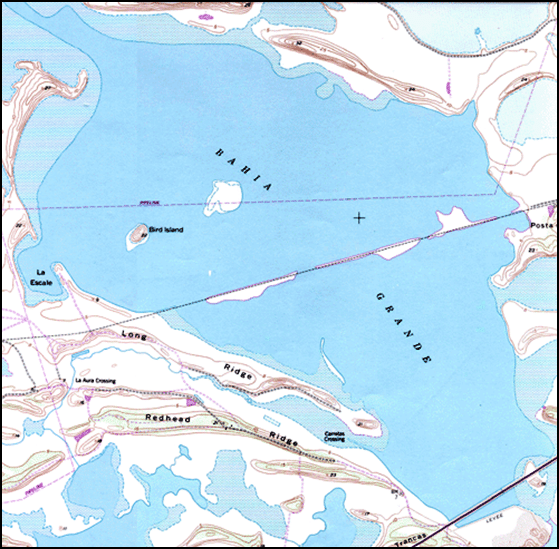
Bahia grande Map, Texas A&M Corpus Christi

Bahia grande Map, Texas A&M Corpus Christi


This is Passport to Texas

Bahia Grande, the largest tidal wetland restoration project in the state of Texas, is getting closer to completion.

10 – A tidal wetland is normally a coastal wetland that is influenced by the daily tide cycle that would basically push or pull water into that system on a daily basis.

John Wallace, Deputy Project Leader South Texas Refuge Complex, says construction of the Brownsville Ship Channel in the 1930s effectively cut off Bahia Grande from the gulf.

09 – The spoil from that ship channel was piled on the north side, and it blocked off those natural channels that allowed water to flow into the Bahia Grande.

Without water, the basin dried up, and eventually became a nuisance to local residents and businesses whenever prevailing winds came from the southeast.

26 – Normally on a coastal area with prevailing winds, you would get winds ten to twenty miles an hour every day. And these winds would pick up that real fine clay dust, and blow it to the north and northwest. And the local communities north of there were suffering from this blowing dust. It was impacting people that had breathing problems. The local schools, their air-conditioning systems, it was getting into the classrooms. So, it was a major concern for the local communities.

Solving the problem…that’s tomorrow.

The Wildlife & Sport Fish Restoration Program supports our series and provides funding for wetland conservation through the Private Lands Enhancement Program.

For Texas Parks and Wildlife…I’m Cecilia Nasti.

Wetlands: Caddo Lake

Friday, May 10th, 2013

Caddo Lake

Caddo Lake


This is Passport to Texas

Abundant water and huge old cypress trees makes Caddo Lake ideal wildlife habitat.

06 – Caddo Lake is the mother load for several species of neo-tropical migrants.

Cliff Shackelford is a non-game ornithologist stationed in Nacogdoches. The prothonotary warbler, northern parula, and yellow-throated warbler flock to Caddo.

17 – A dawn chorus of those warblers singing is quite a neat thing. It’s good to be out in a boat, a canoe, a kayak, something where you can get out in the middle of the swamp to hear these things—they’re just loud and explosive. It’s really refreshing to hear things like that singing in the morning.

But warblers aren’t the only creatures that make use of Caddo’s resources. Vanessa Adams is the area biologist at the Caddo Lake Wildlife Management Area. And says you’ll find white-tailed deer and…

14 – We unfortunately do have feral hog, but that is a huntable population, of course. We see several species of ducks. You’ll see wood duck year round. We get mallards; we have other unusual ducks. In fact, we’ve had white bellied whistling ducks nest here.

There’s more information about Caddo lake on the Texas Parks and Wildlife website.

The Wildlife and Sport Fish Restoration Program supports our series and provides funding for wetland conservation through the Private Lands Enhancement Program.

For Texas Parks and Wildlife…I’m Cecilia Nasti.
TPW TV: Protecting Rare Bats

Wednesday, May 1st, 2013

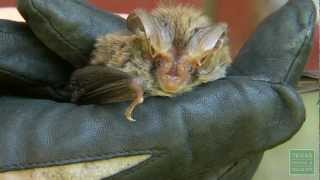
Rafinesque's Big-eared Bat TPWD YouTube Channel

Rafinesque’s Big-eared Bat TPWD YouTube Channel


This is Passport to Texas

Texas is home to some thirty-two bat species. TPW PBS TV producer, Abe Moore, says viewers will meet one of the lesser known bats in a segment airing this month.

56— We did a story on the Rafinesque’s Big-eared Bat. They’re one of the least known bats in the Southeastern United States. And the story looked at one of the largest Big Eared Bat colonies in Texas. The colony’s at the Trinity River National Wildlife Refuge. And it’s in – of all places – in an abandoned mobile home that’s out in the woods. The house was abandoned 18 years ago. We were going to tear it down; we decided that we would rather keep it open for the bats, and actually keep the house in working order enough so they could use it as a roost. It’s this abandoned horror movie type of house. There are rat droppings all over the floor and spider webs everywhere. I mean, it would be the greatest set for a film. But it was the perfect home for the bats. And the refuge built these cool bat roost towers nearby for them to live in the mating season. And they’re close by, and the bats will readily move from here to the towers, depending on the temperature. That story’s going to be on Texas Parks and Wildlife television the week of May 5th through the 11th.

Thanks, Abe.

Support provided by Ram Trucks. Doing what’s right and good regardless of the degree of difficulty — takes guts. Those are the people who build Ram trucks. RAM.

For Texas Parks and Wildlife…I’m Cecilia Nasti.
Conservation: Freshwater Inflows

Tuesday, April 30th, 2013

Freshwater inflow

Freshwater inflow


This is Passport to Texas

Joe Moore, former Executive Director of the Texas Water Development Board, understands the health of bays, estuaries—and us—depends on freshwater inflows; that means freshwater getting to the Gulf of Mexico. Helping folks who live upstream understand this has been a challenge.

49 – A major engineering consulting firm was meeting with an advisory group [in Lubbock] one time, and we were talking about freshwater inflows. He suddenly realized we were talking about assuring freshwater inflows, and he said, ‘You mean you’re going to give the water to a fish before you give it to people?’ They didn’t understand the economics of freshwater inflows. There was a 1957 conference on this campus in which waste was described as a bucket of water that escaped into the Gulf of Mexico. The objective at that point was to dam every river in Texas so that there was not a drop of water that went out of a Texas river into the Gulf of Mexico. So the Trinity would stop flowing before it got to Galveston Bay. Every river in Texas would be so controlled that no water would quote, be wasted into the Gulf of Mexico, end quote. That’s how little understanding there was of the significance of freshwater inflows.

Audio of Joe Moore used in cooperation with the Conservation History Association of Texas.

Support provided by Ram Trucks. Doing what’s right and good regardless of the degree of difficulty — takes guts. Those are the people who build Ram trucks. RAM.

For Texas Parks and Wildlife…I’m Cecilia Nasti.
Conservation: Bighorn Sheep Restoration, 2

Wednesday, April 24th, 2013

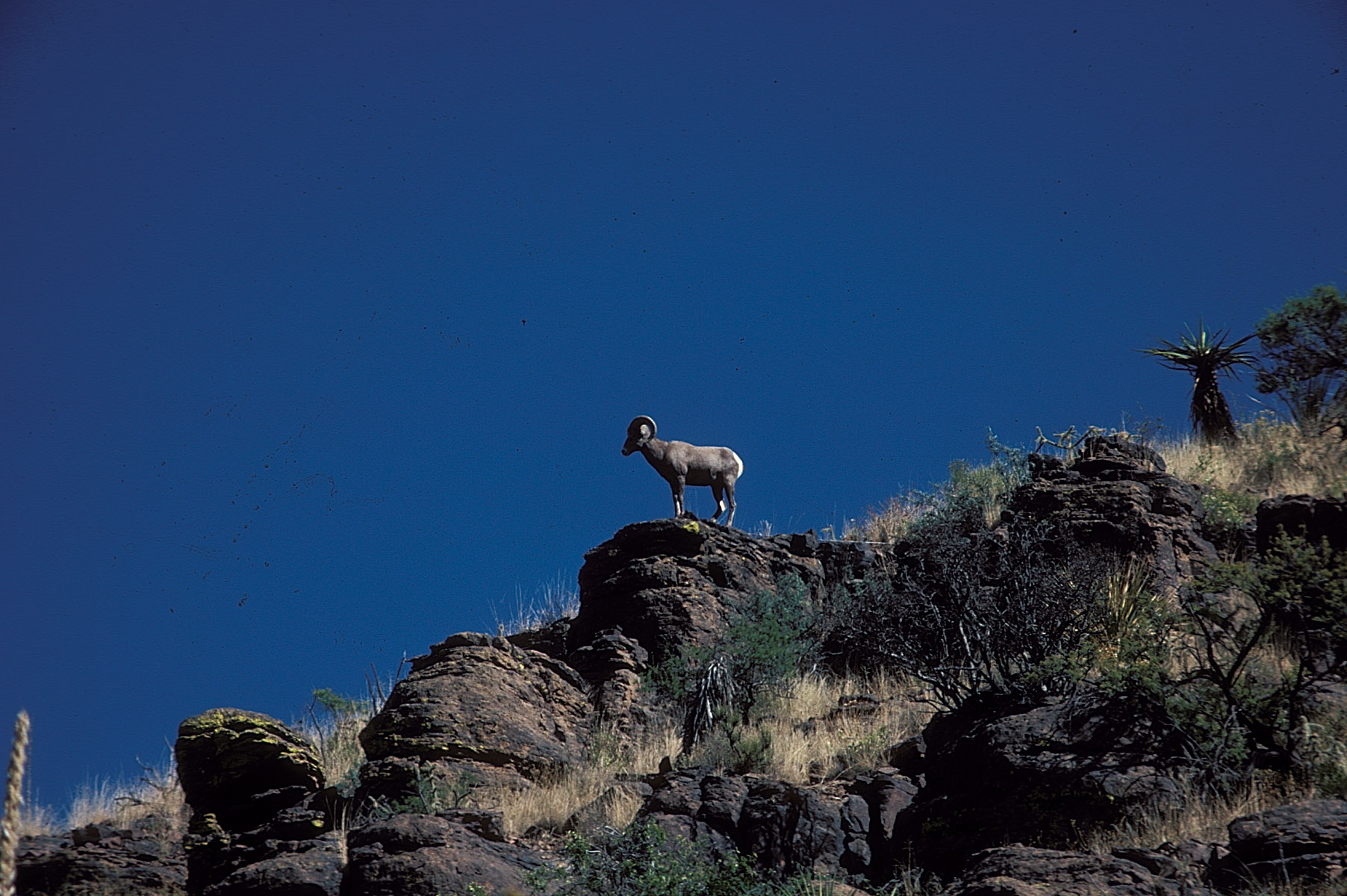
Bighorn Sheep © Texas Parks and Wildlife Department

Bighorn Sheep © Texas Parks and Wildlife Department


This is Passport to Texas

This year marks the 50th anniversary of Texas Parks and Wildlife, and we’re looking back at major milestones, including the success of our Desert Bighorn Sheep restoration program.

11— We have sheep in about eight mountain ranges right now. State numbers are up about 13-hundred or so – we’re halfway there. Our goal being about 25-hundred to 3-thousand animals in all of their historic range.

That included 15 mountain ranges in the Trans Pecos. Froylan Hernandez, Desert Bighorn Sheep Program Leader, says over the decades, TPW, with the support of landowners and other conservation partners, relocated sheep from other states to Texas.

06 — Essentially they’re still the same sheep, however, they have real subtle differences in sub-species that occur out here.

Texas Parks and Wildlife keeps a close watch on the animals to better understand what they require to live fully. One way they do that is by fitting certain sheep with radio tracking collars, from which he gathers data.

17— Research is a huge component of any restoration program, because that is how we learn; it helps us understand the biology of the animal, and it helps us better manage for the animals. It’s very unnatural for them to be running around in the wild with a collar around their neck. But, that’s exactly how we learn, and we better manage for them.

Learn more about Desert Bighorn Sheep Restoration on the Texas parks and Wildlife website.

The Wildlife and Sport Fish Restoration program supports our series and funds Desert Bighorn Sheep Restoration in Texas.

For Texas Parks and Wildlife…I’m Cecilia Nasti.
