Archive for the 'Conservation' Category

Conservation: Urban Life / Rural Impact

Thursday, March 14th, 2013
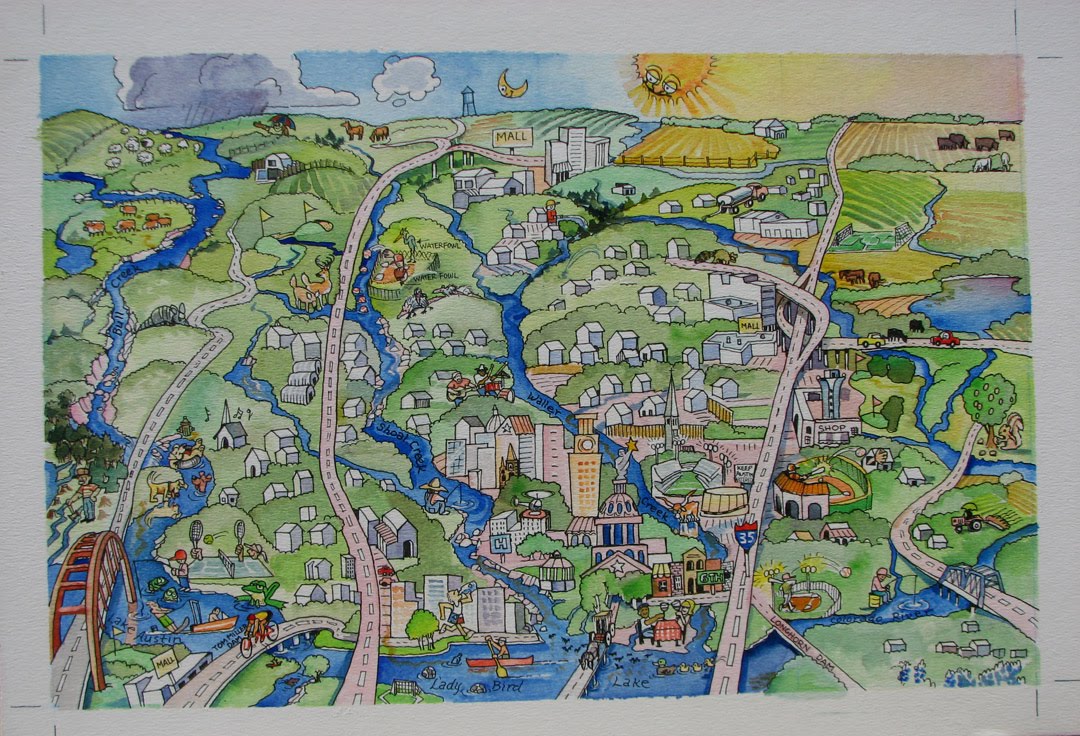
Austin watershed, Artwork Virginia Vaughan, vaughan.com

Austin watershed, Artwork Virginia Vaughan, vaughan.com


This is Passport to Texas

Most urbanites don’t realize they reside in watersheds; they’re also unaware the vitality of these natural drainage systems affects their quality of life, and that their behavior inside the concrete jungle influences the natural world beyond it. How do we raise collective awareness?

04— One thing we’re doing is trying to get them out of those urban areas and on to the countryside to go enjoy it.

Dr. Gary Garrett is state director of the watershed conservation program for Texas Parks and Wildlife. He says engaging nature leads to understanding and protecting it.

05— If you can use it, you support it; that’s just human nature. If you don’t use it, you’re not very interested in it.

While Dr. Garrett’s work involves guiding landowners through proper land management practices – which affects water runoff, absorption, quality and quality – he says educating cities and their citizens about their role in protecting watersheds is critical.

21— That clean, abundant water that we all want takes work. I’d love to see cities fully embrace that, and actually invest in those upstream areas – for their own good – to help us preserve those…
and to keep those solid clean flowing waters, and solid good environments available to use…and always there for your benefit.

Learn more about watersheds when you log onto the Texas Parks and Wildlife website.

The Wildlife and Sport Fish Restoration Program supports our series and funds conservation projects in Texas.

For Texas Parks and Wildlife…I’m Cecilia Nasti.
Conservation: Guadalupe Bass Restoration

Wednesday, March 13th, 2013

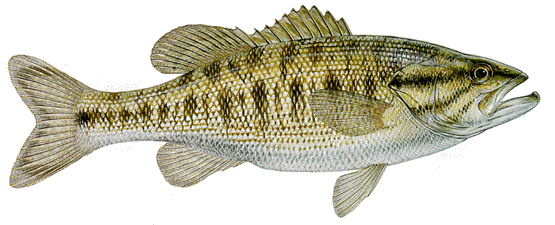
Guadalupe Bass

Guadalupe Bass


This is Passport to Texas

Nearly 40 years ago, Texas Parks and Wildlife began stocking smallmouth bass in the streams and reservoirs in the Edwards Plateau region to improve Hill Country angling opportunities. The unforeseen result: the fish hybridized with the native Guadalupe Bass (known only to those waters) threatening to displace the State Fish of Texas.

02—It’s got its problems and its challenges.

Dr. Gary Garrett says the plight of the species goes beyond hybridization. Inadequate land management caused changes to GB habitat, which also exacted a toll.

Over the past 20 years, fisheries research biologists, like Dr. Garrett – who heads up the watershed conservation program for Texas Parks and Wildlife – landowners, and others have worked together to help improve land and conserve GB habitat using an ecosystem approach.

29— The help is everything from restoring grasslands on the uplands; helping to restore and preserve good riparian habitat; preventing erosion; keeping sediment flows properly balanced within the streams; good water quality and water quantity. You don’t just stock more fish and they’re happier and everything’s cool. You do all of these things together to make a solid, sound, healthy ecosystem, and everything flourishes within it – especially our state fish.

Tomorrow: Life in the city affects life outside of the city.

The Wildlife and Sport Fish Restoration Program supports our series and funds conservation projects in Texas.

For Texas Parks and Wildlife…I’m Cecilia Nasti.
Conservation: What is a Watershed?

Tuesday, March 12th, 2013

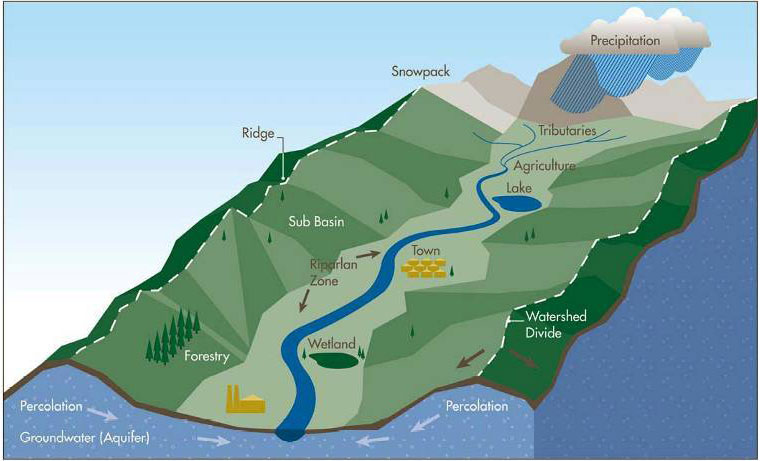
Watershed

Watershed


This is Passport to Texas

What is a watershed? Dr. Gary Garrett, state director of the watershed conservation program at Parks and Wildlife, says watersheds are interactive ecosystems.

10—Everything within that watershed interacts and affects everything else in that watershed – including us. So, there’s no one part of it that is more important or exclusive to the other parts.

That’s one reason why Garrett, a fisheries research biologist, takes a holistic approach to understanding and improving our state’s watersheds.

18—I work with wildlife biologists; I work with riparian ecologists, herpetologists…. Anything and everything that we can understand that brings it all together; then together we can synergistically apply the best guidance, the best restoration and conservation that’s possible.

How we care for the land affects the quality and quantity of our water – a concept that may seem abstract.

23 – We’re spending a lot of time with folks explaining that, because it is a large ecosystem approach to this. Grasslands, if they’re cedar thickets, and we take them back to grasslands, you reduce erosion; you reduce overland flow, you increase the ability for the water to soak in rather than run off, which then improves spring flows over time. It gives you a more dependable water source. That’s just restoring grasslands.

Restoring watersheds and an iconic Texas species. That’s tomorrow.

The WSFR program supports our series and funds conservation projects in Texas.

For Texas Parks and Wildlife…I’m Cecilia Nasti.
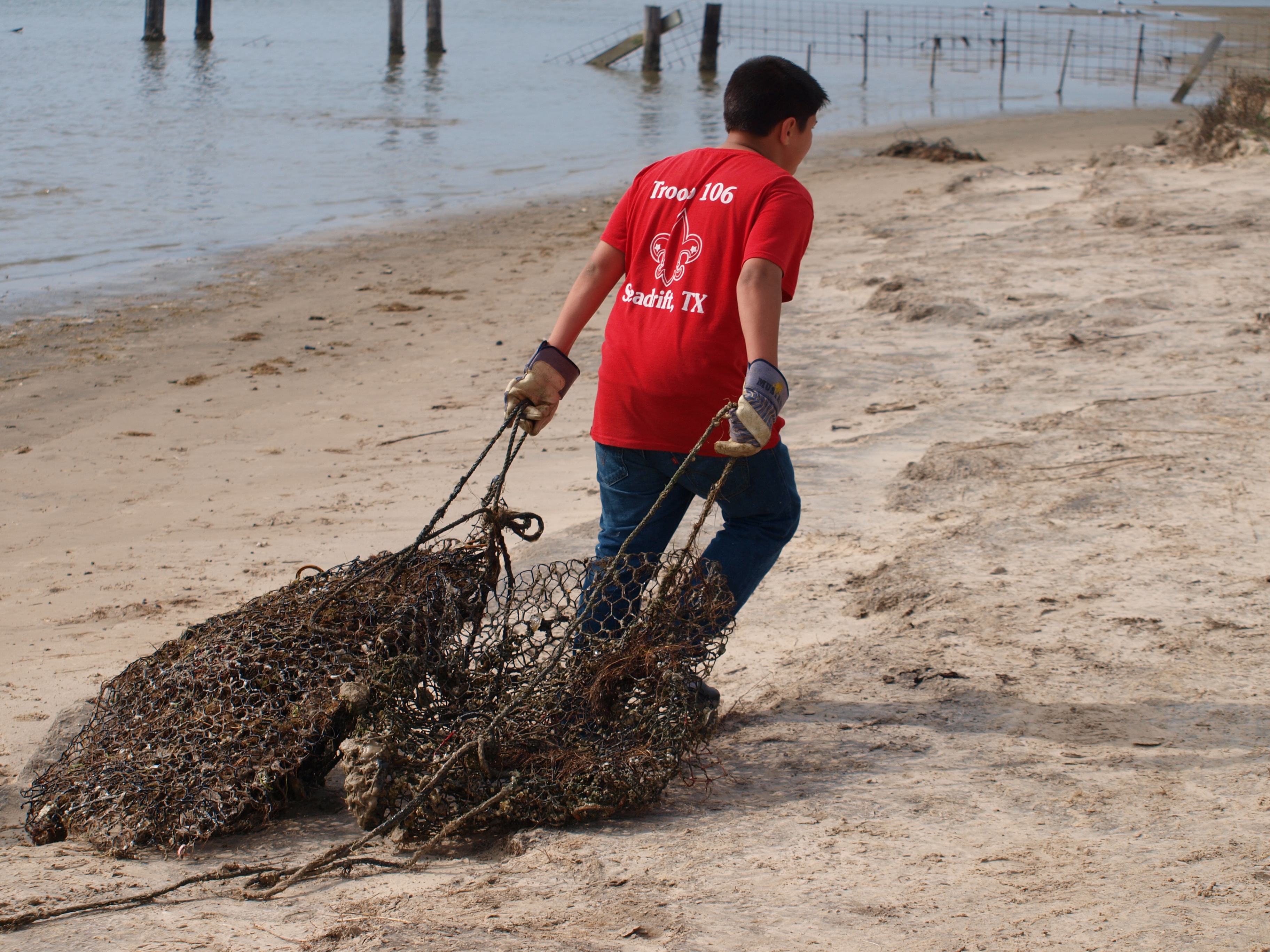
Conservation: Crab Trap Cleanup

Wednesday, February 13th, 2013

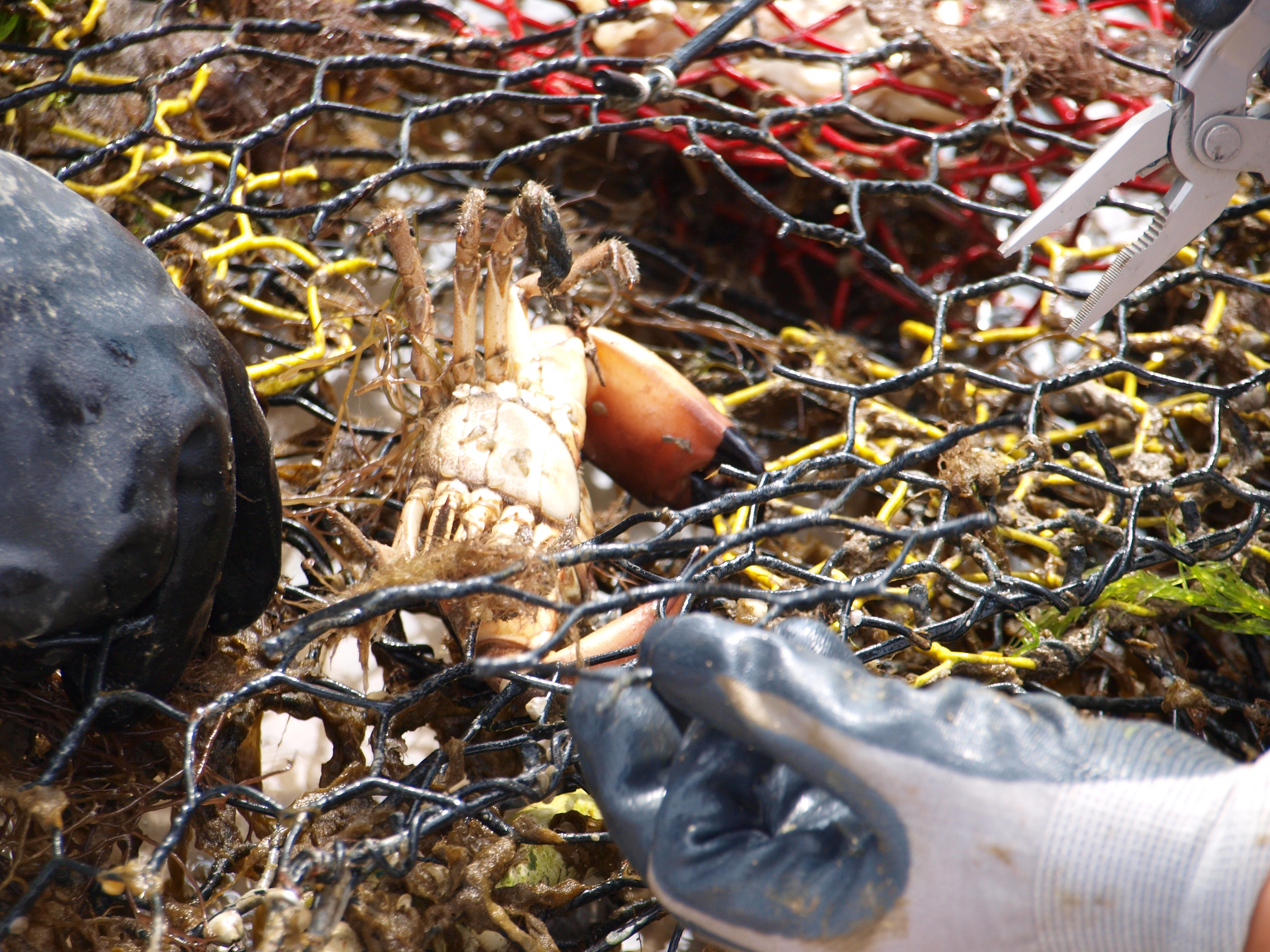
Crab Trap Cleanup, photo by Art Morris, © Texas Parks and Wildlife Department

Crab Trap Cleanup, photo by Art Morris, © Texas Parks and Wildlife Department


This is passport to Texas

Since 2002, more than 29-thousand derelict crab traps have been removed from Texas bays.

:13— Through our program we have documented over forty species of organisms that are caught in these traps that include game fish, and commercially important fish, and even Diamond back terrapins which are a species of special concern.

That’s Art Morris is a biologist with Coastal Fisheries. He says Parks and Wildlife is gearing up for the Sixteenth annual Crab Trap clean up, February 15-24. Volunteers are needed.

:34—Anybody can volunteer, however, we primarily need people with boats, and particularly air boats. But there are jobs for people that don’t have a boat. We need people to unload boats; we need people to maybe sometimes to go out with people that will have crew members to go out with them. We’ll provide gloves; we’ll have tarps for boats. You don’t need to sign up for anything. We would like you to call ahead of time so we can get an estimate of how many people are going to come to that site. Most of our work’s going to be done in San Antonio bay, north, because that’s where most of the crabbing effort goes on. But anybody can volunteer, and they can do it on their own.

The main cleanup event is February 16 from 8:00 to noon; check the Texas Parks and Wildlife website or find information on how to volunteer at passporttotexas.org.

Morris warns to remove traps only during Feb. 15-24 as it is illegal all other times as traps are private property.

That’s our show…with support from the Sport Fish Restoration Program…For Texas Parks and Wildlife…I’m Cecilia Nasti

Angling: Ghost Fishing

Tuesday, February 12th, 2013

Crab Trap Cleanup Art Morris, © Texas Parks and Wildlife Department

Crab Trap Cleanup Art Morris, © Texas Parks and Wildlife Department


This is Passport to Texas

There are ghosts in the gulf that silently trap and kill thousands of marine species annually.

09— They are a perpetual trapping machine. When something gets caught in there, it has nothing to eat and it dies, and it becomes bait and it attracts other fish and other organisms.

That’s Art Morris…ghost buster. Actually, he’s a biologist with Coastal Fisheries. The entities he’s after are abandoned crab traps…adrift in the gulf…ghost fishing.

09—And one of the key things about this, because they’re targeting for crabs, that’s the number one species that we see—the targeted organisms is what we’re losing to these derelict traps.

Weather and vandalism are the primary reasons why traps end up adrift, indiscriminately ensnaring crustaceans and other sea life. Morris says since 2002, more than 29-thousand of these A.W.O.L. traps have been removed from Texas bays.

12—A single trap can kill 26 blue crabs per trap per year. And we can extrapolate those numbers out and we estimate somewhere in the area of half million blue crabs are saved through this program alone—or have to date.

Morris hasn’t removed these traps alone—he’s had a lot of help from volunteers during annual crab trap clean ups. Your chance to help rid the gulf of ghost fishing happens next month… details tomorrow.

That’s our show…with support from the Sport Fish Restoration Program…For Texas Parks and Wildlife…I’m Cecilia Nasti.